


TL;DR:
- Zero waste beauty focuses on minimizing environmental impact through sustainable packaging and natural ingredients.
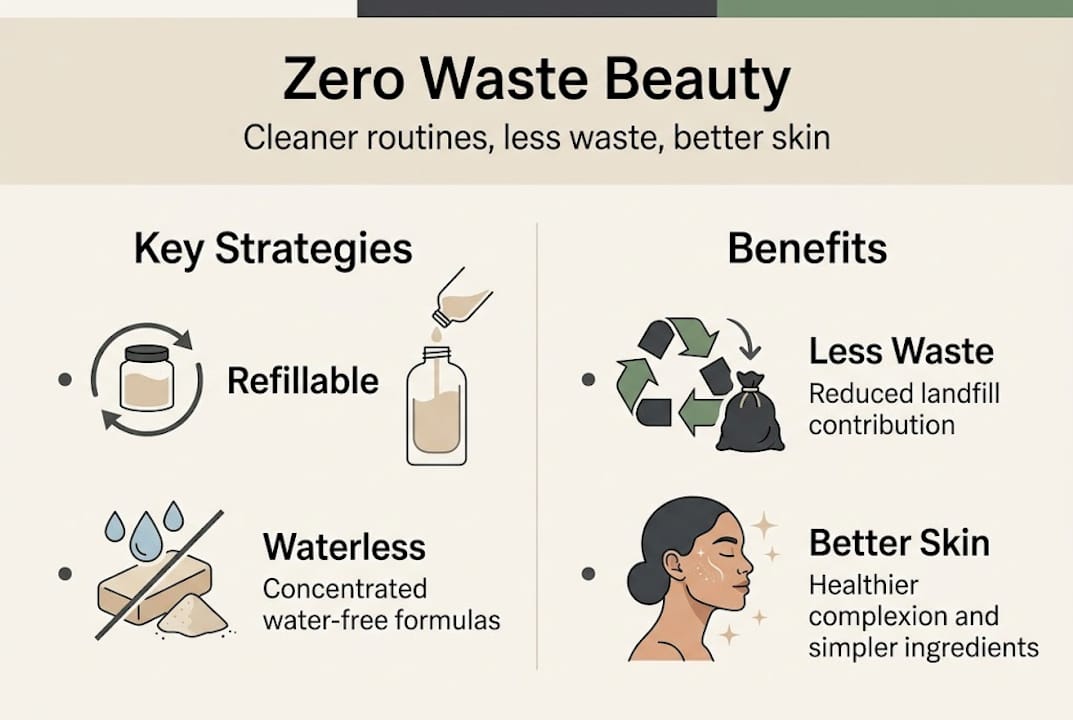
- Key strategies include refillable containers, waterless formulas, and circular economy practices.
- Consistent, manageable changes and skepticism of greenwashing help build an effective, ethical routine.
Most people assume going zero waste with their beauty routine means giving up the products they love, spending hours researching alternatives, or settling for something that barely works. That assumption is wrong. Zero waste beauty is not about sacrifice. It is about making smarter choices that benefit your skin, your wallet, and the planet at the same time. Consumers are increasingly seeking out products that feel good and do good, and the beauty industry is responding faster than ever. This guide will break down what zero waste beauty actually means, show you the strategies that work, and give you realistic steps to start or level up your own routine.
Table of Contents
- What is zero waste beauty?
- Main strategies and practices in zero waste beauty
- Zero waste beauty in action: What makes a product or routine truly zero waste?
- Common challenges, misconceptions, and how to start your zero waste journey
- Why most zero waste beauty advice misses the point
- Start your zero waste journey with Didis Beauty Center
- Frequently asked questions
Key Takeaways
| Point | Details |
|---|---|
| Zero waste beauty defined | It minimizes waste through sustainable packaging, reusable tools, and ethical ingredients. |
| Practical strategies | Switching to refillables, solids, and DIY products makes zero waste easier than you think. |
| Beware of greenwashing | Check for honest certifications and transparent brands to avoid misleading waste-free claims. |
| Start small for big impact | Even one swap in your routine helps reduce waste and drive industry change. |
What is zero waste beauty?
Zero waste beauty is more than a trend. It is a rethinking of how products are made, packaged, used, and disposed of. As defined by eco-lifestyle educators, zero waste beauty is a lifestyle and industry approach focused on minimizing or eliminating waste. That includes everything from the bottle your moisturizer comes in to the synthetic chemicals that wash down your drain.
At its core, zero waste beauty aims to create routines and products with minimal environmental impact. That means favoring:
- Sustainable packaging: glass, aluminum, compostable materials, or no packaging at all
- Natural ingredients: plant-based formulas that biodegrade safely
- Reusable tools: cotton rounds, bamboo applicators, refillable containers
- Vegan and cruelty-free production: no animal testing, no animal-derived ingredients
- Minimal processing: fewer steps, less energy, smaller carbon footprint
The benefits stack up quickly. Less plastic in landfills. Fewer harsh chemicals on your skin. A routine that aligns with your values without requiring a chemistry degree to understand the label.
The numbers show the urgency. The beauty industry generates an estimated 120 billion units of plastic packaging every year globally, and most of it is not recycled. That staggering volume is one reason why informed consumers are driving a real shift. Brands that once ignored sustainability are now racing to offer refillable compacts, biodegradable tubes, and waterless formulas.
Learning more about natural packaging for beauty products is a smart place to start if you want to understand what responsible packaging actually looks like beyond the marketing language. Not every “eco” label means the same thing, and knowing the difference puts you in control.
What makes zero waste beauty genuinely exciting is that it does not ask you to choose between effectiveness and ethics. Today’s zero waste formulas are engineered to perform. Solid shampoos lather just as richly as liquid versions. Concentrated serums deliver more active ingredients per drop. Refillable compacts hold pigment just as beautifully as single-use ones. The idea that natural or low-waste means lower quality is outdated.
Main strategies and practices in zero waste beauty
Understanding the core idea is one thing. Putting it into practice requires knowing which strategies actually move the needle.
The key methodologies shaping the industry right now include refillable packaging, waterless products, and circular economy systems. Here is what each looks like in practice:
| Strategy | What it means | Example |
|---|---|---|
| Refillable packaging | Containers designed to be reused with new product inserts | Refillable foundation compacts |
| Solid bars | Water removed to reduce weight and packaging | Shampoo bars, solid cleansers |
| Waterless formulas | Concentrated products with no added water | Anhydrous serums, powder cleansers |
| Compostable materials | Packaging that breaks down naturally | Paper seed packets, plant-based films |
| Circular economy | Return and refill programs that loop packaging back | Brand take-back programs |
If you are just starting out, a numbered approach keeps things manageable:
- Audit your bathroom shelf. Identify which products generate the most packaging waste.
- Swap one item at a time. Replace your current face wash with a solid bar when it runs out.
- Invest in reusables. Switch to bamboo cotton swabs and washable makeup rounds.
- Research brand policies. Look for take-back programs or refill options before repurchasing.
- Go waterless where possible. Explore waterless beauty products that offer concentrated performance with less packaging.
Upcycled ingredients are another rising strategy worth watching. Some brands now use fruit peels, coffee grounds, and seed extracts that would otherwise be discarded in food production. This approach turns agricultural byproducts into effective skincare actives, reducing waste at the supply chain level before a product even reaches you.

DIY beauty is also part of the conversation. Simple homemade masks using oats, honey, or avocado create no packaging waste at all. The catch is consistency and shelf life. Homemade products lack preservatives, so they need to be used quickly and stored carefully. For ongoing eco-friendly skincare tips, pairing a few trusted zero waste store-bought products with the occasional DIY recipe gives you the best of both worlds.
Pro Tip: Do not try to overhaul your entire routine overnight. Pick one product category, like cleansers or toners, and go zero waste there first. Consistency beats perfection every time.
Zero waste beauty in action: What makes a product or routine truly zero waste?
Knowing the strategies is useful. Seeing how they apply to real products and daily habits makes it actionable.
A truly zero waste routine might look like this: you wash your face with a solid bar cleanser wrapped in paper, apply a concentrated serum from a glass dropper bottle, moisturize with a refillable cream compact, and remove your eye makeup with a reusable cotton pad. Every item in that routine addresses both your skin and the planet.
Here is how a traditional routine compares to a zero waste one:
| Product type | Traditional packaging | Zero waste alternative | End of life |
|---|---|---|---|
| Face wash | Plastic pump bottle | Paper-wrapped solid bar | Composted or recycled paper |
| Toner | Single-use plastic spray | Glass bottle with refill | Refilled or recycled |
| Moisturizer | Plastic jar | Refillable aluminum compact | Returned to brand |
| Makeup remover | Single-use cotton pads | Washable cloth rounds | Laundered and reused |
| Lip balm | Plastic tube | Cardboard push-up tube | Composted |
Refill systems can reduce packaging waste by up to 80%, and waterless products cut carbon emissions by being lighter to ship. Those are meaningful numbers, not just marketing copy.
To evaluate whether a product is genuinely zero waste, use this checklist:
- Are the ingredients naturally derived and biodegradable?
- Is the packaging refillable, compostable, or made from recycled material?
- Does the brand have a take-back or return program?
- Is the product long-lasting enough to reduce how often you repurchase?
- Does the brand hold third-party certifications like COSMOS Organic, Leaping Bunny, or B Corp?
Certifications matter because greenwashing (making false or exaggerated environmental claims) is rampant in beauty marketing. Any brand can print “eco” on a plastic bottle. Third-party certification means an independent organization has verified the claim. When you are browsing DIY beauty practices or ready-made zero waste products, checking for those seals is the fastest way to separate genuine options from clever packaging.
Pro Tip: If a brand cannot tell you exactly what happens to their packaging after you are done with it, that is a red flag worth taking seriously.
Common challenges, misconceptions, and how to start your zero waste journey
Even motivated people hit walls when trying to shift to zero waste beauty. The good news is that most obstacles are smaller than they appear.
Myth 1: Zero waste beauty is too hard. The reality is that most zero waste swaps take less than five minutes of research and zero extra effort once the habit is formed.
Myth 2: Zero waste products are not vegan. Many zero waste brands are built around vegan and cruelty-free principles, using plant-based ingredients and never testing on animals.
Myth 3: Zero waste means less effective. Concentrated, natural formulas often outperform their watered-down conventional counterparts because every ingredient earns its place.
Greenwashing is the trickiest challenge. As one industry analysis notes, greenwashing erodes trust and highlights the urgent need for better standards and certifications across the beauty sector. The solution is skepticism paired with research. Check the label. Search for the brand’s sustainability report. Ask if they have independent certification.
“For consumers, audits and minimalism are key tools. Recycling gaps still persist across the industry, so reducing consumption matters more than recycling alone.” Sustainable Beauty Meets Everyday Minimalism
Here is a simple plan to start your zero waste journey without feeling overwhelmed:
- Do a routine audit. Lay out everything you use and note how much packaging each item generates.
- Replace, do not rush. When a product runs out, replace it with a zero waste version rather than throwing away what you have.
- Embrace minimalism. A shorter routine with fewer, high-quality products creates less waste and often delivers better results.
- Use your eco-friendly beauty checklist to vet brands before you buy.
- Share what you learn. Consumer demand is one of the most powerful forces shaping industry behavior. Every purchase and every conversation you have about zero waste beauty moves the needle.
The biggest mistake people make is waiting until they find the “perfect” zero waste alternative before making any change. Progress over perfection, always.
Why most zero waste beauty advice misses the point
Most zero waste beauty content is obsessed with the finish line. Buy this refillable compact. Toss that plastic bottle. Achieve perfect waste-free status. The problem is that framing zero waste as a destination sets most people up for frustration before they even begin.
Here is what years of watching real consumers navigate this space has taught us: the most sustainable routine is not the most extreme one. It is the one you can actually maintain. Someone who consistently uses one or two zero waste products is doing more good than someone who buys an entire zero waste kit and abandons it in three weeks.
The other thing most advice glosses over is that industry change does not hinge on any single perfect purchase. It is built from millions of small, consistent choices. When you pick up a solid cleanser, you add your voice to a market signal that tells brands to keep investing in better options. That matters far more than achieving a perfectly zero waste shelfie.
We believe intention and transparency count. Choosing sustainable beauty tips that fit your actual life is more powerful than chasing an idealized version of zero waste that burns you out.
Start your zero waste journey with Didis Beauty Center
Shifting to a zero waste beauty routine is more approachable when you have the right products and information behind you. At Didis Beauty Center, we offer natural and vegan skincare formulas that take both your skin and the environment seriously.
Whether you are a consumer building your own routine or an entrepreneur looking to launch a sustainable brand, our custom zero waste solutions and private label options make it easy to align your choices with your values. Browse the full range of natural skincare and wellness products at Didis Beauty Center and find the products that make your zero waste journey feel effortless, not like a chore.
Frequently asked questions
What is the difference between zero waste beauty and sustainable beauty?
Zero waste beauty prioritizes eliminating packaging waste, while sustainable beauty addresses a broader set of environmental factors including ingredient sourcing, production methods, and supply chain ethics.
Are waterless beauty products really effective?
Yes, waterless beauty products are concentrated by design and deliver results comparable to traditional formulas, while also cutting shipping emissions by being lighter and more efficient to transport.
How can I avoid greenwashing when choosing zero waste beauty products?
Look for third-party certifications, study the full ingredient list, and check whether the brand publishes a sustainability policy, since greenwashing erodes trust and is widespread in the beauty industry.
Is zero waste beauty more expensive?
Some products carry a higher upfront price, but refillable formats and long-lasting concentrated formulas typically cost less over time when you factor in how often you repurchase.
Can zero waste beauty routines be vegan and cruelty-free?
Absolutely. Many zero waste beauty brands are built specifically on vegan and cruelty-free principles, using plant-based ingredients and ethical sourcing from start to finish.
Recommended
- Step-by-step sustainable beauty: your actionable guide – Didis Beauty Center
- Home skincare routine tips: vegan and eco-friendly results – Didis Beauty Center
- What is minimalist skincare? Simple, effective routines – Didis Beauty Center
- How to Reduce Packaging Waste: A Practical Guide for 2025 – Spaceman
Discourse (0)