


Finding the right skincare that matches both your ethical values and skin needs can be confusing, especially with so many myths and unclear labels. For eco-conscious shoppers in North America, vegan skincare is more than a trend—it’s a commitment to cruelty-free beauty and sustainable living. This article demystifies vegan skincare and tackles common misconceptions, offering clear guidance on ethical lifestyle choices and ingredient benefits that truly support your skin and the planet.
Table of Contents
- Vegan Skincare Defined And Common Myths
- Types Of Vegan Skincare And Key Ingredients
- How Vegan Skincare Supports Skin Health
- Environmental And Ethical Benefits Explained
- Comparing Vegan And Non-Vegan Skincare Approaches
Key Takeaways
| Point | Details |
|---|---|
| Vegan Skincare Defined | Vegan skincare products contain no animal-derived ingredients and are not tested on animals, focusing on ethical standards in formulation. |
| Myths Debunked | Common misconceptions about vegan skincare, such as it being ineffective or always expensive, are addressed, emphasizing comparable results and pricing options. |
| Certification Importance | Legitimate vegan certifications, like PETA and Vegan Action, ensure ethical standards and consumer trust in product claims. |
| Environmental and Ethical Impact | Choosing vegan skincare promotes animal welfare and minimizes environmental degradation linked to animal agriculture and testing. |
Vegan Skincare Defined and Common Myths
Vegan skincare means products that contain no animal-derived ingredients and weren’t tested on animals. This goes beyond avoiding beeswax or lanolin—it’s about excluding all animal-sourced materials from formulations.
The confusion often starts here: vegan skincare isn’t the same as vegetarian skincare. Vegetarian products may still contain animal byproducts like honey or carmine (a red dye from insects). Vegan products eliminate these entirely.
What Actually Makes Skincare Vegan
A truly vegan skincare product meets these criteria:
- Contains zero animal-derived ingredients (no lanolin, collagen, squalane from sharks, or carmine)
- Was never tested on animals during any stage of development
- Uses plant-based or synthetic alternatives that deliver results
- Often features certifications from recognized cruelty-free organizations
Vegan doesn’t automatically mean natural either. Some vegan products use synthetic ingredients created in labs, which works perfectly fine for your skin—and sometimes better than natural alternatives.
Vegan skincare is an ethical lifestyle choice that extends beyond just avoiding animal products; it represents a commitment to exclude animal exploitation across all cosmetics.
Myth 1: Vegan Skincare Doesn’t Actually Work
This myth dies hard. People assume animal-derived ingredients like collagen or squalane are irreplaceable. They’re not. Plant-based hyaluronic acid hydrates just as effectively. Peptides derived from plants work on wrinkles the same way.
Your skin doesn’t care about the source—it cares about the active ingredients. Vegan formulations from Didis Beauty Center and similar brands prove this daily through customer results.
Myth 2: Vegan Skincare Is Always Expensive
Price varies wildly in vegan skincare, just like conventional products. You’ll find affordable options alongside luxury brands. The cost depends on ingredient quality and brand positioning, not the vegan certification itself.
Many eco-conscious consumers find vegan products competitively priced once they compare ingredient counts and effectiveness.
Myth 3: “Clean” and “Vegan” Are the Same Thing
They overlap but aren’t identical. Clean beauty focuses on avoiding harmful chemicals, while vegan focuses on animal exploitation. A product could be clean but not vegan (contains beeswax), or vegan but include ingredients some might avoid.
Your goal determines which matters more to you.
Myth 4: Vegan Products Lack Certifications
Actual vegan skincare carries legitimate third-party certifications. Look for Vegan Action certification, PETA certification, or Leaping Bunny logos. These aren’t marketing fluff—they represent actual auditing and compliance.
Read labels carefully. Real certifications appear on packaging and company websites.
Pro tip: Check product labels for specific certifications rather than trusting marketing claims alone—this ensures you’re actually getting vegan formulations backed by legitimate organizations.
Here’s a quick guide to vegan skincare certifications and what each means:
| Certification Name | Verified Criteria | Common Logo Appearance |
|---|---|---|
| Vegan Action | No animal ingredients or testing | Stylized “V” leaf badge |
| PETA Cruelty-Free & Vegan | No animal testing or byproducts | Rabbit cartoon logo |
| Leaping Bunny | Rigorous cruelty-free standards | Leaping bunny silhouette |
| Certified Vegan | Excludes animal exploitation | Vegan circle with leaf |
These certifications ensure ethical standards for vegan skincare products.
Types of Vegan Skincare and Key Ingredients
Vegan skincare comes in multiple product categories, each targeting specific skin needs while excluding animal-derived ingredients. Understanding these types helps you build an effective routine tailored to your skin.
The main categories include cleansers, moisturizers, serums, and sunscreens. Each plays a distinct role in maintaining healthy skin without compromising your ethical values.
Core Product Types
Vegan skincare products break down into essential categories:
- Cleansers: Remove dirt and oil while respecting your skin’s natural barrier
- Moisturizers: Hydrate and protect using plant-based and synthetic alternatives
- Serums: Deliver concentrated active ingredients for targeted concerns
- Sunscreens: Protect skin from UV damage with mineral or chemical filters
- Toners: Balance pH and prepare skin for other products
- Masks and treatments: Address specific issues like dryness or sensitivity
Vegan facial cleansers are formulated for different skin types, from oily to sensitive, ensuring everyone finds their match without animal ingredients.
Key Vegan Ingredients That Actually Work
Plant-based and synthetic ingredients deliver real results. These aren’t inferior substitutes—they’re proven performers.
Hyaluronic acid holds up to 1000 times its weight in water, hydrating skin deeply. It’s naturally derived or lab-created, and both versions work identically on your skin.
Botanical oils like jojoba, rosehip, and argan nourish without clogging pores. They’re packed with vitamins and fatty acids your skin craves.

Plant extracts such as green tea and chamomile provide hydrating and soothing benefits00612-7/fulltext) for sensitive or inflamed skin. These powerhouse ingredients reduce redness and calm irritation.
Peptides from plant sources work on fine lines by supporting collagen production, delivering anti-aging results without animal collagen.
Vitamin C derivatives brighten and protect. Ascorbic acid and stabilized versions combat dark spots and free damage.
Plant-based and synthetic vegan ingredients deliver the same results as animal-derived alternatives—your skin responds to the active compound, not its source.
Why Facial oils benefit vegan skincare differently than conventional serums
Oils penetrate deeper and lock in moisture longer than water-based products. They’re ideal for dry or mature skin needing intensive hydration.
Not all skin types need oils. Oily or acne-prone skin often does better with lightweight serums and water-based moisturizers instead.
Pro tip: Layer lighter products first (toner, serum), then apply heavier moisturizers or oils last to maximize absorption without wasting product.
How Vegan Skincare Supports Skin Health
Vegan skincare works because it delivers active ingredients your skin actually needs without unnecessary irritants. Plant-based formulations address common skin concerns while supporting your skin barrier’s natural function.
Your skin doesn’t distinguish between plant-derived and synthetic molecules—it responds to the active compound itself. Vegan skincare simply removes animal ingredients that can sometimes trigger sensitivity in susceptible skin.
Gentle Ingredients That Reduce Irritation
Many people switch to vegan skincare after experiencing reactions to conventional products. The reason? Fewer irritating additives and proven soothing botanicals.
Plant oils and botanical extracts like aloe vera, lavender, and rose oil address skin issues directly:
- Aloe vera cools and hydrates without heaviness
- Lavender calms inflammation and reduces redness
- Rose oil nourishes while maintaining skin elasticity
- Green tea provides antioxidant protection against environmental damage
These ingredients work synergistically. Combining them amplifies benefits rather than overwhelming your skin.
Plant oils, botanical extracts, and natural substances support skin hydration and reduce irritation while avoiding synthetic petrochemicals that can trigger adverse reactions.
Supporting Your Skin Barrier
Your skin barrier is the outermost layer protecting against water loss and environmental damage. Vegan skincare strengthens this barrier instead of compromising it.
Conventional products sometimes strip natural oils, damaging the barrier. Vegan formulations preserve these protective lipids while adding beneficial ones. The result? Healthier, more resilient skin that recovers faster from stress.
A strong barrier means less sensitivity, fewer breakouts, and better moisture retention overall.
Antioxidant and Vitamin Protection
Plant-based ingredients contain antioxidants and vitamins that protect against environmental damage23835-6/fulltext) and support skin repair mechanisms. These compounds neutralize free radicals from pollution and UV exposure.
Vitamin C from plant sources brightens. Vitamin E protects. Polyphenols from green tea fight aging. Your skin gets comprehensive defense without harsh chemicals.
Why Gentleness Matters for Long-Term Health
Aggressive skincare might show quick results, but it damages skin long-term. Vegan products tend toward gentleness, supporting sustainable skin health.
This approach works especially well for sensitive, reactive, or compromised skin. Even resilient skin benefits from non-irritating formulations that maintain barrier function.
Consider eco-friendly beauty practices that emphasize natural skincare as foundational to protecting your skin investment.
Pro tip: Introduce new vegan skincare products one at a time, waiting 1-2 weeks between additions to identify which ingredients your skin loves and which to avoid.
Environmental and Ethical Benefits Explained
Choosing vegan skincare creates real environmental and ethical impact. Your product selection affects animal welfare, habitat preservation, and planetary health. This section shows exactly how.
Vegan skincare eliminates demand for animal-derived ingredients and animal testing. This single choice prevents suffering while reducing destructive practices linked to conventional beauty.
The Environmental Case Against Animal-Derived Ingredients
Animal agriculture drives habitat destruction. Raising animals for collagen, squalane, and other skincare ingredients requires vast land clearing, water usage, and feed production. Cattle ranching alone causes significant deforestation, especially in critical ecosystems.
Vegan alternatives avoid these impacts entirely. Plant-based hydrators and oils don’t require the same resource intensity.
Specific Environmental Wins
Switching to vegan skincare reduces:
- Carbon emissions from animal farming and processing
- Water pollution from animal waste and agricultural runoff
- Deforestation linked to pastureland and feed crops
- Chemical use in conventional animal farming systems
- Ocean damage from fishing for shark squalane and other marine ingredients
Avoiding ingredients like palm oil and choosing cruelty-free formulations reduces deforestation while supporting sustainable sourcing practices globally.
Vegan skincare eliminates animal exploitation and reduces reliance on animal farming linked to habitat destruction, pollution, and high carbon emissions—creating direct environmental benefits.
The Ethical Impact: Ending Animal Testing
Animal testing remains common in conventional cosmetics. Rabbits, guinea pigs, and mice suffer painful experiments to test safety and efficacy. Vegan skincare brands refuse this practice entirely.
Third-party certifications verify companies don’t test on animals. Choosing these brands defunds cruel practices and encourages industry-wide change.
Supporting Responsible Brands
Vegan skincare companies typically align with broader ethical values. They often emphasize:
- Transparency in ingredient sourcing and manufacturing
- Fair labor practices for workers
- Sustainable packaging reducing plastic waste
- Community investment supporting local economies
Your purchase funds businesses genuinely committed to planetary health, not just profit margins.
Understanding Ethical Beauty Standards
Ethical beauty extends beyond “cruelty-free” labels. It encompasses environmental responsibility, worker welfare, and transparent business practices. True ethical brands publish detailed information about their supply chains.
This accountability matters. It ensures your money supports genuinely responsible companies.
Pro tip: Cross-reference certifications by checking brand websites directly—look for Leaping Bunny, PETA, or Vegan Action badges alongside detailed sustainability reports for proof of authentic ethical commitment.
Comparing Vegan and Non-Vegan Skincare Approaches
Vegan and non-vegan skincare differ fundamentally in ingredient sourcing, ethical practices, and environmental impact. Understanding these differences helps you make informed choices aligned with your values and skin needs.
Both approaches can deliver results. The distinction lies in how products achieve those results and what costs accompany them.
Ingredient Sourcing: The Core Difference
Non-vegan skincare relies on animal-derived ingredients like collagen, squalane from shark liver oil, lanolin from wool, and carmine from insects. These ingredients aren’t inherently ineffective—they work well for many skin types.
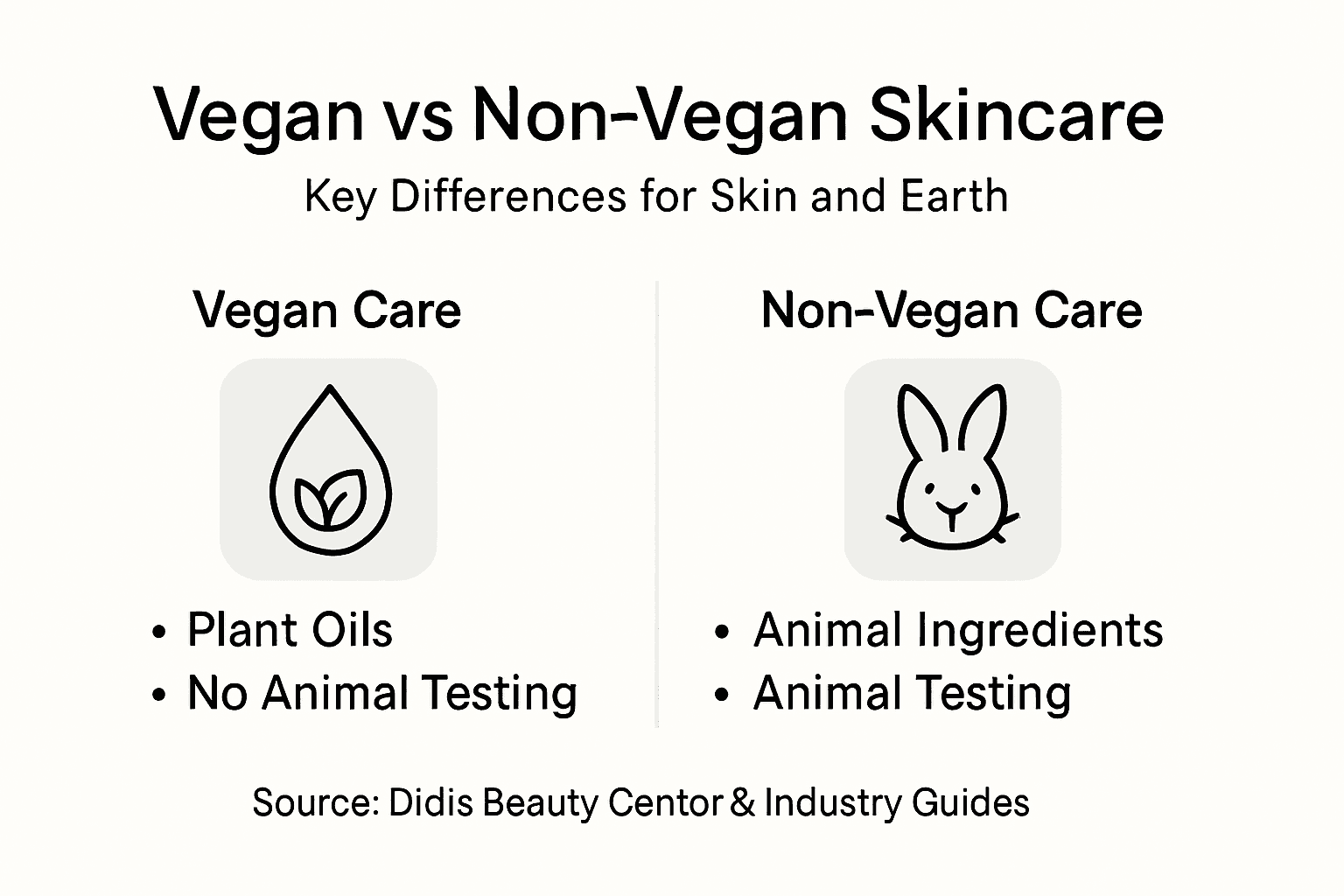
The problem? They require animal farming or harvesting, creating environmental and ethical consequences.
Vegan skincare substitutes these with plant-based and synthetic alternatives. Plant hyaluronic acid hydrates identically. Peptides from plants support collagen just as effectively.
Environmental Impact Comparison
Non-vegan skincare carries hidden environmental costs:
- Animal agriculture drives deforestation and habitat loss
- Ocean fishing for shark squalane depletes marine ecosystems
- Chemical runoff from animal farming pollutes waterways
- Higher carbon footprint from feed production and processing
- Water waste from livestock operations
Vegan skincare eliminates these impacts by removing animal sourcing entirely. Plant-based alternatives require significantly fewer resources.
Compare the environmental impact of vegan versus non-vegan skincare approaches:
| Impact Category | Vegan Skincare | Non-Vegan Skincare |
|---|---|---|
| Carbon Footprint | Significantly reduced | High due to animal farming |
| Water Usage | Moderate, plant-focused | Excessive, supports livestock |
| Animal Welfare | No animal exploitation | Animal testing and farming |
| Habitat Preservation | Supports biodiversity | Deforestation for agriculture |
Choosing vegan skincare benefits the planet in multiple ways.
Vegan skincare uses sustainably sourced plant-based substances that avoid animal testing, offering comparable efficacy with added ethical and environmental advantages.
Chemical Safety: A Significant Advantage
Conventional non-vegan products often contain potentially harmful chemicals. Many contain ingredients linked to toxicity concerns that vegan formulations intentionally avoid, lowering your exposure to questionable compounds.
This doesn’t mean all non-vegan products are unsafe. It means vegan brands typically maintain stricter ingredient standards overall.
Cost and Accessibility
Pricing varies widely in both categories. You’ll find affordable and premium options in each. The cost depends on brand positioning and ingredient quality, not the vegan certification itself.
Vegan skincare from Didis Beauty Center proves you don’t need to overspend for quality, cruelty-free formulations.
Efficacy: Equally Effective When Formulated Well
Both approaches work when formulated correctly. Your skin responds to active ingredients regardless of source. A well-made vegan serum outperforms a poorly-made non-vegan product every time.
Natural skincare approaches emphasize efficacy through quality plant ingredients rather than relying on animal derivatives as shortcuts.
The Ethical Distinction
Non-vegan skincare supports animal testing in many cases. Conventional brands may conduct or commission animal testing for regulatory approval in certain markets. Vegan brands refuse this entirely.
Vegan certification guarantees no animal testing occurred at any stage. This accountability matters if animal welfare influences your purchasing decisions.
Pro tip: Compare ingredient lists directly—if you see lanolin, squalane, carmine, or collagen, it’s not vegan; scan for plant-derived alternatives that achieve identical results without animal sourcing.
Discover Effective Vegan Skincare That Cares for Your Skin and the Planet
If you are seeking skincare solutions that are both ethical and effective, vegan formulations offer a powerful way to nourish your skin while supporting a healthier planet. Many face challenges like irritation from animal-derived ingredients or concerns about environmental impact. Our carefully selected products use plant-based and synthetic ingredients that hydrate and protect your skin without compromising your values.
Explore our Skin Care Collection - Face, Body, Oils – Didis Beauty Center to find cleansers, toners, and serums designed for all skin types that combine cutting-edge science with cruelty-free ethics.
Take the step today toward gentler, more sustainable skincare. Visit Didis Beauty Center to browse our selection including the rejuvenating Oils Collection: Skincare Oils for Face & Body – Didis Beauty Center. Benefit from products that protect your skin barrier while reducing your environmental footprint. Start your ethical beauty routine now and feel the difference in both your skin and the planet.
Frequently Asked Questions
What is vegan skincare?
Vegan skincare refers to products that contain no animal-derived ingredients and have not been tested on animals. This includes avoiding ingredients like beeswax, lanolin, and collagen, ensuring that all materials are plant-based or synthetic alternatives.
How does vegan skincare benefit my skin compared to non-vegan products?
Vegan skincare often uses plant-based and synthetic ingredients that are gentler on the skin, reducing irritation and supporting the skin barrier. These formulations can effectively address common skin concerns without the use of potentially irritating animal-derived substances.
Are vegan skincare products always more expensive than non-vegan options?
No, vegan skincare products can vary widely in price, just like non-vegan products. You’ll find both affordable and luxury vegan options, depending on the quality of ingredients and brand positioning.
Can vegan skincare give me the same results as traditional skincare?
Yes, vegan skincare can be just as effective as traditional skincare. The efficacy of a product depends on the active ingredients and formulation quality, rather than the source of those ingredients. Many plant-based alternatives deliver results comparable to their animal-derived counterparts.
Recommended
- Vegan Skincare and Its Impact on Eco-Conscious Beauty – Didis Beauty Center
- Vegan Skincare and Its Impact on Eco-Conscious Beauty – Didis Beauty Center
- 7 Essential Eco-Friendly Beauty Tips for Natural Skincare – Didis Beauty Center
- 7 Essential Eco-Friendly Beauty Tips for Natural Skincare – Didis Beauty Center
- Was ist veganer Duft? Nachhaltige Parfumwahl erklärt – Pure Parfüm
Discourse (0)