


TL;DR:
- Serums are concentrated, fast-absorbing treatments that deliver active ingredients deeply into the skin. They target specific concerns like hydration, brightness, or aging and should be applied after cleansing but before moisturizer. Consistent use over several weeks maximizes results, with the right ingredient choices based on individual skin types and concerns.
If you’ve stared at a shelf full of skincare products wondering what a serum actually does differently, you’re not alone. A serum is a lightweight, concentrated treatment designed to deliver active ingredients deeper into your skin than a moisturizer ever could. It’s not a replacement for your cleanser or your daily cream. It’s the step between them that most people either skip or misunderstand entirely. This guide breaks down what serums are, how they work, what’s inside them, and exactly how to use one so your skin actually benefits.
Table of Contents
- Key takeaways
- What is a serum and how does it work on your skin?
- Active ingredients in serums and what they target
- How to use serum in your skincare routine
- Choosing the right serum for your skin type
- Common myths and questions about serums
- My honest take on serums after years in beauty
- Serums that actually work, from a brand you can trust
- FAQ
Key takeaways
| Point | Details |
|---|---|
| Serums are concentrated treatments | They deliver higher doses of active ingredients than moisturizers and penetrate deeper layers of skin. |
| Ingredients define results | The serum you choose should match your skin concern, whether that’s hydration, brightness, acne, or aging. |
| Application order matters | Apply serum after cleansing and toning but before moisturizer to get maximum absorption. |
| Results require consistency | Serums are not instant fixes. Regular use over several weeks produces visible changes in skin texture and tone. |
| Moisturizer is still necessary | Serums treat specific concerns but do not seal in hydration the way a moisturizer does. |
What is a serum and how does it work on your skin?
A serum is a lightweight, fast-absorbing liquid packed with concentrated active ingredients that are formulated to penetrate deeper into your skin than a standard moisturizer can reach. The molecules in serums are significantly smaller than those in creams, which is what allows them to bypass the outer surface and work at a more meaningful level.
Most serums are either water-based or oil-based. Water-based serums typically feel thin and gel-like and absorb almost instantly. Oil-based serums feel slightly richer and are better suited for drier skin types or nighttime use. Neither is inherently superior. The right choice depends on your skin type and the concern you are addressing.
Here’s what sets serums apart from other products in your routine:
- Concentration: Serums carry a much higher percentage of active ingredients compared to moisturizers or cleansers.
- Texture: They are thinner and absorb faster, leaving little to no residue on the skin’s surface.
- Purpose: They are designed to treat a specific concern rather than simply cleanse or hydrate.
- Penetration: Their small molecular size allows them to reach the deeper layers of the skin where real change happens.
- Compatibility: Most serums are designed to layer under a moisturizer, which acts as a seal.
The role of serums in skincare is not to replace any step in your routine. Think of your moisturizer as a protective coat that locks everything in. The serum is what you put on first so the moisturizer has something worth locking in.
Pro Tip: If your serum is pilling or balling up after application, you are likely applying it before your skin has fully absorbed your toner. Give each step 30 to 60 seconds to settle before moving on.
Active ingredients in serums and what they target
This is where serums earn their reputation. The results you get from a serum depend almost entirely on what’s inside it. Popular serum ingredients like hyaluronic acid, vitamin C, retinol, and niacinamide each address specific concerns, and matching the right ingredient to your actual skin issue is the difference between visible results and wasted money.
Here’s a breakdown of the most common active ingredients and what they do:
- Hyaluronic acid: Pulls moisture into the skin and holds it there. Great for dehydrated skin at any age.
- Vitamin C: Brightens dull skin, fades dark spots, and protects against environmental damage. Unstable when exposed to light, so store your vitamin C serum in a dark place.
- Retinol: Speeds up cell turnover to reduce fine lines, improve texture, and smooth skin over time. Start with a low concentration if you’re new to it.
- Niacinamide: Reduces redness, minimizes the appearance of pores, and controls oil production. One of the most tolerated ingredients across all skin types.
- Peptides: Signal the skin to produce more collagen, supporting firmness. A good option for those who find retinol too irritating.
- Salicylic acid: Cuts through excess oil and unclogs pores. Ideal for acne-prone and oily skin types.
| Ingredient | Primary benefit | Best for |
|---|---|---|
| Hyaluronic acid | Deep hydration | Dry, dehydrated skin |
| Vitamin C | Brightening, antioxidant | Dull skin, dark spots |
| Retinol | Anti-aging, cell renewal | Aging, uneven texture |
| Niacinamide | Soothing, oil control | Oily, sensitive, acne-prone |
| Peptides | Firmness, collagen support | Mature or sagging skin |
| Salicylic acid | Pore clearing | Oily, acne-prone skin |
Some serums combine multiple actives. A brightening dark spot serum might pair vitamin C with niacinamide for a compound effect on pigmentation. This can be effective, but proceed with care. Certain combinations, like vitamin C and retinol, can cause irritation if used simultaneously. In that case, use one in the morning and the other at night.
Pro Tip: Don’t chase the highest concentration of an active ingredient right away. Starting at 5% niacinamide or 0.025% retinol and building up gradually is far more effective than burning out your skin barrier with a potent formula on day one.
How to use serum in your skincare routine
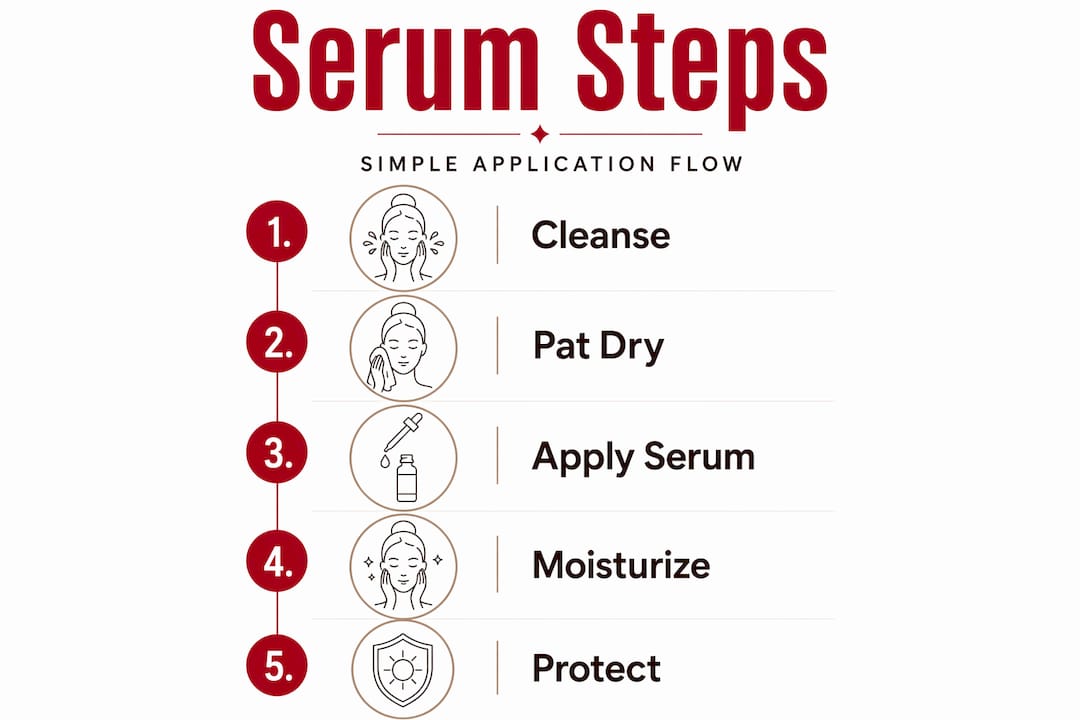
Getting the order right matters more than most people realize. Serums should be applied after cleansing and toning but before moisturizer. This positioning allows the concentrated actives to reach the skin directly, and then the moisturizer seals everything in.
Here’s a step-by-step routine:
- Cleanse your face and pat dry. Residual dirt or oil acts as a barrier that reduces serum absorption.
- Apply your toner if you use one and allow it to absorb fully before moving on.
- Dispense 2 to 4 drops of serum into your palm. More product does not mean more results.
- Press the serum gently into your skin using your fingertips. Work from the center of the face outward. Avoid rubbing.
- Wait 60 seconds before applying moisturizer so the serum can begin absorbing properly.
- Follow with your moisturizer to lock in the actives and prevent moisture loss.
- Apply SPF in the morning if you are using a vitamin C or AHA-based serum, since these ingredients increase sun sensitivity.
One of the most common mistakes is using too much. Applying too much serum can actually work against you, causing congestion, irritation, or a greasy finish that prevents your moisturizer from adhering properly. Most serums are effective in a pea-sized amount or a few drops.
Pro Tip: If you use two serums, apply the thinner, water-based one first and the richer formula second. Never mix serums together in your palm and apply at once. That changes how each formula behaves on your skin.
Choosing the right serum for your skin type
The best serum for your face is the one that targets your specific concern. Not every serum works for every person, and using the wrong formulation can cause breakouts, irritation, or no visible change at all. Oily skin benefits from niacinamide and salicylic acid, while dry skin typically responds better to hyaluronic acid and ceramide-rich options.
Here’s a quick reference by skin type and concern:
- Dry skin: Look for hyaluronic acid, ceramides, or glycerin to reinforce the moisture barrier. A protein lift serum can also support texture and elasticity.
- Oily or acne-prone skin: Niacinamide, salicylic acid, and zinc are your best options. Avoid heavy oil-based serums that can clog pores.
- Sensitive skin: Go fragrance-free and focus on calming ingredients like centella asiatica, oat extract, or low-concentration niacinamide.
- Aging or mature skin: Peptides, retinol, and vitamin C work well together across a day and night routine. An anti-aging wrinkle serum formulated with collagen-supporting actives is worth exploring.
- Dull or uneven skin tone: Vitamin C, kojic acid, and alpha arbutin address pigmentation and restore radiance. Check out natural brightening serums if you prefer plant-based options.
| Skin type | Recommended ingredients | Ingredients to avoid |
|---|---|---|
| Dry | Hyaluronic acid, ceramides, glycerin | High-alcohol formulas |
| Oily/acne-prone | Niacinamide, salicylic acid, zinc | Heavy oils, comedogenic actives |
| Sensitive | Centella asiatica, oat extract, aloe | Fragrance, high-strength retinol |
| Aging | Retinol, peptides, vitamin C | Harsh exfoliants without guidance |
| Dull/uneven | Vitamin C, kojic acid, arbutin | None in particular, test slowly |
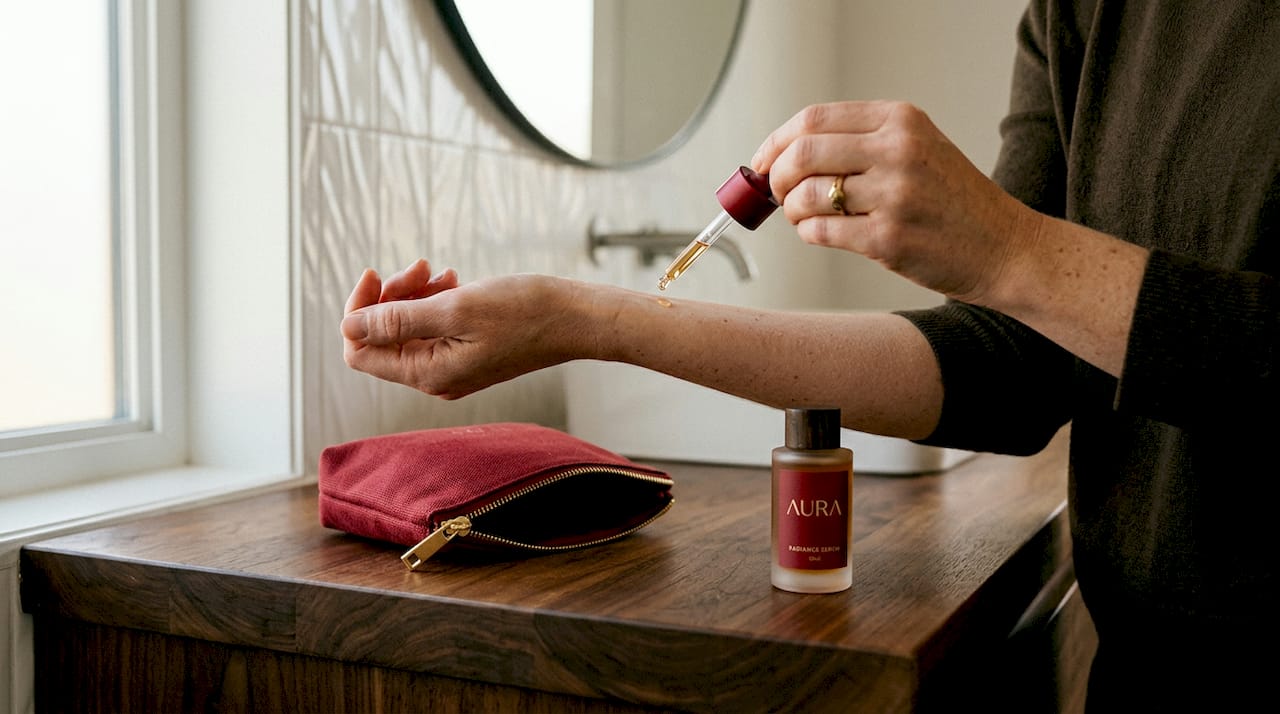
Always patch test a new serum before applying it to your full face. Apply a small amount to the inside of your wrist or behind your ear for 24 to 48 hours. If no reaction occurs, introduce the serum into your routine gradually, starting every other night.
Common myths and questions about serums
Serums have generated more confusion in skincare than almost any other product category. Here are the most common misunderstandings, addressed directly.
- “Serums replace moisturizers.” They don’t. Serums treat specific issues but do not provide the barrier protection or sustained hydration that a moisturizer delivers.
- “They work overnight.” Patience is non-negotiable. Regular serum use over several weeks produces visible improvement in skin texture and tone, not days.
- “More serum means faster results.” More product overwhelms the skin and can trigger sensitivity. A few drops are enough.
- “Expensive serums are always better.” Ingredient quality and formulation matter more than price. Read the ingredients list, not the marketing language.
“Serums are not all-purpose products. They are designed to complement your routine by addressing problems that moisturizers alone cannot fix.” Harvard Health
One note worth including: if you’ve come across the term “serum” in a medical or biology context, blood serum) refers to the fluid portion of blood without clotting factors. It has absolutely nothing to do with skincare. The shared name is a coincidence rooted in the Latin word for fluid.
Storage matters too. Most serums degrade when exposed to light and air. Keep them in a cool, dry place with the cap fully closed. Vitamin C serums in particular oxidize quickly once opened.
My honest take on serums after years in beauty
I’ll be direct: serums are the most skipped and most misunderstood step in the average person’s skincare routine. I’ve seen people spend a lot on a moisturizer loaded with basic ingredients while completely ignoring the step where the real targeted work happens.
What I’ve learned is that serums do one thing exceptionally well when you let them. The mistake I see most often is using a serum inconsistently, giving it two weeks, seeing no change, and abandoning it. Skin cell turnover takes four to six weeks at minimum. You need to be patient in a way that our culture does not encourage.
My personal bias: niacinamide and hyaluronic acid serums are the most universally useful because they address two of the most common issues, excess oil and dehydration, without being aggressive. If someone tells me they’ve never used a serum before, those are where I’d tell them to start. Skip the trendy serums with fifteen active ingredients in one bottle. Simpler formulas, used consistently, beat complicated cocktails applied once a week.
The role of serums in skincare is to do what nothing else in your routine can: deliver precise, high-concentration treatment to specific layers of skin. Once you see that clearly, the rest of your routine starts making more sense around it.
— Gloria
Serums that actually work, from a brand you can trust
Knowing what a serum does is the first step. Finding formulas that actually deliver is the next one. Didisbeautycenter carries a range of targeted serums built on natural, vegan ingredients, designed for real results without harsh chemicals or unnecessary fillers.

If you want a solid place to start, the Daily Essential Bundle pairs core serums with complementary products in a thoughtfully curated routine. For those who want a more complete system from morning to night, the Daily Routine Bundle builds out your full regimen with serums, cleansers, and moisturizers that work together. Didisbeautycenter makes it straightforward to choose products suited to your skin goals, and their team is available to help you figure out where to start.
FAQ
What does a serum actually do for your skin?
A serum delivers concentrated active ingredients deep into the skin to target specific concerns like dark spots, fine lines, or dehydration. Unlike a moisturizer, it is formulated to treat rather than simply protect or hydrate.
Is a serum the same as a moisturizer?
No. Serums are not moisturizers and the two serve different functions. A serum treats specific skin concerns while a moisturizer provides barrier protection and seals in hydration. You typically need both.
How long does it take for a serum to work?
Most serums require consistent use over four to eight weeks before visible changes appear. Serums are not instant fixes, and skipping applications slows any progress significantly.
Can I use more than one serum at a time?
Yes, but with care. Apply the thinner formula first and allow it to absorb before adding the second. Avoid layering actives that conflict, like vitamin C and retinol, at the same time of day.
How do I know which serum is right for my skin type?
Match the serum to your primary concern. Oily or acne-prone skin does well with niacinamide and salicylic acid. Dry skin benefits from hyaluronic acid. Dull or uneven skin responds to vitamin C. Patch testing before full application is always worth the extra step.
Discourse (0)