


TL;DR:
- The skin barrier is a dynamic, lipid-rich system that protects against environmental damage and maintains hydration.
- Damage from harsh cleansers, over-exfoliation, and pollution weakens the barrier, leading to dryness and sensitivity.
- Supporting barrier repair involves gentle routines, barrier-supporting ingredients, sun protection, and patience.
Moisturized skin and healthy skin are not the same thing. You can apply layers of lotion every single day and still experience redness, sensitivity, and breakouts if the real problem is a damaged skin barrier. Most skincare advice focuses on what goes onto your skin, but the more important question is whether your skin can actually protect itself from the outside world. This article breaks down exactly what the skin barrier is, how it works at a structural level, how scientists actually measure its health, and what you can do today to keep it strong with natural and vegan-friendly choices.
Table of Contents
- What exactly is the skin barrier?
- How the skin barrier works: The ‘brick and mortar’ model
- How experts measure skin barrier health
- Signs of a compromised skin barrier (and what makes it worse)
- Supporting your skin barrier: Natural strategies that work
- Our take: Why true skin barrier care is simpler (and smarter) than you think
- Strengthen your skin barrier with the right products
- Frequently asked questions
Key Takeaways
| Point | Details |
|---|---|
| Skin barrier definition | The skin barrier is your outermost skin layer that controls moisture and protects from harm. |
| Brick-and-mortar model | Healthy skin barrier relies on corneocytes and lipids, working like bricks and mortar to lock in hydration and shield you. |
| Scientific measurement | Experts assess barrier health by measuring transepidermal water loss (TEWL) across age groups. |
| Damage signals | Redness, flakiness, and persistent irritation often point to a compromised barrier. |
| Natural care | Simple, gentle, and natural routines help support and repair your skin barrier over time. |
What exactly is the skin barrier?
The skin barrier is not just a surface. It is an active, living system that sits at the outermost layer of your skin, called the epidermis. More specifically, the skin barrier lives in the stratum corneum, which is the very top layer of the epidermis made up of flattened, dead skin cells packed tightly together. These cells are surrounded by a carefully organized mixture of lipids (fats) that create a seal, preventing water from leaving your skin and stopping harmful substances from getting in.
The skin barrier provides selective permeability and helps maintain skin homeostasis, which means it regulates everything from moisture levels to immune responses right at the surface. It is not passive. It constantly adapts to your environment, your health, and the products you put on it.
Here is what your skin barrier is responsible for:
- Keeping moisture inside the skin so cells can function normally
- Blocking out bacteria, viruses, fungi, and environmental pollutants
- Filtering UV radiation to reduce cellular damage
- Regulating the skin’s immune response to irritants
- Maintaining a slightly acidic pH (around 4.5 to 5.5) that discourages harmful microbes
Clinically, skin barrier function protects against pathogens, chemicals, UV radiation, and also regulates water movement in and out of the skin. When this function is working properly, your skin looks calm, feels comfortable, and recovers quickly from minor stressors.
“The stratum corneum is not inert dead tissue but a dynamic, metabolically active membrane responsible for homeostatic regulation of the entire skin organ.”
Understanding this shifts how you think about skincare entirely. It is less about adding ingredients and more about protecting an existing system.
How the skin barrier works: The ‘brick and mortar’ model
Visualizing the skin barrier becomes much easier with one analogy. The stratum corneum has a ‘bricks and mortar’ organization: the corneocytes (flattened, dead skin cells) are the bricks, and the intercellular lipids filling the spaces between them are the mortar. That lipid mortar is made primarily of ceramides, cholesterol, and fatty acids, and each one plays a specific role in keeping the structure tight and effective.
When the mortar is intact, water stays in and irritants stay out. When the mortar is depleted or disrupted, gaps form. Water escapes, and things that do not belong in your skin can get through. That is when you start experiencing sensitivity, dryness, and inflammation.
Here is a direct comparison between a healthy and compromised skin barrier:
| Characteristic | Healthy skin barrier | Compromised skin barrier |
|---|---|---|
| Moisture retention | High | Low, leads to dryness |
| Sensitivity to irritants | Low | High, reacts easily |
| Surface texture | Smooth, even | Rough, flaky, or tight |
| Healing speed | Fast | Slow |
| pH level | 4.5 to 5.5 (slightly acidic) | Disrupted, often more alkaline |
| Appearance | Calm, even-toned | Red, blotchy, or dull |
The lipid mortar is surprisingly easy to damage. Harsh cleansers strip these fats from your skin. Long, hot showers dissolve them. Some popular exfoliating acids, used too frequently, literally break down the outer layers faster than the skin can rebuild them.
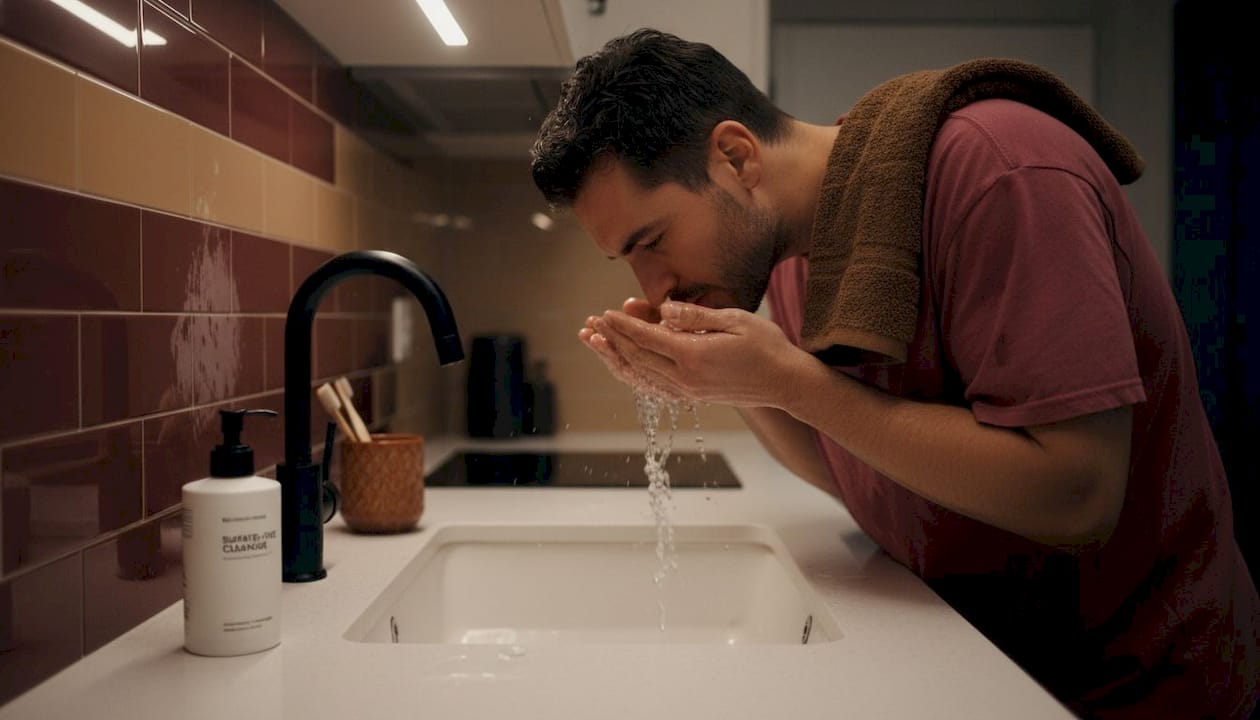
Pro Tip: Look for a pH-balanced, sulfate-free cleanser. Traditional soaps typically sit at a pH of 9 to 10, which is far too alkaline for your skin’s natural environment. This can disturb the lipid mortar every time you wash your face.
Supporting your skin with natural skincare routines that prioritize gentle cleansing and lipid-replenishing moisturizers is one of the best investments you can make for long-term skin health.
How experts measure skin barrier health
You might feel when your skin is off, but how do scientists confirm it? The gold standard measurement is called TEWL, which stands for transepidermal water loss. It measures the rate at which water vapor escapes through the skin to the surrounding air. A high TEWL reading means the skin is losing water quickly, which signals a compromised barrier. A low TEWL reading means the barrier is holding moisture in effectively.
TEWL reflects water vapor diffusion and is notably higher and recovers more slowly in aged skin compared to younger skin. This explains why mature skin often feels drier and takes longer to bounce back from irritation or environmental exposure.
Here are typical TEWL ranges used as clinical benchmarks:
| Skin type/age group | Typical TEWL (g/m²/h) | Recovery after disruption |
|---|---|---|
| Young adult (20s to 30s) | 5 to 10 | Fast (hours) |
| Middle-aged (40s to 50s) | 10 to 15 | Moderate (1 to 2 days) |
| Older adult (60s+) | 15 to 20+ | Slow (several days) |
| Actively damaged barrier | 20 or higher | Varies significantly |
Here is how researchers assess skin barrier health in a clinical setting:
- Baseline TEWL measurement using a probe device placed lightly on the skin surface
- Controlled disruption (such as tape stripping) to test how the barrier responds under stress
- Post-disruption recovery tracking to measure how quickly the barrier rebuilds
- Corneometer readings to assess hydration levels in the stratum corneum
- pH measurements to check surface acidity, since alkalinity signals barrier disruption
You do not have access to clinical instruments at home, but you can pick up on your own barrier signals. If your skin feels tight within 20 to 30 minutes of cleansing, stings when you apply products that never used to bother you, or reacts to climate changes more than it used to, your TEWL is likely elevated.
Incorporating vegan skincare tips into your daily practice can help you track how your skin responds over time and adjust your routine before real damage sets in.
Signs of a compromised skin barrier (and what makes it worse)
Knowing how experts measure the skin barrier, let’s break down the real-life signs your skin’s defenses may be down, and what makes it worse.
Your skin gives clear signals when the barrier is struggling. Watch for these:
- Persistent dryness that does not respond to moisturizer
- Redness or flushing that appears without obvious cause
- Flakiness or rough patches, especially around the cheeks, nose, or forehead
- Increased sensitivity to products you used to tolerate fine
- Stinging or burning when applying toners, serums, or even water
- Slow-healing blemishes or skin that marks easily after minor contact
- Dullness and a general loss of that “lit from within” quality
What is important to understand is that barrier integrity is not just about feeling ‘dry’. It is measurable and dynamic. The skin barrier shifts based on season, stress levels, hormonal changes, diet, sleep, and even the water quality in your home.
“Barrier function changes in response to both external environmental stressors and internal physiological shifts, making it an ongoing concern rather than a one-time fix.”
Some of the most common barrier disruptors people do not expect include:
- Over-exfoliation with AHAs, BHAs, or physical scrubs more than two or three times per week
- Fragrance in skincare, including natural essential oils, which can be irritating even when the formula is otherwise clean
- Alcohol-heavy toners, which feel refreshing but actually dry out and thin the lipid layer
- Environmental pollution, including particulate matter that sits on the skin and triggers oxidative stress
- Extreme temperature changes, such as going from very cold outdoor air into centrally heated spaces repeatedly
Pro Tip: If your skin is reactive, pause all active ingredients (retinoids, acids, vitamin C) for two weeks and rebuild with just a gentle cleanser, a barrier-supportive moisturizer, and SPF. This “skin fast” approach gives the stratum corneum time to repair itself without added chemical stress.
Learning the right approach to building a skincare routine that avoids these disruptors is where lasting improvement begins.
Supporting your skin barrier: Natural strategies that work
Identifying damage is only half the story. Here is how you can support your skin barrier, naturally and effectively.
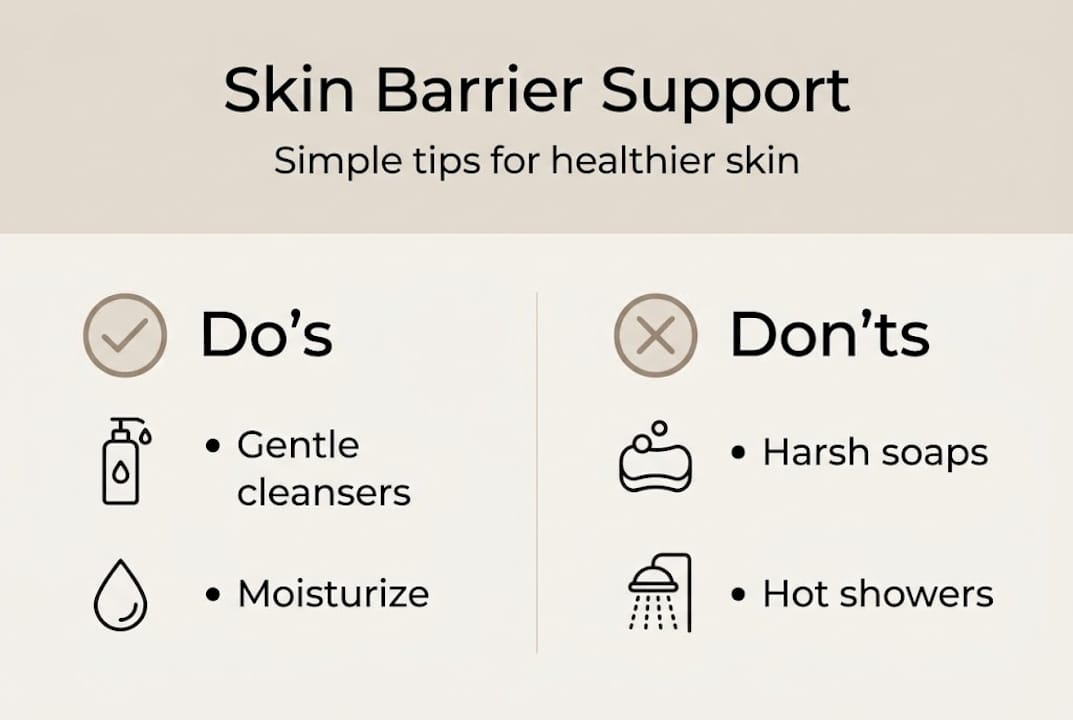
The good news is that the skin barrier is designed to repair itself. Your stratum corneum constantly cycles through new cells and rebuilds its lipid matrix. Your job is to stop disrupting it long enough for those natural processes to work, and to give it the building blocks it needs.
Here are the core habits that make the biggest difference:
- Cleanse gently, once or twice daily. Use a low-pH, fragrance-free cleanser that does not foam aggressively. High-lather cleansers are almost always too stripping.
- Apply moisturizer immediately after cleansing. Within two minutes of washing your face, your skin begins losing the moisture you just introduced. A good moisturizer locks that in.
- Use sun protection every morning. UV radiation degrades the lipid layer and accelerates barrier aging. SPF 30 or higher, daily, is non-negotiable.
- Incorporate ceramides, fatty acids, and cholesterol. These are the three key lipids that make up the mortar in your barrier. Look for products that contain them, ideally in a 3:1:1 ratio as found in healthy skin.
- Avoid over-exfoliating. Once or twice a week is the maximum for most skin types. If your skin is already compromised, stop exfoliating entirely until it recovers.
- Prioritize sleep and manage stress. Cortisol, the stress hormone, actively impairs barrier repair. Consistent sleep supports the skin’s overnight regeneration cycle.
The stratum corneum’s lipid organization is central to barrier function, and water content together with self-repair mechanisms are what determine how quickly and effectively the barrier comes back after damage. Feeding that repair process with the right ingredients speeds recovery significantly.
Pro Tip: When reading an ingredient list, look for terms like “ceramide NP,” “ceramide AP,” “phytosphingosine,” “linoleic acid,” or “beta-glucan.” These are scientifically recognized barrier-supporting ingredients. Products with plant-based oils rich in linoleic acid (such as rosehip, hemp seed, or evening primrose oil) are especially beneficial for vegan routines.
Exploring eco-friendly skincare types gives you a broader map for choosing products that align with both barrier health and conscious beauty values.
Our take: Why true skin barrier care is simpler (and smarter) than you think
Here is something the skincare industry does not want you to think about too hard: most barrier damage is caused by skincare itself.
Every few months, a new “must-have” ingredient takes over social media. Snail mucin, slugging, skin cycling, triple-acid peels, and retinol stacking are all popular, but few conversations acknowledge that many people using these trends are actively disrupting the very barrier they are trying to improve. We have seen it repeatedly when customers come to us after months of following complex routines, only to end up with more sensitivity, more reactivity, and more frustration than when they started.
The truth is, the skin barrier thrives on consistency and simplicity. A gentle cleanser, a moisturizer that replenishes your lipid layer, and daily sun protection will outperform a 12-step routine built around trendy actives in nearly every case. The barrier does not need dozens of ingredients. It needs space to do its job.
What we have found works best for people restoring their barrier is a focused, minimal approach for at least four to six weeks before adding anything else back in. No active serums, no exfoliants, just the basics done well. The transformation is often dramatic, and it confirms something we believe deeply: gentle, natural routines consistently outperform aggressive treatments for long-term skin health.
We also notice that people who commit to skincare routines for glow over time, rather than chasing quick fixes, end up with the most visibly healthy skin. Barrier health is a long game. It rewards patience and consistency far more than it rewards spending money on trending products.
The skin barrier has been doing its job for your entire life. Give it clean ingredients, a gentle touch, and the right support, and it will keep doing that job beautifully.
Strengthen your skin barrier with the right products
Ready to put everything you have learned into daily practice? The right products make this easier than you think.
At Didis Beauty Center, we design with the skin barrier in mind. Every formula we offer is built around natural, vegan-friendly ingredients that support rather than strip your skin’s protective system. If you are looking for a structured place to start, the Daily Essential Bundle brings together the foundational products your barrier needs, gentle cleansing, moisture replenishment, and protective care. For nighttime recovery, the Detox Nightwear Face Cream works while you sleep to support lipid repair and calm any inflammation built up during the day. Clean formulas, real results, and a barrier that finally gets what it needs.
Frequently asked questions
What causes a weak skin barrier?
Skin barrier is disturbed by chemicals, mechanical injury, and aging, along with everyday factors like harsh cleansers, over-exfoliation, environmental pollution, and chronic stress. Certain skin conditions such as eczema and psoriasis also structurally weaken the barrier.
How can I quickly tell if my skin barrier is damaged?
Impaired barrier function leads to measurable dryness and sensitivity, so watch for redness, stinging when applying products, persistent flakiness, and a general increase in skin reactivity. If products that once worked fine now irritate your skin, that is a strong signal.
What is transepidermal water loss (TEWL)?
TEWL is a key method researchers use to assess skin barrier function by measuring water vapor escaping from the skin’s surface. Higher TEWL values indicate that the barrier is not retaining moisture effectively.
Do natural and vegan products help the skin barrier?
Yes, especially when they contain plant-based lipids that mirror your skin’s own natural fats. Natural lipids and moisture restoration support self-repair in the stratum corneum, and plant oils rich in ceramide precursors or linoleic acid are particularly effective for rebuilding a compromised barrier.
Discourse (0)