


Choosing private label skincare can cut your brand’s time to market by up to 50%, a game changer for small beauty businesses. Private label means you buy ready-made, tested skincare formulations from manufacturers and rebrand them under your own name, bypassing lengthy product development. This guide walks you through understanding private label skincare, selecting suppliers offering natural and vegan formulations, verifying certifications, and launching your brand confidently.
Table of Contents
- Understanding Private Label Skincare: Definition & Mechanism
- Why Natural and Vegan Formulations Matter in Private Label Skincare
- How Private Label Partnerships Work: Selecting Your Supplier
- Common Misconceptions and Pitfalls in Private Label Skincare
- Comparing Private Label Vs Custom Formulation for Small Beauty Brands
- Practical Guide: Launching Your Private Label Skincare Brand
- Summary and Next Steps: Empowering Your Brand Launch
- Launch Natural, Vegan Skincare With Didis Beauty Center
Key Takeaways
| Point | Details |
|---|---|
| Time and Cost Savings | Private label reduces time-to-market by 50% and R&D costs by 70% compared to custom formulation. |
| Natural and Vegan Demand | Consumer preference for natural and vegan skincare is rising, boosting brand credibility and trust. |
| Certification Verification | Always confirm supplier certifications and ingredient transparency to avoid greenwashing claims. |
| Supplier Selection | Careful evaluation of suppliers ensures alignment with brand values, compliance, and quality standards. |
| Ideal for Small Businesses | Private label offers fast, affordable market entry with proven formulations perfect for startups. |
Understanding Private Label Skincare: Definition & Mechanism
Private label skincare means purchasing pre-formulated, fully tested products from manufacturers and branding them under your own label. Instead of spending months developing formulations from scratch, you select ready-made products that align with your brand vision. Private label skincare reduces time-to-market by up to 50% and R&D costs by up to 70%, making it ideal for small beauty brands with limited budgets.
Here’s how the process works. Suppliers offer catalogs of fixed formulations ranging from cleansers to serums. You choose products that fit your brand values, then customize the packaging, labels, and branding elements. The supplier handles manufacturing, quality testing, and often fulfillment, while you focus on marketing and customer relationships.
Typical benefits include:
- Proven formulations already tested for safety and efficacy
- Lower upfront investment compared to custom product development
- Faster launch timelines allowing quicker revenue generation
- Access to professional manufacturing without building your own facility
Small beauty business owners gain a significant advantage because private label eliminates the need for in-house chemists, labs, or lengthy trial periods. You leverage the supplier’s expertise and infrastructure, freeing resources for branding and sales. For entrepreneurs seeking private label skincare solutions, this model provides a clear path to market entry without sacrificing product quality.
Understanding this mechanism clarifies why private label suits startups. You retain control over brand identity and customer experience while outsourcing the complex manufacturing process. This partnership structure allows small brands to compete with larger companies by offering quality products at competitive prices.
Why Natural and Vegan Formulations Matter in Private Label Skincare
Consumer demand for natural and vegan skincare has surged in recent years. Shoppers increasingly seek products free from synthetic chemicals, animal-derived ingredients, and harmful additives. Brands offering certified natural and vegan formulations build stronger trust and loyalty, differentiating themselves in crowded markets.
Natural and vegan certifications provide tangible proof of your brand’s claims. Certifications from recognized bodies like COSMOS, Ecocert, or Vegan Society signal transparency and quality. These labels reassure customers that your products meet strict ingredient and ethical standards, reducing skepticism about greenwashing.
Key reasons natural and vegan matter:
- Growing health consciousness drives preference for clean, safe ingredients
- Ethical consumers avoid animal testing and animal-derived components
- Eco-friendly packaging and sustainable sourcing enhance brand reputation
- Premium pricing opportunities exist for certified natural and vegan products
Pro Tip: Always verify supplier certifications directly with the issuing body. Some suppliers make vague natural or vegan claims without proper documentation, leading to credibility issues and potential legal risks.
Sustainability extends beyond formulations. Choosing suppliers who prioritize recyclable packaging, carbon-neutral shipping, and ethical sourcing practices strengthens your brand story. Consumers value authenticity, and aligning your private label choices with these principles builds lasting connections. Explore how vegan skincare impacts eco-conscious beauty and understand the benefits of natural skincare to position your brand effectively.
Natural and vegan formulations also support differentiation. In a market flooded with similar products, certified ingredients and ethical claims provide clear competitive advantages. Small brands leveraging these attributes attract conscious consumers willing to pay premium prices for values-aligned products.
How Private Label Partnerships Work: Selecting Your Supplier
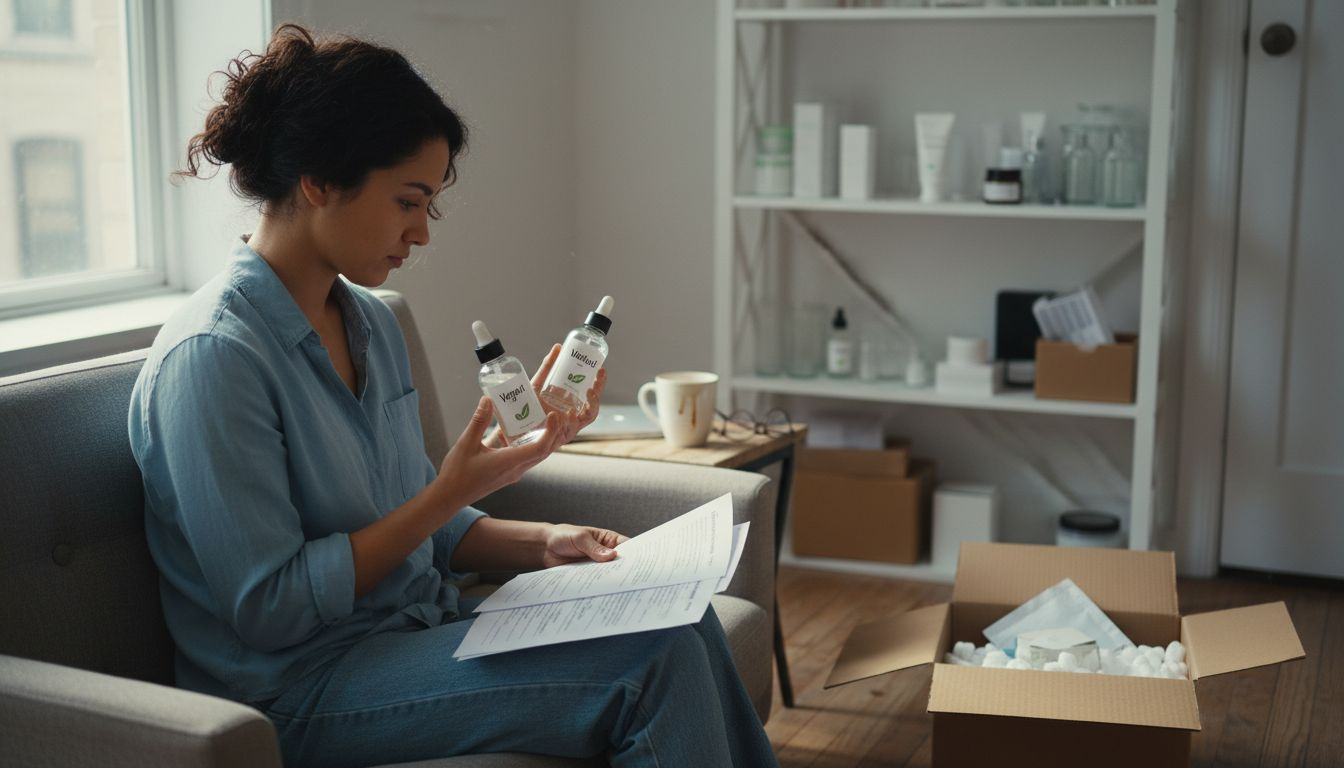
Private label partnerships involve ongoing collaboration between your brand and the manufacturer. Suppliers provide ready-made formulations with limited customization, typically restricted to packaging, labels, and branding elements. Understanding this relationship helps you set realistic expectations and avoid common pitfalls.
Most suppliers offer catalogs showcasing their product range. You review options, request samples, and evaluate formulations against your brand criteria. Once you select products, you provide branding specifications including label designs, packaging materials, and color schemes. The supplier produces your order according to these specifications.
Critical verification points include:
- Requesting complete ingredient lists and safety data sheets for transparency
- Confirming certifications by contacting issuing organizations directly
- Checking supplier reputation through reviews, references, and industry feedback
- Comparing minimum order quantities, unit costs, and lead times across suppliers
- Reviewing contract terms for exclusivity, pricing stability, and quality guarantees
Pro Tip: Request third-party certification documentation directly from certification bodies, not just from suppliers. This extra step prevents issues with fraudulent or expired certifications that could damage your brand reputation.
Formulation changes are usually minimal in private label arrangements. If you need specific ingredient adjustments, suppliers may accommodate small tweaks, but significant changes often require custom formulation services at higher costs. Select products closely matching your brand values upfront to avoid frustration later.
Evaluating suppliers requires diligence. Look for manufacturers with proven track records, clear communication, and transparent processes. Ask about their quality control measures, testing protocols, and compliance with regional regulations. Visiting facilities or scheduling video tours provides additional confidence. For guidance on finding wholesale skincare suppliers, research thoroughly and compare multiple options before committing.
Common Misconceptions and Pitfalls in Private Label Skincare
Several myths surround private label skincare, leading small business owners to make uninformed decisions. Debunking these misconceptions helps you approach supplier selection and product choice with realistic expectations.
Myth: Private label products are inherently low quality. Many private label manufacturers supply ingredients and formulations to major beauty brands. Quality depends on the supplier’s standards, not the business model. Reputable private label partners maintain rigorous testing and quality control comparable to custom formulation labs.
Myth: You can fully customize formulations in private label arrangements. Most private label suppliers offer fixed formulations with packaging customization only. Significant ingredient changes require custom formulation services, which involve higher costs and longer timelines. Clarify customization limits upfront to avoid disappointment.
Common pitfalls include:
- Skipping certification verification and accepting supplier claims at face value
- Ignoring contract terms related to exclusivity, reorder minimums, and pricing changes
- Failing to test samples thoroughly before placing large orders
- Overlooking regional compliance requirements for ingredients and labeling
- Underestimating lead times and inventory management challenges
Another misconception is that private label is entirely risk-free. While it reduces R&D risks, you still bear responsibility for branding, marketing, and regulatory compliance. Ensure your labels meet local requirements, including ingredient disclosure and safety warnings. Neglecting these details can result in fines or product recalls.
Awareness of these pitfalls empowers small business owners to ask the right questions and conduct thorough due diligence. Partnering with transparent suppliers and investing time in verification upfront prevents costly mistakes down the line.
Comparing Private Label vs Custom Formulation for Small Beauty Brands
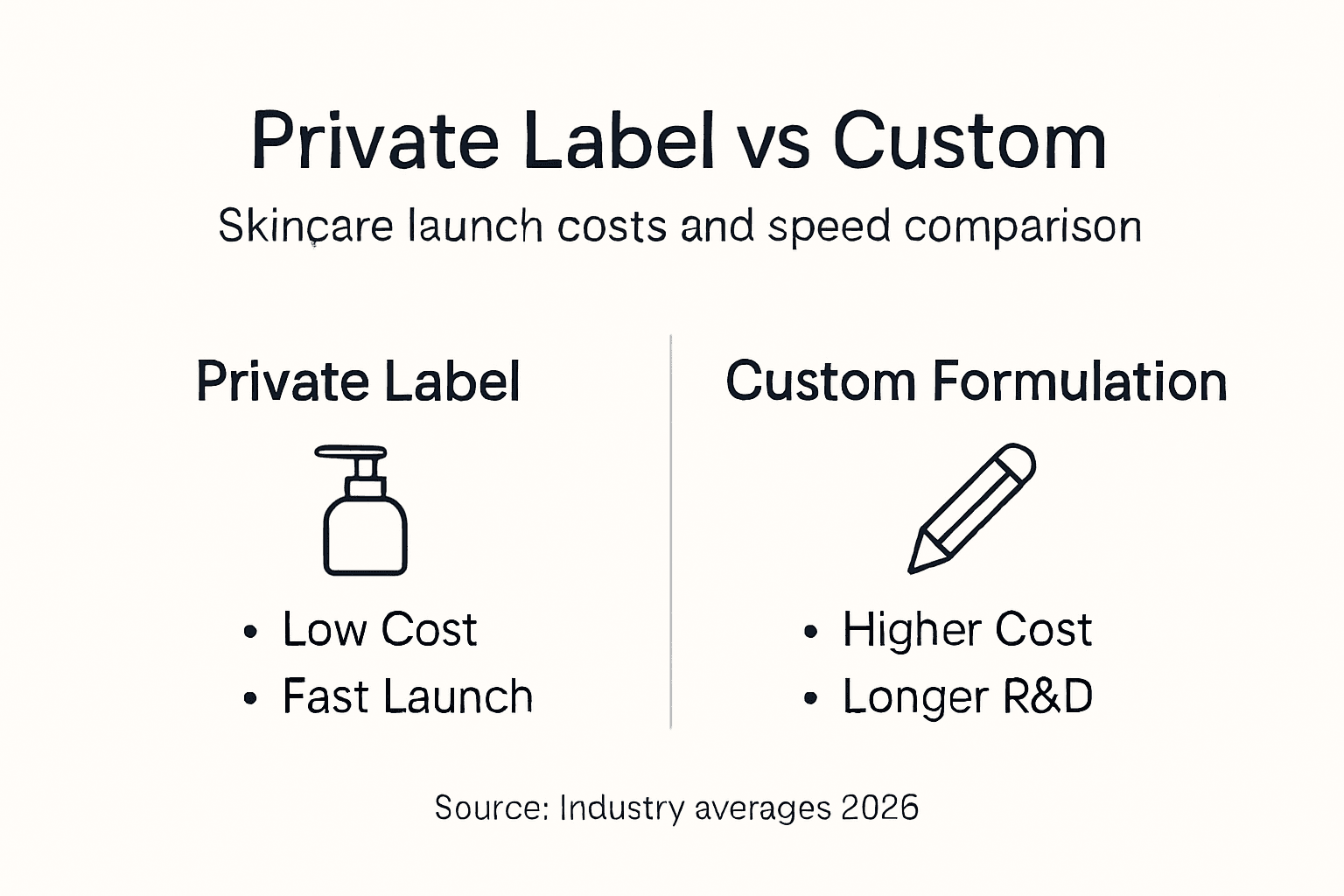
Choosing between private label and custom formulation depends on your brand goals, budget, and timeline. Both approaches have distinct advantages and trade-offs that small beauty brands must weigh carefully.
| Factor | Private Label | Custom Formulation |
|---|---|---|
| R&D Costs | Low (up to 70% savings) | High (requires lab work, testing) |
| Time to Market | Fast (up to 50% faster) | Slow (months to years) |
| Product Uniqueness | Limited (shared formulations) | High (exclusive recipes) |
| Ingredient Control | Minimal (fixed formulations) | Full (customize every ingredient) |
| Minimum Investment | $5,000 to $15,000 | $20,000 to $100,000+ |
| Ideal For | Startups needing quick entry | Established brands seeking differentiation |
Private label suits small brands prioritizing speed and affordability. You access proven formulations, launch quickly, and minimize financial risk. However, you sacrifice product uniqueness and ingredient control since formulations are shared with other brands.
Custom formulation offers complete creative control. You design unique products tailored to specific customer needs, creating strong differentiation. This path demands higher budgets, longer development cycles, and ongoing relationships with cosmetic chemists and labs.
Decision steps:
- Define your brand positioning and competitive strategy clearly
- Assess available budget and timeline constraints realistically
- Determine how critical product uniqueness is to your brand identity
- Evaluate your technical expertise and capacity to manage custom development
- Consider starting with private label and transitioning to custom as you grow
Many successful beauty brands begin with private label to test the market and generate revenue, then invest in custom formulations once they establish customer demand and cash flow. This hybrid approach balances risk and reward effectively.
Practical Guide: Launching Your Private Label Skincare Brand
Launching a private label skincare brand involves systematic steps to ensure product quality, regulatory compliance, and market readiness. Follow this practical guide to navigate the process confidently.
-
Research private label suppliers specializing in natural and vegan formulations. Review their product catalogs, certifications, and customer testimonials. Request samples to evaluate quality firsthand.
-
Verify ingredient lists and certifications rigorously. Contact certification bodies directly to confirm authenticity. Check ingredient safety databases to ensure compliance with regional regulations.
-
Evaluate costs, minimum order quantities, and customization options across multiple suppliers. Compare unit pricing, shipping terms, and payment structures. Negotiate where possible to optimize your budget.
-
Place initial orders with detailed specifications for labels, packaging, and branding elements. Provide high-resolution artwork and clear instructions to avoid production errors. Confirm delivery timelines and quality assurance processes.
-
Develop marketing materials emphasizing your natural and vegan attributes. Create compelling product descriptions, social media content, and email campaigns that highlight certifications and ethical sourcing. Build a brand story that resonates with conscious consumers.
Typical investment ranges from $5,000 to $15,000 for initial inventory, branding, and launch expenses. Time-to-market can be up to 50% faster than custom formulation, allowing quicker revenue generation. Maintain compliance by staying informed about labeling requirements, ingredient restrictions, and safety regulations in your target markets.
Building consumer trust requires transparency. Share your sourcing practices, certification details, and ingredient benefits openly. Engage with customers through social media, respond to questions promptly, and encourage reviews to build credibility. Starting small with a focused product line allows you to test demand and refine your offerings before scaling.
Summary and Next Steps: Empowering Your Brand Launch
Private label skincare delivers significant cost and time advantages for small beauty brands. Reducing R&D expenses by up to 70% and accelerating time-to-market by up to 50% enables startups to compete effectively without massive budgets.
Key takeaways:
- Private label offers proven formulations with lower risk and faster launch timelines
- Natural and vegan certifications build consumer trust and differentiate your brand
- Thorough verification of supplier certifications and ingredient transparency prevents costly mistakes
- Careful supplier selection ensures alignment with brand values and regulatory compliance
- Following systematic steps from research to launch supports confident market entry
Natural and vegan formulations meet rising consumer demand for ethical, sustainable beauty products. Prioritizing these attributes positions your brand favorably in competitive markets. Combine quality products with authentic brand storytelling to attract loyal customers willing to pay premium prices.
Leveraging private label skincare empowers small business owners to build impactful brands without the complexity of custom formulation. Focus your energy on branding, customer relationships, and market positioning while trusted suppliers handle manufacturing. This strategic approach maximizes your strengths and accelerates growth.
Launch Natural, Vegan Skincare with Didis Beauty Center
Ready to launch your natural, vegan skincare brand with confidence? Didis Beauty Center offers expert private label skincare solutions designed for small beauty entrepreneurs. We provide access to certified natural and vegan formulations, guiding you through supplier selection, certification verification, and branding resources.
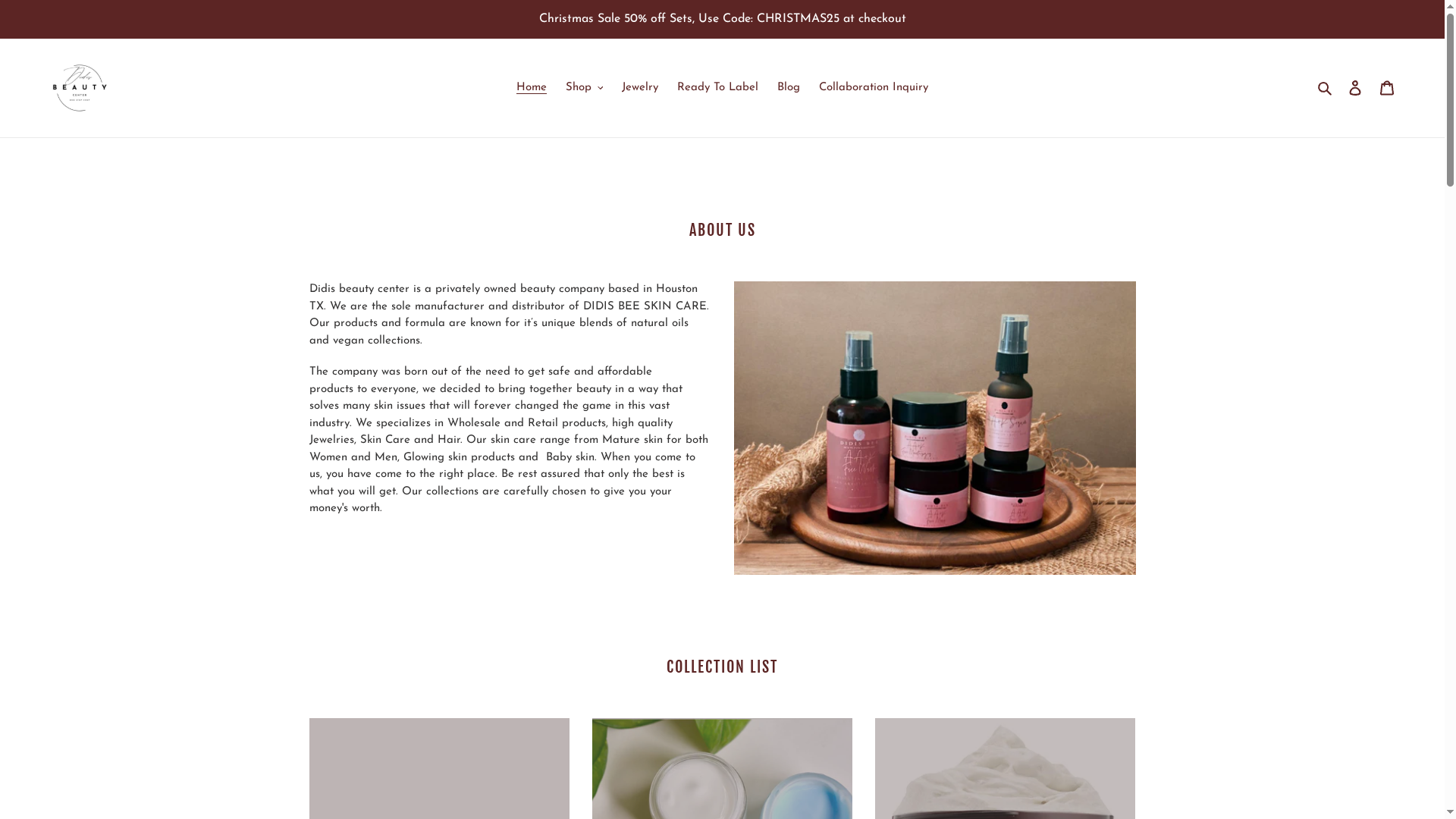
Our team simplifies the launch process, reducing risks and accelerating your market entry. Explore our natural skincare product bundles and discover how natural beauty branding creates lasting customer connections. Partner with us to turn your skincare vision into reality quickly and affordably.
Pro Tip: Partnering with an experienced provider like Didis Beauty Center eliminates guesswork and ensures your products meet quality and compliance standards from day one.
Frequently Asked Questions
What is the typical minimum order quantity for private label skincare?
Minimum order quantities vary by supplier but typically range from 100 to 500 units per product. Some suppliers offer lower minimums for startups, while others require higher volumes for better pricing. Always clarify MOQs before committing to ensure they align with your budget and inventory capacity.
How can I verify if a private label product is truly vegan and natural?
Request complete ingredient lists and certification documents from the supplier. Contact certification bodies like COSMOS, Ecocert, or Vegan Society directly to confirm authenticity. Review ingredient databases to check for hidden animal-derived components or synthetic additives.
Can I customize the ingredients in private label skincare products?
Customization is usually limited to packaging and branding in true private label arrangements. Minor formulation tweaks may be possible with some suppliers, but significant ingredient changes require custom formulation services at higher costs. Select products closely matching your needs upfront.
How long does it usually take to launch a private label skincare brand?
Launching a private label brand typically takes 2 to 4 months from supplier selection to product delivery. This timeline includes sampling, order placement, production, and shipping. Custom branding and packaging design may add extra weeks, but overall timelines are up to 50% faster than custom formulation.
What are the cost ranges for starting a private label skincare line?
Initial investments range from $5,000 to $15,000, covering product inventory, custom packaging, branding materials, and launch marketing. Costs vary based on product selection, order quantities, and packaging complexity. Starting with a focused product line minimizes upfront expenses while testing market demand.
Are private label products lower quality than custom formulations?
No, quality depends on the supplier’s standards, not the business model. Many reputable private label manufacturers supply formulations to major beauty brands and maintain rigorous testing protocols. Thorough supplier vetting ensures you access high-quality products comparable to custom formulations at lower costs.
Discourse (0)