


Your cleanser might be working against you. More than 60% of cleansers, including many labeled as natural, disrupt the skin’s pH and quietly sabotage your barrier health and hydration. If your skin feels tight after washing, breaks out despite a gentle routine, or stays dry no matter how much moisturizer you apply, pH imbalance could be the culprit. This guide breaks down exactly what pH-balanced skincare means, why it matters for natural and vegan routines, and how to build a routine that actually works with your skin instead of against it.
Table of Contents
- What does pH-balanced skincare mean?
- Why skin pH matters: impact on barrier, hydration, and breakouts
- How pH-balanced skincare is formulated and tested
- Nuances and myths: not all ‘pH balanced’ is equal
- pH-balanced skincare for natural and vegan routines
- Find your perfect pH-balanced routine at Didis Beauty Center
- Frequently asked questions
Key Takeaways
| Point | Details |
|---|---|
| Skin’s natural pH | Healthy skin prefers a slightly acidic pH between 4.5 and 5.5 for barrier strength. |
| Why pH matters | Using pH-balanced products protects hydration, supports the skin microbiome, and reduces irritation risk. |
| Watch for alkaline cleansers | Even natural and vegan soaps can raise skin pH and trigger dryness or breakouts. |
| Not all claims equal | ‘pH balanced’ on labels isn’t always regulated—look for pH info or opt for trusted natural brands. |
| Plant-powered buffers | Aloe, green tea, and plant hyaluronic acid help support pH naturally in vegan skincare routines. |
What does pH-balanced skincare mean?
PH stands for “potential of hydrogen” and measures how acidic or alkaline a substance is on a scale from 0 to 14. Pure water sits at 7 (neutral), while your skin naturally leans acidic. That slight acidity is not a flaw. It is a feature.
Your skin is covered by a thin, protective film called the acid mantle. This layer is made up of sebum, sweat, and natural moisturizing factors, and it acts as your first line of defense against bacteria, pollution, and moisture loss. The optimal skin pH is 4.5 to 5.5, a slightly acidic range that keeps this mantle intact and functioning.
The acid mantle does three critical things:
- Supports your skin barrier by keeping lipids (fats) between skin cells intact
- Regulates your skin microbiome by favoring beneficial bacteria over harmful ones
- Activates key enzymes that control how your skin sheds dead cells and retains moisture
When a product pushes your skin’s pH too high or too low, these functions break down. You get dryness, irritation, breakouts, or sensitivity, often without understanding why.
“pH balance in skincare is not just a marketing term. It is a measurable, functional property that directly affects how your skin behaves every single day.”
Here is a quick reference for where common products should land:
| Product type | Ideal pH range |
|---|---|
| Cleanser | 4.5 to 6.5 |
| Toner | 5.0 to 7.0 |
| Serum (actives) | 3.0 to 4.5 |
| Moisturizer | 5.0 to 7.0 |
| Skin surface (healthy) | 4.5 to 5.5 |
Understanding pH’s role in skincare is the first step toward building a routine that supports rather than stresses your skin. If you are starting fresh, a solid natural face care routine built around pH-conscious products is a great place to begin.
Why skin pH matters: impact on barrier, hydration, and breakouts
Now that you understand what pH balance means, let’s discover what actually happens when your skincare routine gets it right, or wrong.
When your skin’s pH climbs above 5.5, the acid mantle weakens. Enzymes that regulate skin cell turnover become overactive, stripping away the lipids that hold moisture in. The result is a compromised barrier that lets irritants in and lets water out. You feel it as tightness, flakiness, or that uncomfortable “squeaky clean” feeling after washing.
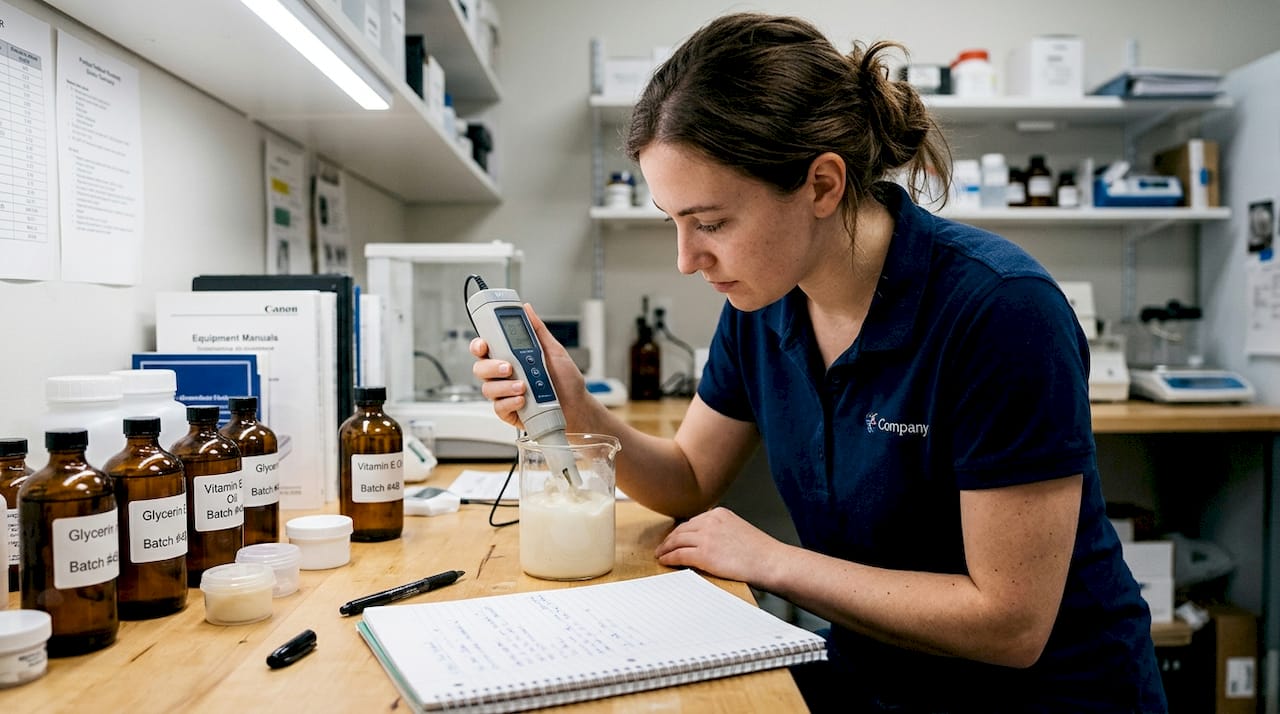
Acne-prone skin shows higher pH (above 5.5) compared to healthy controls at around 5.09, and alkaline cleansers can disrupt the barrier for at least 30 minutes after each use. That is a significant window of vulnerability, especially if you apply actives or serums right after cleansing.
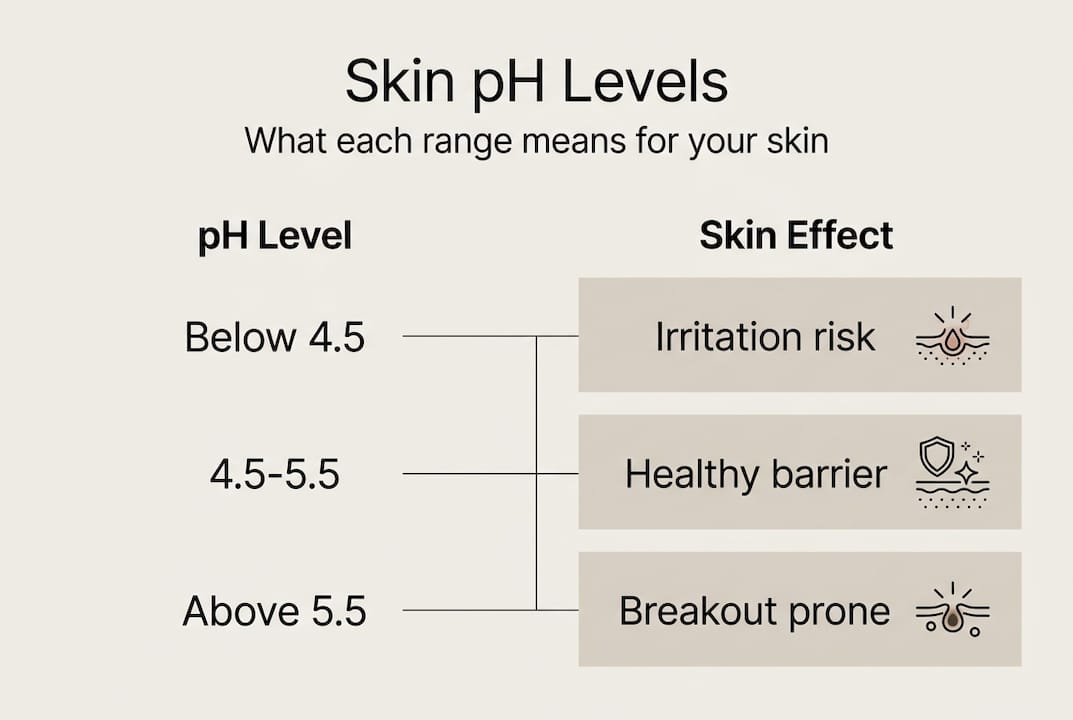
What happens at different pH levels:
| Skin pH level | What it means for your skin |
|---|---|
| Below 4.5 | Possible irritation, over-exfoliation, redness |
| 4.5 to 5.5 | Optimal: barrier intact, microbiome balanced |
| 5.5 to 6.5 | Mild disruption, early dryness or sensitivity |
| Above 6.5 | Barrier breakdown, acne risk, eczema flares |
A low pH environment also inhibits the growth of Cutibacterium acnes, the bacteria linked to breakouts. This is why skin pH and hydration are so closely connected. When pH is off, hydration suffers, and so does your skin’s ability to fight blemishes.
Even well-intentioned natural or vegan soaps can be the problem. Traditional bar soaps, including many plant-based ones, are made through saponification, a process that produces a pH of 9 to 10. That is far too alkaline for your acid mantle.
Pro Tip: After cleansing, apply a slightly acidic toner (pH 5.0 to 6.0) to help restore your skin’s surface pH before layering serums or moisturizer. This one step can make a noticeable difference in how your skin feels and responds. For more ways to protect your skin while staying eco-conscious, explore these eco-friendly skincare tips.
How pH-balanced skincare is formulated and tested
But how do brands ensure their products match your skin’s needs? Here is a look behind the label.
Formulating a pH-balanced product is not as simple as picking a nice ingredient list. Every formula needs to be tested, adjusted, and stabilized to land in the right range and stay there over time. Natural and vegan brands face extra challenges because plant-based ingredients can shift pH as they interact with each other.
Common pH adjusters and buffers used in clean formulations include:
- Citric acid (from citrus fruits): lowers pH and acts as a natural preservative
- Sodium citrate: pairs with citric acid to create a stable buffer system
- Lactic acid: gently acidifies while also hydrating
- Aloe vera: naturally sits at pH 4.5 to 5.5, making it an ideal base ingredient
- Sodium hydroxide (lye): used in tiny amounts to raise pH in overly acidic formulas
Formulators use buffers like citric acid and sodium citrate, as well as lactate systems, to keep products stable. Typical target ranges are pH 4.5 to 7 for cleansers and pH 5 to 7 for moisturizers.
Here is how a responsible brand tests and validates pH:
| Testing stage | Method used |
|---|---|
| Initial formulation | Digital pH meter (most accurate) |
| Batch production | Calibrated pH strips or meter |
| Stability testing | Repeated measurements over weeks/months |
| At-home check | Consumer pH strips (approximate) |
You can test products yourself at home using pH strips designed for cosmetics. Dip a strip into a small amount of product and compare the color to the chart. It is not lab-grade accuracy, but it gives you a useful ballpark. For a deeper look at pH setting of cosmetics, the science behind formulation is more accessible than you might think.
Choosing brands that are transparent about their formulation process is one of the lasting benefits of natural skincare that goes beyond just ingredients.
Nuances and myths: not all ‘pH balanced’ is equal
Even if a product claims to be balanced, all pH stories are not created equal. Let’s clear up what you really need to know.
The phrase “pH balanced” is not regulated by the FDA or most cosmetic authorities. Any brand can print it on a label without disclosing the actual pH value or proving it stays stable over time. That is a problem when you are trying to make informed choices.
Most commercial products sit at pH 6 to 6.5, not the ideal 4.5 to 5.75. Healthy skin can recover its pH quickly after mild disruption, but sensitive, dry, or acne-prone skin takes much longer to bounce back.
Here are the most common myths worth busting:
- Myth: Natural soaps are always gentle. Many plant-based bar soaps are highly alkaline (pH 9 to 10) due to the saponification process.
- Myth: Vegan means pH-safe. Vegan simply means no animal-derived ingredients. It says nothing about pH or barrier compatibility.
- Myth: If it feels soft, it must be balanced. Some alkaline products feel silky because they swell the outer skin layer temporarily, not because they are supporting your barrier.
- Myth: Your skin always self-corrects quickly. Healthy skin does recover fast. Compromised skin, including skin with eczema, rosacea, or chronic acne, may not.
“The skin’s ability to self-correct is real, but it is not a license to use harsh products. Repeated disruption adds up, and the barrier pays the price.”
Pro Tip: When evaluating a new product, look for brands that publish their pH range on the product page or are willing to share it when asked. Transparency here is a strong signal of quality formulation. For a broader view of how to navigate clean beauty claims, the inclusive vegan skincare guide covers what to look for and what to skip. The truth about pH-balanced skincare from dermatologists is also worth reading before you shop.
pH-balanced skincare for natural and vegan routines
So how can you apply all of this to your pursuit of a genuinely gentle, plant-powered routine?
Building a pH-supportive vegan routine starts with ingredient awareness. Not all plant-based ingredients are created equal when it comes to barrier support. Some are naturally acidic and buffer-friendly. Others can tip your skin in the wrong direction.
Aloe vera (pH 4.5 to 5.5), green tea, and plant-derived hyaluronic acid are ideal for barrier-friendly vegan routines. These ingredients work with your skin’s natural acidity rather than fighting it.
Other star ingredients to look for:
- Fermented hyaluronic acid: smaller molecules, deeper penetration, and naturally acidic
- Niacinamide: works best at pH 5 to 7 and helps strengthen the barrier
- Ceramides from vegan sources (like wheat or sweet potato): restore lipid layers without disrupting pH
- Green tea extract: antioxidant-rich and slightly acidic, making it a great toner base
- Lactic acid (low concentration): gently exfoliates while keeping pH in a skin-friendly range
For layering, apply products from lowest to highest pH. Start with your most acidic actives (like a vitamin C serum or AHA toner), then move to serums, and finish with your moisturizer. This order ensures each product works at its intended pH without neutralizing the next.
Pro Tip: If your skin feels stripped or tight after your routine, your cleanser is likely the problem. Swap to a gel or cream cleanser with a pH under 6.5 before changing anything else. Small adjustments to the first step often fix the whole routine. Explore must-have vegan skincare products to find clean options that are already formulated with barrier health in mind. You can also browse cruelty-free dupe brands for additional inspiration.
Find your perfect pH-balanced routine at Didis Beauty Center
Ready to put pH knowledge into action? Didis Beauty Center makes it easy to start or upgrade your balanced routine with products formulated specifically for natural and vegan skin care.
Every product in the Didis Beauty Center lineup is crafted with clean, vegan ingredients and formulated to support your skin’s natural barrier. The daily essential bundle is a great starting point, pairing a gentle cleanser with barrier-supportive hydration in one curated set. For nighttime recovery, the detox nightwear face cream works while you sleep to restore and calm skin that has been exposed to daily stressors. If you want a complete routine in one go, the daily routine bundle covers every step from cleanse to protect. Shop with confidence knowing each formula is designed to work with your skin, not against it.
Frequently asked questions
How do I know if a product is truly pH-balanced?
Not all products listing pH-balanced disclose their actual pH value. Check the label, ask the brand directly, or use pH test strips at home to verify a product falls within the 4.5 to 5.5 ideal range.
Is pH-balanced skincare important for everyone?
pH-balanced products are most essential for people with sensitive, acne-prone, or dry skin, but they are a safe and smart choice for all skin types. Individuals with barrier issues benefit most from consistent pH support, while healthy skin can tolerate a slightly broader range.
Can natural and vegan products be alkaline or harsh on skin?
Yes. Many natural soaps are alkaline due to the saponification process and can elevate your skin’s surface pH well above the healthy range. Always verify pH or choose brands that are transparent about their formulation.
How quickly does skin pH recover after using an alkaline product?
Healthy skin can return to its normal pH within about 30 minutes, but sensitive or compromised skin takes considerably longer. Soap-induced pH rise can last at least 30 minutes in most users, which is why what you apply immediately after cleansing matters.
Discourse (0)