


You’ve probably heard that facial cleansers strip your skin of natural oils, leaving it tight and dry. That’s a common misconception rooted in older formulations with harsh surfactants. Modern natural and vegan facial cleansers are designed to cleanse effectively without damaging your skin barrier or disrupting its delicate balance. This guide will walk you through what facial cleansers actually are, how they work, which types suit your skin, and how to choose formulations that align with eco-conscious beauty practices while delivering real results.
Table of Contents
- Key takeaways
- What is a facial cleanser? Definition and purpose
- How facial cleansers work: ingredients and skin chemistry
- Types of facial cleansers and their best uses
- Expert nuances and common mistakes in facial cleansing
- Discover natural and vegan facial cleansers at Didis Beauty Center
- Frequently asked questions
Key Takeaways
| Point | Details |
|---|---|
| Gentle cleansers protect barrier | Choosing cleansers that are gentle helps preserve the skin’s protective barrier and prevents dryness. |
| Mild surfactants pH 5.5 | Products with mild plant based surfactants and a pH around 5.5 better support the skin barrier than harsh conventional options. |
| Tailor by skin type | Your skin type and concerns determine whether gel cream or oil based cleansers will cleanse effectively without over drying. |
| Natural vegan cleansers work | Modern natural and vegan cleansers cleanse effectively without damaging the skin barrier or disrupting its balance. |
What is a facial cleanser? Definition and purpose
A facial cleanser is a skincare product designed to remove dirt, oil, makeup, pollutants, dead skin cells, and impurities from the facial skin without stripping natural oils or disrupting the skin barrier. This definition separates cleansers from harsh soaps or detergents that can damage your skin’s protective layer. The primary goal is to leave your face clean, balanced, and ready to absorb the rest of your skincare routine.
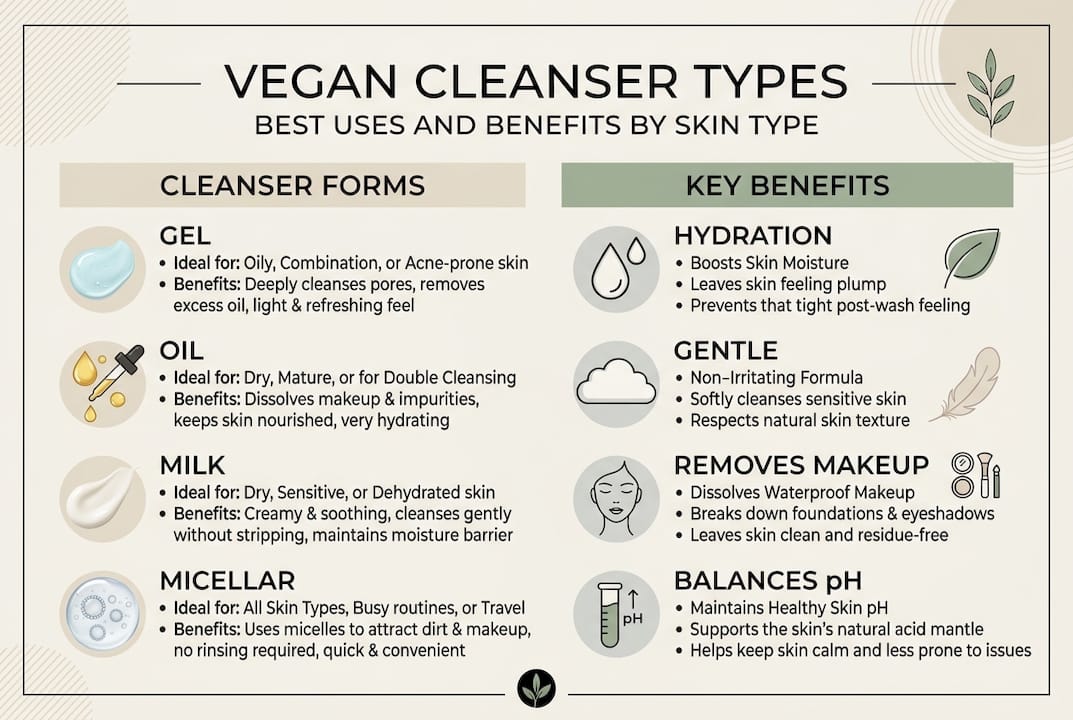
Facial cleansers come in multiple physical forms, each designed for different preferences and skin needs:
- Gels that create light lather and rinse clean
- Creams and milks that provide moisturizing cleanse
- Foams that offer airy, quick application
- Oils and balms that dissolve makeup and sunscreen
- Micellar waters that require no rinsing
The best cleanser removes surface debris, excess sebum, and environmental pollutants while maintaining your skin’s natural moisture and acid mantle. Your skin produces sebum for a reason, creating a protective barrier against bacteria and moisture loss. Stripping this completely triggers your skin to overproduce oil, creating a cycle of dryness and breakouts. Quality natural face care with vegan products focuses on balance rather than aggressive stripping.
Your cleanser choice depends on your skin type, concerns, and lifestyle factors. Oily skin benefits from gel formulations that control sebum without over-drying. Dry or sensitive skin needs cream-based cleansers with added emollients. If you wear heavy makeup or waterproof sunscreen, oil-based cleansers dissolve these products more effectively than water-based options. Understanding these distinctions helps you select formulations that work with your skin rather than against it.
Pro Tip: Check the ingredient list for surfactant type and pH information. Products listing mild plant-based surfactants and pH around 5.5 typically preserve your skin barrier better than conventional options.
How facial cleansers work: ingredients and skin chemistry
Surfactants are the active cleansing agents in facial cleansers. These molecules have both hydrophilic (water-loving) and lipophilic (oil-loving) ends, allowing them to bind to oils, dirt, and makeup on your skin surface. When you rinse, the surfactant carries away these impurities. Mechanics involve surfactants emulsifying oils and dirt for rinse-off, while emollients and humectants offset drying, with ideal pH around 5.5 to match your skin’s natural acidity.
Not all surfactants treat your skin equally. Harsh surfactants like SLS irritate skin, while mild ones like sodium cocoyl glutamate preserve barrier function. Sodium lauryl sulfate (SLS) and sodium laureth sulfate (SLES) create abundant foam but can strip protective lipids and trigger irritation. Natural and vegan cleansers typically use gentler alternatives:
- Sodium cocoyl glutamate derived from coconut and fermented sugar
- Decyl glucoside from corn and coconut
- Coco-betaine from coconut oil
- Sodium cocoyl isethionate from coconut fatty acids
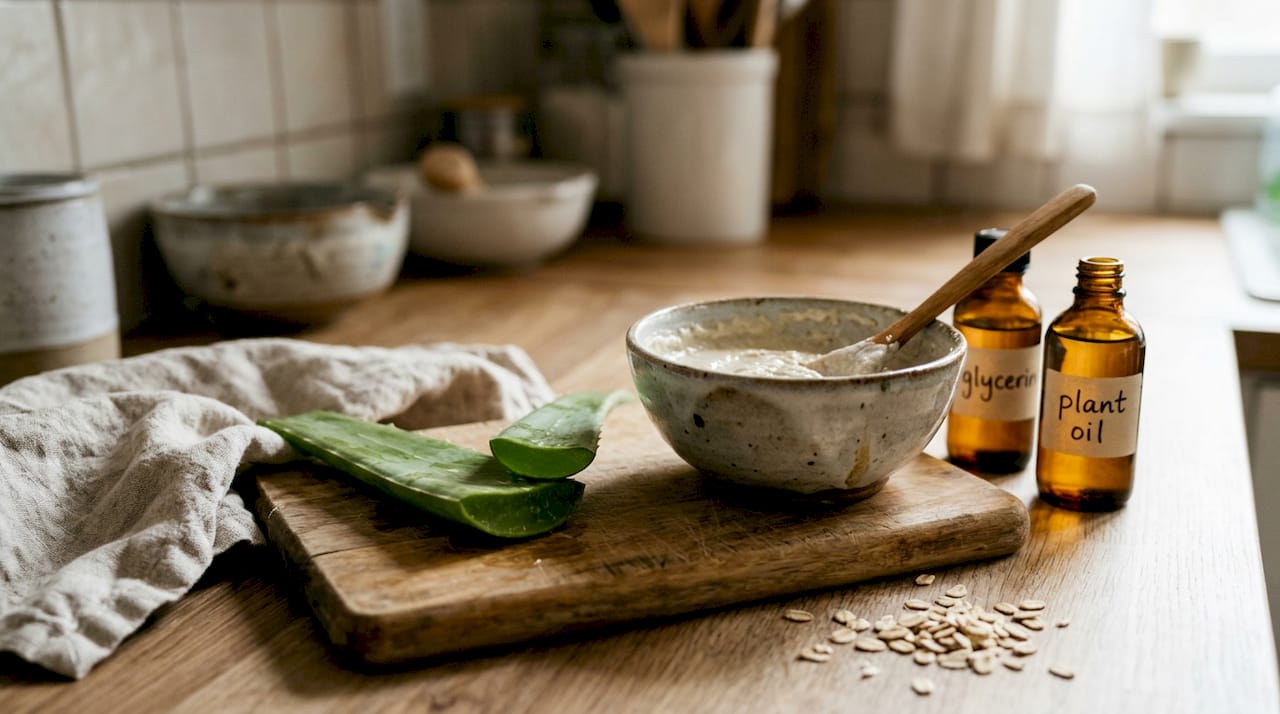
Emollients and humectants balance the drying effect of surfactants. Glycerin, hyaluronic acid, and plant oils help your skin retain moisture during cleansing. These ingredients prevent the tight, stripped feeling associated with harsh cleansers. Quality formulations layer these hydrating components with surfactants to maintain comfort.
Your skin’s acid mantle sits at a pH between 4.5 and 5.5, creating an environment where beneficial bacteria thrive and harmful microbes struggle. Alkaline cleansers (pH 8 or higher) disrupt this balance, potentially taking up to six hours for your skin to recover. During this window, your barrier function weakens and irritation risk increases. Choosing cleansers with pH close to your skin’s natural acidity protects your microbiome and maintains barrier integrity.
Over-cleansing strips essential lipids faster than your skin can replace them. This triggers a rebound effect where your sebaceous glands produce excess oil to compensate. You end up in a cycle of stripping and overproduction. Most people need cleansing twice daily, but sensitive or dry skin types may benefit from cleansing only at night and rinsing with water in the morning. Following a complete natural skincare routine steps approach ensures your cleansing integrates properly with other products.
Pro Tip: If your skin feels tight or dry within minutes of cleansing, your cleanser’s pH is likely too high or its surfactants too harsh. Switch to a gentler formulation with plant-based surfactants.
Types of facial cleansers and their best uses
Different cleanser formats deliver varying levels of cleansing power, hydration, and convenience. Gel and foaming cleansers suit oily or acne-prone skin, cream and milk cleansers work for dry or sensitive skin, oil and balm cleansers excel at makeup removal, and micellar cleansers offer no-rinse convenience. Understanding these categories helps you match formulation to your specific needs.
| Cleanser Type | Best For | Key Benefits | Vegan/Natural Options |
|---|---|---|---|
| Gel | Oily, combination, acne-prone | Controls sebum, lightweight, rinses clean | Widely available with plant surfactants |
| Foam | Normal to oily, quick cleansing | Fast application, thorough cleanse | Common in natural lines |
| Cream/Milk | Dry, sensitive, mature | Hydrating, gentle, barrier-protecting | Easy to formulate vegan |
| Oil/Balm | All types, heavy makeup | Dissolves waterproof products, nourishing | Plant oils make this naturally vegan |
| Micellar | Sensitive, travel, quick refresh | No-rinse, gentle, convenient | Simple formulations often vegan |
Gel cleansers create light lather and rinse away completely, making them ideal if you have oily or combination skin. They remove excess sebum without leaving residue. Natural versions use aloe vera gel as a base with plant-derived surfactants. Foam cleansers pump out pre-lathered product for quick application. They provide thorough cleansing but can be drying if formulated with harsh surfactants.
Cream and milk cleansers deliver hydration while cleansing. These work best for dry, sensitive, or mature skin that needs moisture retention. They typically contain more emollients and fewer aggressive surfactants. The creamy texture feels comforting and leaves skin soft rather than stripped. Many natural formulations use shea butter, coconut oil, or plant milks as bases.
Oil and balm cleansers excel at dissolving makeup, sunscreen, and sebum. The double cleansing method uses an oil-based cleanser first, then a water-based cleanser for heavy makeup removal. This two-step approach ensures complete cleansing without harsh scrubbing. Oil cleansers emulsify when mixed with water, transforming from oil to milky liquid that rinses clean. Balms start solid and melt on contact with skin warmth.
Micellar water contains tiny micelles (oil molecules suspended in water) that attract dirt and oil like magnets. You apply it with a cotton pad and don’t rinse. This makes micellar cleansers perfect for travel, sensitive skin, or quick morning cleansing. They’re gentle but may not remove heavy makeup in one pass.
Double cleansing has become popular in natural skincare because it thoroughly removes modern long-wear makeup and mineral sunscreens without aggressive rubbing. Start with an oil or balm cleanser to break down oil-based products. Follow with a gel or foam cleanser to remove any remaining residue and water-based impurities. This method suits anyone wearing makeup daily or using waterproof sunscreen. A comprehensive vegan skincare guide often recommends this approach for complete cleansing.
Pro Tip: Match your cleanser type to your makeup and sunscreen routine, not just your skin type. Heavy makeup requires oil-based first cleanse regardless of whether you have oily skin.
Expert nuances and common mistakes in facial cleansing
Over-cleansing and hot water strip the skin barrier, pH mismatch disrupts the microbiome, and alkaline cleansers delay recovery by up to six hours. These mistakes undermine even the best cleanser formulations. Understanding what dermatologists warn against helps you avoid damage while building an effective routine.
Cleansing more than twice daily rarely improves skin and often causes problems. Each cleanse removes some protective lipids. Your skin needs time between cleanses to restore its barrier. Exceptions exist for post-workout refreshes, but even then, a water rinse or micellar water may suffice instead of full cleansing. Over-cleansing triggers the rebound oil production cycle that leads to breakouts and irritation.
Water temperature affects cleansing outcomes more than most people realize. Hot water feels relaxing but strips your skin’s natural oils and can dilate capillaries, worsening redness. Cold water doesn’t effectively remove oil-based impurities. Lukewarm water (around body temperature) balances comfort with effective cleansing. It opens pores slightly for thorough cleaning without causing damage.
Alkaline cleansers (traditional bar soaps often sit at pH 9 to 10) temporarily raise your skin’s pH. This creates an environment where harmful bacteria thrive and beneficial bacteria struggle. Your skin works to restore its natural pH, but this process takes hours. During that window, you’re more vulnerable to irritation, infection, and moisture loss. Choosing pH-balanced cleansers eliminates this recovery period.
Hard water contains minerals (calcium and magnesium) that interfere with surfactant effectiveness and leave residue on your skin. This film can clog pores and make cleansers less efficient. If you live in a hard water area, you might need more cleanser to achieve the same results, or consider using filtered or micellar water for final rinse. Some people notice dramatic skin improvements after installing a shower filter.
Active ingredients like salicylic acid in cleansers have limited contact time with your skin. You rinse them away within 60 seconds, which may not allow sufficient penetration for acne treatment. Leave-on products (serums, spot treatments) deliver actives more effectively. Cleansers should focus on gentle, thorough cleansing rather than treatment. Save your actives for products that stay on your skin.
Consistency matters more than intensity. Gentle cleansing twice daily with appropriate products outperforms aggressive scrubbing or constantly switching formulations. Your skin barrier strengthens over weeks of proper care. Give new cleansers at least two weeks before judging effectiveness. Following essential skincare formulations principles ensures your routine supports long-term skin health.
Common cleansing mistakes to avoid:
- Scrubbing too hard, which damages skin barrier
- Using towels roughly instead of patting dry
- Skipping cleansing before bed, leaving makeup and pollutants overnight
- Applying cleanser to dry skin (unless oil cleansing)
- Not cleansing neck and jawline where breakouts occur
- Using the same cleanser year-round despite seasonal skin changes
Discover natural and vegan facial cleansers at Didis Beauty Center
Now that you understand how facial cleansers work and which types suit different needs, you’re ready to explore formulations that align with your values. Didis Beauty Center offers a curated selection of natural and vegan facial cleansers designed to respect your skin barrier while supporting eco-conscious beauty practices. Every product emphasizes gentle plant-based surfactants, balanced pH, and sustainable ingredients.

Whether you’re building your personal skincare routine or developing your own beauty brand, Didis provides both ready-to-use products and private label options for entrepreneurs. Expert guidance helps you select formulations that match your skin type and cleansing needs. Educational resources complement product offerings, ensuring you understand not just what to buy but how to use it effectively. Explore the complete natural vegan face care guide to build a routine that delivers results while honoring your commitment to cruelty-free, sustainable beauty.
Frequently asked questions
What is the difference between a facial cleanser and a face wash?
Facial cleanser is the broad category encompassing all products that clean facial skin. Face wash specifically refers to rinse-off liquid or gel cleansers. All face washes are facial cleansers, but not all facial cleansers are face washes. Micellar waters, cleansing oils, and balms are facial cleansers but not technically face washes since they work differently.
How often should I use a facial cleanser?
Most people benefit from cleansing twice daily, morning and night. However, sensitive or dry skin types may only need evening cleansing with a morning water rinse. If you exercise or work in dirty environments, you might cleanse after workouts or exposure. Listen to your skin and adjust frequency based on how it responds rather than following rigid rules.
Are natural and vegan facial cleansers as effective as conventional ones?
Yes, when properly formulated with plant-based surfactants and balanced pH, natural and vegan cleansers perform equally well. They use ingredients like sodium cocoyl glutamate and decyl glucoside that cleanse effectively without harsh chemicals. Many people find natural formulations gentler and less irritating. The key is choosing quality products from reputable brands rather than assuming all natural products work identically. Following complete natural skincare routine steps ensures your cleanser integrates properly with other products.
What is the double cleansing method and who needs it?
Double cleansing involves using an oil-based cleanser first to dissolve makeup and sunscreen, followed by a water-based cleanser to remove remaining residue. This method suits anyone wearing heavy makeup, waterproof sunscreen, or dealing with oily or acne-prone skin. The first cleanse breaks down oil-based products, while the second cleanse addresses water-based impurities. You don’t need double cleansing on makeup-free days or if you use minimal products.
Discourse (0)