


TL;DR:
- Starting a vegan skincare line requires verified, ethically sourced ingredients, documented compliance, and a clear brand niche.
- Building consumer trust relies on third-party vegan certifications, transparent supply chains, and authentic messaging aligned with vegan values.
A vegan skincare line is defined as a product range formulated without animal-derived ingredients and developed without animal testing at any stage of production. Starting one means more than swapping beeswax for candelilla wax. It requires a documented supply chain, certified formulations, and a brand identity that signals your values before a customer reads a single label. The global ethical beauty market rewards founders who get the fundamentals right from day one. This guide walks you through concept definition, ingredient verification, regulatory compliance, manufacturing standards, and brand building so you can launch with credibility.
How to start a vegan skincare line: define your concept first
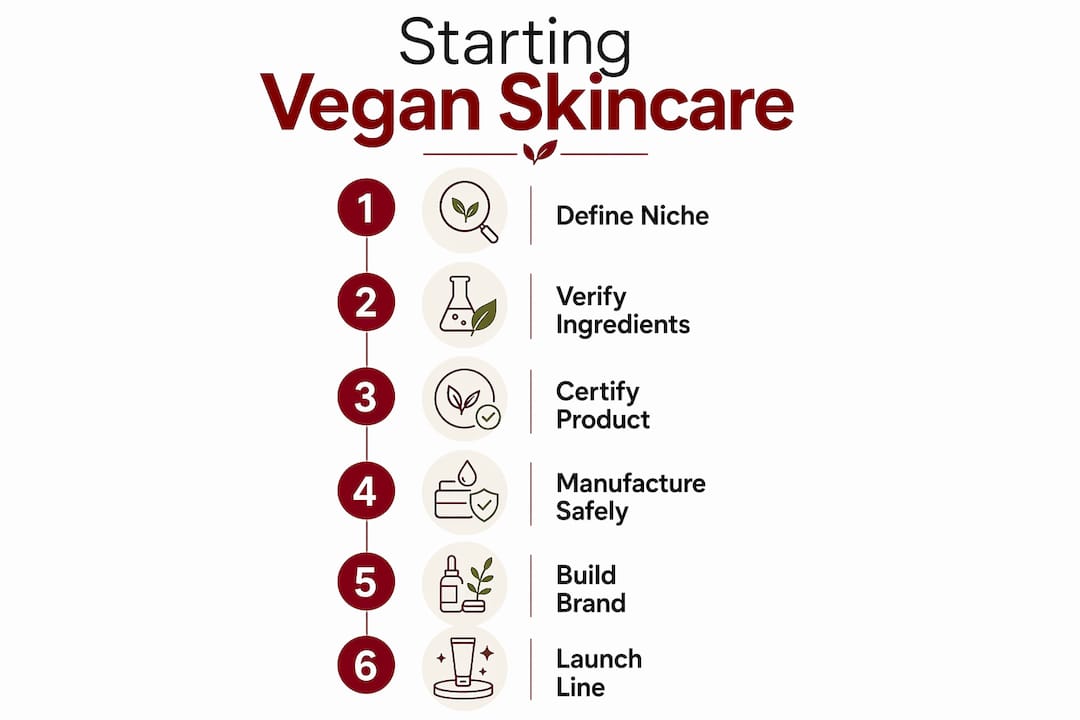
The single most effective move you can make before touching a formula is to define your brand concept and target customer with precision. Concept-first development is explicitly recommended as the first step in 2026 skincare-line guides because it reduces rework and clarifies every product decision that follows. That means fewer reformulations, tighter documentation, and a faster path to market.
Your concept drives everything: ingredient choices, product formats, packaging materials, and the claims you can legally make. A brand targeting menopausal skin will reach for phytoestrogen-rich botanicals like red clover extract. A brand built around teen acne will center salicylic acid alternatives such as willow bark. These are not interchangeable decisions.
To sharpen your concept, answer these questions before you brief a lab:
- Who is your primary customer? Age, skin concern, lifestyle, and values.
- What problem does your hero product solve? One specific, demonstrable outcome.
- What gap exists in the current market? Search Amazon, Sephora, and Ulta reviews to find recurring complaints about existing products.
- What vegan ingredient story will you tell? Bakuchiol instead of retinol. Oat milk instead of dairy peptides.
Pro Tip: Start with one hero product and complete all safety testing and documentation for that product before developing a second. Starting with a focused product accelerates launch speed by concentrating your compliance workflow on a single formula.
A focused niche also builds brand loyalty faster. Customers who feel seen by a brand built specifically for their skin type or values become repeat buyers and vocal advocates. Generic positioning, by contrast, forces you to compete on price.
How do you verify that your ingredients are truly vegan?
Ingredient verification is where most new vegan brands fail silently. A supplier calling a formula “plant-based” is not the same as that formula being certified vegan. Vegan Action certification requires ingredient-by-ingredient documentation, signed no-animal-testing statements, and source verification for every raw material. That application includes spreadsheets listing each ingredient, product labels, and manufacturer no-testing documents no older than three years.

The risk of relying on marketing claims alone is real. An ingredient like glycerin, for example, can be derived from animal fat or plant oils. Without a certificate of origin from your supplier, you cannot confirm which source you are using. The same applies to stearic acid, squalane, and certain emulsifiers.
When sourcing ingredients or working with a private-label lab, apply these verification steps:
- Request a Certificate of Analysis (COA) and a vegan declaration letter for every raw material.
- Confirm that no animal testing occurs at any point in the ingredient’s supply chain, not just at the finished-product level.
- Check that private-label vegan formulas have been verified ingredient by ingredient before you sign any manufacturing contract.
- Audit your supplier’s documentation annually, since ingredient sources can change without notice.
Pro Tip: Use Didisbeautycenter’s ethical sourcing guide to cross-reference supplier claims against established vegan certification criteria before committing to a lab.
Certification and documentation are more reliable than marketing claims for confirming vegan status, and they close supply-chain gaps that could expose your brand to mislabeling accusations later.
What certifications and regulations apply to vegan skincare?
Certification and compliance are not optional extras. They are the infrastructure that makes your vegan claims defensible to regulators, retailers, and consumers.
For vegan certification, Vegan Action (the Certified Vegan logo) and The Vegan Society’s Vegan Trademark are the two most recognized marks in North American and European markets. Both require documented ingredient verification and periodic renewal. Displaying either logo on packaging converts a marketing claim into a verified fact.
For regulatory compliance, the requirements differ by market:
- United States: The FDA regulates cosmetics under the Federal Food, Drug, and Cosmetic Act. You must label products accurately, avoid prohibited ingredients, and substantiate any claims you make. “Vegan” is a marketing claim, not an FDA-regulated term, which makes third-party certification your primary credibility tool.
- European Union: The EU Cosmetics Regulation (EC) No 1223/2009 requires a Product Information File for every product sold in the EU. That PIF must be maintained for 10 years after the last batch is sold and updated whenever the formula or packaging changes.
- Preservative efficacy testing: Water-based formulas require a challenge test to prove microbial safety. Challenge testing takes 28 days and must be scheduled early to avoid delaying your launch.
| Requirement | Market | Timeline |
|---|---|---|
| Vegan Action certification | US and global | 4 to 8 weeks for new products |
| EU Product Information File | European Union | Before first sale; maintained 10 years |
| Preservative efficacy test | EU and recommended globally | 28 days minimum |
| FDA labeling compliance | United States | Before launch |
“Compliance documentation like the EU PIF should be a living system with version control, not a one-time filing. Every formula or packaging change requires an update.” EU Cosmetics Regulation
Choosing a Responsible Person with genuine technical understanding is critical if you sell in Europe. This individual or entity holds legal accountability for your product’s compliance and must be reachable by EU authorities at all times.
What manufacturing standards protect your vegan skincare quality?
Manufacturing quality determines whether your formula performs as intended and survives regulatory scrutiny. ISO 22716 is the international standard for cosmetic Good Manufacturing Practice, covering production, storage, packaging, and shipment. Any contract manufacturer you work with should operate under ISO 22716 as a baseline.
Your two main manufacturing paths are contract manufacturing and custom formulation:
- Contract manufacturing uses pre-existing, tested formulas that you brand under your label. It is faster and cheaper but limits differentiation. Verify that the lab’s existing formulas have been confirmed vegan at the ingredient level before signing.
- Custom formulation builds a formula from scratch to your specification. It takes longer and costs more, but gives you a proprietary product that competitors cannot easily replicate.
Beyond the formula itself, stability testing is non-negotiable. A stability study runs your product through accelerated aging conditions, typically 45 degrees Celsius for 12 weeks, to confirm that texture, color, scent, and efficacy hold over the product’s intended shelf life. Schedule this in parallel with your safety assessment to avoid a sequential bottleneck.
Packaging selection also affects formula integrity. Active botanical ingredients degrade faster in clear packaging exposed to UV light. Airless pump dispensers protect oxidation-sensitive ingredients like vitamin C derivatives and bakuchiol far better than open-jar formats. Your packaging choice is a formulation decision, not just a branding one.
How do you build a vegan brand that earns customer trust?
Authentic vegan branding integrates visual signals and messaging aligned with vegan values across every customer touchpoint. Packaging, website, social media, and messaging all reinforce vegan identity and act as proof points before a customer reads the ingredient list.
The certified vegan logo is your most efficient trust signal. Place it prominently on the front panel of your packaging, in your website header, and in your social media bio. It tells the story before you say a word.
| Branding element | Generic approach | Vegan-specific approach |
|---|---|---|
| Packaging color palette | Trend-driven | Earth tones, greens, or clean whites signaling purity |
| Ingredient callouts | “Natural extracts” | Named botanicals with origin story |
| Certifications displayed | None or one | Vegan logo, cruelty-free bunny, and sustainability marks |
| Social content | Product shots | Behind-the-scenes sourcing and supplier transparency |
Engaging with vegan and cruelty-free communities on platforms like Instagram and TikTok builds organic reach faster than paid advertising for early-stage brands. Partnering with micro-influencers who already live a vegan lifestyle produces more credible content than celebrity endorsements. Emma Heming-Willis, for example, built her vegan skincare line around a personal ingredient story, coconut oil, which gave her brand an authentic narrative that resonated with her audience immediately.
For deeper guidance on natural brand identity, Didisbeautycenter’s branding resources cover how to translate vegan values into visual and verbal brand language that converts browsers into buyers.
Key takeaways
Starting a vegan skincare line requires verified ingredients, documented compliance, and a brand identity built around a specific customer problem, not just a general commitment to being cruelty-free.
| Point | Details |
|---|---|
| Concept before formulation | Define your niche and hero product before briefing any lab to reduce rework. |
| Ingredient-level verification | Require COA and vegan declaration letters for every raw material, not just the finished formula. |
| Certification builds credibility | Vegan Action or The Vegan Society’s Trademark converts a claim into a verified, defensible fact. |
| Compliance is a living system | Update your EU PIF and supplier documentation every time a formula or packaging change occurs. |
| Brand identity signals values early | Place certified vegan logos and ingredient stories on packaging before a customer reads the full label. |
What launching a vegan line actually taught me
The part nobody tells you upfront is that the documentation work is harder than the formulation work. I have seen founders spend months perfecting a serum only to discover their glycerin supplier switched to an animal-derived source mid-production. That single gap invalidated their vegan claim and forced a full reformulation. The lesson: your supplier relationships and your paperwork are your product, just as much as the formula itself.
I am also skeptical of the advice to launch with a full product range. Every brand I have watched succeed in the vegan skincare space started with one product that solved one problem exceptionally well. That focus lets you complete stability testing, safety assessments, and certification for a single SKU, get it to market, and use real customer feedback to guide what comes next. Trying to launch six products simultaneously spreads your compliance budget thin and almost always results in at least one product that is not ready.
The budget tension between quality and speed is real, but it resolves when you prioritize certification early. Founders who treat Vegan Action certification as a launch-day add-on often find themselves rebuilding supplier documentation from scratch under time pressure. Start the application process the moment you have a stable formula. The four to eight week timeline is not a delay. It is your credibility infrastructure being built.
Transparency is also a competitive advantage that most brands underuse. Showing your customers the actual farm where your rosehip oil comes from, or the lab where your formula is tested, builds the kind of trust that no advertising budget can buy. Learn more about what vegan beauty means in practice to understand how to communicate these values authentically.
— Gloria
Ready to launch your vegan skincare line with Didisbeautycenter?
Didisbeautycenter offers private label solutions built specifically for entrepreneurs who want to launch a cruelty-free skincare brand without building a lab from scratch. Every formula in the catalog is developed with natural, vegan formulations in mind, and the team supports ingredient verification and packaging selection to help you meet certification requirements from day one.
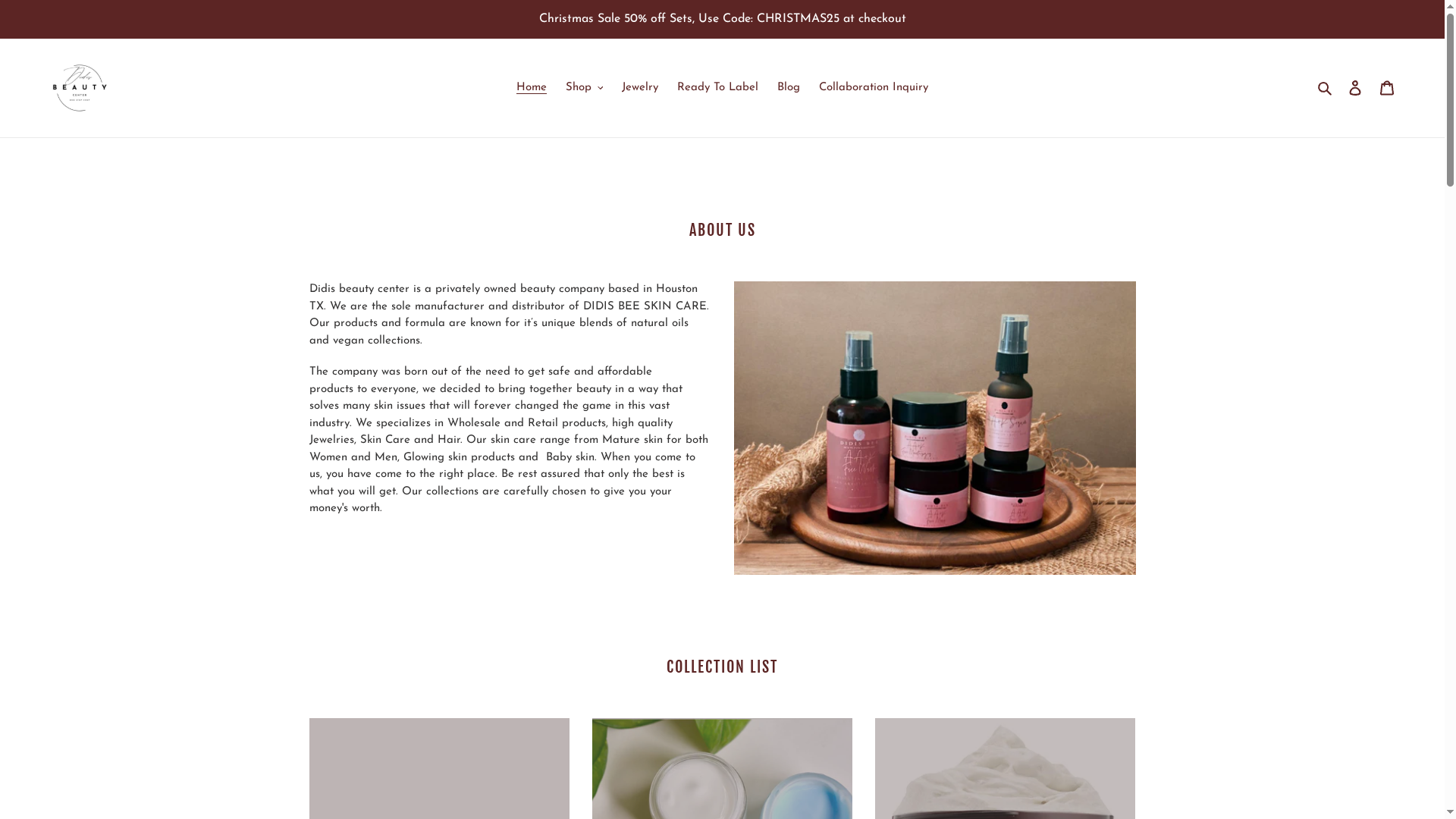
Whether you are starting with a single hero product or building out a brightening line, Didisbeautycenter’s private label program gives you access to ready-to-label formulations, eco-conscious packaging options, and the documentation support you need to launch with confidence. Explore the full range of private label options and take the first step toward a credible vegan brand today.
FAQ
What makes a skincare product legally vegan?
A skincare product is vegan when it contains no animal-derived ingredients and has not been tested on animals at any stage of production. Third-party certification from organizations like Vegan Action or The Vegan Society provides the most defensible proof of this status.
How long does vegan skincare certification take?
Vegan Action certification for a new product typically takes four to eight weeks, depending on how quickly you can supply ingredient documentation and signed no-animal-testing statements from your manufacturers.
Do I need an EU Product Information File if I only sell in the US?
The EU PIF is required only for products sold in the European Union. However, building a PIF-equivalent documentation file is good practice for any market because it organizes your safety data, formula records, and supplier certifications in one place.
Can I use a private-label lab and still call my products vegan?
Yes, but private-label formulas require ingredient-by-ingredient verification before you can make a vegan claim. Confirm that the lab provides vegan declaration letters for every raw material in the formula, not just a general statement about the finished product.
What is the biggest mistake new vegan skincare brands make?
The most common mistake is relying on a supplier’s marketing language instead of documented ingredient verification. Phrases like “plant-based” or “natural” do not confirm vegan status. Always request a COA and a signed vegan declaration for every ingredient before production begins.
Discourse (0)