


TL;DR:
- Preparing a legal and administrative foundation is crucial before sourcing wholesale skincare, as it enables legitimate business operations.
- Research channels such as trade shows, online directories, and social communities help find verified suppliers with proper certifications and favorable terms.
- Starting with small initial orders allows for market testing and learning, reducing risks and supporting sustainable growth.
Sourcing wholesale natural and vegan skincare products sounds straightforward until you’re three weeks in, sitting on a pile of supplier emails, confused about certifications, and wondering if you’ve spent your startup budget wisely. Most beauty entrepreneurs don’t fail because they lack passion. They fail because they skip the preparation that makes every step after it easier. This guide gives you a clear, proven roadmap for sourcing wholesale beauty products, building a legitimate business foundation, and launching a skincare line that can actually grow.
Table of Contents
- What you need before sourcing wholesale beauty products
- How to find reliable wholesale beauty suppliers
- Step-by-step process: Sourcing and ordering your beauty products
- Testing, branding, and launching your beauty line
- Why most aspiring beauty brands struggle and how to succeed
- Ready to launch your own skincare line?
- Frequently asked questions
Key Takeaways
| Point | Details |
|---|---|
| Preparation is crucial | Lay legal, branding, and market groundwork before contacting suppliers. |
| Vetting saves money | Thoroughly evaluate suppliers and test samples to avoid costly mistakes. |
| Negotiate smartly | Discuss order terms, minimums, and private label options for better profit. |
| Launch with quality | Test every product, build authentic branding, and prepare all assets for a smooth debut. |
| Iterate for growth | Use feedback from your first sales to refine and expand your brand successfully. |
What you need before sourcing wholesale beauty products
Now that you understand the value of structure, let’s cover what you need in place before you start contacting suppliers. Getting the basics right at this stage saves you from expensive mistakes later.
Legal and administrative setup comes first. Before any supplier takes you seriously, you need proof that you’re running a real business. That means registering your business entity (LLC, sole proprietor, corporation), obtaining your federal tax ID (EIN), and securing a resale certificate for your state. Some states and product categories also require a cosmetic seller’s permit. Skipping these steps means you can’t open a business bank account, negotiate wholesale pricing, or legally resell products.
Understanding wholesale beauty basics is critical before starting, especially when it comes to knowing what sets wholesale pricing apart from retail and how minimum order quantities (MOQs) affect your cash flow planning.
Your niche and target market define everything else. Are you targeting Gen Z consumers who want cruelty-free toners? Busy professionals who want clean brightening serums? Your answer shapes your product selection, price point, and brand voice. Natural and vegan skincare is a growing niche with passionate buyers, but within it there are dozens of sub-niches. Get specific early.
Here’s a quick overview of what to have ready before approaching suppliers:
| Preparation item | Why it matters | Timeline |
|---|---|---|
| Business registration | Required for wholesale accounts | Week 1 |
| Tax ID and resale certificate | Needed for tax-exempt purchasing | Week 1 to 2 |
| Brand name and logo | Suppliers and customers need visual identity | Week 2 to 3 |
| Budget plan | Determines realistic order sizes | Week 1 |
| Target audience profile | Guides product selection | Week 2 |
Budget planning is non-negotiable. Many new brands underestimate costs. Factor in product cost, packaging, labeling, photography, a website, and initial marketing. A realistic starting budget for a small wholesale skincare launch sits between $2,000 and $8,000 depending on your MOQs and product range.
- Register your business entity and get your EIN before anything else
- Define your niche clearly: natural, vegan, brightening, anti-aging, sensitive skin, etc.
- Set a firm budget with a 15 to 20 percent buffer for unexpected costs
- Have your brand name, colors, and tone of voice decided before supplier conversations
- Prepare a basic brand story that explains your values, especially around natural and vegan ethics
Pro Tip: Write a one-page brand brief before you contact any supplier. It tells the supplier you’re serious, speeds up conversations, and helps you stay consistent when you’re choosing between formulations.
How to find reliable wholesale beauty suppliers
Once your business foundation is set, you’re ready to search for reliable suppliers. This stage separates brands that launch strong from those that stall out.

Finding wholesale skincare suppliers is a critical success factor that requires deliberate research, not just a quick Google search. You have several solid discovery channels available.
Research channels to explore:
- Google searches with specific terms like “private label vegan skincare wholesale USA”
- Trade shows such as Cosmoprof North America or the Indie Beauty Expo
- Online wholesale directories like Faire, Tundra, or beauty-specific B2B platforms
- Industry Facebook groups and Reddit communities where founders share recommendations
- LinkedIn searches for cosmetic manufacturers with cruelty-free or vegan certifications
“The best supplier relationships start with thorough vetting, not just the lowest price. Verify certifications, test samples personally, and read contract terms before committing to any partnership.”
When you find a potential supplier, ask these questions before placing any order:
- Do you hold any third-party vegan or cruelty-free certifications (Leaping Bunny, PETA, Vegan Society)?
- What are your minimum order quantities per product?
- Do you provide full ingredient lists and Safety Data Sheets (SDS)?
- Can I order samples before committing to a bulk order?
- What are your private label and custom branding options?
- What is your lead time from order confirmation to shipping?
- Do you carry product liability insurance?
Here’s a comparison between direct manufacturers and distributors, which are your two main supplier types:
| Factor | Direct manufacturer | Distributor |
|---|---|---|
| Pricing | Lower per unit | Higher per unit (markup added) |
| MOQs | Usually higher | Often lower, more flexible |
| Customization | Extensive (formulation, label) | Limited or fixed |
| Certifications | Owned directly | Passed from manufacturer |
| Communication speed | Slower (production focused) | Often faster |
| Best for | Scaling brands with volume | New brands testing the market |
Red flags to watch for: Suppliers who refuse to share full ingredient lists, can’t provide proof of vegan or cruelty-free status, demand full payment upfront without a contract, or have no verifiable reviews from other brands. Legitimate suppliers are transparent. If anything feels opaque, trust that instinct.
Step-by-step process: Sourcing and ordering your beauty products
With a shortlist of reliable suppliers, you’re ready to put your sourcing plan into action. Here’s exactly how to move from research to your first confirmed order.
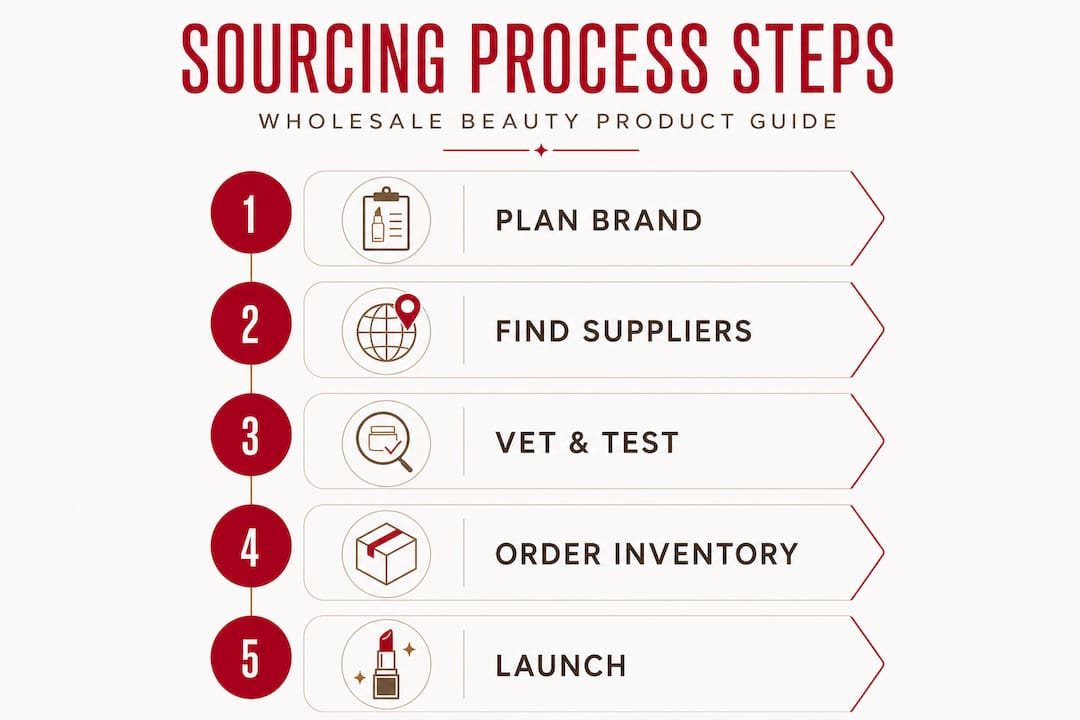
- Send an inquiry email. Introduce your brand, mention your niche, ask about MOQs, certifications, and sample availability. Keep it professional and specific.
- Request documentation. Ask for certificates of analysis (COAs), vegan certifications, ingredient lists, and any relevant safety testing data before you evaluate the products.
- Order samples. Never skip this step. Test the texture, scent, performance, and packaging on real skin. Ideally, get feedback from people who match your target customer.
- Compare quality and terms across suppliers. Score each sample against set criteria: formulation quality, packaging durability, ingredient transparency, label compatibility, and price.
- Negotiate terms. Wholesale skincare advantages include better margins and private label flexibility, but negotiating order minimums, payment terms, and lead times can improve those margins further.
- Finalize and place your first order. Once terms are agreed in writing, confirm your label design, review the contract, and place your first order. Get everything in a signed agreement.
Sample negotiation checklist:
- Confirmed MOQ in writing
- Payment schedule (deposit vs. balance on delivery)
- Lead time and shipping terms
- Return or replacement policy for defective units
- Private label and custom packaging scope
- Exclusivity clause (if relevant to your niche)
One useful approach is to check the best wholesale skincare products available so you can benchmark what’s already performing well in the market before you finalize your selection.
The most common mistakes at this stage:
- Skipping samples to save money (this is how you end up with 200 units of a product that smells wrong)
- Unclear label policies: some suppliers limit what claims you can print; know this before design begins
- Ordering too much inventory before validating demand with real customers
Pro Tip: Your first order should be small enough to sell out within 60 to 90 days. This forces you to stay lean, learn fast, and reinvest profits into a second, smarter order. Brands that over-order early often get stuck holding dead stock.
A critical insight: brands that treat their first order as a learning experiment, not a big launch, tend to grow faster and more sustainably. The goal is market feedback, not volume.
Testing, branding, and launching your beauty line
Now your first order is in hand, it’s time to ensure safety and prepare a successful product launch. Rushing this stage is one of the most common mistakes new brands make, and it’s also one of the most avoidable.
Testing and compliance come before everything else. Even if your supplier provides safety documentation, you are legally responsible for the products you sell under your brand name. Conduct patch testing internally, and for wider markets, consider a third-party cosmetic safety assessment. In the US, the FDA regulates cosmetic labeling, which means your labels must list ingredients correctly (INCI names in descending order), include net weight, and display your business contact information.
As outlined in selling beauty products online, launching a skincare brand requires thorough testing and transparent product information to build customer trust and avoid costly regulatory issues.
Branding and private label decisions:
- Finalize your label design using your confirmed ingredient list and regulatory requirements
- Ensure your packaging matches your brand’s sustainability values if eco-conscious positioning is part of your story
- Take professional product photos in natural light; lifestyle shots that show the product in use consistently outperform plain white-background images on social media
- Write product descriptions that focus on benefits and ingredient transparency, not just marketing language
| Launch asset | Status check | Why it’s essential |
|---|---|---|
| Product labels (compliant) | Approved by supplier | Legal requirement |
| Professional photos | Complete | Drives online conversion |
| Product descriptions | Written and reviewed | SEO and customer trust |
| Website or store page | Live and tested | Enables transactions |
| Social media accounts | Active and branded | Builds pre-launch audience |
| Email list | Started | First customers come from warm audiences |
| Legal documents | Privacy policy, T&Cs | Required for e-commerce |
“Customers buy your brand story before they buy your product. Every touchpoint — label, website, social post — should communicate the same clear message about your values and what you offer.”
Marketing before launch is not optional. Build your audience before your products arrive. Share behind-the-scenes content about your sourcing process. Talk about why you chose vegan and natural formulations. Run a waitlist. When launch day arrives, you want people ready to buy, not discovering you for the first time.
Why most aspiring beauty brands struggle and how to succeed
After walking through all the main steps, it’s worth stepping back to look at the deeper reasons so many beauty startups stall out within the first year.
The most common culprit is impatience. Founders rush from idea to product in weeks, skipping market validation, proper vetting, and legal groundwork. They launch too fast, get poor initial results, and interpret that as proof the business won’t work. Usually, the business model is fine. The execution was just premature.
The second major trap is chasing trends instead of building something real. The vegan skincare market is full of products that look trendy but have no authentic brand story behind them. Customers in this space are educated, skeptical, and loyal to brands they trust. Copying what’s popular right now rarely builds that trust. Real differentiation comes from understanding your customer deeply and solving a problem they genuinely have.
Here’s what actually works: incremental launches over big reveals, consistent testing over gut-feel decisions, and customer feedback loops built into your process from day one. Brands that survive their first two years are almost always the ones that stayed lean, listened closely, and iterated constantly.
There’s also an underrated advantage in starting with a curated, smaller product line. Launching with three to five hero products gives you focus. It keeps your branding consistent. And it makes restocking and quality control manageable while you’re still learning how your supply chain behaves under real-world conditions.
Finally, don’t underestimate the value of community. Beauty brand founders who join trade groups, attend industry events, and share knowledge with peers learn faster and avoid costly mistakes. The beauty industry has a culture of collaboration at the entrepreneur level. Use it.
For more wholesale skincare tips, understanding the structural advantages of wholesale sourcing can help you build a more profitable pricing strategy from day one.
Ready to launch your own skincare line?
You’ve done the research, you understand the process, and you know what to look for in a supplier. Now it’s time to take the next concrete step toward building your brand.
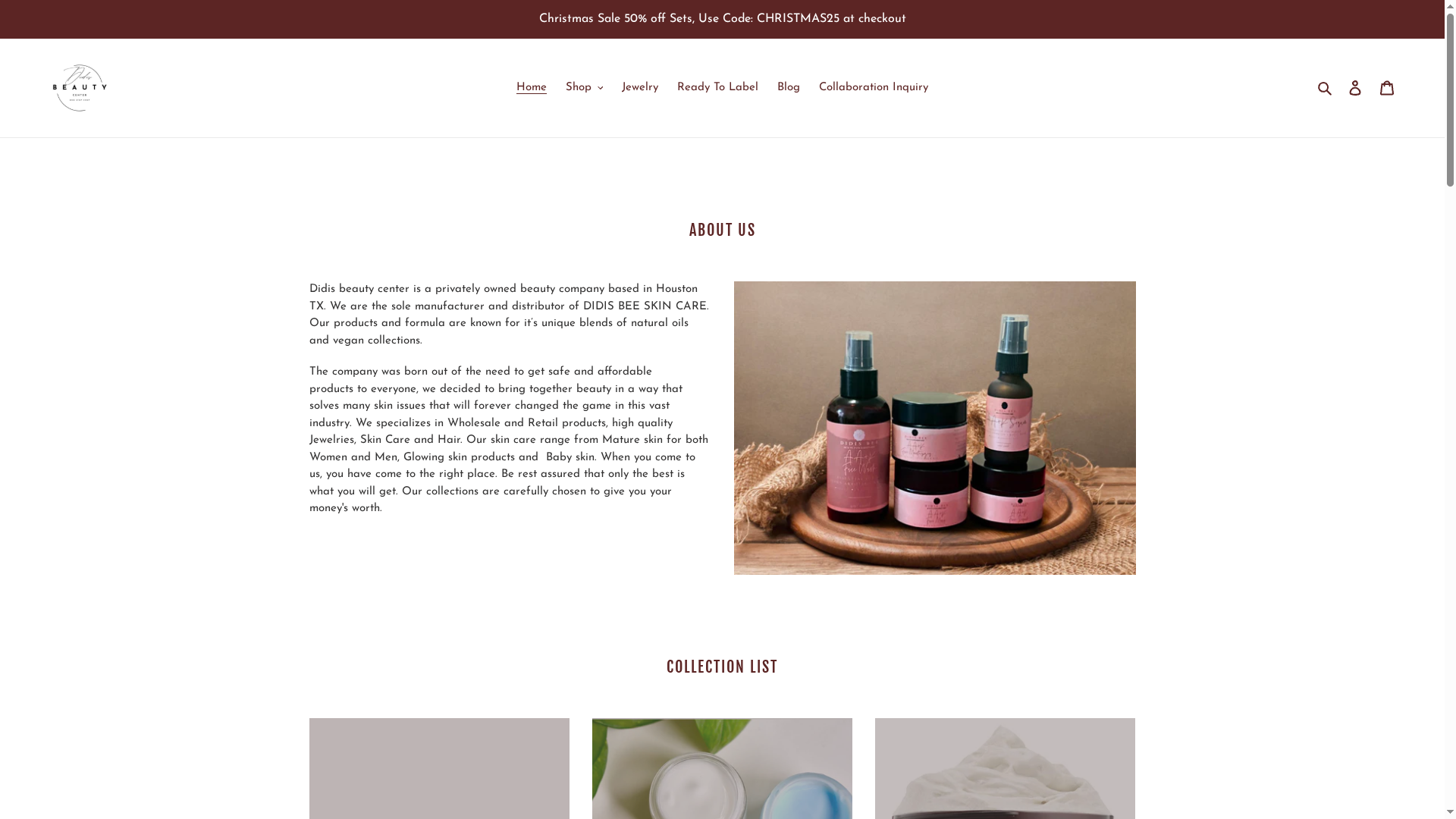
At Didis Beauty Center, we’ve built a platform specifically for beauty entrepreneurs like you. Our private label skincare program gives you access to ready-to-label natural and vegan formulations, custom branding support, and flexible order quantities designed for founders who are just starting out. You don’t need a massive budget or years of formulation experience. You need a reliable partner with the products, transparency, and support to help you launch and grow a brand you’re proud of. Browse our full wholesale catalog and see how quickly you can move from idea to your first order.
Frequently asked questions
What licenses do I need to start a wholesale beauty business?
You usually need a business registration, tax ID, resale certificate, and, in some regions, a cosmetic seller’s permit. Requirements vary by state, so check your local business authority’s website for specifics.
How do I know if my supplier offers genuine vegan and natural products?
Request certifications, ingredient lists, and ask for third-party test results when vetting suppliers. Reliable supplier selection is a critical success factor, and a trustworthy supplier will provide documentation without hesitation.
Can I order small batches to start my brand?
Many suppliers allow low minimum orders for new brands, especially with private label programs. Negotiating order terms including minimums and private label options can directly impact your startup margins.
What if my first batch doesn’t sell well?
Gather customer feedback, adjust your marketing message, and identify whether the issue is product, positioning, or audience targeting before placing larger orders. Small first runs are specifically designed to give you this learning opportunity without major financial risk.
What are the benefits of a private label solution?
Private label programs provide turnkey formulas, custom branding, and reduce your time to market significantly. For new beauty brands, this removes the need to develop formulations from scratch while still giving you a branded product that feels entirely your own.
Discourse (0)