


TL;DR:
- Reading ingredient lists reveals the true composition and safety of skincare products.
- “Natural,” “vegan,” and “cruelty-free” labels require careful verification and certification.
- Proper label compliance increases consumer trust and ensures regulatory adherence for brands.
Flip over almost any skincare product and you’ll find a wall of unfamiliar Latin names, vague marketing claims, and tiny print that seems designed to confuse. Most people skim the front panel, spot a word like “natural” or “vegan,” and move on. That shortcut can lead to real problems, from irritating your skin with hidden allergens to unknowingly supporting practices you’re ethically opposed to. Whether you’re a conscious consumer trying to make safer choices or a small business owner building a brand people can trust, understanding how to read a skincare label is one of the most practical skills you can develop.
Table of Contents
- The anatomy of a skincare label: What’s required and why it matters
- How to decode the ingredient list: Steps for understanding what’s really inside
- Identifying natural, vegan, and cruelty-free options: What to look for and avoid
- Label loopholes and greenwashing: Critical nuances and red flags
- Essential compliance tips for beauty brands and small businesses
- Our perspective: The real-world payoff of label literacy
- Expert skincare and compliant labeling tools at your fingertips
- Frequently asked questions
Key Takeaways
| Point | Details |
|---|---|
| First ingredients matter most | The first 5-10 ingredients on a skincare label make up most of the formula and have the greatest impact on your skin. |
| Check for certified logos | Certifications like Vegan Society or Leaping Bunny provide reliable proof of vegan or cruelty-free status beyond marketing claims. |
| Beware of greenwashing | Terms like ‘natural’ or ‘clean’ have no legal meaning, so always verify real ingredient lists and look for third-party verifications. |
| Label compliance is brand trust | For businesses, clear, compliant labels build credibility and help you meet regulatory requirements while reducing risk. |
| Tools can help decode labels | Databases like EWG Skin Deep and apps like INCIDecoder make it easier to identify ingredient safety and avoid hidden hazards. |
The anatomy of a skincare label: What’s required and why it matters
Every skincare product sold in the US must include specific information in specific places. Knowing where to look saves you time and prevents you from being misled by flashy front-panel claims.
A standard label has two main panels:
- Principal Display Panel (PDP): The front of the product. It shows the product name, net quantity, and any key marketing claims. This panel is heavily styled and often prioritizes branding over facts.
- Information Panel: Found on the back or side. This is where the real data lives: the ingredient list, manufacturer information, warnings, and directions.
The ingredient list is the most important section on any skincare label. Ingredients use INCI names and are listed in descending order of concentration, meaning the first ingredient is present in the highest amount and the last is present in the least. The first five to ten ingredients typically make up the bulk of the formula. Everything after that, especially ingredients near the bottom, is usually present in amounts under one percent and may have little functional impact.
INCI stands for International Nomenclature of Cosmetic Ingredients. It’s a globally standardized naming system. So “water” becomes Aqua, and aloe vera becomes Aloe Barbadensis Leaf Juice. It sounds clinical, but it’s actually your friend. It means you can compare products across brands and countries without confusion.
One thing that surprises many people: the FDA does not pre-approve cosmetics or test ingredients for safety before they hit shelves. Manufacturers are responsible for their own compliance and safety substantiation. That puts the burden on you, the consumer, to read labels critically.
| Label section | What it contains | Why it matters |
|---|---|---|
| Principal Display Panel | Product name, net weight, key claims | Marketing focused; not always accurate |
| Information Panel | Ingredient list, warnings, manufacturer info | Where real formulation data lives |
| Ingredient list | INCI names in descending order | Reveals what’s actually in the product |
| Warnings | Allergy alerts, usage cautions | Legal requirement; critical for safety |
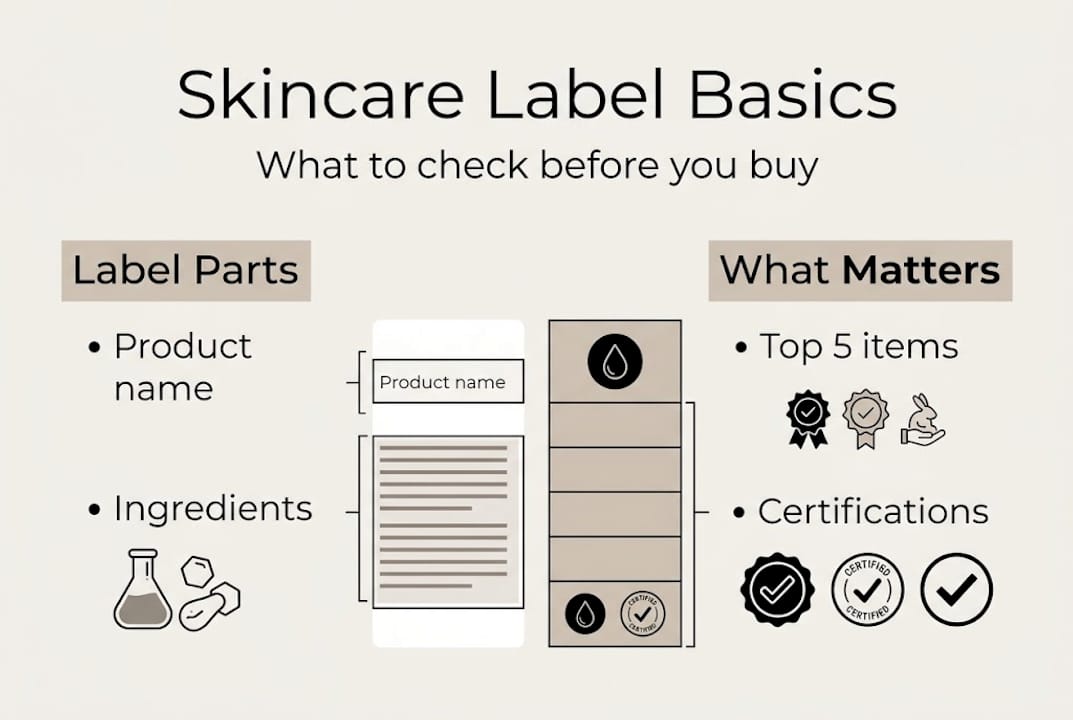
For small business owners, FDA labeling requirements also specify minimum type sizes, placement rules, and the exact order information must appear. Getting this wrong isn’t just a branding problem. It’s a compliance issue.
How to decode the ingredient list: Steps for understanding what’s really inside
Now that you understand label structure, here’s how to actually read the ingredient list without getting overwhelmed.
- Ignore the front panel first. Words like “brightening,” “pure,” and “dermatologist-tested” are marketing language. Go straight to the ingredient list on the back.
- Focus on the first five to ten ingredients. These make up the majority of what you’re actually putting on your skin. If the first ingredient is water and the second is a synthetic filler, that tells you something important.
- Look for your key actives. Actives are the ingredients that produce a specific skin benefit. Niacinamide works best at two to five percent concentration; salicylic acid is effective between 0.5 and two percent. If these appear near the bottom of the list, they’re likely underdosed.
- Scan for red flags. Watch for ingredients containing “fluoro” or “perfluoro” in their names. These are PFAS chemicals, a class of synthetic compounds linked to health concerns, and the FDA has identified over 50 that are intentionally added to personal care products.
- Use a decoding tool. Databases like EWG Skin Deep and apps like INCIDecoder let you paste an ingredient list and get hazard ratings, function descriptions, and safety data instantly.
| Approach | What you learn | Best for |
|---|---|---|
| Read top 5 ingredients | Core formula composition | Quick assessment |
| Check active placement | Whether actives are effective doses | Targeted treatment products |
| Search PFAS terms | Presence of synthetic hazards | Safety-focused shoppers |
| Use EWG/INCIDecoder | Full hazard and function breakdown | Deep research |
Pro Tip: If a product claims to contain a powerful active like retinol or vitamin C but lists it near the very end of a 30-ingredient formula, the concentration is almost certainly too low to do anything meaningful. Position matters.
Identifying natural, vegan, and cruelty-free options: What to look for and avoid
This is where label reading gets genuinely tricky, because “natural” and “vegan” don’t always mean what you think.
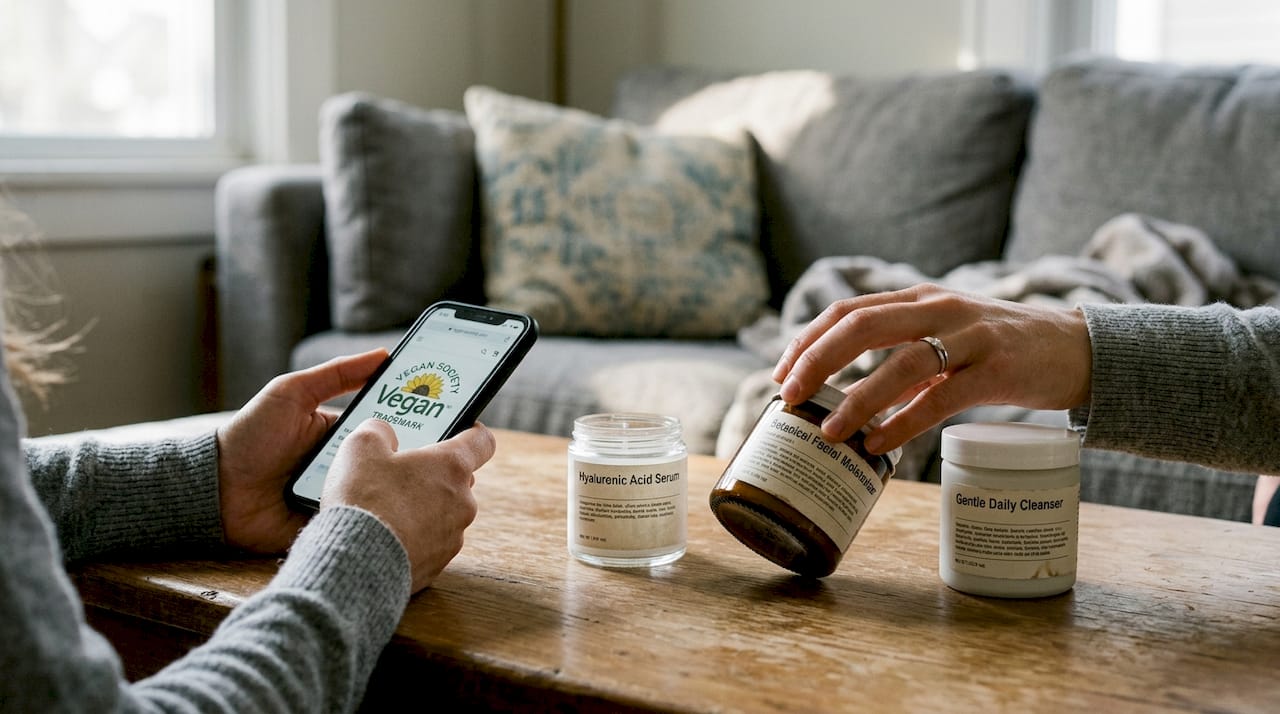
For plant-based products, look for INCI names that include botanical terms: Rosa Canina (rosehip), Camellia Sinensis (green tea), Butyrospermum Parkii (shea butter). These signal plant-derived ingredients. To source vegan skincare responsibly, you also need to know what to avoid.
Common animal-derived ingredients to watch for:
- Beeswax (Cera Alba): used in balms and lip products
- Lanolin: a wax from sheep’s wool, common in moisturizers
- Carmine (CI 75470): a red pigment made from crushed insects
- Collagen and gelatin: often sourced from animal bones or skin
- Casein: a milk protein sometimes used in hair and skin products
A product can be labeled “plant-based” and still contain honey or beeswax. “Plant-based” is not a regulated term. Vegan certification is. Look for the Vegan Society sunflower logo or the Leaping Bunny symbol for cruelty-free assurance. These certifications require third-party audits, not just a brand’s self-declaration. Understanding the vegan skincare impact goes beyond personal ethics. It connects to supply chain accountability and environmental responsibility.
Also remember: vegan and cruelty-free are not the same thing. A product can be vegan (no animal ingredients) but still be tested on animals. And a cruelty-free product might contain animal-derived ingredients. For full alignment with your values, you need both. Resources on choosing cruelty-free products can help you navigate this distinction confidently.
Vegan Society certification requires brands to confirm no animal ingredients and no animal testing at any stage of production, including by suppliers.
Pro Tip: Screenshot the ingredient list and run it through INCIDecoder or a vegan ingredient checker before buying. It takes 60 seconds and saves a lot of regret.
Label loopholes and greenwashing: Critical nuances and red flags
Even when you know how to read labels, some brands use legal but misleading language to make products appear cleaner or safer than they are.
The most important thing to understand: the terms “natural,” “organic,” “clean,” and “green” are completely unregulated in the US cosmetics industry. Any brand can print them on any product without meeting a single standard. The only way to verify these claims is through third-party certification like ECOCERT or USDA Organic.
“Fragrance-free” doesn’t always mean what you think. A product labeled fragrance-free may still contain essential oils that cause reactions in sensitive skin. And products simply labeled “fragrance” or “parfum” can hide dozens of undisclosed chemicals under that single word.
Common greenwashing red flags to watch for:
- Vague claims like “made with natural ingredients” (even one counts)
- Green or earthy packaging with no certifications to back it up
- Long ingredient lists that bury synthetic chemicals after a few plant extracts
- Claims like “dermatologist-approved” without specifying what was tested
- “Free from” lists that exclude common ingredients already banned in the US
EWG ingredient ratings cover over 130,000 products and score them on health endpoints including cancer risk, developmental toxicity, and allergens. It’s one of the most reliable free tools available for cutting through greenwashing. For a curated starting point, our top natural skincare picks highlight products that hold up under scrutiny.
Always patch test new products on a small area of skin before full use, regardless of how clean the label looks. Reactions can come from ingredients that are technically natural.
Essential compliance tips for beauty brands and small businesses
If you’re building a skincare brand, label compliance isn’t optional and it’s not just about avoiding fines. It’s about building real trust with customers who are increasingly label-savvy.
Here’s what every indie beauty brand must get right:
- Use correct INCI names. Every ingredient must appear under its official INCI designation. Using common names alone is not compliant.
- List ingredients in descending order. Ingredients at one percent or below may be listed in any order, but everything above that threshold must be ranked by concentration.
- Meet minimum type size requirements. The FDA specifies minimum font sizes for ingredient lists based on label surface area. Going smaller to fit more marketing copy is a violation.
- Avoid misleading claims. Saying your product “treats acne” or “reduces wrinkles” crosses into drug territory under US law and triggers a completely different regulatory framework.
- Complete safety substantiation. Small business label compliance requires documented evidence that your product is safe for its intended use before it goes to market.
Under MoCRA (the Modernization of Cosmetics Regulation Act), which took full effect in 2024 and continues to shape 2026 compliance requirements, brands must also register facilities and report serious adverse events. This is new territory for many small businesses, and staying current matters.
Pro Tip: Work with a cosmetic chemist or regulatory consultant before launching. The cost of getting it right upfront is a fraction of what a recall or legal challenge costs later.
Our perspective: The real-world payoff of label literacy
In our experience, reading skincare labels with diligence is about much more than compliance or trend-following. Most people treat label reading as a checklist exercise. They scan for one or two buzzwords and feel confident. That’s exactly how brands get away with greenwashing and how consumers end up with products that don’t deliver or, worse, cause harm.
Real label literacy means understanding why an ingredient is there, how much of it is present, and what it actually does at that concentration. It means knowing that a product with 28 ingredients and only three plant-derived ones near the bottom is not a “natural” product, regardless of what the front panel says.
For indie brands, this knowledge is a competitive advantage. Customers who understand labels will choose you over a competitor the moment they see your ingredient list is clean, honest, and backed by real formulation integrity. Understanding vegan skincare sourcing is one place where that integrity starts.
Don’t chase trends. Chase transparency. The brands and consumers who commit to genuine label literacy are the ones who build lasting trust in this industry.
Expert skincare and compliant labeling tools at your fingertips
Ready to put your label knowledge to work? At Didis Beauty Center, we build every product with ingredient transparency as a starting point, not an afterthought.
Our Fresh Tea Face Mist is a great example of a product where every ingredient earns its place, with a clean, readable INCI list and no hidden fillers. For entrepreneurs ready to launch their own line, our private label skincare solutions include formulation support and compliance-ready labeling tools designed to meet current FDA and MoCRA standards. Whether you’re shopping for yourself or building a brand, we make it easy to choose products you can actually stand behind.
Frequently asked questions
What does INCI mean on a skincare label?
INCI stands for International Nomenclature of Cosmetic Ingredients, a standardized naming system required by law for ingredient lists on cosmetic products sold in the US and many other countries.
How can I spot vegan or cruelty-free skincare products quickly?
Look for certified logos like the Vegan Society sunflower or Leaping Bunny symbol, and scan for plant-derived INCI names while avoiding common animal-derived ingredients like beeswax, lanolin, and carmine.
Why do some labels use ‘fragrance’ without listing specific ingredients?
Fragrance is legally considered a trade secret in the US, so brands are not required to disclose the individual chemicals it contains. Fragrance may hide dozens of undisclosed compounds under that single word.
How do I check if a skincare ingredient is safe?
Use EWG Skin Deep, which rates over 130,000 products on health endpoints, and always patch test any new product before applying it to your full face or body.
What are the legal requirements for skincare labels in the US?
Labels must include INCI names in descending order, a principal display panel with net quantity, required warnings, manufacturer information, and minimum font sizes for legibility as specified by FDA guidelines.
Discourse (0)