


TL;DR:
- Consumers and regulations demand sustainable, recyclable packaging, transforming market expectations in skincare.
- Brands should evaluate packaging based on sustainability, recyclability, product compatibility, and certifications.
- Transitioning to eco-friendly packaging provides a trust-building opportunity and strengthens brand loyalty.
Skincare entrepreneurs face a genuinely tough balancing act: your packaging has to look stunning on a shelf or in an unboxing video, meet tightening global regulations, and satisfy customers who are increasingly vocal about sustainability. 64% of consumers are more likely to buy beauty products with recyclable packaging, and 67% of Gen Z actively prefer sustainable brands. That is not a niche movement. It is a mainstream market shift that is already reshaping buying decisions, brand loyalty, and regulatory timelines. This article walks you through practical, proven eco-friendly packaging options, a clear comparison framework, and actionable steps to make the transition work for your beauty business.
Table of Contents
- How to choose eco-friendly packaging: key criteria
- Top eco-friendly packaging ideas for skincare products
- Comparing packaging solutions: features, pros, and drawbacks
- Making the switch: tips for successful eco-friendly packaging adoption
- Why eco-friendly beauty packaging is a brand opportunity, not a burden
- Take your beauty brand further with sustainable packaging solutions
- Frequently asked questions
Key Takeaways
| Point | Details |
|---|---|
| Consumer demand drives change | Beauty shoppers prefer eco-friendly packaging and look for transparency in claims. |
| Multiple sustainable options exist | Glass, aluminum, PCR plastic, and refills each offer distinct sustainability and branding advantages. |
| Comparing features is crucial | Use a side-by-side table to decide which eco-packaging works best for your product and customer. |
| Success depends on transparency | Clear labeling and third-party certifications help brands avoid greenwashing and build trust. |
| Action beats intention | Implementing eco-friendly packaging requires strategic planning, supplier coordination, and customer education. |
How to choose eco-friendly packaging: key criteria
Before you commit to any specific packaging format, you need a reliable way to evaluate your choices. Not all “green” claims are equal, and not every sustainable material works for every skincare formula. Starting with a consistent checklist saves you from expensive mistakes and protects your brand from greenwashing accusations.
The core criteria every beauty brand should evaluate:
- Material sustainability: Does the packaging use recycled content, renewable materials, or resources that can be responsibly sourced at scale?
- Recyclability or compostability: Can your customer actually recycle or compost it in their local system? Industrial composting and home composting are very different things.
- Refill potential: Can the unit be refilled or reused, extending its functional life before it becomes waste?
- Product compatibility: Some eco materials react with active skincare ingredients. Always verify chemical compatibility with your formulas.
- Regulatory compliance: This one is non-negotiable. EU PPWR and California SB54 both mandate minimum recycled content and recyclability standards by 2030 to 2032, and non-compliance risks fines or full market exclusion.
- Brand alignment: Does the look and feel of the packaging communicate your brand story to your specific customer?
You also want to look at third-party certifications. Labels like FSC for paper, How2Recycle for plastics, or Cradle to Cradle for material cycles give your customers verifiable proof rather than vague claims. Learning about natural beauty packaging is a solid starting point for understanding which materials pair well with natural and vegan formulations specifically.
Pro Tip: Ask every supplier for a full material data sheet before ordering samples. Knowing the exact recycled content percentage and any chemical treatments helps you make accurate environmental claims on your labels without legal risk.
Understanding the full picture of what makes packaging genuinely sustainable, including production energy, transport emissions, and end-of-life options, is what separates brands that lead on sustainability from those that only follow a trend. If you want a deeper breakdown of each step in the transition process, the guide on eco-friendly packaging steps is worth bookmarking.
Top eco-friendly packaging ideas for skincare products
With a clear set of criteria in hand, let’s look at the top sustainable packaging options shaping the future of beauty and skincare. Each format has real strengths and real limitations. Knowing both upfront helps you make smarter sourcing decisions and set realistic customer expectations.
1. Glass jars and bottles
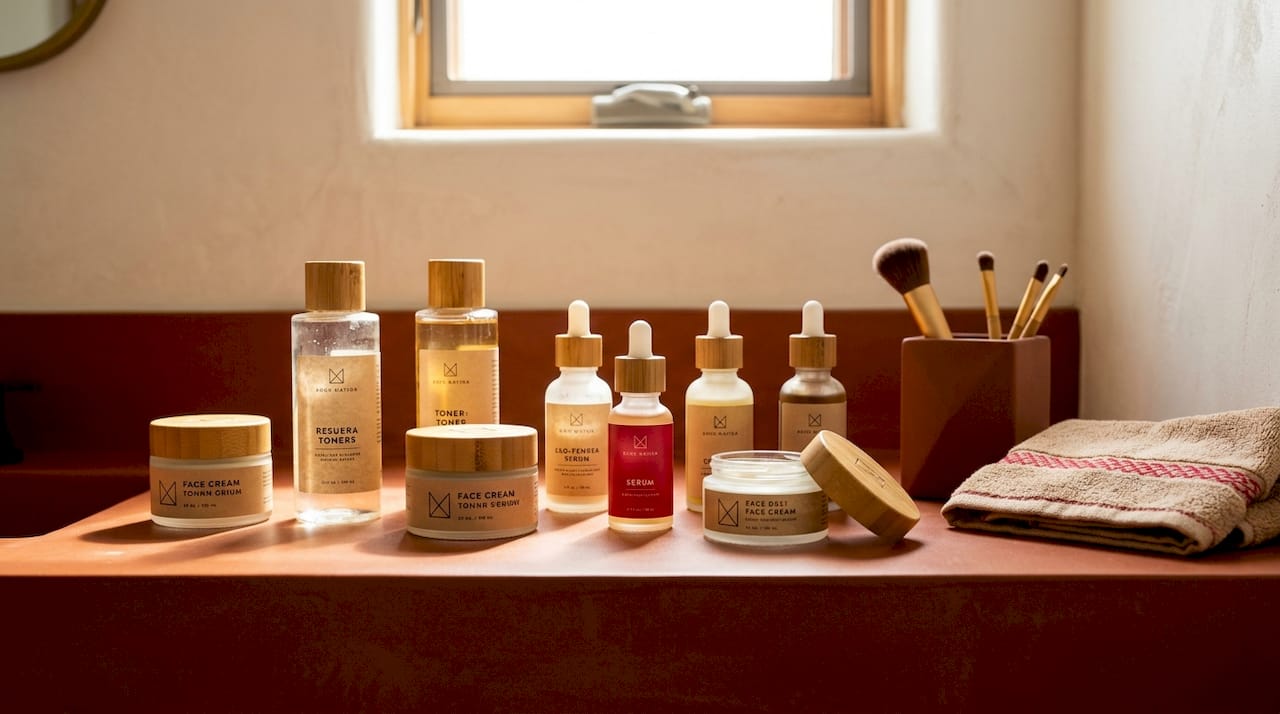
Glass is endlessly recyclable without any loss in quality. For premium face creams, serums, and toners, it also projects the kind of luxury feel that justifies a higher price point. The downside is weight: glass costs more to ship and has a higher carbon footprint during transportation. For small-batch, locally distributed skincare, though, glass remains one of the most honest sustainability choices available.
2. Aluminum tubes and caps
Aluminum is lightweight, fully recyclable, and provides excellent barrier protection against light, air, and moisture, all of which matter a great deal for active skincare ingredients like vitamin C and retinol. Recycled aluminum requires about 95% less energy to produce than virgin aluminum, which is a significant environmental advantage. It works especially well for serums, eye creams, and products with sensitive formulations.
3. Post-consumer recycled (PCR) plastics
PCR plastic closes the waste loop by using materials that have already been in consumer hands. When certified properly, PCR content gives brands a credible sustainability story that holds up to scrutiny. The main caution here is clarity: your supplier needs to confirm the exact percentage of PCR content, because mixing claims without documentation is a fast path to regulatory trouble and consumer distrust.
4. Refill systems
Refill programs are gaining serious traction in the premium skincare segment. A customer buys a beautifully designed primary container once, then purchases refill pouches or inserts going forward. This slashes overall packaging waste dramatically per use. However, as Mintel research confirms, refills appeal strongly to premium skincare consumers but require infrastructure and sustained consumer education to close the intention-action gap. This means you need a clear return or refill mechanism, not just a promise.
5. Paper-based and compostable pouches
These are innovative and work particularly well for sample sizes, solid skincare formats, or products where moisture protection is less critical. The challenge is that compostability is context-dependent. A pouch certified for industrial composting will not break down meaningfully in a backyard bin, which can frustrate eco-motivated customers. Being upfront about exactly how and where your packaging composts builds far more trust than vague “compostable” claims.
“Transparent environmental claims backed by life cycle assessments and certifications build lasting consumer trust. With over 50% of consumers flagging greenwashing as a major concern, accuracy in your packaging claims is not optional.”
When it comes to communicating these choices to your customers, learning how eco labels in skincare work and what they actually certify gives you the language and credentials to speak confidently. For a broader strategy on building a sustainably positioned brand, the eco-friendly skincare guide gives you a practical roadmap.
Pro Tip: If you are launching a new product line, consider starting with a limited-edition eco-packaging run before committing to a full production switch. This lets you gather real customer feedback on both aesthetics and sustainability claims before scaling your investment.
Comparing packaging solutions: features, pros, and drawbacks
Now that you have seen each eco-friendly option individually, a side-by-side comparison makes choosing your ideal solution much easier. 80% of beauty packaging ends up in landfills, only 9% of plastic is actually recycled globally, and compostable packaging fails to break down properly in approximately 30% of home composting environments. Those numbers matter when you are deciding which material to stake your brand’s sustainability claim on.
| Packaging type | Recyclability | Consumer perception | Cost level | Best for |
|---|---|---|---|---|
| Glass | High (infinitely recyclable) | Premium, trustworthy | Medium-High | Creams, serums, toners |
| Aluminum | Very High (95% energy savings in recycling) | Modern, sustainable | Medium | Serums, eye creams, SPF |
| PCR Plastic | Moderate (depends on local system) | Eco-conscious | Low-Medium | Cleansers, body care |
| Refill systems | High (reduces total packaging) | Innovative, loyal-customer facing | High (upfront) | Premium skincare lines |
| Paper/compostable pouches | Low-Moderate (facility dependent) | Eco-forward, niche | Low-Medium | Samples, solid products |
Choosing the right option for your brand:
- If you prioritize premium positioning, glass or aluminum will reinforce that message every time a customer picks up your product.
- If you are working with tight margins or high volume, PCR plastics give you a credible eco story at a lower per-unit cost than glass.
- If your brand is built around a loyalty and community model, refill systems reward your most engaged customers and reduce long-term packaging costs.
- If you sell samples or gift sets, compostable or paper-based pouches create a memorable unboxing moment without heavy material investment.
- If you want to explore how to pair the right packaging with an eco-friendly accessories strategy, it rounds out a more complete sustainability story for your whole brand experience.
One factor that many brands underestimate is the gap between recyclability in theory and recycling in practice. Even perfectly recyclable packaging ends up in landfills when consumers are confused about how to sort it. Clear disposal instructions printed directly on the package make a measurable difference in actual recycling rates.
Making the switch: tips for successful eco-friendly packaging adoption
Seeing how the options stack up, let’s explore how leading brands successfully roll out sustainable packaging in real-world beauty businesses. The difference between brands that successfully make the switch and those that stall usually comes down to process, not intention.
Step-by-step approach to transitioning your packaging:
-
Audit your current packaging. List every SKU you sell and the current packaging material for each. Note where the biggest waste or sustainability gaps are. This gives you a prioritized list rather than an overwhelming overhaul.
-
Research certified suppliers. Look for suppliers with documented recycled content percentages, third-party certifications, and clear data on recyclability in your target markets. Ask for samples and test them with your actual formulas before committing to a purchase order.
-
Pilot a limited run. Choose one product or a small collection to switch first. Communicate the change clearly to your existing customers and invite feedback. This is your lowest-risk opportunity to learn what works before scaling.
-
Educate your customers. 67% of Gen Z prefer sustainable brands, but they also expect brands to explain why and how. Use your product pages, packaging inserts, and social content to share the story behind your packaging choice. Transparency closes the intention-action gap that derails so many eco-focused programs.
-
Use verified eco-labels. Once you have confirmed your claims with supplier data and certifications, display the relevant eco-labels visibly on your packaging. These visual cues reduce purchase hesitation for eco-conscious shoppers significantly.
-
Reassess regularly. Sustainability standards, regulations, and material technologies evolve quickly. Schedule a packaging review at least annually to stay ahead of regulatory changes and capitalize on new material innovations.
“Consumer education is not just a nice-to-have. It is the bridge between a customer who wants to be sustainable and a customer who actually engages with your refill program or recycles your packaging correctly.”
For a detailed walkthrough of building sustainable habits into your brand’s operations from the ground up, the guide on eco-conscious routine steps offers practical, brand-level thinking you can apply immediately.
Pro Tip: When writing copy about your eco-friendly packaging, always be specific. “Made with 80% post-consumer recycled aluminum” is powerful. “Eco-friendly packaging” alone raises more questions than it answers and opens your brand to skepticism.
Why eco-friendly beauty packaging is a brand opportunity, not a burden
Here is the honest truth that the beauty industry does not say loudly enough: most brands treat eco-friendly packaging as a compliance checkbox or a cost problem to manage. The brands that are actually growing loyalty and commanding premium price points treat it as their most authentic brand story.
Sustainability compliance, particularly under frameworks like the EU PPWR and California SB54, is genuinely demanding. But waiting until a regulatory deadline forces your hand means you miss the relationship-building window that early movers are exploiting right now. When you choose glass, certified PCR, or a refill system before you have to, you are sending a clear signal about your values. Customers notice, and they talk about it.
The greenwashing concern is real and worth taking seriously. Over 50% of consumers already flag greenwashing as a major issue, which means vague claims backfire faster than no claim at all. But the answer is not silence. The answer is specificity, backed by the kind of documentation that life cycle assessments and third-party certifications provide. Brands that share their sustainability journey honestly, including imperfect stages and ongoing improvements, build deeper trust than brands that only communicate polished green credentials.
Think about what eco-friendly packaging does beyond reducing waste. It becomes a conversation starter. Customers who love your refill pouches tell their friends. The beautiful glass jar with an FSC-certified label gets posted on Instagram. The clear, honest claim on your PCR tube becomes the reason a skeptical eco-shopper finally tries your brand. Learning exactly how eco labeling impact translates into consumer trust is worth your time as a brand owner.
Eco-friendly packaging, done right, is not a burden on your margins. It is a brand asset that works every single time your product is on someone’s bathroom shelf.
Take your beauty brand further with sustainable packaging solutions
Ready to implement innovative, sustainable packaging ideas in your beauty business? The transition becomes significantly smoother when you have access to products and support systems already designed with eco-conscious entrepreneurs in mind.
At Didis Beauty Center, our private label solutions are built specifically for beauty business owners who want to launch or grow their brand with natural, vegan formulations and packaging that reflects genuine sustainability values. From ready-to-label skincare packs to full brand support, we help you move from concept to shelf without having to navigate every supplier and certification question alone. If you are based in Canada, our private label for Canadian brands offers the same tailored support with local market considerations built in. Your eco-friendly brand story starts with the right foundation.
Frequently asked questions
What packaging materials are most eco-friendly for beauty products?
Glass, aluminum, and high-quality post-consumer recycled plastics are the strongest choices. The key distinction is that 80% of beauty packaging currently ends up in landfills, so selecting materials with well-established recycling infrastructure is more impactful than choosing materials that are theoretically recyclable but rarely processed.
How can brands verify if their packaging is truly sustainable?
Request life cycle assessment data and third-party certifications from your supplier, and look for recognized eco-labels on finished packaging. Transparent, verifiable claims are the standard that differentiates credible sustainability from greenwashing, and consumers increasingly know the difference.
Do refill systems actually reduce waste in the beauty industry?
Yes, when brands build in the right infrastructure. Refills require both a clear mechanism for customers to participate and consistent education to drive actual behavior change, but when those elements are in place, the reduction in total packaging waste per product use is substantial.
What are the main challenges with compostable packaging in beauty?
The biggest challenge is the gap between certification and real-world performance. Compostable packaging fails to break down correctly in approximately 30% of home composting environments, and most certified compostable materials require industrial composting facilities that are not accessible to all consumers.
Discourse (0)