


TL;DR:
- Upcycled beauty transforms food and agricultural waste into high-quality cosmetic ingredients.
- It supports sustainability by reducing waste, lowering resource use, and promoting circular economy principles.
- Consumers should seek transparency, third-party certifications, and detailed sourcing information when choosing upcycled products.
The upcycled beauty market is not a niche trend for the fringe crowd. It’s a fast-growing industry valued at $3.2 billion in 2024, projected to reach $10.9 billion by 2033. That kind of momentum doesn’t come from gimmicks. It comes from real innovation that turns agricultural and food byproducts into potent skincare ingredients. If you’ve ever wondered whether upcycled beauty is just clever marketing or genuinely better for you and the planet, you’re asking exactly the right questions. This article breaks down what upcycled beauty really is, how it’s made, why it matters, what to watch out for, and how to shop smarter.
Table of Contents
- What is upcycled beauty?
- How upcycled beauty products are made
- Benefits for the environment, your skin, and your values
- The challenges and nuances of upcycled beauty
- Why true upcycled beauty means asking harder questions
- Discover upcycled beauty with Didis Beauty Center
- Frequently asked questions
Key Takeaways
| Point | Details |
|---|---|
| Upcycled beauty defined | It means using safe, high-quality ingredients made from repurposed waste or byproducts. |
| Why it matters | Upcycling beauty ingredients cuts waste, saves resources, and supports cruelty-free values. |
| How it’s made | Innovative processes like green chemistry and biotech turn food or plant waste into effective skincare ingredients. |
| What to watch for | Not all claims are equal—look for transparency, certifications, and meaningful upcycled content. |
What is upcycled beauty?
Most people hear “upcycled” and picture a tote bag made from an old t-shirt. In beauty, the concept runs much deeper. Upcycled beauty transforms discarded materials, primarily byproducts from food, agriculture, and other industries such as fruit peels, seeds, coffee grounds, and eggshells, into high-value cosmetic ingredients of equivalent or superior quality to virgin materials. That last part is key. Upcycling isn’t about settling for leftovers. It’s about recognizing that many so-called waste streams are actually packed with powerful bioactives, antioxidants, oils, and nutrients that never fully made it into the original product.
Think about what happens to a grape after winemaking. The flesh, seeds, and skins, called pomace, are rich in resveratrol and polyphenols. These compounds protect cells from oxidative stress, and they’re extremely valuable in anti-aging skincare. Yet for decades, grape pomace was dumped or barely repurposed. Upcycled beauty asks: why discard something this potent?
This is where the distinction between upcycling, recycling, and downcycling becomes important. Recycling typically breaks a material down and reconstitutes it into something of equal or lower quality. Downcycling is even more extreme, taking a high-quality material and turning it into something with less value or utility. Upcycling creates higher-value products without degradation, conserving resources more efficiently and delivering superior functional and environmental benefit.
“Upcycled beauty challenges the linear economy model by finding use and value in what we once threw away, proving that waste is often just a resource in the wrong place.”
Here’s a quick comparison to make it concrete:
| Approach | Process | Outcome |
|---|---|---|
| Upcycling | Byproduct transformed into higher-value ingredient | Premium cosmetic ingredient, reduced waste |
| Recycling | Material broken down and reformed | Same or lower value product |
| Virgin materials | Raw extraction from nature | High quality, high environmental cost |
| Downcycling | Material degraded into lesser use | Lower value, often still wasted |
Common upcycled ingredients you’ll find in beauty products today:
- Coffee grounds from cafe or food industry waste, used for exfoliation and caffeine-rich skin stimulation
- Fruit peels from oranges, lemons, and pomegranate, rich in vitamin C and antioxidants
- Grape seed and pomace oil from wine production, packed with linoleic acid and resveratrol
- Rice bran from milling, a brightening and moisturizing powerhouse
- Avocado pits and skins from food processing, containing oleic acid and natural waxes
- Spent vanilla pods from flavor extraction, still rich in vanillin and aromatic compounds
Understanding these ingredients helps you connect your skincare choices with sustainable beauty principles that go well beyond just avoiding parabens. It’s about seeing the full lifecycle of what you put on your skin.
How upcycled beauty products are made
After understanding the concept, it’s worth knowing how upcycling is actually performed within the beauty industry. Transforming food waste into a skin-safe, effective cosmetic ingredient is not as simple as grinding up orange peels and adding them to a moisturizer. The process is scientific, rigorous, and often more sophisticated than conventional ingredient sourcing.
Upcycling methodologies include extraction, purification, biotech fermentation, supercritical CO2 extraction, enzymatic hydrolysis, and green chemistry techniques to ensure purity, safety, and efficacy without contaminants. Let’s break down what those actually mean in practice:
-
Collection and quality screening. Byproducts are sourced from food, agricultural, or manufacturing partners. At this stage, quality control is critical. Inconsistencies in the raw material affect the final product’s performance.
-
Cleaning and decontamination. The raw waste material is cleaned to remove pesticides, pathogens, or unwanted compounds. This is where many products either succeed or fail from a safety standpoint.
-
Extraction. The desired compounds, whether oils, polyphenols, peptides, or acids, are extracted from the byproduct. Methods vary based on the ingredient.
-
Purification and standardization. The extracted compound is refined to a consistent, measurable potency. This step is what makes an upcycled ingredient genuinely functional rather than decorative.
-
Formulation testing. The purified ingredient is incorporated into a cosmetic formula and tested for stability, efficacy, skin compatibility, and safety.
-
Final certification and compliance. The product is checked against relevant cosmetic regulations and, ideally, third-party certifications for sustainability or cruelty-free status.
Here’s a simplified look at some key extraction techniques and what they’re best suited for:
| Technique | What it does | Best for |
|---|---|---|
| Supercritical CO2 extraction | Uses pressurized CO2 to pull out oils and actives without heat or solvents | Seed oils, fragrant compounds |
| Enzymatic hydrolysis | Uses enzymes to break down plant cell walls to access nutrients | Proteins, peptides, plant extracts |
| Cold pressing | Mechanical pressure extracts oils without heat | Fruit seed oils, avocado |
| Fermentation | Microorganisms convert byproducts into new bioactive compounds | Postbiotics, probiotics, acids |
Pro Tip: When you see “supercritical CO2 extraction” or “fermented extract” on a product label, that’s a strong signal that the brand invested in a clean, advanced process rather than a quick fix. These terms indicate both technical precision and a commitment to ingredient integrity. Learn more about what these labels mean by exploring eco-conscious beauty steps that help you decode product information with confidence.
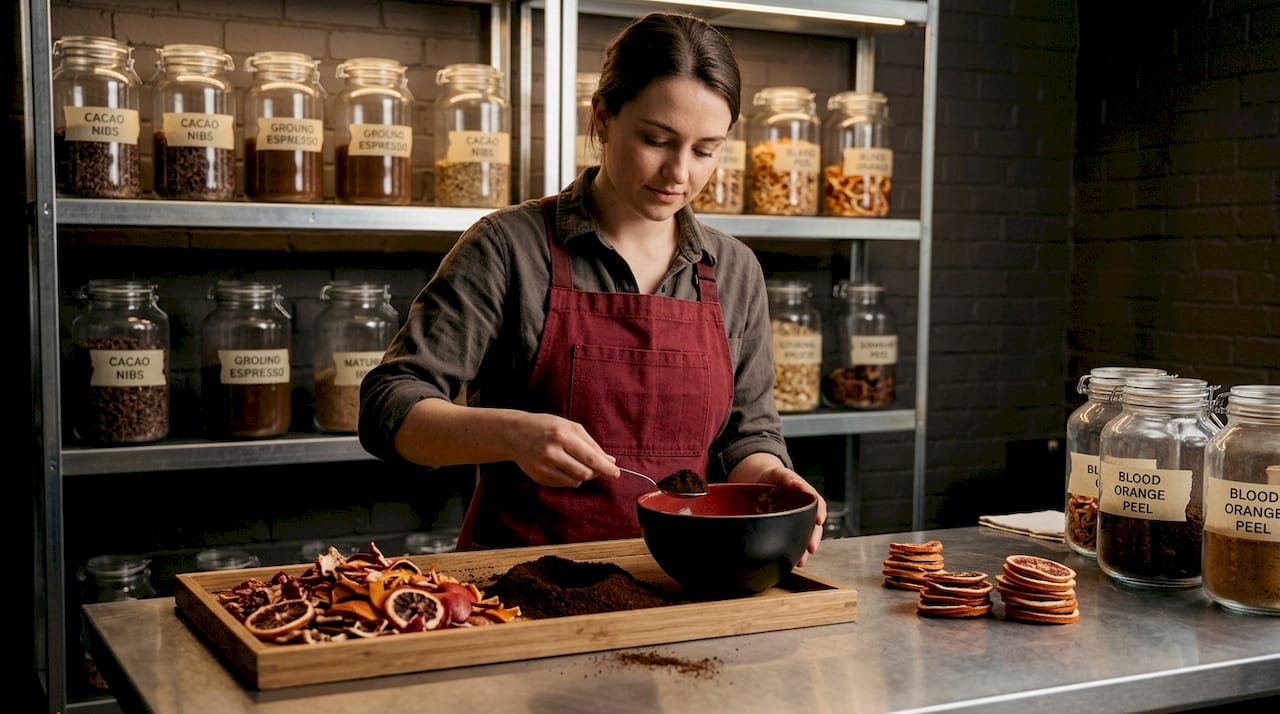
The cruelty-free dimension matters here too. Because upcycled beauty ingredients come from plant and food industry byproducts, there’s no need to test on animals to source them. The ingredients themselves are derived from existing processes, not new extractions from living creatures. This makes upcycled formulations a natural fit for cruelty-free and vegan beauty lines.
Benefits for the environment, your skin, and your values
With the making process in mind, let’s explore why upcycled beauty is so celebrated by both environmental advocates and conscious consumers. The benefits aren’t just philosophical. They show up in real environmental data, measurable skin results, and alignment with the ethical values many of us hold in other areas of our lives.
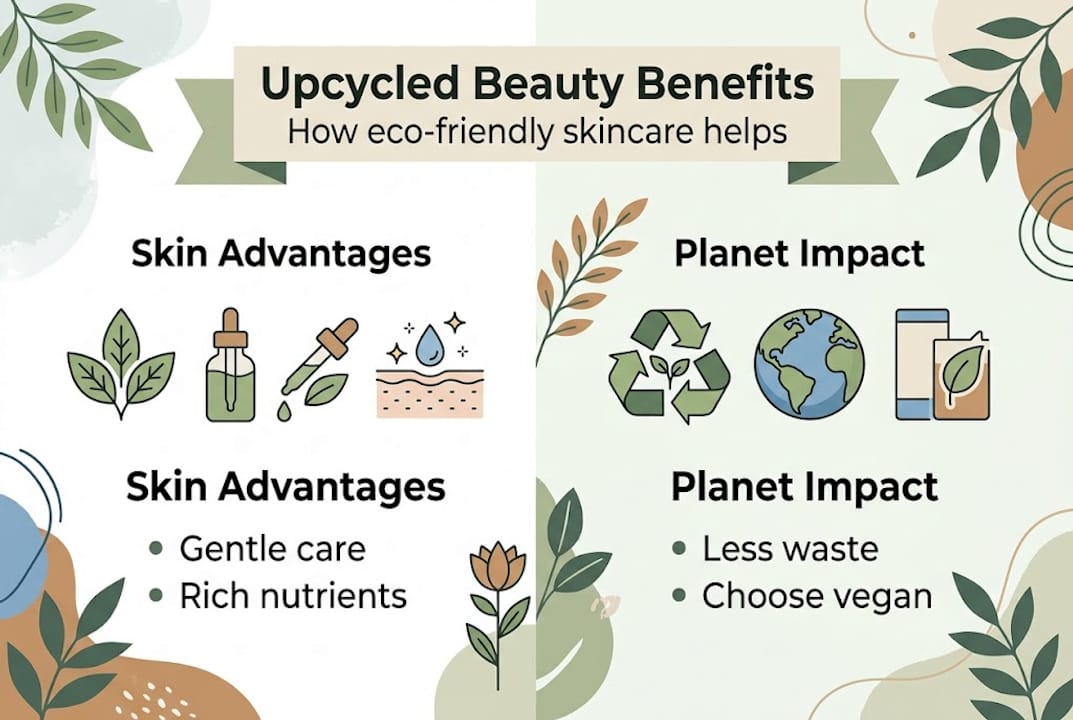
Upcycled beauty supports the circular economy by reducing waste, lowering virgin resource use, and cutting emissions, while delivering bioactive benefits like antioxidants and oils. It’s especially well-suited to cruelty-free standards because it repurposes plant and food waste rather than sourcing from animals or generating new demand for raw natural extraction.
Ecological benefits include:
- Diverting thousands of tons of agricultural and food waste from landfills annually
- Reducing the need to grow, harvest, and process virgin plant materials
- Lowering energy and water consumption compared to conventional cosmetic ingredient production
- Supporting local food and agricultural industries by creating a secondary revenue stream from their waste
- Contributing to a circular economy where nothing of value is wasted
For your skin specifically, upcycled ingredients often perform exceptionally well. Grape seed extract has documented antioxidant properties that rival or exceed synthetic alternatives. Rice bran, a standard byproduct of rice milling, contains gamma-oryzanol, tocopherols, and phytosterols that nourish and protect the skin barrier. Coffee grounds exfoliate without microplastics, making them a sustainable and effective alternative to conventional scrub agents.
The overlap with cruelty-free and vegan values is not accidental. Because upcycled beauty is fundamentally plant-based and byproduct-derived, it naturally avoids animal-sourced ingredients. Still, it’s always smart to verify certifications rather than assume.
Pro Tip: Before purchasing an upcycled beauty product, ask these three questions. Where does the byproduct actually come from? What percentage of the formula is genuinely upcycled? Is there a third-party certification backing the sustainability claim? Brands that answer these questions clearly, on their packaging or website, are the ones worth trusting.
It’s also worth noting that eco-friendly skincare broadly connects to upcycled beauty because both movements reject the idea that effective skincare has to come at the planet’s expense. Upcycled beauty is one of the most concrete, verifiable expressions of that principle.
The challenges and nuances of upcycled beauty
Despite these impressive benefits, it’s crucial to understand the complexities and realities behind the upcycled beauty movement. Not every product labeled “upcycled” is automatically a better choice, and some of the most critical conversations in sustainable beauty right now center on exactly this point.
Byproduct quality varies significantly, which requires rigorous testing and standardization. Consider this: if 90% of grape pomace is already being composted or used in other industries, diverting it to cosmetics may not always be the most impactful use. Transport emissions from moving agricultural waste across long distances can offset the environmental gains. Regulatory hurdles remain inconsistent across different countries, making it harder to standardize what “upcycled” actually means on a label. And greenwashing, which means exaggerating or fabricating sustainability credentials, is a genuine risk when a product uses only a trace amount of an upcycled ingredient while marketing itself as eco-friendly.
Core challenges to be aware of:
- Variable raw material quality. Byproducts differ batch to batch, which can affect product consistency and efficacy.
- Transport and logistics emissions. Sourcing byproducts from distant partners can undermine the environmental benefit.
- Regulatory inconsistency. No universal legal standard yet defines what qualifies as “upcycled” in beauty across all markets.
- Greenwashing risk. A product that contains 1% upcycled ingredient but markets itself as a sustainability champion is misleading.
- Existing reuse conflict. If a byproduct already has a high-value second use (like food or compost), redirecting it to cosmetics may not actually improve sustainability.
“The word ‘upcycled’ is powerful. But power without accountability is just marketing. Real upcycled beauty requires transparency about sourcing, processing, and actual environmental impact.”
This is why defining sustainable beauty in meaningful terms matters so much. When brands use sustainability language without substance, it erodes trust for the brands that are genuinely doing the work.
Smarter shopping starts with skepticism and curiosity. Look for brands that publish detailed sourcing information, use third-party certifications like the Upcycled Beauty Association (UBA) standard, and actively disclose the percentage of upcycled content in their formulas. If a brand can’t or won’t tell you where its upcycled ingredients come from, that’s worth noting before you buy.
Why true upcycled beauty means asking harder questions
We’ve spent years exploring sustainable beauty, and the most honest thing we can say is this: the label “upcycled” is not a shortcut to ethical perfection. Many consumers, especially those newer to conscious beauty, see “upcycled” and assume the product checks every box. It doesn’t always.
The beauty industry has a long history of borrowing the vocabulary of sustainability without doing the underlying work. Terms like “natural,” “clean,” and “green” have all passed through a phase of being stretched so thin they nearly lost meaning. “Upcycled” is at risk of going the same way if consumers don’t push back.
What we believe separates genuinely impactful upcycled beauty from clever packaging is radical transparency. Does the brand name the specific byproduct? Do they name the supplier? Do they quantify the upcycled content? Do they carry a recognized third-party certification? These aren’t nitpicky demands. They’re the minimum standards for a claim that’s supposed to represent a meaningful environmental commitment.
There’s also the personal efficacy question that doesn’t get asked enough. A product can be upcycled and still perform beautifully. In fact, some of the most nutrient-dense skincare ingredients exist precisely because they come from concentrated byproducts. But you deserve to know that your cruelty-free, eco-conscious choice also delivers results for your skin, not just for your conscience. Ask both questions. You’re allowed to want both things.
Discover upcycled beauty with Didis Beauty Center
If you’re ready to move from curiosity to action, Didis Beauty Center is a trusted destination for natural, vegan, and eco-conscious skincare that aligns with your values. Every product in the lineup is formulated with an eye toward clean, cruelty-free ingredients and mindful sourcing.
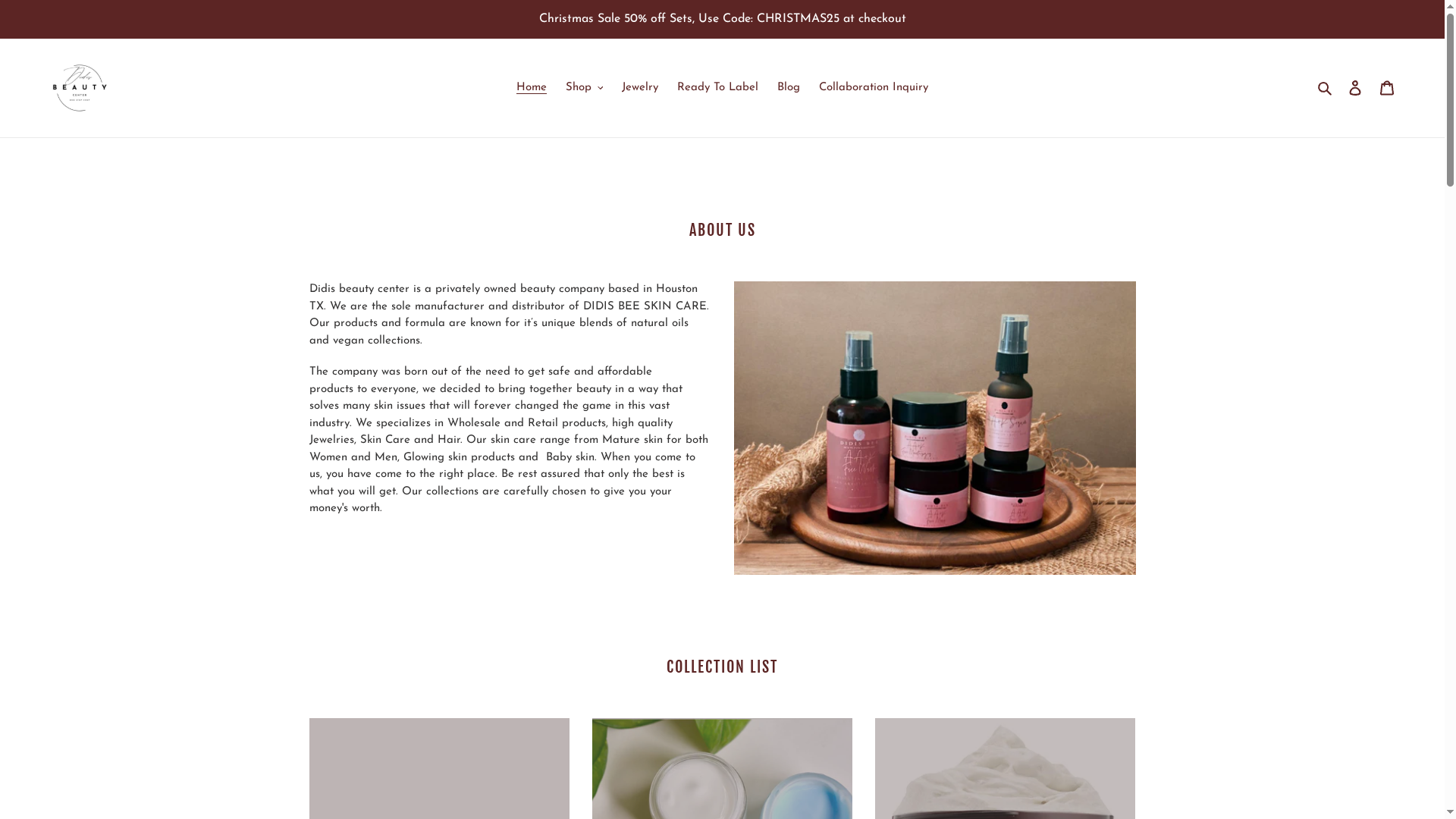
A great place to start is the Daily Essential Bundle, which gives you a curated introduction to effective, consciously formulated skincare without the overwhelm of piecing together a routine from scratch. For those who want to support their skin overnight, the Detox Nightwear Face Cream works while you sleep to refresh and restore. Conscious shopping doesn’t have to be complicated. The right products are here, waiting for you to make the switch.
Frequently asked questions
What makes a beauty product “upcycled”?
A beauty product is considered upcycled when its ingredients come from salvaged byproducts or waste such as fruit peels, seeds, or coffee grounds, transformed through innovative processes to meet safe, high-value cosmetic standards.
Are upcycled beauty products better than recycled ones?
Upcycled products aim to deliver higher quality and environmental benefit compared to recycled alternatives, which often result in lower-value materials through degradation or downcycling.
Can upcycled beauty be vegan and cruelty-free?
Yes, most upcycled beauty products are plant-based and naturally align with cruelty-free values since they repurpose plant and food waste, though always verify with certifications before purchasing.
What should I watch out for with upcycled beauty claims?
Watch for vague sourcing, low percentages of actual upcycled content, and lack of third-party certification, as potential greenwashing is a real risk when brands use the term without substantive supporting evidence.
Discourse (0)