


TL;DR:
- Fragrance-free products contain no added fragrance ingredients, making them safer for sensitive skin and allergy sufferers.
- Eliminating fragrance chemicals reduces allergic reactions, indoor air pollution, and potential respiratory health issues.
Fragrance-free products are formulations that contain no added fragrance ingredients, making them the safest choice for anyone managing sensitive skin, allergies, or chemical sensitivities. Fragrance is the most common cause of cosmetic contact dermatitis worldwide, affecting 1 to 4% of the general population and up to 15% of dermatitis patients. That number is not a minor footnote. It means millions of people are unknowingly triggering skin reactions with products they use every day. Understanding why fragrance-free products matter goes beyond comfort. It is a decision that protects your skin barrier, your respiratory health, and the air quality in your home.
Why fragrance-free products matter for skin health
Fragrance chemicals are among the most potent sensitizers in personal care products. Compounds like linalool, limonene, and geraniol appear in both synthetic fragrances and natural essential oils, and they trigger immune responses in susceptible individuals. The mechanism is not a simple irritation. It is a delayed immune reaction called allergic contact dermatitis, where the immune system builds a memory of the allergen and attacks on re-exposure.
What makes this particularly difficult to manage is timing. Fragrance sensitization can develop silently over months or years of regular use, with allergic reactions appearing 24 to 72 hours after contact. That delay means most people never connect their rash, redness, or swelling to the moisturizer they applied two days earlier. They blame stress, diet, or the weather instead.
The prevalence data reinforces how serious this is:
- 1 to 4% of the general population reacts negatively to fragrance chemicals in everyday products.
- 8 to 15% of dermatitis patients test positive for fragrance allergy, making it the leading cosmetic allergen category.
- Reactions range from mild redness and itching to severe blistering and chronic eczema flares.
“Fragrance sensitization is often silent and develops over time, resulting in delayed allergic reactions that can mislead users about the cause.” — Skindetekt
The difficulty in diagnosing fragrance allergy is compounded by the fact that “fragrance” on an ingredient label can represent a blend of hundreds of individual chemicals. Patch testing by a dermatologist is the only reliable way to confirm a fragrance allergy, and even then, identifying the exact compound requires extended testing panels.
Fragrance-free vs. unscented: what the labels actually mean
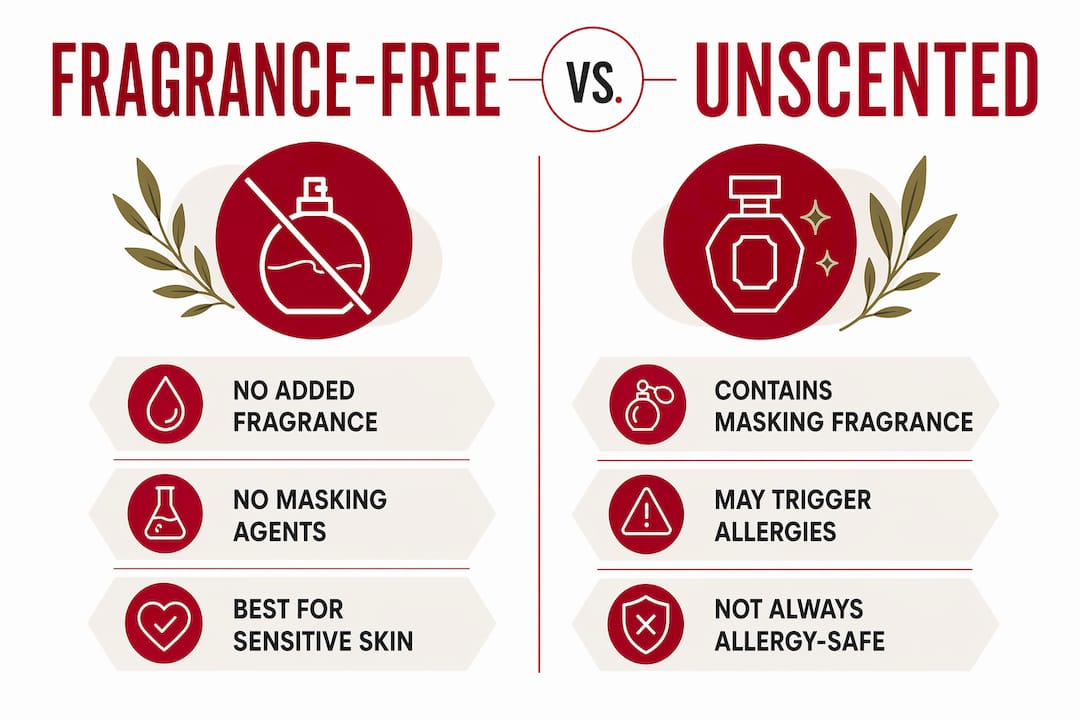
These two terms are not interchangeable, and the difference matters more than most people realize. Fragrance-free products contain no intentional fragrance ingredients or masking agents. Unscented products, by contrast, often contain masking fragrances added specifically to neutralize the natural smell of other ingredients. Those masking agents are still fragrance chemicals and can still trigger reactions.
| Label | What it means | Fragrance chemicals present? |
|---|---|---|
| Fragrance-free | No added fragrance or masking agents | No |
| Unscented | Odor masked with neutralizing fragrance | Often yes |
| Hypoallergenic | No standardized definition | Possibly |
| For sensitive skin | No regulatory requirement | Possibly |
The regulatory gap makes this worse. There is no legal definition of “fragrance-free” in major markets including the United States, which means brands can use the term without meeting any verified standard. The FDA does not require cosmetic companies to disclose individual fragrance ingredients, allowing them to hide dozens of chemicals under the single word “parfum” or “fragrance” on the label.
The same problem applies to “hypoallergenic” and “for sensitive skin” claims. These labels lack regulatory definition and do not guarantee the absence of fragrance or allergens. A product marketed to sensitive skin can legally contain linalool, limonene, or synthetic musks.
Pro Tip: When verifying a product, scan the full ingredient list for parfum, fragrance, essential oils, and botanical extracts like lavender oil, rose extract, or citrus peel oil. These are all fragrance sources, even when they sound natural and harmless.
For guidance on selecting products that genuinely minimize allergic risk, the sensitive skin selection guide at Didisbeautycenter walks through ingredient verification in practical terms.
How fragrance chemicals affect more than just your skin
The impact of fragrance on skin is well documented, but the health implications extend further. Fragrance chemicals are volatile organic compounds, meaning they evaporate into the air you breathe. Indoors, some of these compounds react with ozone to form secondary pollutants like formaldehyde, a known respiratory irritant and carcinogen. Limonene, a common fragrance ingredient found in citrus-scented products, is one of the primary compounds involved in this reaction.
A study of 287 respondents found that 38.9% reported adverse health effects from fragranced products, with respiratory symptoms and headaches as the most common complaints. Laundry products were the top trigger. That figure represents a substantial portion of the population experiencing measurable harm from products most people consider completely safe.
| Health impact category | Symptoms reported | Primary triggers |
|---|---|---|
| Respiratory | Coughing, wheezing, shortness of breath | Laundry detergents, air fresheners |
| Neurological | Headaches, migraines, brain fog | Perfumes, scented candles |
| Skin | Redness, itching, contact dermatitis | Moisturizers, cleansers |
| Hormonal | Endocrine disruption (synthetic musks) | Perfumes, body lotions |
Fragrance pollution is now recognized as an emerging public health concern, particularly in enclosed spaces with limited ventilation. Choosing fragrance-free products reduces the chemical load in your home environment, which benefits everyone in the household, including children and people with asthma or multiple chemical sensitivities. The sustainability angle is equally real. Fewer synthetic chemicals in products means fewer compounds entering waterways through rinse-off and waste disposal. For anyone building an eco-conscious beauty routine, fragrance-free is one of the most direct choices you can make.
How to choose and transition to fragrance-free products
Switching to fragrance-free skincare does not require replacing everything at once. A structured approach reduces the risk of skin disruption and helps you identify which products were causing problems.
- Start with leave-on products. Prioritize moisturizers and serums over rinse-off products like cleansers and shampoos. Leave-on products create the greatest cumulative skin exposure and carry the highest irritation risk. Replacing your daily moisturizer and night cream first delivers the most immediate benefit.
- Read every ingredient list. Look for parfum, fragrance, essential oil, and botanical extracts. Lavender oil, bergamot extract, and rose water are fragrance sources regardless of how natural they sound. Natural essential oils contain allergenic compounds like linalool, limonene, and geraniol that are structurally identical to synthetic fragrance allergens.
- Ignore marketing claims on the front label. Verify the ingredient list directly. “Natural,” “clean,” and “gentle” are marketing terms with no regulatory weight.
- Look for third-party certifications. Organizations like the National Eczema Association in the United States provide a Seal of Acceptance for products that meet verified fragrance-free and low-irritant standards. The Environmental Working Group’s Skin Deep database also rates products by ingredient safety.
- Simplify your routine during the transition. Fewer products mean fewer variables. If a reaction occurs, a shorter ingredient list makes it far easier to identify the cause.
One underappreciated fact: fragrance adds no functional benefit to a skincare product. It is purely sensory. A moisturizer without fragrance hydrates just as effectively as one with it, and the simplified formula is inherently less likely to cause irritation. You are not sacrificing performance by going fragrance-free. You are removing a risk with no upside.
Pro Tip: When building a fragrance-free routine for the first time, use the sensitive skin regimen framework from Ironwood Grooming as a reference for layering products without compounding irritation risk.
Key takeaways
Fragrance-free products reduce skin irritation, allergic reactions, and indoor air pollution by eliminating fragrance chemicals that offer no functional benefit to skin health.
| Point | Details |
|---|---|
| Fragrance is the top cosmetic allergen | Up to 15% of dermatitis patients react to fragrance chemicals, making it the leading cosmetic sensitizer. |
| Unscented is not fragrance-free | Unscented products often contain masking fragrances that still trigger reactions in sensitive individuals. |
| Labels like “hypoallergenic” are unregulated | No legal standard exists for these claims; always verify the full ingredient list for parfum and botanical extracts. |
| Leave-on products carry the highest risk | Transition to fragrance-free by replacing moisturizers and serums first, before rinse-off products. |
| Fragrance affects more than skin | Indoor fragrance chemicals form secondary pollutants like formaldehyde and contribute to respiratory symptoms in nearly 39% of people studied. |
What I’ve learned from years of watching fragrance reactions unfold
The most common mistake I see is people assuming that if a product is labeled “natural” or “botanical,” it is automatically safe for sensitive skin. It is not. Lavender oil, one of the most popular ingredients in “clean beauty,” contains linalool and linalool hydroperoxide, both of which are established contact allergens. I have seen people spend months eliminating synthetic fragrances from their routine, only to keep reacting because their “natural” facial oil was the actual trigger.
The second mistake is treating fragrance-free as a niche concern for people with diagnosed allergies. The sensitization process does not require a pre-existing condition. Anyone can develop a fragrance allergy over time with repeated exposure. The fact that you have used a product for two years without a problem does not mean you are immune. It may mean you are approaching the threshold.
What I find genuinely encouraging is how much the product quality conversation has shifted. A few years ago, fragrance-free options in the natural and vegan skincare space were limited and often poorly formulated. That has changed. Brands like Didisbeautycenter are building fragrance-free lines with ingredient transparency as a core value, not an afterthought. The non-toxic skincare movement is pushing the entire industry toward simpler, cleaner formulations that happen to perform better for sensitive skin.
My honest recommendation: stop reading front labels entirely. Flip the product over, read the INCI list, and search any unfamiliar ingredient in the Environmental Working Group’s Skin Deep database before you buy. That habit alone will protect you more than any marketing claim ever will.
— Gloria
Fragrance-free skincare from Didisbeautycenter
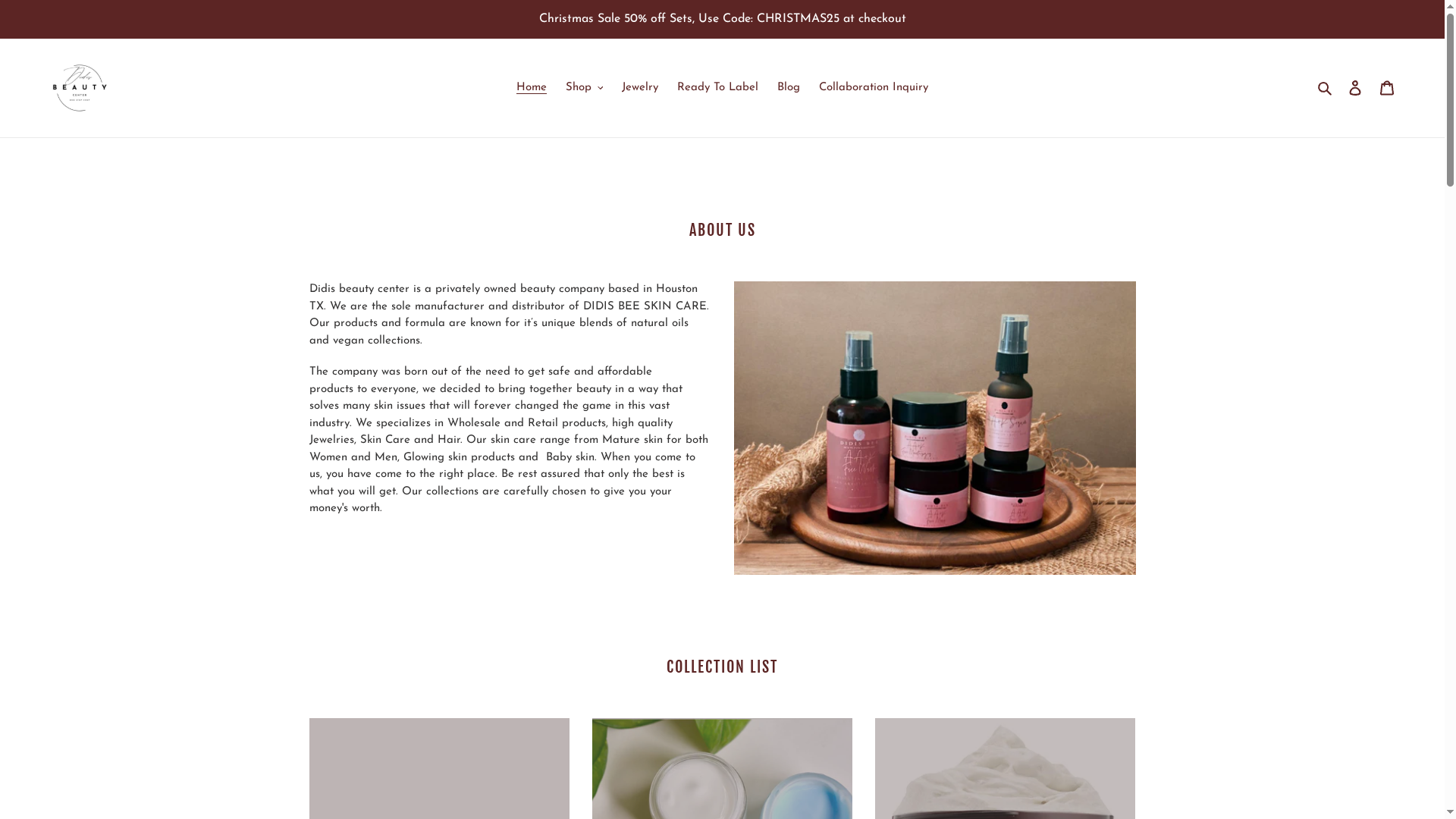
Didisbeautycenter has built its skincare line around ingredient transparency and formulations that work for sensitive, allergy-prone skin. The Daily Essential Bundle brings together the core fragrance-free products you need to build a safe, effective daily routine without guesswork. For a more complete approach, the Daily Routine Bundle covers every step of your regimen with gentle, vegan formulations designed to minimize irritation. Both bundles reflect the same principle this article is built on: fragrance adds no benefit to skin, and removing it is one of the most direct ways to protect your skin barrier. If you are ready to transition, these bundles are a practical starting point.
FAQ
What does fragrance-free mean on a product label?
Fragrance-free means the product contains no added fragrance ingredients or masking agents. Because there is no legal standard for this claim in the U.S., always verify by checking the ingredient list for parfum, essential oils, and botanical extracts.
Is unscented the same as fragrance-free?
No. Unscented products often contain masking fragrances that neutralize odor but still introduce fragrance chemicals that can trigger reactions in sensitive individuals.
Can natural fragrances cause the same reactions as synthetic ones?
Yes. Natural essential oils like lavender, bergamot, and citrus contain allergenic compounds including linalool, limonene, and geraniol that cause the same immune responses as synthetic fragrance allergens.
Who benefits most from fragrance-free products?
People with sensitive skin, eczema, rosacea, or diagnosed fragrance allergies benefit most. However, anyone can develop fragrance sensitization over time, so fragrance-free products reduce risk for all skin types.
Do fragrance-free products work as well as scented ones?
Fragrance adds no functional benefit to skincare. A fragrance-free moisturizer hydrates just as effectively as a scented version, and the simpler formula is less likely to cause irritation or disrupt the skin barrier.
Discourse (0)