


Finding truly non-toxic skincare can feel challenging when brands make bold promises but rarely share safety data. For eco-conscious beauty enthusiasts and emerging entrepreneurs, understanding what really defines a safe, non-toxic product goes beyond trendy labels. Here you will discover why transparent ingredient selection and substantiated safety claims set modern non-toxic skincare apart, helping you confidently choose or develop products that protect both skin health and the environment.
Table of Contents
- Defining Non-Toxic Skincare Today
- Types, Labels, and Ingredients Explained
- How Non-Toxic Skincare Works
- Common Myths and Greenwashing Tactics
- Legal Oversight and Safety Worldwide
Key Takeaways
| Point | Details |
|---|---|
| Non-Toxic Definition | Non-toxic skincare products are formulated without harmful chemicals, emphasizing ingredient safety, transparency, and efficacy. |
| Importance of Transparency | Brands must disclose ingredient sourcing and safety documentation to gain consumer trust and drive innovation in skincare. |
| Regulatory Compliance | Understanding global regulatory standards, especially from the European Union, is essential for ensuring product safety and expanding market opportunities. |
| Consumer Expectations | Consumers increasingly demand proof and transparency regarding ingredients and safety claims, which influences brand credibility and loyalty. |
Defining Non-Toxic Skincare Today
Non-toxic skincare refers to products formulated without potentially harmful chemicals, synthetic irritants, or ingredients linked to skin damage or systemic health concerns. It’s about choosing formulations that prioritize safety, transparency, and efficacy through carefully selected components.
The definition has evolved significantly in recent years. What once meant simply “natural” now encompasses a more rigorous standard: products must substantiate ingredient safety through proper hazard analysis and toxicological assessment. For emerging skincare entrepreneurs and eco-conscious beauty enthusiasts, this shift represents both opportunity and responsibility.
Modern non-toxic skincare emphasizes transparency. Brands now disclose ingredient sourcing, testing methods, and manufacturing processes—moving away from mystery formulations toward accountability.
Key Components of Non-Toxic Skincare
Non-toxic products typically exclude:
- Synthetic dyes, artificial fragrances, and undisclosed fragrance components
- Parabens, phthalates, and hormone-disrupting chemicals
- Heavy metals, microplastics, and environmental toxins
- Ingredients lacking safety substantiation or risk assessment data
Instead, they prioritize clean formulation strategies using natural biosurfactants and skin-compatible components. Biosurfactant-derived ingredients offer biodegradability, reduced environmental impact, and enhanced microbiome compatibility—crucial for sustainable product lines.
Legislative and Safety Standards
Non-toxic skincare now operates within stricter frameworks. The shift toward non-animal testing methods and consumer-driven safety requirements has transformed ingredient selection globally. Regulatory bodies increasingly demand safety documentation rather than relying on traditional ingredient lists alone.
For entrepreneurs developing skincare lines, this means investing in proper safety substantiation from the start. It’s not just about avoiding “bad” chemicals—it’s about proving your chosen ingredients are genuinely safe and effective.
Non-toxic skincare combines clean ingredient selection with transparent safety verification and environmental responsibility.
Consumers now expect brands to back claims with evidence. This expectation drives innovation toward safer formulations, better testing protocols, and honest marketing.
Pro tip: When developing non-toxic formulations, source ingredients with existing safety data and third-party certifications—this reduces development costs and builds instant credibility with customers.
Types, Labels, and Ingredients Explained
Non-toxic skincare exists across several distinct categories, each with different standards and ingredient restrictions. Understanding these types helps you make informed choices for your personal routine or when developing products for your brand.
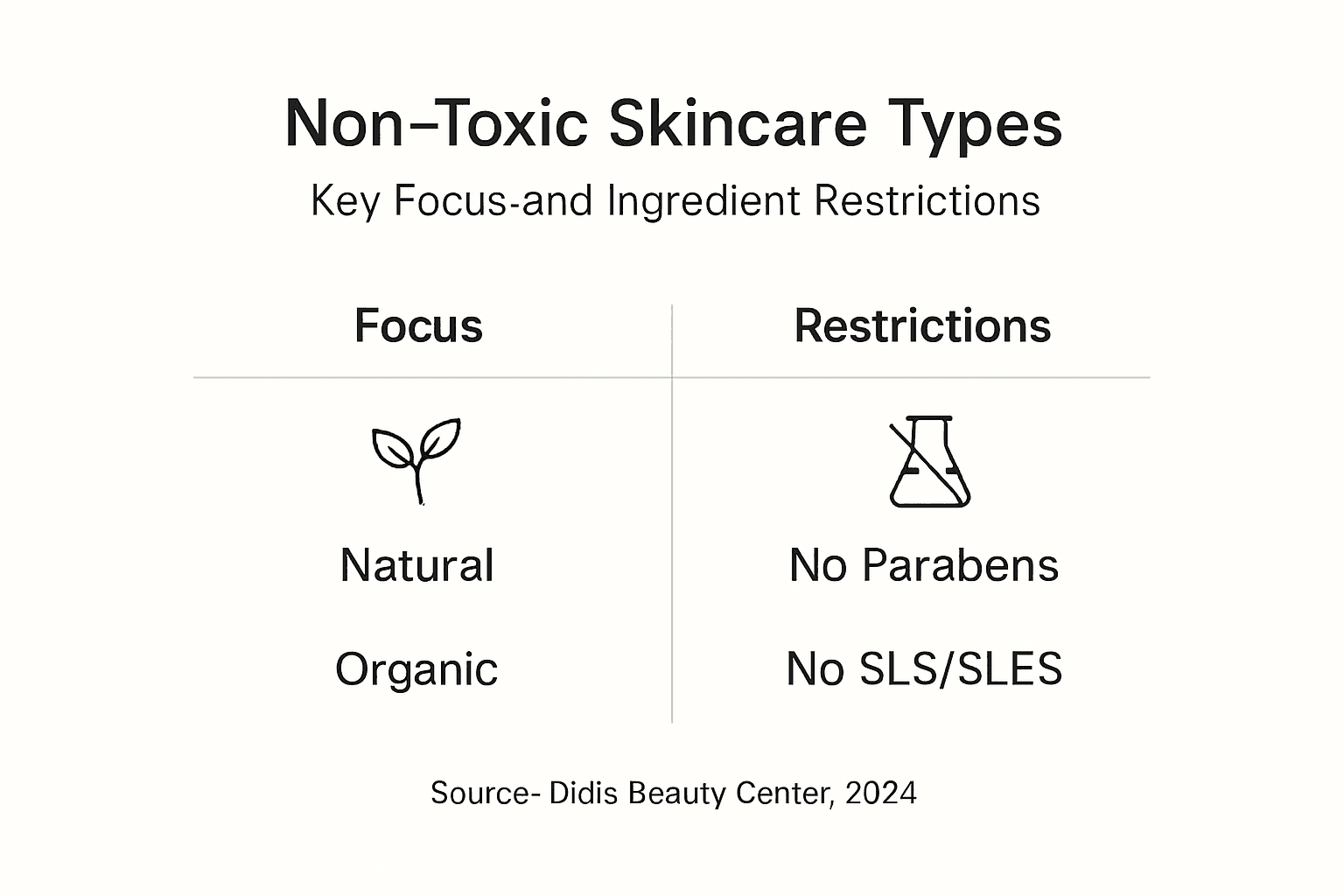
The landscape includes clean beauty, natural skincare, organic certified, and vegan formulations. Each category has overlapping principles but distinct regulatory requirements and ingredient guidelines. Clean beauty emphasizes safety and transparency, while organic certification requires specific agricultural standards and third-party verification.
Common Non-Toxic Skincare Types
Here’s what distinguishes each category:
- Clean beauty focuses on excluding controversial ingredients while maintaining efficacy. Products prioritize ingredient transparency and safety substantiation without necessarily requiring natural sources.
- Natural skincare uses plant-based and mineral ingredients, though “natural” alone doesn’t guarantee safety or efficacy without proper formulation.
- Organic certified products meet strict agricultural and processing standards verified by independent certifying bodies like USDA or ECOCERT.
- Vegan formulations exclude all animal-derived ingredients and animal testing, aligning with ethical consumption values.
These categories often overlap. A product can be both organic and vegan, or clean and natural.
Here’s a quick reference to fundamental non-toxic skincare categories and what sets them apart:
| Category | Main Focus | Certification Needed | Common Ingredient Restrictions |
|---|---|---|---|
| Clean Beauty | Safety, transparency | Not always required | Excludes controversial chemicals |
| Natural Skincare | Plant/mineral sources | Optional | Avoids synthetic additives |
| Organic Certified | Organic agriculture | Third-party required | Only certified organic components |
| Vegan Formulations | No animal products/testing | Often third-party | Excludes all animal derivatives |
Reading Labels and Certifications
Labels tell you a product’s story—if you know what to look for. Third-party certifications like cruelty-free, vegan, or organic stamps provide independent verification. These certifications cost brands money and require ongoing compliance, making them meaningful quality indicators.
When examining ingredient lists, clean beauty standards prioritize full disclosure and safety documentation. Look for brands that explain why they’ve excluded specific ingredients, not just that they’ve excluded them.
Labels matter most when backed by third-party verification and transparent ingredient sourcing.
Beware of misleading terms like “natural” without certification. Marketing language isn’t regulated the same way ingredient claims are, so “naturally derived” doesn’t guarantee safety or efficacy.
Key Ingredients to Embrace and Avoid
Non-toxic skincare prioritizes specific ingredients:
Beneficial ingredients:
- Plant extracts with documented skin benefits (green tea, niacinamide from plant sources)
- Hyaluronic acid and glycerin for hydration
- Peptides and amino acids for skin barrier support
- Natural oils with proven bioavailability
Ingredients to avoid:
- Synthetic fragrance (undisclosed components)
- Parabens and phenoxyethanol as preservatives
- Silicones that disrupt skin microbiome
- Sulfates that strip natural oils
For entrepreneurs, choosing ingredients with existing safety data accelerates product development and builds consumer trust immediately.
Pro tip: Create a “banned ingredients” list specific to your brand values, then source suppliers who align with those standards—consistency in your formulations builds brand credibility faster than chasing trends.
How Non-Toxic Skincare Works
Non-toxic skincare doesn’t work through complicated chemistry or aggressive formulations. Instead, it operates on a simple principle: support your skin’s natural functions rather than disrupt them. The mechanism centers on working with your skin biology, not against it.
Your skin has its own ecosystem. It maintains a protective barrier, hosts beneficial microorganisms, and constantly repairs itself. Non-toxic products enhance these processes instead of interfering with them. This approach produces more sustainable results over time.
The Role of Natural Ingredients
Plant-based phytochemicals work through multiple pathways to protect and repair skin. They scavenge free radicals, reduce inflammation, and support your skin’s natural repair mechanisms. This antioxidant action prevents damage accumulation rather than forcing dramatic changes.
When you choose non-toxic skincare, you’re choosing ingredients that your skin recognizes and processes efficiently. Plant extracts, peptides, and natural oils work because they integrate with your skin’s existing biochemistry.
Key mechanisms include:
- Antioxidant protection prevents oxidative stress and premature aging
- Inflammation reduction calms irritation and strengthens the skin barrier
- Hydration support maintains moisture balance without synthetic film-formers
- Enzymatic support encourages natural skin renewal processes
Skin Microbiome Compatibility
Your skin hosts trillions of beneficial bacteria. Toxic ingredients kill indiscriminately, disrupting this ecosystem and triggering reactive problems like sensitivity or breakouts. Non-toxic formulations, especially those using biosurfactant-based ingredients, maintain this delicate balance.
Biosurfactants are naturally derived cleansing agents that dissolve oils without damaging beneficial bacteria. They’re mild, biodegradable, and work for your skin microbiome rather than against it.
Non-toxic skincare succeeds because it works with your skin’s natural biology, not against it.
This compatibility explains why results develop gradually. Non-toxic products build healthier skin over weeks, not dramatic changes overnight. Patience delivers better long-term outcomes than harsh formulations that create dependency.
Why This Approach Matters for Entrepreneurs
For emerging beauty brands, this mechanism offers competitive advantage. Customers increasingly understand that sustainable skin health requires sustainable formulations. Products that support skin function rather than force temporary fixes build lasting customer loyalty.
When developing your own line, emphasize how your ingredients support skin function. This positions your brand as solution-focused rather than problem-concealing.
Pro tip: Document your ingredient selection rationale—explain how each component supports skin function rather than just listing “natural” claims, and you’ll convert skeptics into loyal customers.
Common Myths and Greenwashing Tactics
The non-toxic skincare market attracts well-intentioned consumers and unscrupulous marketers alike. Myths flourish because the industry lacks strict regulation on terms like “natural” and “clean.” Greenwashing—making false or exaggerated environmental claims—thrives in this ambiguity.
Understanding these tactics protects you whether you’re a consumer or entrepreneur. Misleading claims damage trust in the entire industry, making transparency increasingly valuable as a competitive advantage.
Common Myths About Non-Toxic Skincare
Misunderstandings persist about what non-toxic skincare actually delivers:
- “Natural always means safe” – Many plants are toxic. “Natural” doesn’t guarantee efficacy or skin compatibility without proper formulation and testing.
- “Non-toxic products work instantly” – Real skin health develops gradually. Overnight results suggest synthetic actives or unrealistic marketing.
- “All chemicals are dangerous” – Water is a chemical. The concern is which chemicals and in what concentrations.
- “One ingredient does everything” – Skincare requires strategic combinations. Single-ingredient claims ignore how skin biology actually functions.
- “Organic certification equals non-toxic” – Organic means agricultural standards were met, not that the product is safe or effective for skin.
Greenwashing Tactics to Recognize
Deceptive environmental claims undermine authentic sustainability efforts. Brands use vague language to suggest benefits they haven’t substantiated. Watch for these red flags:
- Vague terms like “eco-friendly,” “natural,” or “clean” without certification or explanation
- Lack of ingredient transparency or sourcing information
- Unverified claims about environmental impact
- Greenwashing packaging (green colors, leaf imagery) without substantive practices
- Absence of third-party certifications
Consumer skepticism grows when greenwashing combines unclear claims with limited ingredient disclosure. Savvy shoppers now demand proof, not promises.
Real non-toxic skincare proves its claims through transparency, third-party verification, and honest marketing.
How to Spot Authentic Non-Toxic Brands
Legitimate brands distinguish themselves through:
- Detailed ingredient lists with explanations of why each component was chosen
- Third-party certifications (cruelty-free, vegan, organic, clean beauty standards)
- Published safety data and testing results
- Transparent sourcing and manufacturing information
- Honest communication about what products can and cannot do
For entrepreneurs developing your own line, transparency becomes your differentiator. Consumers increasingly reward brands that educate rather than mislead.
Pro tip: Create an ingredient transparency document explaining your formulation philosophy—share it publicly and you’ll instantly separate your brand from greenwashers while building customer trust.
Legal Oversight and Safety Worldwide
Non-toxic skincare operates within a complex global regulatory landscape. What’s permitted in one country may be banned in another. Understanding these frameworks matters whether you’re a consumer selecting products or an entrepreneur developing formulations for international markets.
Regulation reflects each region’s approach to consumer protection and environmental responsibility. The stricter the oversight, the more confident you can be about product safety claims.
European Union Standards
The EU enforces the world’s most stringent cosmetic regulations. Safety reports and ingredient bans are mandatory, and animal testing is completely prohibited. Manufacturers must notify authorities of adverse effects, creating a transparent safety tracking system.
The EU banned over 1,300 chemicals from cosmetics—significantly more than other regions. This strict approach makes European non-toxic skincare claims particularly credible. For entrepreneurs, EU compliance often exceeds other markets’ requirements, providing a competitive advantage globally.
Regulatory Frameworks Across Major Markets
Global cosmetic regulations vary significantly across the EU, United States, Japan, China, and Brazil. Each region enforces different ingredient restrictions, labeling requirements, and pre-market approval processes.
Key differences include:
The table below compares global cosmetic regulations highlighting their rigor and scope:
| Region | Banned Ingredients Count | Animal Testing Policy | Safety Documentation Required |
|---|---|---|---|
| European Union | Over 1,300 | Completely prohibited | Strict pre-market approval |
| United States | Around 30 | Not explicitly banned | Manufacturer self-regulation |
| Japan | Moderate number | Varies; some restrictions | Ingredient approval lists |
| China | Historically strict | Recently relaxed imports | Increasing transparency |
| Brazil | Moderate | Some restrictions | Efficacy substantiation |
- European Union – Strictest regulations; pre-market safety approval required; animal testing banned
- United States – FDA oversight; fewer banned ingredients; manufacturer responsibility for safety
- Japan – Moderate restrictions; specific ingredient approval lists; detailed documentation required
- China – Historically stricter; recent liberalization for imported products; growing transparency requirements
- Brazil – ANVISA regulations; emphasis on efficacy substantiation; increasing alignment with international standards
What This Means for Consumers and Entrepreneurs
Consumers benefit from understanding which regulatory framework governs their products. EU-compliant products generally meet higher safety standards than products only compliant with US regulations.
Entrepreneurs face a choice: meet the lowest common denominator or exceed standards globally. Brands that pursue EU compliance automatically qualify for most other markets, reducing reformulation costs and expanding distribution opportunities.
Stricter regulatory oversight creates genuine non-toxic skincare; weaker regulations enable misleading claims.
Transparency requirements vary globally, but the trend moves toward stronger disclosure mandates. Adverse effect reporting systems now exist in most developed markets, creating accountability mechanisms that protect consumers and reward genuinely safe products.
Pro tip: If developing skincare products, start with EU compliance standards—they exceed most markets’ requirements, making your formulations viable everywhere while positioning your brand as safety-focused.
Embrace Safer Beauty with Non-Toxic Skincare Solutions
Choosing non-toxic skincare means prioritizing your skin’s health and the environment by avoiding harmful chemicals and embracing transparency. If you are looking for products that truly support your skin’s natural function while aligning with strict safety standards and clean beauty principles, explore our curated Skin Care Collection - Face, Body, Oils – Didis Beauty Center. Each item features thoughtfully selected ingredients designed to nurture your skin without compromise.
Take control of your skincare routine starting today with effective and honest formulas. Visit Didis Beauty Center and discover how our natural, vegan lines and transparent ingredient sourcing can elevate your beauty regimen. Whether you want hydrating toners from our Toners Collection: Facial Toners for Skincare – Didis Beauty Center or are looking to create your own cruelty-free brand, we provide the quality and reliability you need. Shop now and make the switch to clean, proven, and confident skincare.
Frequently Asked Questions
What is non-toxic skincare?
Non-toxic skincare refers to products formulated without harmful chemicals, synthetic irritants, or potentially damaging ingredients for skin and overall health. It emphasizes safety, transparency, and efficacy through carefully chosen components.
Why does non-toxic skincare matter for consumers?
Non-toxic skincare matters because it prioritizes the use of safe and effective ingredients while supporting skin health. It also fosters transparency in product formulation, allowing consumers to make informed choices about the products they apply to their skin.
How do I identify non-toxic skincare products?
You can identify non-toxic skincare products by looking for clear ingredient lists that exclude synthetic dyes, fragrances, parabens, and phthalates. Certifications such as cruelty-free, vegan, and organic can also indicate a commitment to safety and transparency.
What is the difference between clean beauty and organic skincare?
Clean beauty focuses on excluding controversial ingredients while maintaining product efficacy and transparency. In contrast, organic skincare adheres to specific agricultural standards, requiring third-party verification that the ingredients used are certified organic.
Recommended
- Why Non-Toxic Skincare Matters for Wellness – Didis Beauty Center
- Why Non-Toxic Skincare Matters for Wellness – Didis Beauty Center
- What Is Minimal Skincare and Why It Matters – Didis Beauty Center
- What Is Minimal Skincare and Why It Matters – Didis Beauty Center
- Why Simple Skincare Matters for Modern Men – NORML
Discourse (0)