


Finding truly effective skincare can feel overwhelming when social media promotes endless multi-step routines and flashy influencer recommendations. Eco-conscious consumers worldwide often struggle to balance ethical choices with simple daily regimens. Minimal skincare prioritizes scientifically supported ingredients and vegan, cruelty-free products, helping you avoid unnecessary clutter and irritation while reducing your environmental footprint. This article guides you through essential principles, debunks common myths, and helps you build a routine that actually works for both your skin and your values.
Table of Contents
- Minimal Skincare Defined and Common Myths
- What Minimal Skincare Actually Includes
- Common Myths Debunked
- Why This Matters for You
- Key Principles and Essential Product Types
- The Core Principles
- Essential Product Categories
- Key Ingredients Worth Your Attention
- Optional Targeted Treatments
- Choosing Vegan, Cruelty-Free Options
- Vegan, Cruelty-Free, and Sustainable Trends
- Understanding the Distinctions
- Why These Standards Matter Now
- Evaluating Brand Claims
- Sustainability Beyond Just Ingredients
- Building Your Ethical Minimal Routine
- Sample Minimal Skincare Routines Explained
- Morning Routine (The Essentials)
- Evening Routine (Repair and Reset)
- Routines by Skin Type
- Weekly Treatments (Optional)
- Adjusting for Seasons
- Risks, Mistakes, and Comparing Full Routines
- Common Mistakes to Avoid
- Real Risks of Overcomplicated Routines
- Minimal Versus Full Routines: The Comparison
- The Evidence-Based Approach
- When Full Routines Make Sense
Key Takeaways
| Point | Details |
|---|---|
| Embrace Minimalism | Focus on a few essential products to simplify your skincare routine and enhance effectiveness. |
| Core Products | A minimal routine should include a gentle cleanser, moisturizer, and sunscreen as non-negotiable items. |
| Quality Over Quantity | Prioritize proven ingredients in your products rather than following social media trends and using excessive items. |
| Eco-Conscious Practices | Adopting minimal skincare helps reduce waste and aligns with sustainable living, benefiting both you and the environment. |
Minimal Skincare Defined and Common Myths
Minimal skincare means using fewer, purposeful products instead of a lengthy bathroom cabinet. It’s about stripping away unnecessary items and focusing on what actually works for your skin. Think of it as quality over quantity—a philosophy that aligns perfectly with eco-conscious living.
The core principle is simple: effective skincare relies on a few scientifically supported ingredients rather than accumulating countless products. You don’t need 10 steps to have healthy skin. In fact, dermatologists and skincare experts increasingly recommend simplified routines based on evidence rather than complex regimens influenced by social media trends.
What Minimal Skincare Actually Includes
A minimal routine typically contains three essential elements:
- A gentle cleanser suited to your skin type
- A moisturizer with hydrating ingredients
- Sun protection (non-negotiable for prevention)
Optional additions depend on your specific concerns—perhaps a targeted serum for brightening or a treatment addressing sensitivity. That’s it. No need for toners, essences, masks, and multiple serums unless your skin genuinely needs them.
Effective skincare often requires just a few products with proven ingredients, not an extensive collection taking up your counter space.
Common Myths Debunked
Myth 1: More products equal better results
False. Adding more items doesn’t improve outcomes; it increases irritation risk and expense. Your skin processes what you apply, and excess layering can overwhelm it. Simple routines actually perform better for most people.
Myth 2: You need different products for each season
Not necessarily. A solid moisturizer and cleanser work year-round. You might adjust hydration levels slightly, but completely rotating your lineup is unnecessary and wasteful.
Myth 3: Skincare must be complicated to be effective
This is perhaps the biggest misconception. Contemporary skincare practices have grown unnecessarily complex due to social media and marketing, but complexity doesn’t equal efficacy. Generations had healthy skin with far fewer products than today’s 10-step routines demand.
Myth 4: Natural products are always safer
Naturalness doesn’t guarantee safety or efficacy. However, vegan, cruelty-free formulations from trusted sources do eliminate harmful synthetic chemicals while avoiding animal testing. Quality matters more than whether ingredients come from nature or laboratories.
Myth 5: You must follow influencer routines
Influencers benefit financially from promoting multi-step routines. Your skin has unique needs unrelated to their recommendations. What works for someone online might irritate your skin or contradict your values.
Why This Matters for You
Minimal skincare saves money, reduces packaging waste, and simplifies your morning and evening routines. You spend less time applying products and more time living your life. For eco-conscious consumers, using fewer items directly reduces your environmental footprint through less packaging and fewer resources consumed.
You can confidently explore why choosing natural skincare approaches aligns with both personal wellness and planetary health when you focus on intentional, minimal product selection.
Pro tip: Start by identifying your three non-negotiable products, then use them consistently for at least four weeks before adding anything new—this reveals what your skin actually needs versus what marketing convinced you it needs.
Key Principles and Essential Product Types
Minimal skincare works when you understand what your skin actually needs versus what marketing tells you it needs. The key is selecting products with proven ingredients that deliver measurable results without unnecessary fillers or marketing hype.
Think of your skincare like a balanced diet. You wouldn’t eat 15 different foods at every meal; you’d choose nutrient-dense options that fuel your body. The same applies to your skin—a few powerful, purposeful products beat a drawer full of mediocre ones.
The Core Principles
Every minimal skincare routine rests on these foundational ideas:
- Simplicity first: Use only what your skin demonstrates it needs
- Quality ingredients: Focus on proven actives rather than trendy additions
- Consistency matters: Regular use of fewer products outperforms sporadic complex routines
- Less is more: Overwhelming your skin with layers increases irritation risk
- Evidence-based choices: Let science guide purchases, not social media trends
Your skin thrives with intention, not abundance—a few well-chosen products beat a bathroom cabinet full of untested items.
Essential Product Categories
A complete minimal routine includes three non-negotiable categories:
1. Cleanser
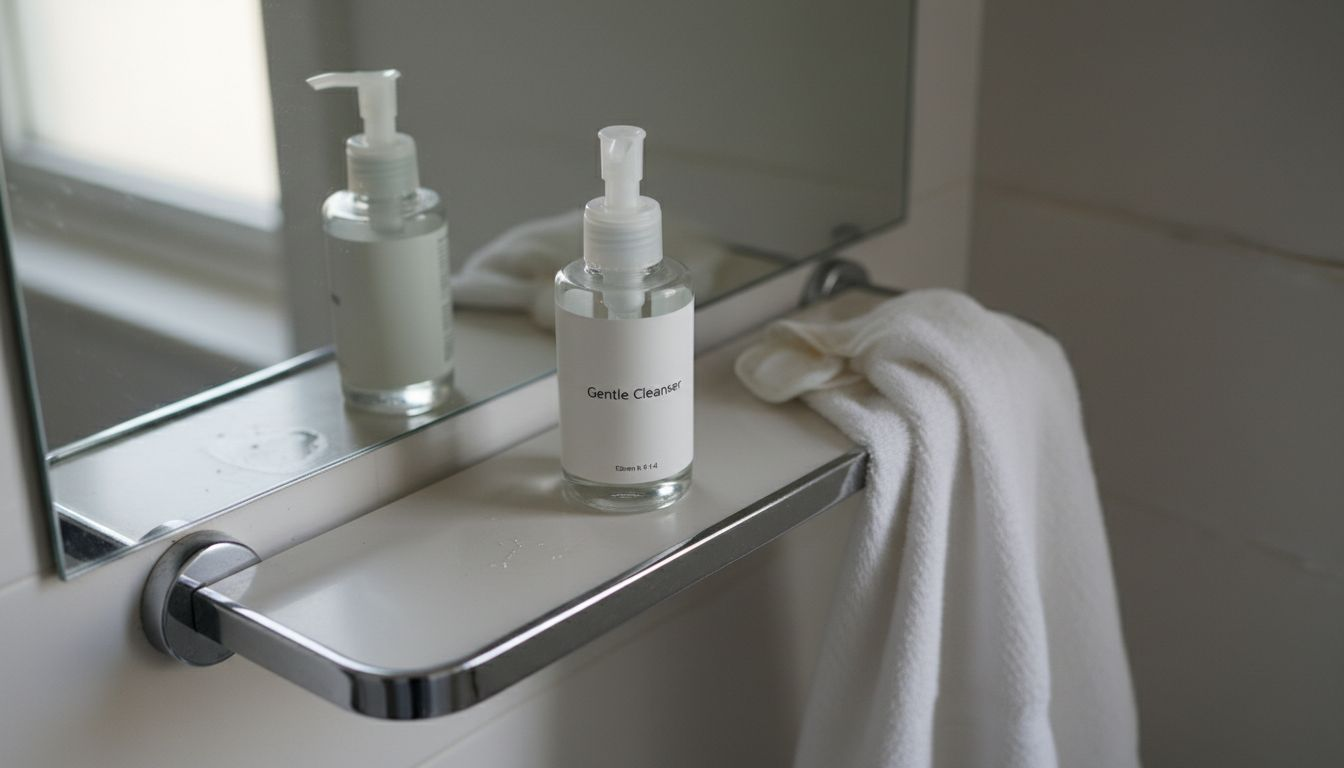
Your cleanser removes dirt, oil, and impurities without stripping natural moisture. Choose one suited to your skin type—gel for oily skin, creamy for dry, balanced for combination. This product touches your face twice daily, so quality matters significantly.
2. Moisturizer
Hydration is non-negotiable. Your moisturizer locks in water and supports your skin barrier. Even oily skin needs this step; just select lightweight, oil-free formulas. A good moisturizer prevents your skin from overproducing oil to compensate for dryness.
3. Sun Protection
Sunscreen prevents aging, skin cancer risk, and hyperpigmentation. Use it daily, even on cloudy days. This is the single most effective anti-aging product available.
Key Ingredients Worth Your Attention
When evaluating products, look for proven skincare ingredients that support minimalism: hyaluronic acid for deep hydration, vitamin C for antioxidant protection, niacinamide for strengthening skin barrier, and peptides for anti-aging support.
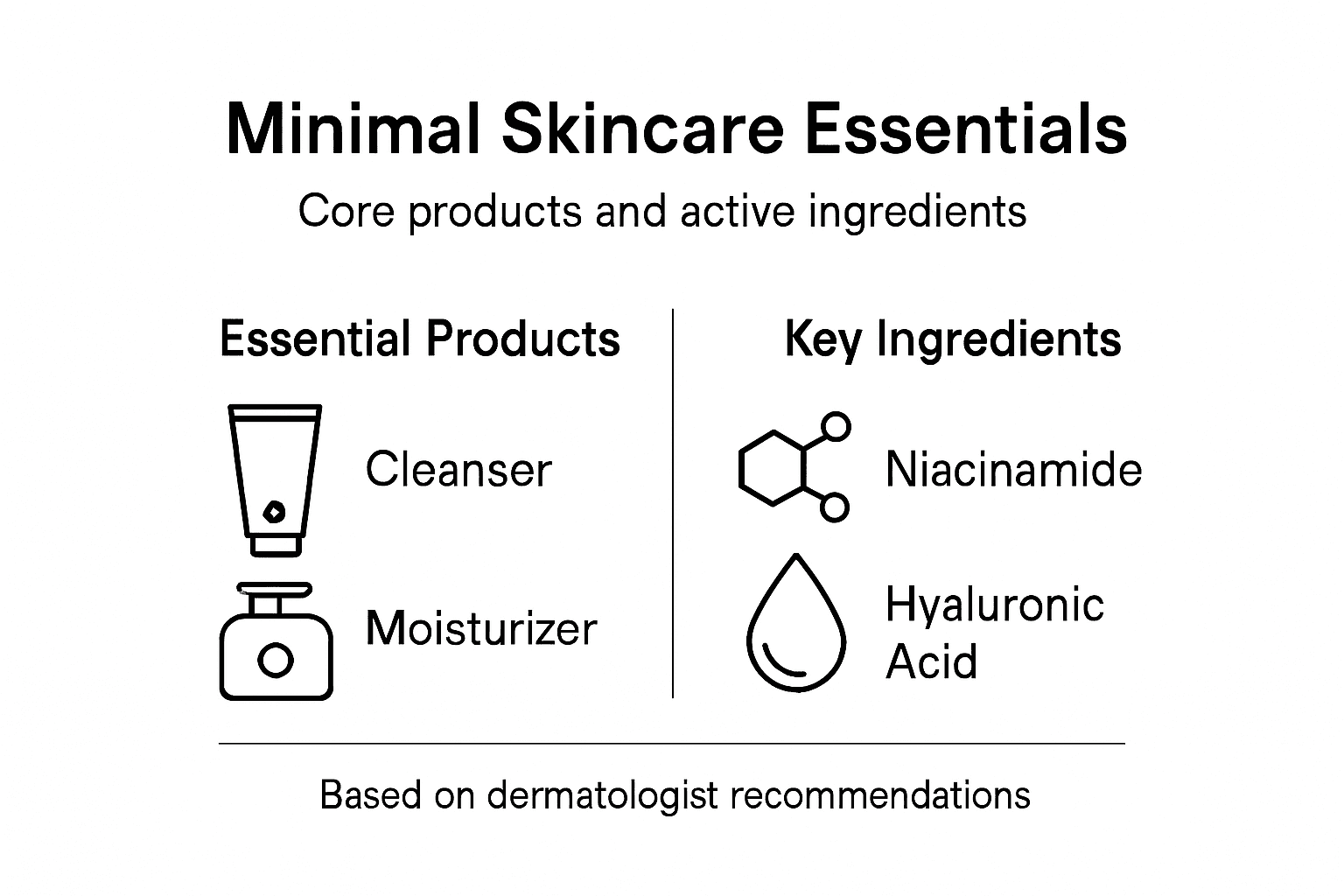
These actives deliver visible results without requiring 10-step routines. Each addresses specific concerns through solid scientific backing.
Key ingredients in minimal skincare offer distinct benefits:
| Ingredient | Primary Benefit | Who Should Use |
|---|---|---|
| Hyaluronic Acid | Deep hydration boost | All skin types needing moisture |
| Vitamin C | Antioxidant and brightening | Dull, uneven, or aging skin |
| Niacinamide | Strengthens skin barrier | Sensitive or irritated skin |
| Peptides | Anti-aging support | Mature or texture-prone skin |
Optional Targeted Treatments
Consider adding one targeted treatment based on your primary skin concern:
- Brightening serums for dullness or uneven tone
- Hydrating essences for dehydration
- Targeted treatments for sensitivity or barrier damage
- Anti-aging formulas for fine lines (if that’s your goal)
One treatment maximum. If you address multiple concerns, choose the most pressing one first.
Choosing Vegan, Cruelty-Free Options
Minimal doesn’t mean compromising your values. Vegan, cruelty-free formulations eliminate animal-derived ingredients and testing, aligning your skincare with your ethics. Quality vegan products deliver equivalent results to conventional options while supporting compassionate beauty practices.
Pro tip: Before purchasing any new product, read ingredient lists looking for your key actives in the first five ingredients—this indicates effective concentration rather than token amounts.
Vegan, Cruelty-Free, and Sustainable Trends
Minimal skincare aligns naturally with eco-conscious values. When you use fewer products, you eliminate unnecessary waste, reduce your carbon footprint, and make purchasing decisions intentional. This is where vegan, cruelty-free, and sustainable skincare becomes not just a trend but a meaningful lifestyle choice.
The beauty industry is shifting. Consumers worldwide increasingly demand products that reflect their ethics—no animal testing, no animal-derived ingredients, and minimal environmental impact. Minimal skincare makes this shift easier by reducing the number of items you purchase and evaluate.
Understanding the Distinctions
These terms mean different things. Understanding each helps you make informed choices:
- Vegan: Contains zero animal-derived ingredients (no beeswax, lanolin, collagen, or carmine)
- Cruelty-free: Not tested on animals at any stage of development
- Sustainable: Produced with minimal environmental harm through responsible sourcing and packaging
A product can be vegan but not cruelty-free, or vice versa. Look for brands meeting all three criteria if your values demand it.
Your purchasing power drives industry change—choosing ethical skincare sends a message that consumers value compassion and sustainability.
Why These Standards Matter Now
Global consumer demand for skincare products free from animal testing continues rising dramatically. Brands respond to market pressure, meaning your choices influence what companies produce next year. When you support cruelty-free options, you fund research into alternative testing methods.
Evaluating Brand Claims
Not all marketing claims are legitimate. Watch for these red flags:
- Vague language like “naturally derived” without vegan certification
- No transparent sourcing information available
- Parent company tests finished products on animals
- Excessive, non-recyclable packaging contradicting sustainability claims
Trusted certifications matter. Look for Leaping Bunny, PETA certified, or similar recognized logos verifying claims.
Sustainability Beyond Just Ingredients
True sustainability encompasses more than what’s inside the bottle. Consider:
- Packaging materials (glass, aluminum, or recyclable plastic)
- Refill options reducing repetitive packaging waste
- Carbon-neutral shipping or local sourcing
- Ethical labor practices throughout the supply chain
Minimal routines naturally support sustainability since fewer products mean fewer containers and less overall consumption.
Building Your Ethical Minimal Routine
Start by identifying two to three brands aligning with your values. Research their cruelty-free status and sustainability practices thoroughly before committing. Quality vegan skincare performs identically to conventional options while supporting your ethical boundaries.
Transitioning doesn’t require replacing everything immediately. Use current products until empty, then swap to ethical alternatives. This approach reduces waste while respecting your budget.
Pro tip: Check brand websites for transparency reports detailing ingredient sourcing, testing methods, and packaging materials—companies confident in their ethics freely share this information.
Sample Minimal Skincare Routines Explained
Minimal skincare isn’t one-size-fits-all. Your routine depends on your skin type, climate, age, and specific concerns. The good news? You don’t need different routines for morning and night—just strategic adjustments based on your skin’s actual needs.
Think of minimal routines as a foundation you customize. Start with the essentials, then add targeted treatments only when your skin demonstrates it needs them. This approach prevents wasting money on products that don’t address your concerns.
Morning Routine (The Essentials)
Your morning routine should take five minutes maximum:
- Cleanse with a gentle cleanser suited to your skin type
- Apply moisturizer while skin is still slightly damp
- Use sunscreen (non-negotiable, even indoors)
That’s it. Your skin doesn’t accumulate overnight grime like your face does during the day, so a gentle rinse with water or minimal cleanser suffices for many people. Sunscreen is your most powerful anti-aging tool—use it consistently.
Evening Routine (Repair and Reset)
Night routines allow deeper treatment since you’re not heading into sun exposure:
- Cleanse to remove daily buildup, makeup, and environmental pollutants
- Apply targeted serum or treatment (if needed for your concerns)
- Moisturize while skin is slightly damp
This is when you layer in optional actives. Your skin repairs itself at night, making it the ideal time for treatments addressing specific issues like texture or hyperpigmentation.
Routines by Skin Type
Simple skincare routines tailored to different skin types emphasize that oily, dry, sensitive, and combination skin all benefit from minimal approaches.
Oily Skin: Lightweight cleanser, mattifying moisturizer, sunscreen. Skip heavy serums unless addressing specific concerns.
Dry Skin: Creamy cleanser, rich moisturizer, sunscreen. Consider adding a hydrating serum if your skin feels tight.
Sensitive Skin: Gentle, fragrance-free cleanser, barrier-supporting moisturizer, mineral sunscreen. Avoid unnecessary actives that irritate.
Combination Skin: Balanced cleanser, lightweight hydrating moisturizer, sunscreen. Focus on your most problematic zone if needed.
A minimal routine you use consistently outperforms a complex routine you abandon—consistency beats complexity every time.
Weekly Treatments (Optional)
If you want additional care, keep it minimal:
- One exfoliating treatment weekly (not necessary for everyone)
- One hydrating mask if your skin feels dehydrated
- Never exceed two additional treatments weekly
Many people skip these entirely and experience no negative effects. Add them only if your skin visibly improves.
Adjusting for Seasons
You might increase moisturizer hydration in winter or use lighter textures in summer. These minor tweaks keep your routine effective year-round without requiring complete product overhauls.
Abrupt climate changes demand slight adjustments, but your core three products remain constant. This consistency helps you identify what actually works versus what causes problems.
Pro tip: Use the same three products for at least six weeks before evaluating results—your skin needs time to stabilize before you’ll see meaningful improvements.
Risks, Mistakes, and Comparing Full Routines
Complex skincare routines carry real risks most people don’t discuss. Adding more products doesn’t guarantee better results—it often creates problems like irritation, sensitization, and barrier damage. Understanding these risks helps you make informed decisions about your routine.
The biggest mistake? Following influencer routines blindly. What works for someone with different skin, climate, and genetics won’t necessarily work for you. Social media drives unnecessarily complicated regimens that harm more than help.
Common Mistakes to Avoid
These errors derail skincare results and waste money:
- Using too many actives simultaneously (retinol plus vitamin C plus acids)
- Applying products to damp versus dry skin inconsistently
- Switching routines every few weeks without patience
- Layering incompatible ingredients that cause irritation
- Skipping sunscreen to accommodate “simpler” routines
- Using adult products on young skin without professional guidance
Each mistake undermines your results. The solution? Start minimal, change one element at a time, and wait at least four weeks before evaluating.
Real Risks of Overcomplicated Routines
Complex skincare routines can disrupt your natural skin barrier through excessive layering and potent actives. Over-irritated skin becomes reactive, flaky, and sensitized. This takes months to repair after damage occurs.
Additional risks include:
- Contact dermatitis from ingredient incompatibility
- Photosensitivity from multiple actives without adequate sun protection
- Budget strain from unnecessary products
- Environmental waste from unused bottles
Your skin barrier exists to protect you. Respecting it through minimal routines prevents these costly problems.
Minimal Versus Full Routines: The Comparison
Minimal Routine Benefits
- Lower cost with fewer products
- Easier to identify irritants if problems arise
- Better consistency since routines take five minutes
- Reduced environmental impact
- Proven effective in clinical settings
Full Routine Reality
Studies show overcomplicated routines often lack clinical benefit02294-1/fulltext) and frequently cause adverse effects. Many products offer no additional value beyond marketing appeal. Full routines work only when every product addresses a demonstrated need—which rarely occurs.
Here is how minimal and full skincare routines compare on key factors:
| Factor | Minimal Routine | Full Routine |
|---|---|---|
| Cost | Low product expense | High ongoing expense |
| Skin Irritation Risk | Reduced chance of reactions | Increased irritation likelihood |
| Environmental Impact | Less packaging, less waste | More containers and waste generated |
| Routine Time | 5 minutes or less | Often 15+ minutes daily |
| Consistency | Easier to maintain | Frequently abandoned or skipped |
The Evidence-Based Approach
Dermatologists increasingly recommend minimal, evidence-based routines over complex ones. Your skin responds better to consistency with proven actives than to frequent product switching. Quality beats quantity.
If you currently use a full routine, transition gradually. Replace one product monthly with a minimal alternative rather than overhaul everything simultaneously. This prevents shock to your skin barrier while allowing adjustment time.
More products create more problems, not better skin—simplicity backed by science beats complexity every time.
When Full Routines Make Sense
Full routines benefit only those addressing multiple complex concerns simultaneously with professional guidance. Even then, dermatologists recommend starting minimal and adding strategically.
For most people, including your target audience of eco-conscious consumers, minimal routines deliver superior results with less waste and lower cost. You’re not sacrificing effectiveness—you’re optimizing it.
Pro tip: If your skin develops unexpected irritation, immediately pause all new products and return to your three essentials for one week—this reveals which product caused the problem.
Simplify Your Skincare Routine with Natural, Effective Solutions
If you are ready to embrace the benefits of minimal skincare and reduce the hassle of complex routines, Didis Beauty Center offers exactly what you need. Our curated Cream Collection - Skincare & Moisturizers for Face & Beard features high-quality, vegan moisturizers formulated to nourish and protect your skin without unnecessary additives. Complement these with our gentle selections from the Oils Collection: Skincare Oils for Face & Body to hydrate and support your skin barrier naturally.

Discover how simplifying your skincare can save money, time, and reduce irritation while honoring your values with cruelty-free products. Start your journey toward a cleaner, more intentional routine today at Didis Beauty Center. Shop our Skin Care Collection - Face, Body, Oils now and enjoy the confidence that comes from truly effective, minimal skincare.
Frequently Asked Questions
What is minimal skincare?
Minimal skincare is a philosophy that focuses on using fewer, purposeful products to achieve healthy skin, emphasizing quality over quantity. It involves selecting a few scientifically supported ingredients rather than accumulating numerous products.
What are the key components of a minimal skincare routine?
A minimal skincare routine typically includes three essential components: a gentle cleanser suited to your skin type, a moisturizer with hydrating ingredients, and daily sun protection. Optional additions may include targeted serums based on specific skin concerns.
Are more skincare products always better for my skin?
No, using more products does not guarantee better results. In fact, a simplified routine often performs better as it reduces the risk of irritation and allows your skin to process a fewer number of ingredients effectively.
Why is sun protection essential in a minimal skincare routine?
Sun protection is essential because it prevents skin damage, aging, and the risk of skin cancer. Daily use of sunscreen is the most effective anti-aging measure you can adopt, and it should be a non-negotiable part of your skincare regimen.
Recommended
- Role of Education in Skincare – Empowering Better Choices – Didis Beauty Center
- Role of Education in Skincare – Empowering Better Choices – Didis Beauty Center
- Why Non-Toxic Skincare Matters for Wellness – Didis Beauty Center
- Why Non-Toxic Skincare Matters for Wellness – Didis Beauty Center
- Navova Micellar Cleansing Water | Gentle Makeup Removal
Discourse (0)