


Finding honest information about facial oils can feel confusing when so many natural products claim to have miracle effects. The truth is, not all plant-based oils offer the same benefits or safety, and terms like “organic” or “natural” do not always guarantee gentle results. Understanding the chemical makeup and intended use of each oil is crucial for both eco-conscious shoppers and businesses. This guide unpacks the real science and clears up common myths so you can confidently choose oils that fit your skincare values and needs.
Table of Contents
- Defining Facial Oil And Common Misconceptions
- Types Of Facial Oils And Key Ingredients
- How Facial Oils Work In Skincare
- Selecting And Using Facial Oils Safely
- Comparing Facial Oils With Other Moisturizers
Key Takeaways
| Point | Details |
|---|---|
| Facial Oils Are Versatile | Properly selected facial oils benefit all skin types, providing hydration and nourishment regardless of skin concerns. |
| Understanding Carrier vs. Essential Oils | Knowing the difference helps in selecting the right products; carrier oils are safe for direct application while essential oils need dilution. |
| Educate Customers on Usage | Communicate the importance of patch testing and understanding product ingredients to avoid adverse reactions. |
| Quality Over Labels | Focus on sourcing quality ingredients and transparency rather than relying solely on organic or “natural” labels. |
Defining Facial Oil and Common Misconceptions
Facial oils are concentrated plant extracts derived from seeds, nuts, and plant matter that deliver moisture and nutrients directly to your skin. Unlike water-based moisturizers, these oils penetrate the skin barrier and create a protective layer that locks in hydration. They’re lightweight enough for daily use yet powerful enough to address specific skin concerns.
Here’s what facial oils actually are:
- Plant-based concentrates extracted from botanicals like jojoba, rosehip, argan, and squalane
- Skin-barrier builders that strengthen your skin’s natural protective function
- Nutrient powerhouses packed with vitamins, antioxidants, and fatty acids
- Versatile ingredients suitable for all skin types when chosen correctly
The Misconceptions Holding You Back
The biggest myth? That facial oils are only for dry skin. This idea persists because people confuse “oily” skin with “needing oil.” Your skin produces its own oils, but if stripped too aggressively, it overcompensates by producing even more sebum. The solution isn’t avoiding facial oils—it’s choosing the right formulas.
Another major misconception assumes “natural” automatically means safe. This is simply untrue. Essential oils contain complex chemical compositions that vary widely between plants and batches. Some have hormonal activity that could affect your endocrine system if used improperly. Natural doesn’t bypass chemistry or biology.
Many small business owners and eco-conscious consumers believe organic oils require zero safety considerations. That’s incorrect. The source and processing method matter more than the label. Even organic oils need proper concentration levels and usage guidelines to avoid adverse reactions.
Understanding what facial oils truly are—and what they aren’t—is the foundation for building a skincare routine that actually works for your skin type and values.
Regulatory Reality Check
Facial oils fall into cosmetic classification when marketed to cleanse or beautify skin. However, products claiming therapeutic benefits may be regulated as drugs. This affects labeling requirements, safety standards, and what claims companies can legally make. For small business owners creating private-label skincare, this distinction matters tremendously.
When you understand these definitions and misconceptions, you can shop with confidence and avoid products making false promises.
Pro tip: Read ingredient lists beyond marketing claims—look for concentration levels and patch test any new facial oil on your inner arm for 24 hours before applying to your face.
Types of Facial Oils and Key Ingredients
Facial oils come from diverse plant sources, each delivering unique benefits based on their chemical makeup. Understanding the difference between carrier oils and essential oils helps you choose the right products for your skin and business offerings.
Carrier Oils vs. Essential Oils
Carrier oils are the foundation of most facial oil products. These are typically cold-pressed from seeds, nuts, and plant matter, containing distinct fatty acid profiles that support skin barrier function and hydration. Common carriers include jojoba, rosehip, argan, squalane, and sunflower oil.
Essential oils are highly concentrated extracts with potent aromatic and therapeutic properties. They’re usually blended into carrier oils because they’re too powerful to use alone. The FDA recognizes various essential oils derived from botanical sources as generally safe for cosmetic use when properly formulated.
Here’s how they differ:
Here’s a quick comparison of carrier oils and essential oils to clarify their uses in skincare:
| Property | Carrier Oils | Essential Oils |
|---|---|---|
| Skin Application | Safe undiluted | Requires dilution |
| Main Benefit | Hydration, barrier repair | Aroma, targeted therapy |
| Extraction Method | Cold-pressed from seeds/nuts | Distilled from plant parts |
| Shelf Life | Usually longer, stable | Sensitive to light and air |
- Carrier oils are lightweight, stable, and safe for direct skin application
- Essential oils are concentrated, require dilution, and demand careful handling
- Carrier oils nourish and protect the skin barrier
- Essential oils provide fragrance, aromatherapy benefits, and specific skin benefits
Key Ingredients Across Plant Sources
Facial oils originate from various plant families including seeds, flowers, bark, and roots. Lavender, chamomile, rose, ginger, and carrot oils each bring different phytochemicals and properties to formulations.
The plant source determines the ingredient profile:
- Seed oils (sunflower, jojoba, rosehip) deliver vitamins and antioxidants
- Herbal oils (lavender, chamomile, mint) offer soothing and aromatic properties
- Citrus oils (lemon, orange, grapefruit) provide brightening and energizing effects
- Specialty oils (carrot, ginger, laurel) target specific skin concerns
The chemical composition of your chosen oil determines its actual benefits—not the marketing claims or price point.
What This Means for Small Business Owners
If you’re creating private-label skincare products, knowing your oil types helps you craft honest product descriptions and meet regulatory standards. Mislabeling carrier oils as essential oils or vice versa creates compliance issues and customer trust problems.
Choosing quality sources matters tremendously. Organic certification helps, but processing methods and storage conditions affect the final ingredient quality more than the label.
Pro tip: Request supplier documentation showing botanical origin, extraction method, and chemical testing results before adding facial oils to your private-label formulations.
How Facial Oils Work in Skincare
Facial oils don’t just sit on your skin surface—they actively work to restore your skin barrier and address underlying concerns. Understanding this mechanism helps you make informed choices about which products will deliver real results for your customers and your own routine.

The Moisture Barrier Restoration
Your skin barrier is a protective layer that keeps moisture in and harmful elements out. When stripped by harsh cleansing or environmental stress, it becomes compromised, leading to sensitivity and water loss.
Facial oils restore this barrier by providing emollient benefits that lock in moisture and rebuild protective lipids. They create a breathable seal rather than a heavy occlusive coating, allowing your skin to function normally while staying hydrated.
Here’s what happens when you apply facial oil:
- Fatty acids penetrate the outer skin layer
- Lipids reinforce the barrier structure
- Moisture gets sealed into deeper layers
- Skin becomes more resilient and balanced
Active Biochemical Actions
Beyond moisture retention, many facial oils deliver therapeutic benefits through their chemical constituents. Essential oils exhibit antibacterial and anti-inflammatory properties that support skin protection and healing.
These oils work at the cellular level by modulating microbial populations and reducing inflammation. When properly diluted, topical application can exert antibacterial and anti-inflammatory effects that improve overall skin appearance and comfort.
The benefits include:
- Fighting acne-causing bacteria without harsh chemicals
- Calming irritated or inflamed skin
- Supporting your skin’s natural healing processes
- Strengthening skin resilience over time
Why Dilution Matters
Undiluted essential oils are too potent for direct skin application. Diluting them in carrier oils reduces irritation risk while maintaining their benefits. This is why quality facial oil products blend essential oils with carrier bases.
The best facial oils work because they address both the physical barrier and the biochemical needs of your skin simultaneously.
For Small Business Owners
When formulating private-label facial oils, understanding these mechanisms helps you create products that deliver measurable results. Customers notice when products actually work—this builds loyalty and repeat purchases.
Don’t just blend oils randomly. Know why each ingredient serves a purpose in your formulation.
Pro tip: Document the specific benefits each oil brings to your formulation and educate your customers about what they’re applying—this transparency builds trust and justifies your pricing.
Selecting and Using Facial Oils Safely
Choosing the right facial oil and using it correctly makes the difference between glowing skin and irritation. Safety isn’t complicated, but it does require attention to a few key practices that protect your skin and your bottom line.
Reading Labels and Understanding Claims
Marketing language can be misleading. Terms like “hypoallergenic” aren’t federally regulated, so they don’t guarantee you won’t react to a product. Always check the ingredient list rather than relying on marketing claims alone.
When selecting facial oils, look for transparency about sourcing and processing. Reputable brands list botanical origins and any dilution information clearly on packaging.
Key things to verify:
- Ingredient transparency and botanical sourcing
- Dilution ratios for essential oils
- Storage recommendations and shelf life
- Allergen warnings if applicable
Patch Testing Before Full Use
No matter how quality the product is, your skin is unique. Essential oils can cause allergic reactions and respiratory irritation, especially in individuals with asthma or sensitivities.
Always patch test new facial oils on your inner arm or behind your ear for 24 hours before applying to your face. This catches adverse reactions before they become a bigger problem.
Your patch test process:
- Apply a small amount to clean inner arm skin
- Wait 24 hours without washing the area
- Check for redness, itching, or burning
- Proceed only if no reactions occur
Safe Storage and Handling
Proper storage extends shelf life and prevents contamination. Keep facial oils in dark glass bottles away from direct sunlight, heat, and moisture. Store in cool environments—many oils oxidize quickly when exposed to light or air.
Following label directions and maintaining clean hands and packaging prevents bacterial contamination. Before each application, wash your hands thoroughly and ensure bottle caps seal properly.
Discard products immediately if you notice changes in smell, color, or texture. These indicate oxidation or bacterial growth.
Never use undiluted essential oils directly on skin—dilution is non-negotiable for safety and effectiveness.
Special Considerations
If you have existing skin conditions like eczema or rosacea, consult healthcare providers before introducing new facial oils. Some oils contain compounds that disrupt hormones or trigger sensitivities in vulnerable individuals.
For those with asthma or respiratory allergies, avoid inhaling aromatherapy oils directly. Use them only in diluted topical formulations.
Pro tip: Create a simple tracking system documenting which products your customers use and their reactions—this data becomes invaluable for formulating new products and building customer trust.
Comparing Facial Oils With Other Moisturizers
Facial oils aren’t the only way to hydrate your skin. Understanding how they compare to creams, lotions, and serums helps you choose what actually works for your specific needs and build better product lines for your customers.
How Facial Oils Work Differently
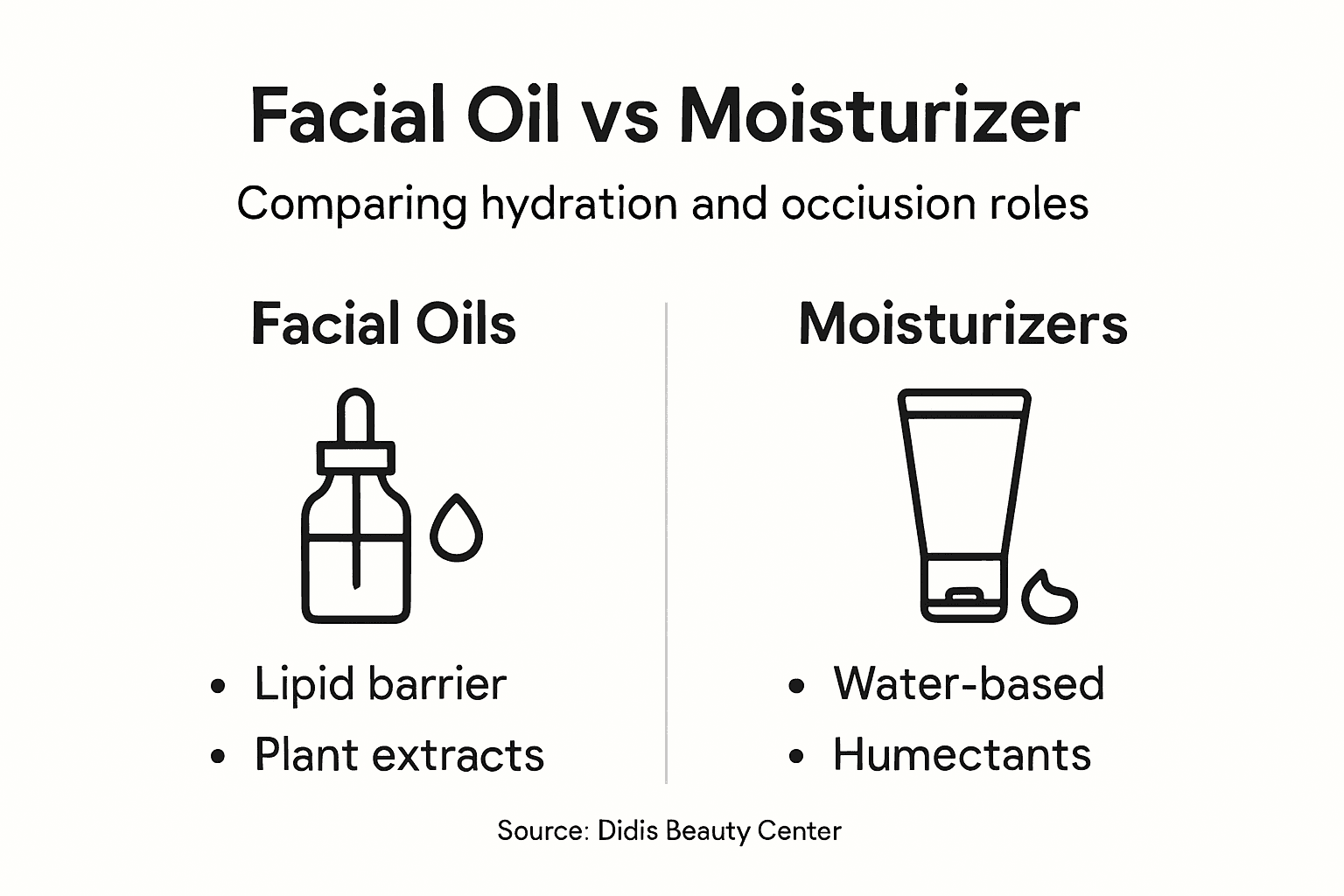
Most traditional moisturizers rely on water-based formulas combined with humectants to draw moisture into the skin. Facial oils take a completely different approach. Unlike many moisturizers that act mainly through water retention, facial oils primarily moisturize by replenishing the lipid content of the skin barrier.
This distinction matters tremendously. Water-based moisturizers need to be applied to damp skin to work effectively. Oils work independently by reinforcing your natural lipid barrier.
The key difference:
- Moisturizers hydrate by adding and retaining water in the skin
- Facial oils protect by sealing moisture already present in deeper layers
- Moisturizers often contain humectants, preservatives, and emulsifiers
- Facial oils are primarily lipid-based with minimal additives
Occlusion vs. Hydration
Facial oils function as emollients by providing a lipid barrier that locks in moisture and soothes dry skin, similar to creams and ointments. However, the degree of occlusion varies based on fatty acid composition.
Heavier oils like coconut and shea create a thicker barrier suitable for very dry skin. Lighter oils like jojoba and argan absorb faster, working better for combination or oily skin types.
Some moisturizers combine both approaches. Lightweight lotions add hydration while facial oils seal it in. This layering strategy works exceptionally well for aging or compromised skin.
Ingredient Complexity
Traditional moisturizers contain water, emulsifiers, preservatives, and stabilizers to maintain consistency and shelf life. Facial oils eliminate most of this complexity. Different types of fatty acids—monounsaturated, polyunsaturated, and saturated—affect texture and skin absorption.
This simplicity appeals to eco-conscious consumers. Fewer ingredients means less processing and packaging waste.
Facial oils work best when layered strategically—apply hydrating moisturizer first, then seal with oil for maximum effectiveness.
Choosing Between Them
Facial oils excel for dry, aging, or sensitive skin. Traditional moisturizers suit those with oily or acne-prone skin needing lightweight hydration without heavy occlusion.
Many skin types benefit from both. A hydrating toner plus facial oil often outperforms a single heavy moisturizer.
Use this summary to help choose the right moisturizer for different skin needs:
| Skin Concern | Facial Oils | Traditional Moisturizers |
|---|---|---|
| Dryness | Locks in deep moisture | Adds and retains water |
| Sensitive Skin | Simplified formulas, fewer irritants | May contain preservatives |
| Layering | Best applied after hydrating products | Applied to damp skin |
| Eco-Friendliness | Often minimal ingredients | Includes stabilizers, more waste |
Pro tip: Offer both facial oils and lightweight moisturizers in your product line to serve different skin types—customers with combination skin especially appreciate having options to layer.
Unlock the True Potential of Facial Oils for Your Skin and Business
Facial oils are not just moisturizers. They repair your skin barrier, hydrate deeply, and address specific concerns using powerful plant-based ingredients. If you have struggled with knowing which oils are safe and effective or how to incorporate them into your routine or product lineup, Didis Beauty Center offers a carefully curated Oils Collection: Skincare Oils for Face & Body – Didis Beauty Center that caters to all skin types and business needs. Our natural and vegan formulations are designed with transparency and quality so you can confidently select oils that deliver real results.
Explore our diverse Skin Care Collection - Face, Body, Oils – Didis Beauty Center and discover how you can incorporate pure, effective facial oils into your daily regimen or private-label brand. Visit Didis Beauty Center today to experience high-quality skincare products backed by education and trusted by customers. Start restoring and protecting your skin with the power of authentic facial oils now.
Frequently Asked Questions
What is facial oil and what are its benefits?
Facial oil is a concentrated plant extract derived from seeds, nuts, and botanicals that provides moisture and nutrients to the skin. It acts as a skin-barrier builder, nourishing the skin with vitamins, antioxidants, and fatty acids while locking in hydration.
Can facial oils be used on oily skin?
Yes, facial oils can be beneficial for all skin types, including oily skin. The right facial oil can help regulate oil production by nourishing the skin without causing excess greasiness, proving that oil can be helpful even for those with oily skin.
How do I choose the right facial oil for my skin type?
When selecting a facial oil, consider your skin type and concerns. Lightweight oils like jojoba or squalane work well for oily skin, while richer oils such as argan or rosehip may be better for dry skin. Additionally, look for the ingredient profiles to match specific needs.
Why is it important to dilute essential oils in facial oil formulations?
Essential oils are highly concentrated and can cause irritation if applied directly to the skin. Diluting them in carrier oils ensures safety and enhances their benefits while reducing the risk of adverse reactions.
Discourse (0)