


Sorting through endless skincare options can feel exhausting when all you want is to support authentic cruelty-free brands. For eco-conscious consumers and beauty entrepreneurs, verifying brand claims is more important than ever because misleading marketing and uncertified logos often hide the truth. This guide offers actionable steps to help you identify genuinely cruelty-free skincare, from checking recognized certifications to researching supply chain transparency, so you can shop with confidence and uphold your ethical values.
Table of Contents
- Step 1: Assess Brand Claims and Product Packaging
- Step 2: Check Recognized Cruelty Free Certifications
- Step 3: Research Ingredient Sourcing and Transparency
- Step 4: Verify Company Policies and Supply Chains
- Step 5: Confirm With Trusted Cruelty Free Databases
Quick Summary
| Key Point | Explanation |
|---|---|
| 1. Examine Certification Logos | Look for trusted logos like Leaping Bunny to confirm animal testing standards. |
| 2. Research Ingredient Sourcing | Investigate how ingredients are sourced to assess ethical practices behind formulations. |
| 3. Verify Company Policies | Review written animal testing policies to understand a brand’s commitment to cruelty-free standards. |
| 4. Use Trusted Databases | Cross-reference brands with reliable cruelty-free databases to ensure authenticity. |
| 5. Watch for Misleading Claims | Be cautious of vague marketing language that may conceal unethical testing practices. |
Step 1: Assess Brand Claims and Product Packaging
Understanding the authenticity of cruelty-free claims requires a keen eye and strategic approach when examining beauty product packaging. Your goal is to look beyond marketing buzzwords and verify the genuine ethical standards behind brand statements.
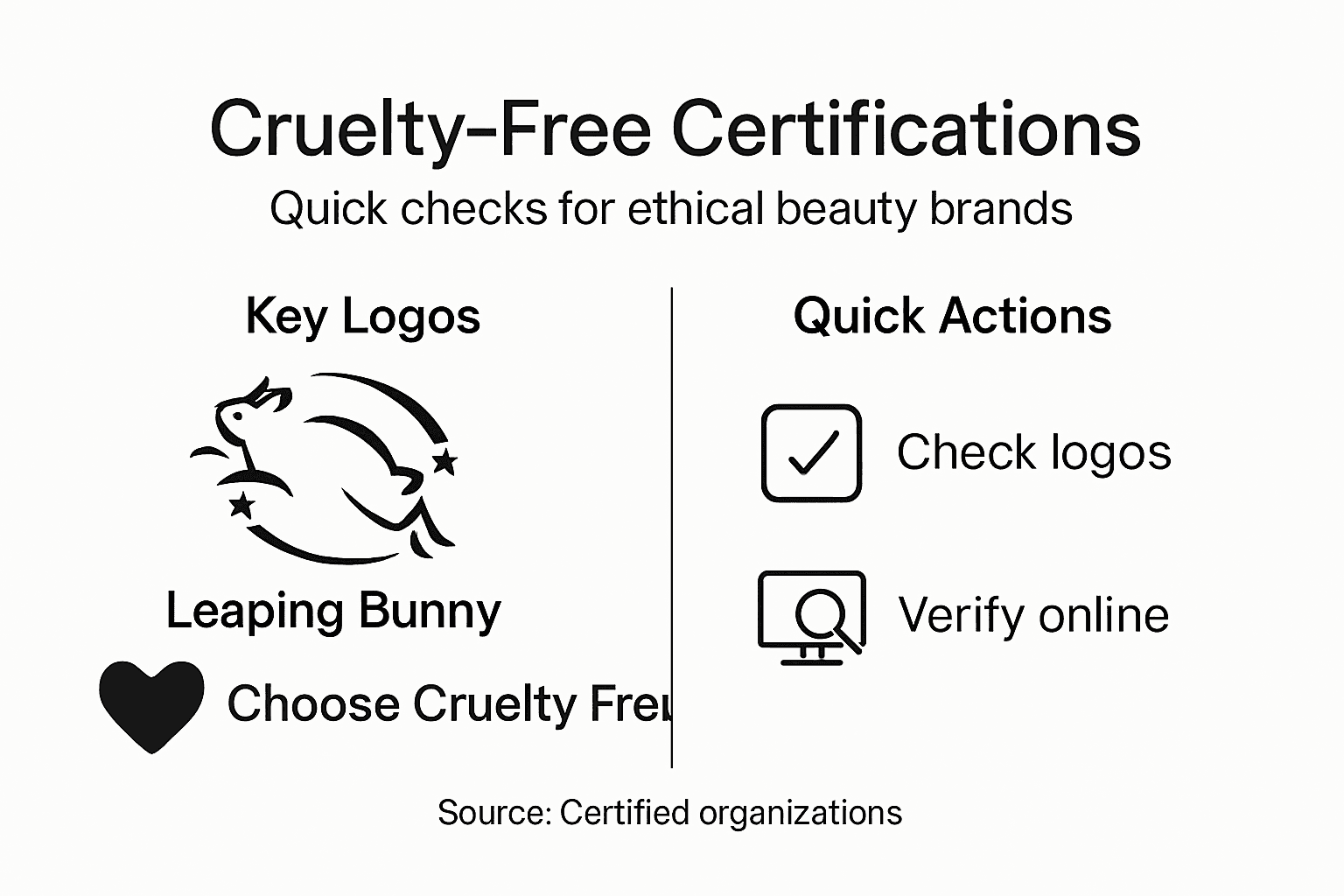
Start by carefully examining the product packaging for recognized certification logos from reputable organizations like Leaping Bunny, PETA, or Choose Cruelty Free. These logos provide credible third-party verification that brands have rigorous animal testing standards. Not all logos are created equal, so familiarize yourself with these key indicators:
- Leaping Bunny logo: Indicates no animal testing during any product development stage
- PETA certification: Confirms both product and parent company avoid animal testing
- Choose Cruelty Free logo: Specifically focused on Australian and international brand standards
Beyond logos, critically analyze the language used on packaging. Phrases like “cruelty-free” or “not tested on animals” require deeper investigation. Authentic brands typically provide transparent details about their testing practices, ingredient sourcing, and ethical commitments. Look for:
- Specific statements about animal testing policies
- Details about ingredient origin and sourcing
- Clear communication about supply chain ethics
Be aware that some brands use misleading marketing language to appear more ethical than their actual practices.
Carefully cross-reference packaging claims with brand websites and third-party certification databases to validate their statements. Many consumers mistakenly assume a claim means comprehensive animal-welfare compliance, when in reality, these claims require careful scrutiny to avoid greenwashing practices.
Pro tip: Download certification verification apps like Cruelty-Cutter or Bunny Free to instantly check brand authenticity while shopping.
Step 2: Check Recognized Cruelty Free Certifications
Navigating the world of cruelty-free certifications requires understanding the most respected and legitimate verification organizations. Not all certification logos are equally rigorous, so learning to distinguish between authentic and misleading claims is crucial for conscious consumers.
Focus on these primary certification organizations that provide robust, credible cruelty-free verification standards:
- Leaping Bunny Program: Most internationally recognized certification
- PETA’s Beauty Without Bunnies: Comprehensive global certification
- Choose Cruelty Free: Specialized Australian certification standard
- The Vegan Society: Offers comprehensive vegan and cruelty-free certification
When evaluating certifications, look for these key characteristics:
- Independent third-party verification
- Regular audit and recertification processes
- Clear, transparent standards for animal testing
- Comprehensive supply chain assessment
Legitimate certifications provide more than just a logo - they represent a commitment to ethical animal welfare practices.
Each certification has unique criteria, so research the specific requirements for each organization. Some focus exclusively on finished product testing, while others examine the entire production process, including ingredient sourcing and manufacturing.
Here is a comparison of major cruelty-free certification organizations and their unique standards:
| Organization | Geographic Focus | Verification Process | Notable Standards |
|---|---|---|---|
| Leaping Bunny | Global | Independent third-party audit | No animal testing at any stage |
| PETA Beauty Without Bunnies | International | Brand-submitted documentation | Expanded to parent companies |
| Choose Cruelty Free | Australia and global | Supplier verification | Excludes animal-derived ingredients |
| Vegan Society | Global | Ingredient and supply chain review | Requires both vegan and cruelty-free criteria |
Pro tip: Keep a screenshot of verified certification logos on your phone to quickly cross-reference while shopping.
Step 3: Research Ingredient Sourcing and Transparency
Understanding a brand’s ingredient sourcing practices is crucial for identifying genuinely cruelty-free beauty products. Your mission is to dig deeper than surface-level marketing claims and uncover the true ethical standards behind product formulations.
Start by investigating brands that demonstrate comprehensive ingredient transparency through these key research strategies:
- Check brand websites for detailed ingredient databases
- Review sourcing documentation for animal-derived components
- Investigate supply chain practices for ethical manufacturing
- Examine raw material origins and sustainability credentials
Look for brands that provide transparent information about their ingredient selection process:
- Complete ingredient lists with scientific names
- Explanations of ingredient purposes and origins
- Documentation of ethical sourcing practices
- Clear statements about animal testing policies
Authentic cruelty-free brands welcome scrutiny and provide comprehensive information about their ingredient sourcing.
Beyond basic ingredient lists, conscious consumers should evaluate brands that go beyond minimum requirements. Companies committed to ethical practices typically offer detailed traceability reports that demonstrate their commitment to animal welfare and sustainable production methods.

Pro tip: Use specialized apps and websites that aggregate cruelty-free ingredient information to streamline your research process.
Step 4: Verify Company Policies and Supply Chains
Verifying a brand’s ethical practices requires a comprehensive investigation beyond surface-level marketing claims. Your goal is to understand how companies truly implement cruelty-free standards throughout their entire production process.
Effective cruelty-free verification demands auditing the entire supply chain to ensure no animal testing occurs at any stage of production:
- Request detailed supplier documentation
- Examine company animal testing policies
- Investigate ingredient sourcing practices
- Look for third-party verification reports
Key areas to thoroughly investigate include:
- Explicit written policies against animal testing
- Supplier code of conduct documents
- International testing compliance statements
- Declarations of ethical manufacturing standards
A truly cruelty-free brand will provide transparent, comprehensive information about its entire production process.
Pay special attention to brands that go beyond minimal compliance. Comprehensive ethical brands will proactively share detailed information about their supply chain, including ingredient origins, manufacturing processes, and global testing policies.
Pro tip: Create a digital folder to save screenshots of company policy documents for easy future reference and comparison.
Step 5: Confirm with Trusted Cruelty Free Databases
Navigating the complex world of cruelty-free verification requires using reliable, comprehensive databases that track and validate ethical beauty brands. Your final step is to cross-reference the brands you’re interested in with authoritative sources that maintain rigorous standards.
Comprehensive global databases provide verified cruelty-free brand information to help conscientious consumers make informed purchasing decisions:
- PETA’s Beauty Without Bunnies Database
- Leaping Bunny International Certification List
- Choose Cruelty Free International Registry
- The Vegan Society’s Trademark Database
When consulting these resources, pay attention to key verification details:
- Date of most recent brand certification
- Specific scope of cruelty-free claims
- Parent company testing policies
- International compliance standards
Not all databases are created equal - look for those with transparent verification processes and frequent updates.
Beyond simple listings, the best databases offer detailed background information about a brand’s ethical commitments, including supply chain transparency, ingredient sourcing practices, and ongoing animal welfare standards.
Pro tip: Create digital bookmarks for multiple cruelty-free databases to quickly cross-reference brand information.
Below is a summary of key factors to consider when verifying a brand’s overall cruelty-free status:
| Verification Step | Critical Focus Area | Why It Matters |
|---|---|---|
| Check Certification Logos | Official third-party proof | Confirms standardized criteria |
| Research Ingredient Transparency | Ingredient origin details | Reveals hidden animal testing |
| Examine Company Animal Testing Policy | Comprehensive written policy | Shows brand-wide commitment |
| Confirm Using Trusted Databases | Independent validation | Spotlights potential greenwashing |
Discover Truly Cruelty-Free Beauty Choices Today
Navigating the complex world of cruelty-free beauty can be overwhelming. You want to avoid misleading labels and greenwashing while finding products that truly respect your ethical values. At Didis Beauty Center, we understand your need for transparency about ingredient sourcing, company policies, and recognized certifications. Our curated selection of natural and vegan skincare offers verified cruelty-free products backed by trustworthy brands to help you shop confidently.
Explore our wide range of Brands committed to ethical beauty standards or check out our Ready To Label packs if you are ready to start your own cruelty-free line. Every product we offer reflects a commitment to safety, effectiveness, and animal welfare. Don’t wait to make informed and compassionate beauty choices today at Didis Beauty Center. Start your journey toward honest and cruelty-free skincare now.
Frequently Asked Questions
How can I verify if a beauty brand is truly cruelty-free?
To verify if a beauty brand is truly cruelty-free, look for trusted certification logos on the product packaging, such as Leaping Bunny, PETA, or Choose Cruelty Free. Check the brand’s website for detailed information on their animal testing policies and ethical commitments.
What should I look for on product packaging when identifying cruelty-free brands?
When identifying cruelty-free brands, examine the product packaging for recognized certification logos and clear statements about animal testing policies. Focus on phrases like “not tested on animals” and verify them by cross-referencing on the brand’s website.
How do I research a brand’s ingredient sourcing practices?
Research a brand’s ingredient sourcing practices by reviewing their website for detailed ingredient lists and information about raw material origins. Look for transparency regarding ethical sourcing and any documentation confirming they do not use animal-derived components.
What factors indicate a strong cruelty-free certification?
A strong cruelty-free certification should include independent third-party verification, regular audits, and clear standards on animal testing. Ensure that the certification covers the entire supply chain, not just the final product.
How can I confirm a company’s cruelty-free policies?
To confirm a company’s cruelty-free policies, request detailed documentation regarding their animal testing practices and supplier codes of conduct. Look for public statements that clearly outline their commitment to ethical manufacturing without animal testing.
What are reliable databases for checking cruelty-free brands?
Reliable databases for checking cruelty-free brands include PETA’s Beauty Without Bunnies Database and the Leaping Bunny International Certification List. Use these resources to cross-check brand information and verify their cruelty-free status.
Discourse (0)