


Finding truly ethical skincare options can feel overwhelming as labels and promises crowd the shelves. For eco-conscious consumers and small business owners, understanding what stands behind terms like fair trade is essential to making responsible choices. By focusing on ethical ingredient sourcing and fair treatment of workers, fair trade skincare principles lay a foundation for real positive impact, from protecting communities to supporting global environmental goals.
Table of Contents
- Defining Fair Trade Skincare Principles
- Types And Certifications In Skincare Industry
- How Fair Trade Certification Works
- Impact On Communities And Small Brands
- Practical Implications For Retailers And Entrepreneurs
Key Takeaways
| Point | Details |
|---|---|
| Fair Trade Principles | Fair trade skincare emphasizes ethical ingredient sourcing, worker protection, environmental sustainability, and community empowerment as core values. |
| Certification Importance | Various certifications, such as Fairtrade International and USDA Organic, validate ethical claims and ensure adherence to rigorous social and environmental standards. |
| Impact on Communities | Fair Trade practices create economic empowerment and social development opportunities for marginalized communities, fostering long-term positive change. |
| Retailer and Entrepreneur Strategies | Success in ethical skincare requires transparent supply chain practices, consumer education, and adaptable business models that prioritize sustainability. |
Defining Fair Trade Skincare Principles
Fair trade skincare represents a holistic approach to beauty product development that prioritizes ethical treatment of workers and sustainable agricultural practices. At its core, these principles go far beyond simple financial transactions, creating a comprehensive framework that supports human dignity and environmental responsibility.
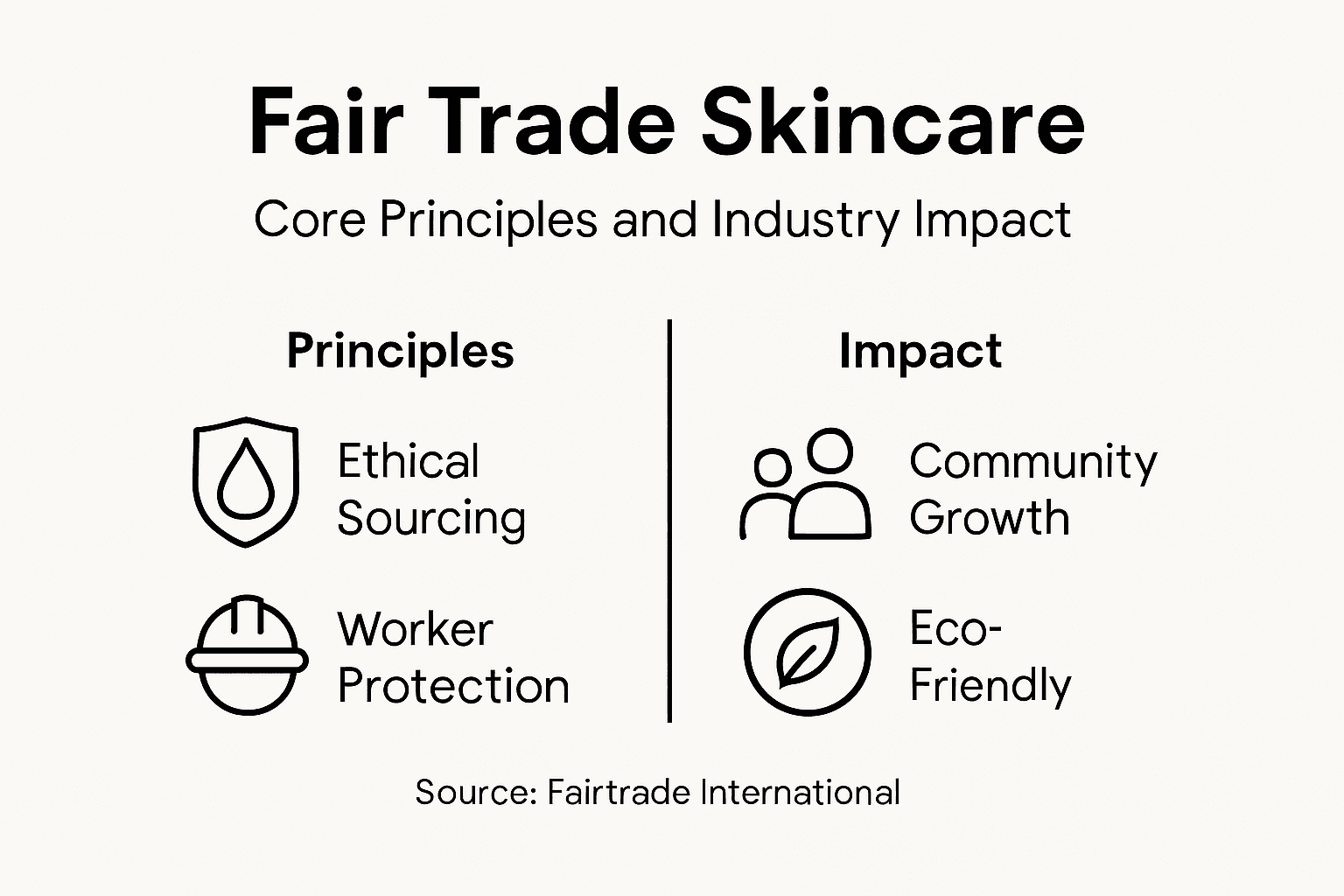
The fundamental principles of fair trade skincare revolve around several key elements:
- Ethical Ingredient Sourcing: Ensuring ingredients are obtained through transparent, equitable supply chains
- Worker Protection: Guaranteeing safe working conditions and fair compensation for agricultural laborers
- Environmental Sustainability: Promoting farming methods that minimize ecological damage
- Community Empowerment: Directing resources toward local economic development in producer regions
Fair trade principles have deep roots in understanding global economic disparities. Comprehensive academic research reveals that these standards integrate complex economic, sociological, and anthropological considerations to create meaningful change. This isn’t just about paying workers more—it’s about restructuring entire economic relationships to promote genuine equity.
The practical implementation of fair trade skincare involves rigorous certification processes that examine every stage of production. Brands must demonstrate consistent commitment to worker welfare, environmental stewardship, and transparent business practices. This means conducting thorough audits, maintaining detailed documentation, and allowing independent verification of their ethical claims.
Pro tip: When evaluating fair trade skincare products, look beyond marketing claims and seek out specific certifications that validate ethical sourcing practices.
Types and Certifications in Skincare Industry
In the complex world of ethical skincare, certifications serve as critical indicators of product quality, sustainability, and social responsibility. These specialized credentials help consumers and industry professionals navigate the intricate landscape of responsible beauty products, ensuring transparency and accountability throughout the production process.
The primary types of certifications in the skincare industry can be categorized into several key areas:
-
Product Certifications:
- USDA Organic
- EcoCert
- Fairtrade International
- COSMOS Organic
-
Ethical Sourcing Certifications:
- Fair Trade Certified
- Rainforest Alliance
- Regenerative Organic Certified
-
Manufacturing Certifications:
- Good Manufacturing Practices (GMP)
- ISO 22716
- Cruelty-Free International
Fair Trade certification processes involve rigorous auditing of entire supply chains to confirm compliance with critical social and environmental standards. Brands must demonstrate commitment to fair wages, safe working conditions, and sustainable agricultural practices to obtain and maintain these important credentials.

Certification bodies play a crucial role in verifying and validating ethical claims. They conduct comprehensive assessments that examine everything from ingredient sourcing to worker treatment, ensuring that beauty brands meet stringent standards of social and environmental responsibility. These independent audits provide consumers with reliable information about the true origins and impact of their skincare products.
The complexity of certification goes beyond simple labeling. Brands must undergo extensive documentation, independent verification, and ongoing compliance checks to maintain their ethical credentials. This means regularly proving their commitment to sustainable practices, worker welfare, and environmental stewardship.
Here’s a summary comparing the key fair trade skincare certifications and what they emphasize:
| Certification Name | Primary Focus | Typical Requirements |
|---|---|---|
| Fairtrade International | Worker rights and equity | Fair wages, safe labor, fair pricing |
| USDA Organic | Organic content | No synthetic chemicals, strict ingredient sourcing |
| Rainforest Alliance | Environmental impact | Biodiversity, resource conservation, social standards |
| COSMOS Organic | Natural ingredients | Organic sourcing, sustainable processing |
Pro tip: When selecting skincare products, look for multiple certification logos and research the specific standards behind each certification to ensure genuine ethical practices.
How Fair Trade Certification Works
Fair Trade certification represents a comprehensive system designed to ensure ethical and sustainable practices throughout the global skincare supply chain. This rigorous process goes far beyond simple product labeling, creating a transformative approach that fundamentally reshapes how beauty products are sourced, produced, and brought to market.
Fair Trade certification processes involve several critical stages of evaluation and verification:
- Initial Application: Brands submit detailed documentation about their entire supply chain
- Independent Audit: Certified inspectors conduct comprehensive assessments
- Compliance Verification: Examination of labor practices, environmental standards, and worker compensation
- Ongoing Monitoring: Regular follow-up inspections to maintain certification status
The key components of Fair Trade certification include:
-
Labor Standards:
- Guaranteed minimum wages
- Safe working conditions
- No child or forced labor
- Worker empowerment programs
-
Environmental Criteria:
- Sustainable farming practices
- Reduced chemical usage
- Conservation of natural resources
- Biodiversity protection
-
Economic Requirements:
- Fair pricing mechanisms
- Community development investments
- Transparent financial reporting
Certification bodies play a crucial role in maintaining the integrity of Fair Trade standards. These independent organizations conduct thorough investigations that examine every aspect of production, from raw material sourcing to final product manufacturing. They ensure that brands are not just making ethical claims, but actually implementing meaningful practices that support workers and protect the environment.
The certification process is intentionally rigorous, requiring brands to demonstrate continuous commitment to ethical principles. This means regular audits, detailed documentation, and a willingness to make systemic changes that prioritize human and environmental well-being over short-term profits.
Pro tip: When reviewing Fair Trade certified products, look beyond the logo and research the specific standards and impact of the certification for deeper understanding.
Impact on Communities and Small Brands
Fair Trade practices represent a transformative approach that goes far beyond simple economic transactions, creating meaningful pathways for community development and empowerment in the global skincare industry. By prioritizing ethical sourcing and sustainable practices, these initiatives fundamentally reshape how small brands can create positive social impact.
Fairtrade’s positive community interventions have demonstrated significant economic and social benefits for marginalized producers. These interventions provide critical support through multiple strategic approaches:
-
Economic Empowerment:
- Guaranteed minimum pricing
- Direct financial premiums
- Stable income streams
- Reduced economic vulnerability
-
Social Development:
- Enhanced community infrastructure
- Educational program investments
- Women’s empowerment initiatives
- Skill development opportunities
-
Environmental Sustainability:
- Climate resilience training
- Sustainable farming techniques
- Reduced chemical dependency
- Biodiversity preservation
Small beauty brands play a crucial role in this ecosystem by creating alternative supply chains that prioritize human and environmental well-being. By directly engaging with small-scale producers, these brands can create meaningful change that extends far beyond traditional corporate social responsibility models. This approach allows for more transparent, equitable relationships that support entire communities.
The economic model of Fair Trade fundamentally challenges conventional global supply chains by placing human dignity at the center of production. Small brands become agents of change, demonstrating that ethical business practices can simultaneously drive social progress and commercial success. They prove that economic empowerment and community development are not mutually exclusive goals but interconnected strategies for sustainable global commerce.
Pro tip: Research the specific community impact of Fair Trade certified brands before making purchasing decisions to understand the deeper social value of your skincare choices.
This table highlights how Fair Trade practices benefit both communities and skincare entrepreneurs:
| Stakeholder | Main Benefit | Long-Term Impact |
|---|---|---|
| Producer Communities | More stable income streams | Improved infrastructure and education |
| Small Brands | Enhanced brand reputation | Stronger customer loyalty |
| Environment | Reduced chemical use | Greater ecosystem resilience |
| Entrepreneurs | Market differentiation | Sustainable business growth |
Practical Implications for Retailers and Entrepreneurs
The landscape of ethical skincare demands strategic approaches from retailers and entrepreneurs who seek to integrate Fair Trade principles into their business models. Success requires more than good intentions—it demands a comprehensive understanding of how ethical sourcing can become a competitive advantage in an increasingly conscious marketplace.
Retailers play a crucial role in mainstreaming Fair Trade products by developing innovative strategies that balance product promotion with genuine sustainability efforts. The most successful approaches involve several key considerations:
-
Strategic Implementation:
- Transparent supply chain documentation
- Clear communication of ethical practices
- Verified certification processes
- Consistent brand messaging
-
Consumer Education:
- Storytelling about producer communities
- Impact reporting and transparency
- Highlighting social and environmental benefits
- Demonstrating tangible community improvements
-
Business Model Adaptation:
- Flexible pricing strategies
- Direct relationships with producers
- Investment in sustainable infrastructure
- Long-term partnership commitments
Entrepreneurs in the skincare industry face unique challenges when implementing Fair Trade practices. These challenges include higher initial costs, complex supply chain management, and the need for continuous verification. However, the potential rewards—including enhanced brand reputation, customer loyalty, and meaningful social impact—far outweigh these initial obstacles.
Successful integration requires a holistic approach that goes beyond simple compliance. Entrepreneurs must develop genuine partnerships with producers, invest in community development, and create transparent communication channels that allow consumers to understand the true impact of their purchasing decisions.
Pro tip: Develop comprehensive impact reporting that clearly demonstrates the social and environmental benefits of your Fair Trade sourcing to build consumer trust and differentiate your brand.
Embrace Ethical Beauty with Fair Trade Skincare Solutions
The challenge of finding truly fair trade skincare can feel overwhelming as you navigate claims, certifications, and the impact on producer communities. You want products that honor ethical ingredient sourcing, promote worker protection, and support environmental sustainability without compromising quality. At Didis Beauty Center, we understand these goals because we are committed to offering skincare that aligns with these core values.
Explore our Cream Collection - Skincare & Moisturizers for Face & Beard – Didis Beauty Center to discover nourishing products made with care and transparency. For entrepreneurs seeking to make a difference, our Ready To Label Collection - Brightening Skin Care – Didis Beauty Center offers an ethical starting point to build your own sustainable brand.

Choose skincare that not only transforms your skin but also uplifts the communities behind the ingredients. Visit Didis Beauty Center today to shop responsibly and support fair trade principles with every purchase. Now is the perfect moment to align your beauty routine with your values and show the world what truly conscious skincare means.
Frequently Asked Questions
What are the key principles of fair trade skincare?
Fair trade skincare focuses on ethical ingredient sourcing, worker protection, environmental sustainability, and community empowerment, ensuring fairness and responsibility throughout the supply chain.
How do I identify certified fair trade skincare products?
Look for specific certifications such as Fairtrade International, USDA Organic, and Rainforest Alliance on product labels. It’s essential to research the standards behind these certifications to confirm genuine ethical practices.
What impact does fair trade skincare have on communities?
Fair trade skincare fosters economic empowerment by providing stable income, invests in social development like education, and promotes environmental sustainability, benefiting communities and small producers.
How does the Fair Trade certification process work?
The Fair Trade certification process involves an initial application by brands, rigorous independent audits, compliance verification regarding labor and environmental practices, and ongoing monitoring to ensure continuous commitment to ethical standards.
Discourse (0)