


Finding authentic sustainable beauty products can feel overwhelming when buzzwords and flashy marketing dominate the shelves. Eco-conscious consumers and aspiring entrepreneurs are looking for more than just trend-driven packaging—they want products and practices that truly support the planet, workers, and long-term well-being. By understanding the roots of sustainable beauty practices, you equip yourself to make ethical choices and build collections or brands that reflect genuine care for environmental and social impact.
Table of Contents
- What Sustainable Beauty Really Means
- Types of Sustainable Beauty Practices
- Criteria for Natural and Vegan Beauty
- The Role of Cruelty-Free Certification
- Eco-Conscious Packaging and Its Importance
- Challenges and Common Mistakes in Sustainable Beauty
Key Takeaways
| Point | Details |
|---|---|
| Understanding Sustainable Beauty | Sustainable beauty focuses on minimizing environmental harm and ensuring ethical practices throughout the product lifecycle. Consumers should investigate brands’ sourcing, production, and packaging ethics. |
| Importance of Certifications | Third-party certifications provide proof of a product’s sustainability claims, helping consumers distinguish between genuine efforts and greenwashing. Look for certifications like NATRUE, PETA, and Leaping Bunny. |
| Eco-Conscious Packaging Matters | Sustainable packaging is crucial as it significantly impacts waste and the environment, requiring brands to consider materials and design that reduce their ecological footprint. Opt for brands using recyclable or biodegradable packaging. |
| Avoiding Common Pitfalls | Greenwashing and neglecting supply chain impacts are prevalent issues in the industry. It’s vital for consumers and entrepreneurs to seek transparent practices and verify sustainability claims before purchasing or launching products. |
What Sustainable Beauty Really Means
Sustainable beauty isn’t just a marketing buzzword thrown around by companies trying to seem environmentally conscious. It’s a fundamental shift in how we think about skincare and personal care products. At its core, sustainable beauty means creating and using skincare products in ways that minimize harm to the environment, respect human rights, and support economic viability for everyone in the supply chain. This includes everything from the moment raw ingredients are sourced all the way through to how the empty product bottle ends up in your recycling bin.
The definition goes beyond simply swapping out one ingredient for another. True sustainable beauty encompasses several interconnected dimensions. First, there’s the ingredient story. The industry is increasingly substituting petrochemical-derived ingredients with sustainable alternatives, moving toward natural, biodegradable components that break down safely in the environment rather than accumulating in water systems or soil. Second, there’s the production process itself. How are those ingredients manufactured? What energy sources power the facilities? Are workers paid fairly and treated ethically? Third is packaging. The beauty industry generates enormous amounts of waste, and sustainable beauty demands we rethink the plastic bottles and excessive packaging that end up in landfills. Finally, there’s the social impact. Conscious consumerism considers how products are made, including whether communities harvesting natural ingredients face exploitation or child labor, and whether indigenous knowledge is respected and compensated.
For eco-conscious consumers building their skincare routines and entrepreneurs developing their own beauty lines, understanding this complete picture changes everything. You’re no longer just asking “Is this moisturizer effective?” You’re asking “Who grew the lavender in this product? What happens to the packaging? Could a synthetic ingredient be replaced with something that biodegrades naturally?” These questions lead you toward brands and formulations that align with your values. When you start considering these factors, you become part of a market that demands better standards from the beauty industry, pushing companies to invest in green chemistry, invest in ethical sourcing networks, and rethink packaging solutions entirely.
Pro tip: Start by checking product ingredient lists and searching for third-party certifications like vegan, cruelty-free, or eco-friendly labels that indicate a brand’s commitment to sustainable practices beyond what the marketing claims.
Types of Sustainable Beauty Practices
Sustainable beauty practices aren’t one-size-fits-all. Different companies and brands implement sustainability in different ways, depending on their resources, values, and target markets. Understanding the main types of practices helps you identify which brands align with your priorities and which areas matter most to you as a consumer or entrepreneur. These practices fall into several key categories that work together to create a more responsible beauty industry.
One major category focuses on ingredient selection and formulation. This involves prioritizing natural and renewable ingredients while avoiding petrochemical-based substances that harm ecosystems and human health. Companies working in this space invest in green chemistry innovations and cutting-edge preservation techniques that keep products safe without relying on harsh synthetic preservatives. Biotechnology-driven formulations allow brands to create effective skincare without compromising environmental values. Another critical practice involves ethical sourcing and community impact. This means ensuring that farmers and harvesters who provide raw materials receive fair compensation, work in safe conditions, and aren’t exploited through unfair trade agreements. Some brands go further by supporting regenerative agriculture practices that actually improve soil health and biodiversity rather than depleting natural resources.

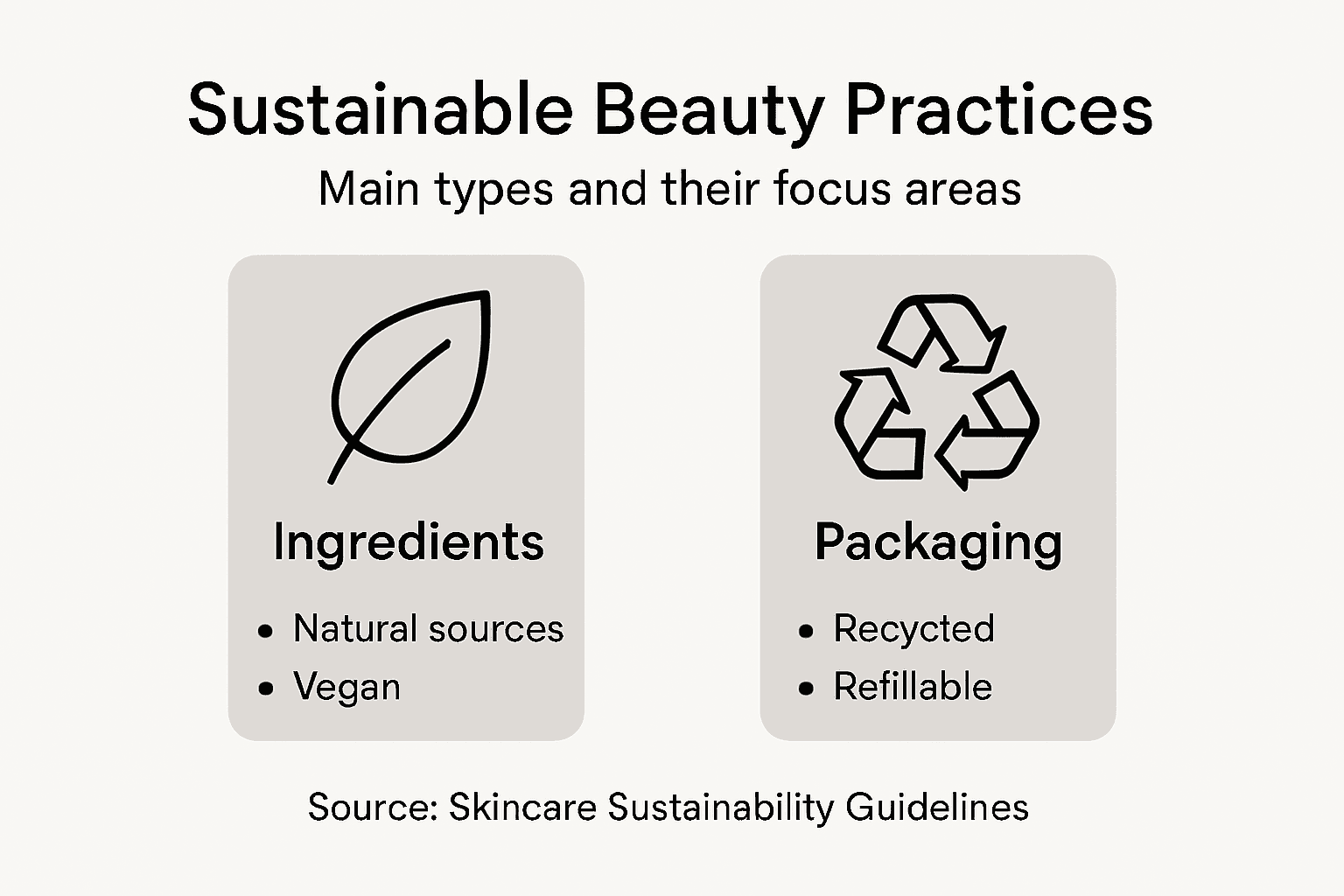
Packaging and waste reduction represents another essential practice category. Sustainable beauty companies minimize plastic use by switching to recyclable or compostable materials, reducing packaging size and excess padding, and designing refillable systems that keep containers out of landfills. This addresses the fact that the beauty industry generates enormous amounts of waste. Finally, there’s transparency and accountability. Brands committed to sustainable practices openly share their supply chain information, obtain third-party certifications that verify their claims, and regularly assess their environmental and social impact. This multi-disciplinary approach incorporates environmental and social dimensions globally, recognizing that true sustainability requires action across the entire product lifecycle.
For entrepreneurs developing private label skincare or consumers building sustainable routines, knowing these practice categories helps you make informed decisions. You can prioritize what matters most to you, whether that’s biodegradable ingredients, fair trade sourcing, minimal packaging, or transparent reporting about environmental impact.
Pro tip: Look for brands that implement multiple sustainable practices across ingredients, sourcing, packaging, and transparency rather than focusing on just one area, as this indicates a comprehensive commitment to sustainability.
Criteria for Natural and Vegan Beauty
When you’re shopping for skincare products labeled “natural” or “vegan,” what do those terms actually mean? Without clear standards, companies could slap these labels on almost anything. That’s where certification criteria come in. These are the objective benchmarks that separate genuine natural and vegan beauty products from greenwashing marketing tactics. Understanding these criteria helps you make confident purchases and build product lines you can genuinely stand behind if you’re an entrepreneur.
Natural beauty products follow specific ingredient and processing standards. Products must contain ingredients derived from nature such as plants, minerals, or biodegradable substances, and they must limit or eliminate synthetic chemicals. The NATRUE Standard defines criteria for natural and organic cosmetics, emphasizing ingredient origin and sustainable sourcing while requiring environmentally responsible processing methods. This certification demands transparency and ingredient verification, ensuring companies can prove their claims rather than just making vague promises. Another widely recognized framework is ISO 16128, which provides international guidelines defining natural and organic cosmetic ingredients and products. This standard outlines specific ingredient categories, establishes allowable substances, and sets percentage thresholds so you know exactly how much of a product must come from natural sources to earn the designation.
Vegan beauty products operate under different criteria entirely. These products contain no animal-derived ingredients such as beeswax, lanolin, collagen, or carmine. But vegan certification goes deeper than just ingredient lists. Brands must also commit to not testing on animals at any stage of development, and many vegan certifications verify that parent companies don’t conduct animal testing either. The key distinction is that a product can be natural but not vegan, or vegan but not natural. A serum made entirely from plant oils is both natural and vegan. An organic moisturizer containing beeswax is natural but not vegan. A synthetic, lab-created formula that contains no animal ingredients is vegan but not natural.
For eco-conscious consumers and entrepreneurs developing private label lines, these distinctions matter because they define what you can claim and what you actually deliver. Third-party certifications from recognized organizations provide proof that your products meet these standards, building trust with customers who increasingly demand authenticity.
Pro tip: Prioritize products with third-party certifications from established organizations like NATRUE or PETA rather than relying solely on brand claims, since certified products have undergone independent verification of their natural or vegan status.
Here’s a comparison of sustainable beauty certification organizations and what they verify:
| Certification Organization | Focus Area | Notable Requirements | Impact on Trust |
|---|---|---|---|
| NATRUE | Natural/Organic | Ingredient origin & processing | High transparency |
| ISO 16128 | Natural/Organic | Defined ingredient categories | Global consistency |
| PETA | Vegan/Cruelty-Free | No animal testing, no animal ingredients | Recognized symbol |
| Leaping Bunny | Cruelty-Free | Supply chain animal testing ban | Strong credibility |
| NSF | Vegan/Cruelty-Free | Supply chain audits, ongoing compliance | Rigorous verification |
The Role of Cruelty-Free Certification
Cruelty-free certification stands as one of the most visible and emotionally resonant aspects of sustainable beauty. For many consumers, knowing that no animals suffered to develop or test their skincare is non-negotiable. Yet the cruelty-free landscape is more complicated than a simple yes or no label suggests. Different certifications operate under different standards, regulations vary by country, and some certifications are far more rigorous than others. Understanding what these certifications actually mean helps you identify genuinely cruelty-free products versus those making misleading claims.
The foundation of cruelty-free certification is straightforward in theory but complex in practice. A truly cruelty-free product contains no animal-derived ingredients, was not tested on animals, and the company did not pay anyone else to test on animals on their behalf. However, cruelty-free certification varies globally, with some regions banning animal testing for cosmetics while others still require it by law. This creates a challenging situation where a product might be cruelty-free in one country but unable to be sold in another without animal testing. Certifications such as Leaping Bunny and PETA’s Ultimate Cruelty-Free List provide voluntary standards that help companies demonstrate their commitment beyond legal requirements, though these certifications differ in how comprehensively they verify claims.
What makes certification particularly valuable is the verification process behind it. NSF offers a comprehensive Vegan and Cruelty-Free Certification program that applies rigorous criteria across ingredients, production, and supply chains to verify ethical claims. The certification requires ongoing compliance monitoring and supply chain verification, meaning companies must continuously prove they maintain animal welfare standards. This matters because some brands make empty promises without submitting to independent oversight. When you see a recognized cruelty-free certification logo, you know an external organization has actually investigated the company’s practices rather than simply accepting their word.
For entrepreneurs launching private label skincare lines, pursuing cruelty-free certification provides competitive advantage and builds customer loyalty. For consumers, it ensures your money supports companies genuinely committed to animal welfare rather than those using cruelty-free messaging as marketing theater.
Pro tip: Look for recognized third-party certifications like Leaping Bunny or NSF Cruelty-Free rather than just “cruelty-free” claims on packaging, since independent certifications require verified proof that companies actually avoid animal testing throughout their entire supply chain.
Eco-Conscious Packaging and Its Importance
Here’s a jarring reality: a skincare product might contain entirely natural, ethically sourced ingredients created through sustainable processes, yet still end up in a landfill inside plastic packaging that takes 450 years to decompose. This contradiction highlights why eco-conscious packaging deserves as much attention as what’s inside the bottle. Packaging represents one of the most tangible ways the beauty industry impacts the environment, and it’s also one of the areas where consumers can directly drive change through their purchasing choices.
The problem is massive. The beauty industry generates extraordinary amounts of waste through excessive packaging, protective layers that serve no functional purpose, and single-use plastics designed to be discarded immediately after purchase. Most packaging materials never get recycled despite having recycling symbols printed on them. When they do reach landfills, they leach chemicals into soil and water systems. Sustainable packaging aims to reduce waste, use recycled and recyclable materials, and minimize pollution caused by traditional plastic containers. Companies addressing this challenge are switching to glass containers, aluminum tubes, biodegradable plant-based plastics, and minimalist designs that eliminate unnecessary packaging layers. Some brands go further by offering refillable systems where customers return empty containers and receive refilled products, drastically reducing waste over time.
What makes packaging truly sustainable involves more than just the material itself. Sustainable packaging reduces environmental impact by using renewable, recyclable, and lightweight materials while improving product preservation and reducing waste. This means companies must balance multiple factors. Lightweight materials reduce transportation emissions, but they must still protect the product effectively. Recyclable materials sound good in theory, but only if your local recycling infrastructure actually processes them. Renewable materials are preferable to virgin plastics, but sourcing them responsibly matters. Life-cycle assessment examines the total environmental footprint from material extraction through manufacturing, transportation, use, and disposal. A glass container requires significant energy to produce but lasts longer and recycles infinitely. A paper-based container biodegrades quickly but might require plastic liners for water-resistant products.
For eco-conscious consumers choosing skincare brands, packaging reveals a company’s genuine commitment to sustainability. For entrepreneurs developing private label products, investing in eco-friendly packaging signals to your customers that you care about the entire product lifecycle, not just profits.
Pro tip: Choose products in glass, aluminum, or certified compostable packaging, and prioritize brands offering refill systems or minimal packaging that reduces overall waste impact.
This table summarizes common sustainable packaging materials and their environmental performance:
| Packaging Material | Environmental Benefits | Common Challenges |
|---|---|---|
| Glass | Recyclable, durable | Heavy, energy intensive |
| Aluminum | Lightweight, highly recyclable | May dent, requires energy to produce |
| Plant-based plastic | Biodegradable, renewably sourced | Needs composting infrastructure |
| Paper/Cardboard | Biodegradable, lightweight | May need plastic lining for liquids |
Challenges and Common Mistakes in Sustainable Beauty
The sustainable beauty industry is booming, but not all growth represents genuine progress. As demand increases, so does the temptation for brands to cut corners and mislead consumers. Navigating this landscape requires understanding the real obstacles companies face and recognizing the deceptive practices that undermine authentic sustainability efforts. These challenges affect everyone from consumers trying to make ethical purchases to entrepreneurs building legitimate sustainable brands.
The most pervasive problem is greenwashing. This occurs when brands make vague sustainability claims without verifiable action behind them. You might see “natural,” “eco-friendly,” or “green” splashed across packaging with no certifications, no transparent supply chain information, and no third-party verification. Many brands make misleading sustainability claims without verifiable action, causing consumer distrust. A company might source one sustainable ingredient while sourcing everything else conventionally, yet market itself as an eco-conscious brand. Without regulations requiring proof, distinguishing between genuine commitment and marketing theater becomes difficult. Real verification requires third-party certification from organizations that audit supply chains and manufacturing processes.
Another critical mistake involves ignoring supply chain impacts. Brands focus on beautiful packaging and natural ingredients while overlooking that workers harvesting those ingredients face exploitation, child labor, or unsafe conditions. Challenges in sustainable beauty include deforestation, pollution, and animal exploitation alongside supply chain impacts. Additionally, substituting synthetic ingredients with natural alternatives sometimes creates new problems. Harvesting wild plants for ingredients drives deforestation and biodiversity loss. Scaling up cultivation of niche ingredients to meet demand requires extensive land use. Companies pursuing sustainability must address the complete lifecycle, not just individual components. Entrepreneurs developing private label products often struggle with this complexity, attempting to navigate regulatory gaps while managing costs. Larger brands sometimes have resources to innovate truly sustainable solutions, but smaller companies may lack the investment capital to implement comprehensive changes.
Common practical mistakes include poor communication of sustainability efforts, inadequate transparency about what’s actually been achieved, and neglecting the reality that sustainable practices often cost more upfront. Consumers willing to pay premium prices expect to know exactly where that money goes. Failing to educate your market about your sustainability journey leaves customers skeptical.
Pro tip: Before purchasing or launching sustainable products, verify claims through recognized certifications rather than brand statements alone, and ask companies specific questions about their supply chain, manufacturing practices, and environmental impact data.
Embrace Truly Sustainable Beauty with Didis Beauty Center
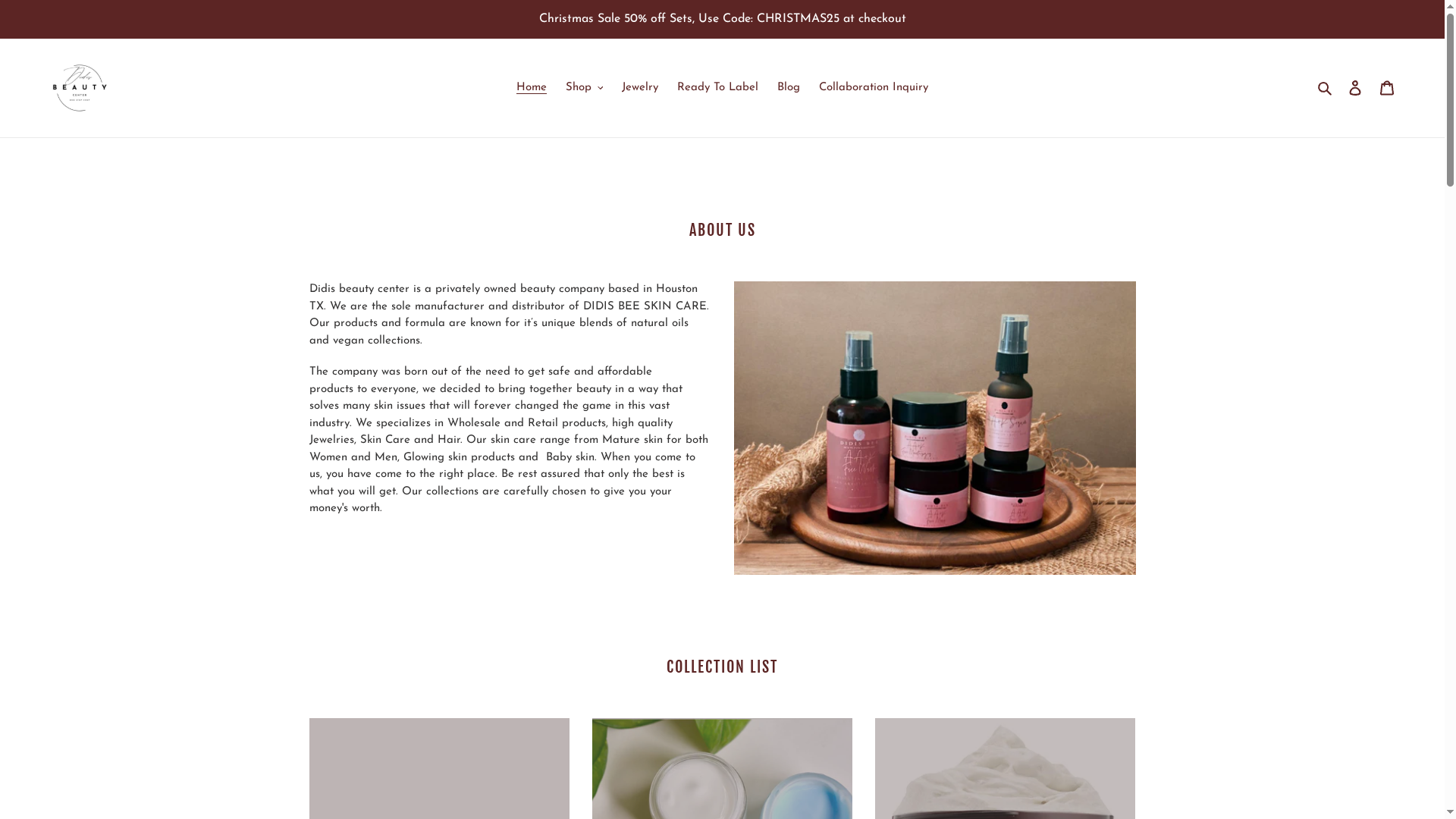
Navigating the complexities of sustainable beauty can feel overwhelming. From understanding ingredient sourcing to choosing eco-conscious packaging, the challenges you face as a mindful consumer or entrepreneur require trustworthy solutions rooted in transparency and real commitment. Didis Beauty Center addresses these key concerns by offering a curated selection of natural, vegan, and ethically formulated products designed to minimize environmental impact while supporting fair supply chains.
Whether you are looking to revamp your daily routine with nourishing oils or launch your own brand with our Ready To Label Collection - Brightening Skin Care, you gain access to skincare solutions that align with your values and goals. Our Beauty Bundles Collection | 50% Massive Sales – Didis Beauty Center provides convenient, affordable options that combine efficacy with sustainability.
Discover the power of clean beauty and ethical sourcing by exploring our products today. Visit Didis Beauty Center now to take the next step toward truly sustainable skincare that protects the planet and honors your principles.
Frequently Asked Questions
What does sustainable beauty mean?
Sustainable beauty refers to the practice of creating and using skincare products in a way that minimizes environmental harm, respects human rights, and supports economic viability throughout the supply chain. This includes sourcing ingredients responsibly, using sustainable packaging, and ensuring ethical labor practices.
How can I identify truly sustainable beauty products?
Look for third-party certifications such as NATRUE, ISO 16128, or organic labels. These certifications verify that products meet specific standards related to ingredients and production practices, helping consumers distinguish genuine sustainable products from those simply using green marketing tactics.
What are the key categories of sustainable beauty practices?
The main categories of sustainable beauty practices include ingredient selection and formulation focusing on natural and renewable components, ethical sourcing of raw materials, innovative packaging solutions to reduce waste, and transparency in supply chain operations to hold brands accountable for their claims.
Why is eco-conscious packaging important in sustainable beauty?
Eco-conscious packaging is crucial because it addresses the significant waste created by conventional beauty products. Sustainable packaging reduces environmental impact by using recyclable, biodegradable, or reusable materials, thereby minimizing pollution and the amount of waste that ends up in landfills.
Recommended
- Sustainable Beauty Explained: Healthy Skin, Greener Earth – Didis Beauty Center
- Sustainable Beauty Explained: Healthy Skin, Greener Earth – Didis Beauty Center
- Eco-Friendly Skincare: Why It Matters for You – Didis Beauty Center
- Eco-Friendly Skincare: Why It Matters for You – Didis Beauty Center
- Why Support Sustainable Beauty: Nurturing Skin and Planet – Pure Light Botanical Beauty
- What Is Slow Beauty and Its Benefits for Skin
Discourse (0)