


TL;DR:
- Consumers often perceive natural skincare as safer and more effective due to a bias, but labels like “natural” are unregulated marketing claims. The actual benefits depend on formulation quality, ingredient stability, and transparent ingredient lists, not just marketing labels or certifications. Using scientifically supported natural actives thoughtfully can improve skin health and environmental impact, but awareness of limitations and careful product selection are essential.
You’ve probably stood in a beauty aisle — or scrolled through an online store — and felt pulled toward the product labeled “natural” or “plant-based.” That instinct isn’t random. Research shows a documented naturalness bias in consumers where people automatically perceive natural options as safer and more effective, even without evidence. The truth is more nuanced. Understanding why use natural ingredients in skincare, and when to use them thoughtfully, is what separates an informed buyer from one who just trusts the label.
Table of Contents
- Key takeaways
- Why use natural ingredients: what the label actually means
- Advantages of using natural ingredients for your skin and the planet
- What natural ingredients can and cannot do: honest limitations
- How to choose skincare products with natural ingredients wisely
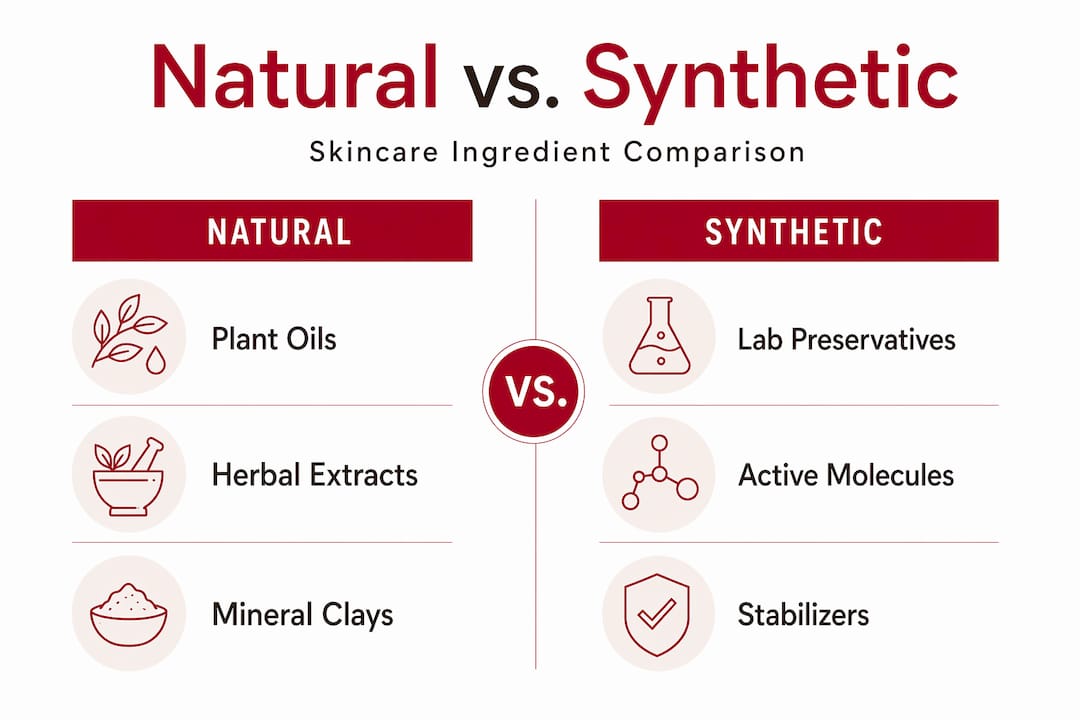
- Natural vs. synthetic: a side-by-side comparison
- My honest take on the natural skincare trend
- What Didisbeautycenter offers for natural skincare seekers
- FAQ
Key takeaways
| Point | Details |
|---|---|
| “Natural” is not regulated | The FDA has no legal definition for “natural” in cosmetics, so labels alone tell you very little. |
| Real benefits do exist | Natural actives like green tea and aloe vera offer clinically supported skin benefits when properly formulated. |
| Natural does not mean risk-free | Some plant extracts and essential oils cause irritation or allergic reactions depending on concentration. |
| Formulation quality matters most | The effectiveness and safety of any ingredient, natural or not, depends on how the product is made. |
| Read the ingredient list | Third-party certifications and transparent ingredient lists are your best tools for evaluating a product. |
Why use natural ingredients: what the label actually means
Before you can weigh the advantages of using natural ingredients, you need to know what “natural” actually means on a product label. The short answer? Very little, legally speaking.
The FDA does not legally define “natural” or “plant-based” for cosmetics in the U.S. Under the Federal Food, Drug, and Cosmetic Act and the Modernization of Cosmetics Regulation Act (MoCRA), all cosmetics are regulated the same way regardless of whether they carry a “natural” label. That label is a marketing claim, not a safety guarantee.
The confusion gets deeper when you look at “plant-based” claims. A product labeled plant-based may legally contain synthetic preservatives, synthetic surfactants, and petroleum derivatives, as long as the ingredient list is accurate. The FTC applies a “reasonable consumer” standard to evaluate whether these claims mislead buyers, but enforcement is inconsistent.
Here is what to look for instead of trusting the front of the package:
- INCI ingredient list: The International Nomenclature of Cosmetic Ingredients list on the back tells you what is actually in the product, in order of concentration.
- Certifications: Third-party labels like USDA Organic, COSMOS, or EWG Verified carry more weight than the word “natural” alone.
- Vague marketing terms: Words like “nature-inspired,” “green,” and “botanical” have no regulated definition.
- Greenwashing signals: Minimalist packaging and earthy color schemes don’t confirm ingredient quality.
Pro Tip: Flip the bottle over before reading the front. If the first five ingredients include recognizable plant oils or extracts, that is a better sign than a “natural” badge on the label.
Advantages of using natural ingredients for your skin and the planet
With the regulatory fog cleared, you can look at the real question: are natural ingredients better for your skin and for the environment? In many cases, the answer is yes, with important caveats.
Natural ingredients often contain antioxidants, vitamins, and bioactive compounds that deliver genuine skin benefits. Green tea extract reduces inflammation. Vitamin C from rosehip or kakadu plum brightens uneven skin tone. Willow bark provides salicylic acid, a well-studied exfoliant, without the need for laboratory synthesis. These aren’t just marketing stories. They are compounds that have co-evolved with biological systems over millennia, which is partly why skin often recognizes and responds well to them.
The clinical research is growing, too. A pilot study on a lavender-extract formulation with a pH of 5.5 found no irritation and favorable tolerability in psoriasis patients, a group with notoriously sensitive skin. Larger trials are still needed, but findings like these reinforce that the health benefits of natural products in skincare are worth taking seriously, not dismissing.
The environmental case for natural ingredients in products is also meaningful. Plant-derived ingredients are generally biodegradable, which means they break down after washing off rather than accumulating in water systems. Many synthetic compounds, including certain silicones and some UV filters, have raised environmental concerns due to their persistence in aquatic ecosystems. Choosing products with responsibly sourced natural actives reduces your contribution to that problem.
Specific natural actives that have strong research support include:
- Aloe vera: Documented soothing and wound-healing properties, effective for sunburns and irritated skin.
- Green tea extract (EGCG): Potent antioxidant activity with anti-inflammatory effects in multiple studies.
- Niacinamide (vitamin B3): Found in many foods naturally and well-researched for brightening and barrier support.
- Sea buckthorn oil: Rich in omega-7 fatty acids and carotenoids, supports skin repair and hydration.
- Willow bark extract: Natural source of salicylates, useful for acne-prone and textured skin.
These are not just trend ingredients. They are backed by enough evidence to justify their place in your routine. Exploring types of natural skincare that feature these actives gives you a practical starting point.
What natural ingredients can and cannot do: honest limitations
Here is where many conversations about natural skincare go wrong. The benefits are real, but so are the limitations, and ignoring them leads to irritated skin and wasted money.
Natural does not mean non-irritating. Essential oils like peppermint, citrus, and cinnamon can cause irritation, chemical burns, or allergic contact dermatitis if used at the wrong concentration. Poison ivy is natural. So is arsenic. The source of an ingredient tells you nothing about its safety profile at a given dose and formulation.

Stability is another real challenge. Natural extracts can degrade when exposed to light, heat, or air, reducing their effectiveness or even making them unsafe. A poorly stored natural face oil can go rancid, introducing oxidized lipids onto your skin. This is why good manufacturing practices and proper packaging matter as much as ingredient sourcing.
Here are the key cautions to hold onto:
- Fragrance sensitivity: Natural fragrance from essential oils is among the most common causes of skincare allergies. “Fragrance-free” is often safer than “naturally scented” for reactive skin types.
- Concentration control: A natural extract at 0.5% and at 5% behaves differently. Without standardized extracts and proper formulation, you cannot predict how an ingredient will perform.
- Synthetic alternatives can win: Synthetic hyaluronic acid is purer and more consistent than most naturally derived versions. Synthetic niacinamide performs identically to the natural form. The ingredient’s origin matters less than its form, concentration, and stability in the final product.
- Compromised skin needs extra care: If you have eczema, rosacea, or a damaged skin barrier, some plant actives that healthy skin tolerates easily can trigger flares.
Pro Tip: When you add a new natural product to your routine, apply it to the inner arm for three to five days before using it on your face. This is especially important with essential oil-heavy formulas.
How to choose skincare products with natural ingredients wisely
Knowing why to use natural ingredients is only useful if it helps you shop smarter. Here is a practical process for evaluating products without getting misled by marketing.
- Start with the ingredient list, not the product name. If “aloe vera juice” appears near the top, that signals meaningful inclusion. If it appears after the preservatives, it’s likely present in trace amounts.
- Look for transparent brands. Brands that publish their full formulas, disclose sourcing, and explain why each ingredient is included are significantly more trustworthy than those hiding behind vague claims.
- Match ingredients to your actual skin needs. Dry skin benefits from natural emollients like shea butter and jojoba oil. Oily skin may do better with lighter plant extracts. There is no universally superior formula.
- Check for third-party certifications. USDA Organic, COSMOS Natural, and NSF Organic are audited standards. EWG Verified checks for safety concerns in the ingredient database.
- Introduce products one at a time. Adding three new natural products at once makes it impossible to identify what caused a reaction. One new product every two to three weeks is a reasonable pace.
- Consult credible sources when confused. Dermatologists, cosmetic chemists, and databases like the Environmental Working Group’s Skin Deep provide science-based ingredient assessments.
The lasting benefits of natural skincare become accessible only when you pair good ingredients with good judgment. Understanding the importance of non-toxic formulations adds another layer to making choices you can feel confident about.
Natural vs. synthetic: a side-by-side comparison
Not every ingredient category favors one approach over the other. This table breaks down how natural and synthetic options compare across common skincare roles.
| Category | Natural option | Synthetic option | Advantage |
|---|---|---|---|
| Preservatives | Rosemary extract, vitamin E | Phenoxyethanol, parabens | Synthetic preservatives offer more consistent broad-spectrum protection |
| Emollients | Jojoba oil, shea butter | Dimethicone, petrolatum | Natural emollients provide additional fatty acids; synthetics are more occlusive |
| Surfactants | Coco-glucoside (from coconut) | Sodium lauryl sulfate | Plant-derived surfactants are gentler; synthetics can be more effective at cleansing |
| Fragrance | Essential oils | Synthetic fragrance compounds | Synthetic fragrance is more stable; natural fragrance carries higher allergy risk |
| Actives | Vitamin C (ascorbic acid from plants) | Synthetic vitamin C derivatives | Both effective; synthetic derivatives are often more stable |
The takeaway from this table is not that one column is better. It is that the choice depends on what you need the ingredient to do, what your skin tolerates, and how the product is formulated overall.
My honest take on the natural skincare trend
I’ve worked with enough skincare products and talked with enough clients to have strong opinions on this. The appeal of natural ingredients is real, and I’ve seen genuine results with well-formulated plant-based products. But I’ve also seen clients come in with irritated, compromised skin from products that were aggressively “natural” and just as aggressively misformulated.
The naturalness bias is genuinely powerful. I’ve watched people dismiss a perfectly safe, effective synthetic ingredient because it sounded “chemical,” while accepting an essential oil at an irritating concentration because it smelled like a forest. This is backwards thinking, and it costs people their skin health.
My actual advice: use natural ingredients because the evidence supports specific ones for your skin’s needs, not because “natural” sounds reassuring. A product with jojoba oil, green tea extract, and no synthetic fragrance can be genuinely excellent. So can a product that pairs plant-based actives with carefully chosen synthetic stabilizers. What I’ve learned is that the best formulas don’t force an either-or choice. They use whatever works at the right concentration, in the right base, with full transparency.
The clients I’ve seen get the best results are the ones who stopped asking “is this natural?” and started asking “does this work for my skin?” Those are very different questions, and the second one is the one worth answering.
— Gloria
What Didisbeautycenter offers for natural skincare seekers
If you’ve spent time reading labels and second-guessing product claims, Didisbeautycenter was built for exactly that frustration.

Didisbeautycenter carries a curated selection of skincare built around natural, vegan formulations, with full ingredient transparency and no vague “botanical blend” marketing speak. The Daily Essential Bundle is a strong starting point for anyone building a health-conscious routine from scratch, combining carefully formulated natural actives in a complete daily system. For overnight recovery, the Detox Nightwear Face Cream uses natural ingredients to support skin repair while you sleep. Every product meets FDA cosmetic compliance standards and is cruelty-free. You’re not just shopping. You’re building a routine you can trust.
FAQ
What does “why use natural ingredients” really mean in skincare?
Using natural ingredients in skincare means choosing products formulated with plant-derived or minimally processed actives that offer skin benefits like antioxidants, vitamins, and fatty acids. The rationale is both health-focused and environmental, though formulation quality always determines actual results.
Are natural ingredients actually better than synthetic ones?
Not automatically. Natural extracts vary widely in quality and stability, and some synthetic options are safer or more consistent. The best products often combine both, using natural actives alongside synthetic stabilizers or preservatives for performance and shelf life.
Can natural skincare ingredients cause irritation?
Yes. Essential oils and plant extracts like citrus, cinnamon, and peppermint can cause allergic reactions or irritation, particularly in high concentrations. Patch testing any new product is the safest way to introduce it, regardless of how natural it claims to be.
How do I know if a “natural” product actually contains natural ingredients?
Ignore the front-of-label marketing and read the INCI ingredient list on the back. Look for recognizable plant-derived names near the top of the list, and prioritize products with third-party certifications like USDA Organic or COSMOS Natural over unverified “natural” claims.
What are the health benefits of natural products for the skin?
Well-formulated natural products provide antioxidant protection, reduce inflammation, support the skin barrier, and hydrate without harsh chemicals. Ingredients like green tea extract, aloe vera, and willow bark have documented clinical benefits, though concentration and product design determine how much of that benefit reaches your skin.
Discourse (0)