


TL;DR:
- Plant-based oils supply essential fatty acids, vitamins, and bioactive compounds for nutrition and skincare. Their efficacy depends on fatty acid profiles, formulation, and delivery systems, influencing barrier repair, hydration, and UV protection. Proper selection and formulation optimize their benefits for specific skin types and health outcomes.
Plant-based oils are defined as lipid extracts derived from seeds, nuts, and fruits that supply essential fatty acids, fat-soluble vitamins, and bioactive compounds your body cannot produce on its own. In both nutrition and skincare, the role of plant-based oils spans two distinct but connected functions: feeding your cells from the inside and protecting your skin barrier from the outside. Oils like flaxseed, argan, grapeseed, and pumpkin seed each carry a unique fatty acid profile that determines where they work best. Understanding those profiles is the difference between choosing a product that transforms your skin and one that just sits on top of it.
What nutritional benefits do plant-based oils provide?
Plant-based oils are the primary dietary source of alpha-linolenic acid (ALA) and linoleic acid, the two essential fatty acids your body cannot synthesize. ALA is the plant form of omega-3, found in high concentrations in flaxseed and chia oils. Linoleic acid is the dominant omega-6, abundant in safflower, sunflower, and grapeseed oils. Both are required for cell membrane integrity, inflammatory regulation, and cardiovascular function.
The nutritional value of plant oils becomes especially clear when you look at long-term supplementation data. A 2025 NuEva prospective study found that 3 g/day of ALA from flaxseed oil over nine months significantly increased EPA, DPA, and DHA levels across all diet groups. Participants with low baseline EPA saw increases of up to 62.9%. That figure matters because it shows plant-based omega-3 sources can meaningfully raise long-chain fatty acid levels, not just contribute ALA that goes unused.
The comparison between plant oils and animal fats is also well-supported by research. According to Memorial Sloan Kettering, seed oils lower mortality risk by 16% and cancer death risk by 17% when they replace butter in the diet. Seed oils are lower in saturated fat than animal fats, and scientific consensus supports their use in typical dietary amounts for cardiovascular and metabolic health.
Here are the most practical ways to incorporate plant oils into a daily wellness routine:
- Flaxseed oil: Add one tablespoon to smoothies or salad dressings daily for ALA intake. Do not heat it.
- Olive oil: Use for low-to-medium heat cooking. Its oleic acid content supports anti-inflammatory pathways.
- Avocado oil: High smoke point makes it suitable for roasting and sautéing while retaining monounsaturated fats.
- Hemp seed oil: Delivers a near-ideal 3:1 ratio of omega-6 to omega-3. Use cold in dressings or drizzled over grains.
Pro Tip: If you are new to plant-based omega-3 supplementation, get a baseline fatty acid blood panel first. The NuEva study confirmed that people with the lowest starting EPA levels see the most dramatic gains from ALA-rich oils, so your starting point determines your results.
How do plant oils function in topical skincare?
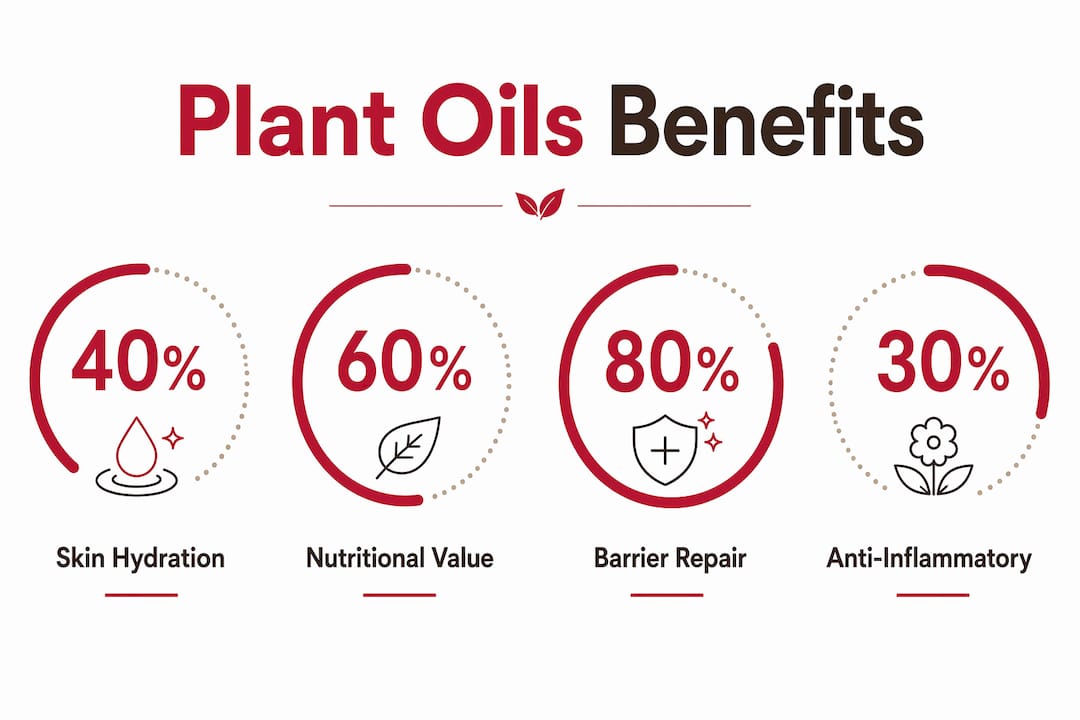
Plant oils in topical skincare function as emollients and occlusive agents, filling gaps in the skin’s lipid matrix and slowing transepidermal water loss. The industry term for this function is “carrier oil,” though the biochemical role goes well beyond simple moisturization. Emolliency refers to softening the skin surface by filling intercellular spaces. Occlusion refers to forming a physical barrier that reduces water evaporation.

A 2026 MDPI study evaluated water-in-oil (W/O) emulsions using olive, avocado, sesame, flaxseed, and grapeseed oils at 15% and 30% oil concentrations. The results showed high occlusion factors and SPF > 1 for several formulations, meaning plant oils in the right delivery system can offer measurable UV protection in addition to hydration. That is not a claim most people associate with plant oils, but the data supports it.
Pumpkin seed oil takes this further when paired with advanced delivery technology. A 2026 MDPI study on biomimetic liquid crystal emulsions found that pumpkin seed oil with polysaccharides in a lamellar structure improved skin hydration through a triple-action mechanism: barrier lipid repair, moisture retention, and reduced transepidermal water loss. The lamellar structure mimics the skin’s own lipid organization, which is why it outperforms standard oil-in-water creams for sustained hydration.
Here is a comparison of oil types by skin function:
| Oil Type | Key Fatty Acid | Best For | Recommended Use Level |
|---|---|---|---|
| Grapeseed | Linoleic (omega-6) | Oily, acne-prone skin | 5–15% in formulations |
| Argan | Oleic (omega-9) | Dry, mature skin | 5–15% in formulations |
| Flaxseed | ALA (omega-3) | Sensitive, inflamed skin | 5–10% in formulations |
| Pumpkin seed | Linoleic + oleic blend | Barrier repair, hydration | 5–15% in formulations |
| Avocado | Oleic (omega-9) | Dry, dehydrated skin | 5–15% in formulations |
Pro Tip: When reading a skincare label, look for the oil listed in the first five ingredients. Oils listed near the bottom of an INCI list are present in trace amounts and will not deliver meaningful barrier support.
Which plant oils are best for your skin type?
Selecting the right plant oil for your skin starts with understanding the linoleic versus oleic acid distinction. This framework, outlined by The Skin Science Company’s omega-rich carrier oil guide, is the most practical tool available for matching oils to skin conditions.
High-linoleic oils are best for oily, acne-prone, or barrier-compromised skin. Linoleic acid is a structural component of ceramides, the lipids that hold your skin barrier together. When the skin is deficient in linoleic acid, sebum becomes thicker and more comedogenic. Replacing it topically with high-linoleic oils like grapeseed, safflower, or hemp seed oil can reduce breakouts and improve barrier function over time.
High-oleic oils are best for dry or mature skin. Oleic acid penetrates more deeply into the skin and supports long-term moisture retention. Argan, avocado, and macadamia oils all fall into this category. They feel richer on the skin and work well in night creams or facial oils designed for intensive repair.
For dietary use, the omega-rich seeds in flaxseed and chia oil provide the highest plant-based ALA concentrations. These oils do not translate directly to topical use because their high ALA content makes them prone to oxidation on the skin. They are better consumed than applied.
Blending oils lets you target multiple skin needs at once. A practical starting blend for combination skin: 60% grapeseed oil for its light texture and linoleic content, 30% argan oil for oleic depth, and 10% flaxseed oil for anti-inflammatory omega-3 support. Keep blends in dark glass bottles and use within 60 days to prevent oxidation.
How does formulation affect plant oil efficacy in skincare?
The benefits of plant oils in skincare are not fixed. They change significantly based on how the oil is formulated. This is one of the most misunderstood aspects of plant-based skincare, and it directly affects what you should look for when buying products.
The 2026 MDPI study on W/O emulsions found that viscosity and performance in a finished product are not determined by the oil’s inherent viscosity alone. The emulsifier system, oil concentration, and water phase all interact to produce the final texture, occlusion level, and photoprotective capacity. An oil that performs well at 30% concentration in one emulsifier system may behave completely differently in another. This means two products listing the same oil can deliver very different results.
Liquid crystal emulsion technology represents the most advanced delivery system currently available for plant oils in skincare. The 2026 pumpkin seed oil study demonstrated that a lamellar reservoir mechanism sustains hydration over time by releasing moisture gradually through biomimetic oil and water layers. Standard emulsions coat the surface. Liquid crystal emulsions integrate with the skin’s own structure.
For consumers, this means the product format matters as much as the ingredient list. A serum with 2% argan oil in a well-designed delivery system will outperform a face oil with 100% argan applied directly, especially for barrier repair and sustained hydration. Look for products that reference lamellar emulsion technology, biomimetic formulation, or structured lipid delivery on their labels or product pages.
You can also learn more about how vegan facial oils function as emollients and occlusive agents in modern skincare formulations.
Key takeaways
Plant-based oils deliver their strongest results when matched to the right skin type, consumed at effective dietary doses, and delivered through formulations designed to work with the skin’s lipid structure rather than just coating it.
| Point | Details |
|---|---|
| Match oil to fatty acid profile | Use high-linoleic oils for oily or acne-prone skin; use high-oleic oils for dry or mature skin. |
| Dietary ALA converts to omega-3s | Flaxseed oil at 3 g/day raised EPA by up to 62.9% in people with low baseline levels over nine months. |
| Seed oils outperform animal fats | Replacing butter with seed oils is linked to a 16% lower mortality risk and a 17% lower cancer death risk. |
| Formulation determines topical results | Oil concentration and emulsifier choice affect occlusion and UV protection more than oil type alone. |
| Liquid crystal emulsions sustain hydration | Biomimetic lamellar structures release moisture gradually, outperforming standard oil-in-water creams. |
What i’ve learned after years of working with plant oils
Most people approach plant-based oils as a monolithic category. They hear “natural oil” and assume all of them work the same way, for the same skin, at the same dose. That assumption is responsible for a lot of frustration, breakouts from the wrong oil, and supplements that seem to do nothing.
The most important shift I made was treating plant oils the way a formulator does: by fatty acid profile first, delivery system second, and marketing claims last. When I started recommending grapeseed oil specifically for clients with congested skin instead of a generic “natural face oil,” the results were immediate and consistent. When I stopped assuming flaxseed oil would work topically the same way it works nutritionally, I stopped recommending it for direct skin application entirely.
The NuEva research on baseline EPA status confirmed something I had observed anecdotally: the people who see the most dramatic results from plant-based omega-3 supplementation are the ones who were most deficient to begin with. If you have been eating a diet rich in fatty fish for years, adding flaxseed oil daily may not move the needle much. If you have been eating a low-fat or plant-only diet, it can be transformative.
My honest advice is to start with one change at a time. Add a high-linoleic facial oil to your routine for 30 days and assess your skin. Add one tablespoon of flaxseed oil to your diet daily for 60 days and notice your skin texture and inflammation levels. The data is there. The results are real. But they require patience and specificity, not a cabinet full of every oil you can find.
— Gloria
Discover plant-oil skincare at Didisbeautycenter
Didisbeautycenter formulates its skincare products around the same principles this article covers: the right plant oils, in the right concentrations, in delivery systems that actually work with your skin.
The Daily Essential Bundle brings together plant-oil-enriched formulas designed for daily barrier support and hydration. For overnight repair, the Detox Nightwear Face Cream uses botanical oils and antioxidants to support skin renewal while you sleep. Both products reflect Didisbeautycenter’s commitment to natural, vegan formulations that go beyond surface-level moisturization. If you are building a plant-based wellness routine, these are the products worth starting with.
FAQ
What is the role of plant-based oils in skincare?
Plant-based oils function as emollients and occlusive agents in skincare, filling gaps in the skin’s lipid barrier and reducing water loss. Depending on their fatty acid profile, they can also support barrier repair, reduce inflammation, and provide measurable UV protection in the right formulation.
Are plant oils better than animal fats for health?
Seed oils are associated with a 16% lower mortality risk when they replace butter, according to Memorial Sloan Kettering. They are lower in saturated fat and supply essential fatty acids that animal fats do not provide.
Which plant oil is best for acne-prone skin?
High-linoleic oils like grapeseed, safflower, and hemp seed oil are best for acne-prone skin. Linoleic acid is a key component of skin ceramides, and topical application can help normalize sebum composition and reduce congestion.
How long does it take for dietary plant oils to affect omega-3 levels?
The NuEva study tracked participants over nine months and found meaningful increases in EPA, DPA, and DHA from 3 g/day of ALA. Results depend heavily on your baseline fatty acid status, with low-baseline individuals seeing the fastest and largest gains.
Does the type of skincare product affect how well plant oils work?
Yes. A 2026 MDPI study confirmed that emulsifier choice and oil concentration affect occlusion and performance more than the oil’s inherent properties. Liquid crystal emulsion systems deliver sustained hydration by mimicking the skin’s own lamellar lipid structure, outperforming standard creams with the same oil content.
Discourse (0)