


TL;DR:
- White label cosmetics involve manufacturers producing shared formulas sold under multiple brands, enabling quick market entry. The brand owner is ultimately responsible for regulatory compliance, including labeling, safety, and documentation, in their jurisdiction. Start by identifying a niche, vetting manufacturers, and focusing on branding to differentiate in a saturated market.
If you’ve been researching how to start a beauty brand, you’ve almost certainly stumbled across the term white label cosmetics and wondered what it actually means in practice. The concept is simpler than it sounds, but it carries real implications for how you’ll build, market, and scale your brand. This guide breaks down exactly how white label beauty products work, how they compare to private label options, what the regulatory landscape looks like, and how to make smart decisions as an entrepreneur entering this space.
Key takeaways
| Point | Details |
|---|---|
| White label is fast | Brands can launch in weeks instead of the 12–24 months needed to develop proprietary formulas. |
| Compliance is your responsibility | Even when you don’t manufacture, you own the legal obligations tied to your branded product. |
| White label vs private label matters | White label uses shared formulas; private label gives you exclusive, customized formulations. |
| Branding drives success | The formula is secondary. What wins customers is packaging, positioning, and customer experience. |
| Vet your manufacturer carefully | Product quality, GMP certification, and documentation practices directly affect your brand’s reputation. |
What is white label cosmetics, and how does it work
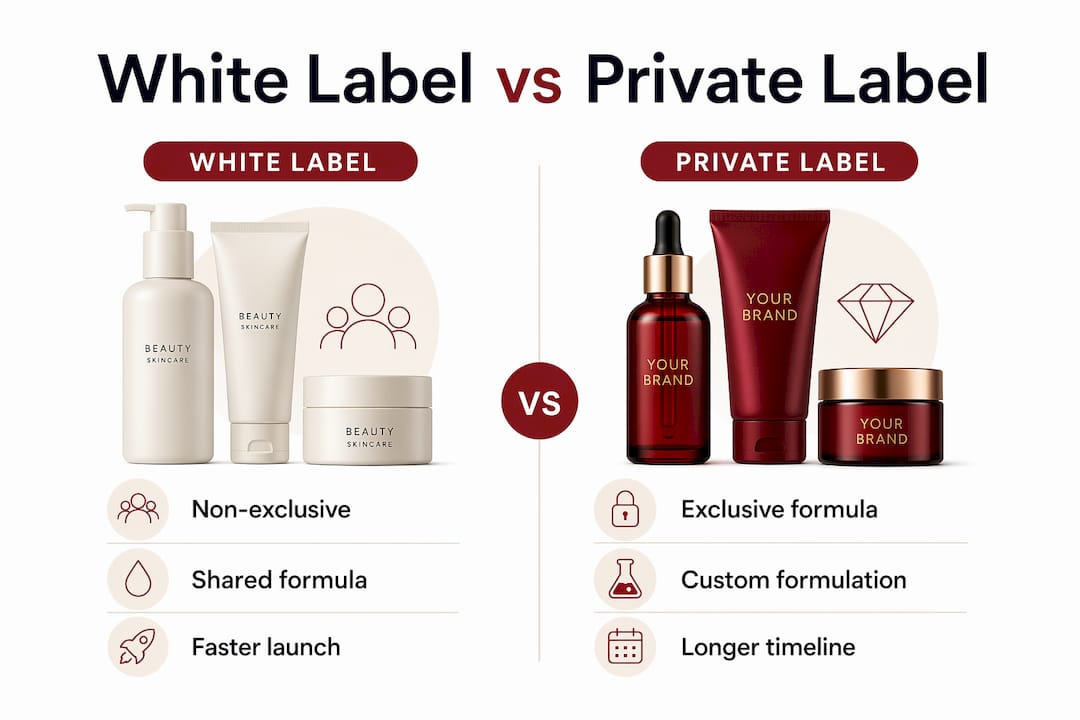
White label cosmetics, also called white labeling in the industry, refers to products that a manufacturer creates in bulk, then sells to multiple brands, each of which applies their own name, logo, and packaging. The end consumer sees only your brand. They have no idea the same base formula might be sold under ten other names.
Here is the basic flow:
- A manufacturer formulates and produces a product, such as a vitamin C serum or a tinted moisturizer
- You select the product from their catalog
- You provide your branding, logo, and label specifications
- The manufacturer packages the product under your brand
- You sell it to customers as your own product
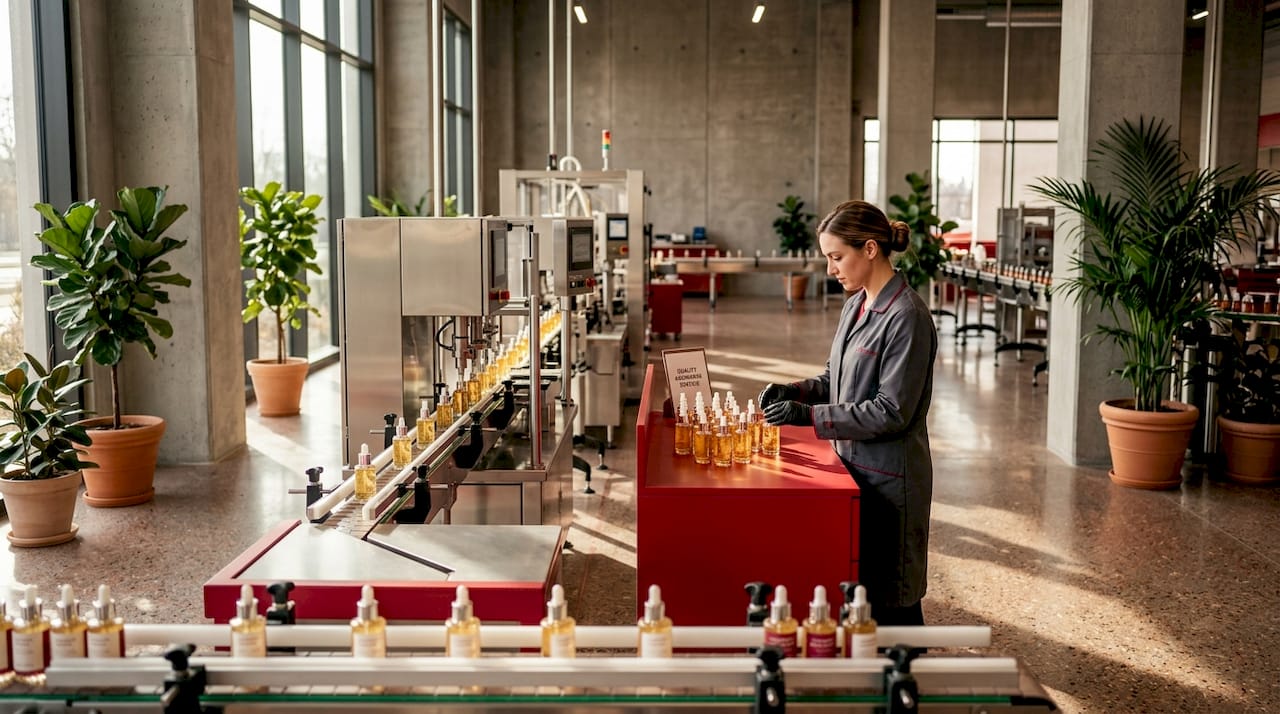
Brands can launch products quickly without handling formulation, safety testing, production, or compliance. The manufacturing partner takes care of all of that. This is what makes white label so attractive for entrepreneurs who want to move fast without building a lab or hiring chemists.
The speed advantage is significant. Developing proprietary formulas takes 12 to 24 months, whereas white labeling enables brands to launch in a matter of weeks. For someone testing a market or expanding an existing product line, that difference is everything.
What white label is not is a shortcut around quality. The best white label manufacturers produce genuinely effective, safe products. Your job is finding the right one.
Benefits and drawbacks for brand owners
The benefits of white label cosmetics are real, but so are the limitations. Understanding both will save you a lot of time and money.
What works in your favor:
- Low startup cost compared to custom manufacturing
- Fast time to market, sometimes as little as four to six weeks
- No need for in-house formulation expertise
- Flexibility to test multiple product categories without large commitments
- Freedom to focus resources on marketing and customer relationship building rather than production
Where you will face challenges:
- You have no control over the formula, which means you cannot change ingredients or improve performance
- Other brands sell the exact same product, making differentiation harder
- You are dependent on your manufacturer for quality consistency
- If the manufacturer discontinues a product, you lose it from your line
- Building a story around a formula you did not create requires careful, honest positioning
The market saturation point is real and often underestimated. If your only differentiator is packaging design, you are one competing brand away from losing shelf space or customer loyalty. Successful white label brands layer in strong storytelling, community building, and consistent customer service to compensate for the formula sameness.
Pro Tip: Before committing to a white label supplier, order samples under a fictional brand name and have real customers test them without telling them the source. Honest feedback at that stage is worth more than any sales pitch from the manufacturer.
Regulatory and compliance requirements you cannot skip
This is the section most beginner guides gloss over. Regulatory compliance is not the manufacturer’s problem alone. When your name and logo are on the label, you are legally responsible for that product.
Here is what you need to understand, whether you are selling in the U.S. or the European Union:
-
Know your jurisdiction’s rules. In the U.S., the Modernization of Cosmetics Regulation Act (MoCRA) of 2022 expanded FDA authority to require facility registration, product listing, safety substantiation, adverse event reporting, and compliant labeling. These are your obligations as the brand owner.
-
Understand the EU Responsible Person role. If you sell in the European Union, you or your designee must serve as the Responsible Person. This role requires maintaining a Product Information File (PIF) accessible for 10 years after the last batch is placed on the market, plus product notification through the CPNP portal before sale.
-
Verify GMP certification. Ask any manufacturer you work with whether they comply with ISO 22716, the international Good Manufacturing Practice standard for cosmetics. This is the baseline that EU regulations reference and that serious markets expect.
-
Audit labeling requirements. Your label must include specific elements depending on your market, including ingredient lists in INCI format, contact information for adverse event reporting, net quantity, and country of origin. Errors here are not just embarrassing. They are compliance violations.
-
Set up document retention workflows. PIF records must survive supplier changes, staff turnover, and software migrations for up to a decade. Build a document management system from day one rather than scrambling during an audit.
Pro Tip: The Responsible Person role in the EU is widely misunderstood. Many brand owners assume the manufacturer handles all regulatory obligations. They do not. If your name is on the label, you need to either take on this role yourself or formally appoint a compliant third party to hold it.
The good news is that reputable white label manufacturers will have their own compliance documentation ready and will support you with safety assessment data for the PIF. Ask for it explicitly before signing any agreement.
How to get started with white label cosmetics
Getting your first white label product to market is achievable in a matter of weeks if you approach it methodically. Here is a practical sequence that works:
-
Define your niche before you pick a product. The worst approach is browsing a manufacturer’s catalog and choosing what looks interesting. Start with a specific customer problem. Natural vegan skincare for sensitive skin, brightening products for melanin-rich complexions, or clean body care for athletes are examples of niches that create a ready audience.
-
Research and shortlist manufacturers. Look for suppliers who are transparent about their ingredient sourcing, hold GMP certification, and will provide safety documentation. Request samples of at least three to five products before making any commitment.
-
Understand minimum order quantities. Many white label manufacturers require minimum orders of 100 to 500 units per SKU. Know your cash flow limits before falling in love with a product line you cannot afford to stock.
-
Invest seriously in packaging and branding. This is where white label brands either win or lose. Since the formula is shared, your packaging, label design, product naming, and brand story are what create perceived value. Budget for professional design. It pays back immediately.
-
Test before you scale. Launch with two or three products, gather real customer feedback, and refine your positioning. Comparing private label vs white label options at this stage can help you decide whether to eventually move toward exclusive formulations as your brand grows.
-
Build your compliance checklist. Before selling a single unit, confirm your labeling meets local requirements, your facility registration is complete if required, and you have a clear process for handling any customer adverse event reports.
The most common pitfall is skipping step one and rushing to step four. A beautifully branded product with no clear audience is an expensive lesson. The brands that succeed with white label cosmetics are those that treat the formula as a starting point, not the whole strategy.
White label vs private label: key differences
These two models are constantly confused, and the distinction matters when you are making strategic decisions for your brand.
| Factor | White label | Private label |
|---|---|---|
| Formula exclusivity | Shared with multiple brands | Exclusive to your brand |
| Customization | Label and packaging only | Formula, scent, color, texture |
| Time to market | Weeks | Months |
| Cost to launch | Lower | Higher |
| Differentiation | Harder | Stronger |
| Best for | Testing, low-budget launches | Established brands, niche positioning |
White label products are generic and non-exclusive, while private label products are customized and exclusive to one brand. A private label arrangement means a manufacturer develops or modifies a formula specifically for you. No other brand sells that exact product. That exclusivity costs more and takes longer, but it gives you a genuine product story and competitive moat.
Many successful beauty entrepreneurs start with white label to build their audience and cash flow, then transition specific hero products to private label once they know what their customers love most. This hybrid approach is smart because it minimizes risk while leaving room to grow into something more proprietary. If you want to explore what that path looks like for your beauty brand, Didisbeautycenter walks through both models in detail.
My honest take on white label brand building
I’ve watched a lot of entrepreneurs treat white label cosmetics as the easy path, and then get frustrated when the business stalls. Here is what I’ve learned: the formula was never the hard part. The hard part is building a brand that people trust enough to buy from repeatedly.
In my experience, the brands that thrive with white label are the ones that pour everything they save on formulation into customer relationships. They show up consistently on social media. They respond to every review. They package with enough care that unboxing feels like a gift. The product inside is good, but the experience around it is what creates loyalty.
What I’ve found is that compliance is also chronically underestimated. Most new brand owners I’ve talked to assume the manufacturer handles all regulatory obligations. That assumption is costly. When MoCRA requirements kick in or an EU customs review flags a shipment, it is the brand owner on the hook, not the factory. Diligence here is not optional, it is the foundation your business sits on.
My honest advice: choose white label if you want to test, move fast, or expand a product line without a massive capital commitment. But be ruthless about manufacturer vetting, invest in branding like your business depends on it (because it does), and treat compliance as a day-one priority rather than something to figure out later.
— Gloria
Launch your beauty brand with Didisbeautycenter
If this article has you thinking seriously about starting your own white label skincare line, Didisbeautycenter is built for exactly that next step.
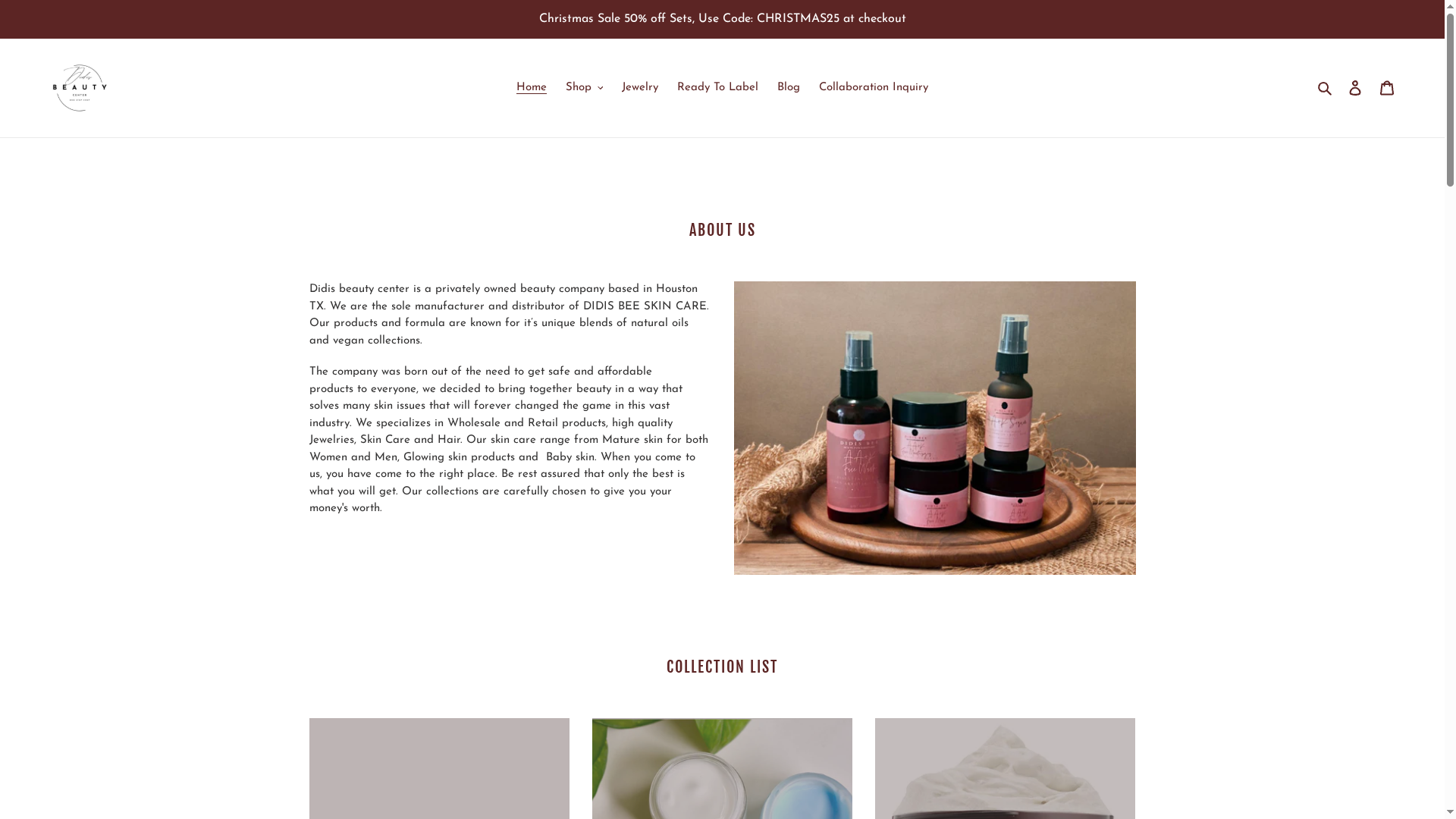
Didisbeautycenter offers ready-to-label products and private label solutions designed for entrepreneurs who want natural, vegan formulations without the overhead of custom manufacturing. The Daily Essential Bundle is one of the most popular starting points for new brand owners, combining beginner-friendly products with strong customer appeal. Whether you are testing your first SKU or expanding an existing line, Didisbeautycenter’s catalog makes it straightforward to find products that align with your brand values, with transparent documentation support to keep you compliant from the start.
FAQ
What is the difference between white label and private label cosmetics?
White label cosmetics use shared, non-exclusive formulas that multiple brands can sell under their own names. Private label products involve formulas developed or customized exclusively for one brand, giving stronger differentiation at a higher cost.
Do I own the formula in a white label arrangement?
No. In a white label model, the manufacturer owns the formula and licenses or sells it to multiple brands. You own your branding and label, but not the underlying product formulation.
Who is responsible for cosmetic compliance with white label products?
The brand owner is legally responsible. In the U.S., MoCRA requires the brand to handle facility registration and adverse event reporting. In the EU, the brand must appoint a Responsible Person to maintain the Product Information File for up to 10 years.
How long does it take to launch a white label cosmetics brand?
Most white label launches take four to eight weeks from selecting a product to having branded units ready to sell, compared to 12 to 24 months for proprietary formula development.
Can I switch from white label to private label later?
Yes, and many brands do. A common strategy is launching with white label products to test the market and build a customer base, then transitioning high-performing products to private label formulations for greater exclusivity and brand differentiation.
Discourse (0)