


TL;DR:
- Many people discard vitamin C skincare products after two weeks due to unmet expectations, but proper application reveals visible results over time. Vitamin C acts as an antioxidant, supports collagen production, and brightens skin, especially when used consistently and correctly stored. Formulation quality, delivery system, and understanding skin sensitivity are crucial for achieving its full benefits.
Vitamin C sits on more bathroom shelves than almost any other skincare ingredient, yet a surprising number of people toss it after two weeks because they see nothing happening. That frustration is completely understandable, but it usually comes down to one thing: mismatched expectations. When you understand exactly what vitamin C does inside your skin, at what pace, and which formulas actually deliver it there, you stop guessing and start seeing real results. This guide walks you through the science, the smart application strategies, and the vegan-friendly solutions that make vitamin C one of the most rewarding ingredients in a plant-based routine.
Table of Contents
- What makes vitamin C essential for healthy skin?
- Collagen boost and anti-aging: How vitamin C rejuvenates skin
- Targeting dark spots and uneven tone: Vitamin C for brightening and pigmentation
- Getting results: What to know about formulations, storage, and application
- Expert perspective: What most vitamin C guides miss
- Explore clean, vegan vitamin C solutions
- Frequently asked questions
Key Takeaways
| Point | Details |
|---|---|
| Consistent routine matters | Vitamin C’s benefits for brightening and anti-aging appear over weeks, not overnight. |
| Pair with the right ingredients | Combining vitamin C with the right actives—like vitamin E or ferulic acid—can amplify its effects. |
| Formulation drives results | Optimal results depend on choosing stable vitamin C forms and proper storage, especially for natural routines. |
| Suitability for sensitive skin | Buffered and derivative vitamin C products can offer benefits with less irritation for sensitive users. |
What makes vitamin C essential for healthy skin?
Vitamin C is not just a wellness buzzword. It is a biologically active compound that your skin genuinely depends on, and it cannot make its own supply. The most studied form for topical use is L-ascorbic acid, the pure, active version of vitamin C. Because L-ascorbic acid can irritate sensitive skin and oxidize quickly, formulators also use gentler derivatives like ascorbyl glucoside, sodium ascorbyl phosphate, and ethyl ascorbic acid. These forms convert to active vitamin C once absorbed and are especially popular in natural and vegan products because they pair well with plant-based ingredient systems.
What does vitamin C actually do when it reaches your skin cells? A few key things:
- Antioxidant defense: Topical vitamin C works as an antioxidant that protects skin from UV and pollution-related oxidative stress and supports skin biology relevant to aging and pigmentation. Free radicals, which are unstable molecules from sun exposure and environmental pollution, break down collagen and trigger inflammation. Vitamin C neutralizes them before they cause lasting damage.
- Collagen support: Vitamin C is a required cofactor (a helper molecule) for the enzymes that build and stabilize collagen fibers. Without enough of it, your skin’s structural scaffold weakens over time.
- Brightening effect: Vitamin C interferes with the enzyme tyrosinase, which is responsible for producing melanin, the pigment behind dark spots and uneven tone.
- Anti-inflammatory action: It helps calm skin that is reacting to environmental stressors, making it a useful ingredient even for reactive skin types.
Vitamin C does not work like a filter on a photo. It works like a repair crew that shows up every day, doing invisible but cumulative work that becomes very visible over weeks of consistent use.
If you want to understand how vegan antioxidants for glowing skin work in a broader plant-based context, combining vitamin C with other antioxidants from botanical sources amplifies the protective effect considerably.
Collagen boost and anti-aging: How vitamin C rejuvenates skin
Collagen is the protein that gives your skin its bounce, firmness, and smooth texture. Starting in your mid-twenties, your body produces less of it each year, and sun exposure accelerates that decline. This is where vitamin C earns its anti-aging reputation, and the evidence behind it is solid.
Research on topical vitamin C and collagen markers shows that consistent topical use correlates with increased collagen production and measurable clinical improvements in photoaging (sun-related skin aging) after several weeks of use. That means fewer fine lines, improved firmness, and a more even texture are all realistic outcomes when you stay consistent.
How to use vitamin C for the best anti-aging results:
- Start with the right concentration. For anti-aging benefits, L-ascorbic acid products in the 10 to 20 percent range tend to show the strongest results in research. If you have sensitive skin, start at 10 percent or choose a stabilized derivative.
- Apply it in the morning. Morning application allows vitamin C to work alongside your sunscreen, boosting UV defense when you need it most. The antioxidant effect is most valuable when your skin is about to face environmental exposure.
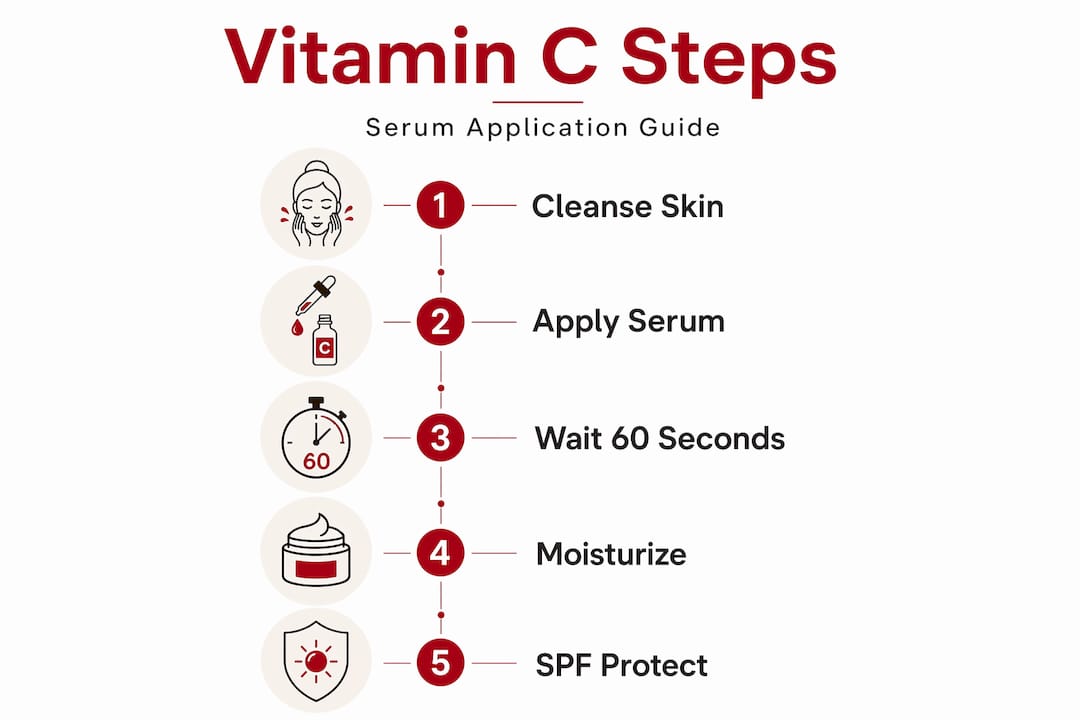
- Layer correctly. Apply vitamin C serum after cleansing and toning, but before heavier moisturizers and SPF. Thin to thick is the general rule.
- Give it time. Most users in clinical studies saw noticeable improvements after 8 to 12 weeks. Expecting results in one week is the most common reason people give up too early.
- Be consistent. Applying it three days a week produces far weaker results than daily use. Your skin’s repair processes run on a daily cycle.
| Product factor | What to look for | What to avoid |
|---|---|---|
| Active form | L-ascorbic acid or ascorbyl glucoside | Vague “vitamin C blend” with no % listed |
| Concentration | 10 to 20% for strong results | Below 5% for anti-aging goals |
| pH level | 2.5 to 3.5 for L-ascorbic acid | High pH that deactivates the vitamin |
| Packaging | Airless pump or dark glass | Clear bottles or jars exposed to light |
| Added actives | Vitamin E, ferulic acid | Incompatible oxidizing agents |
A well-formulated product like the CC Serum for skin renewal takes these factors seriously, offering a stable, skin-friendly delivery system that supports your brightening natural skincare routine without harsh synthetic additives.
Targeting dark spots and uneven tone: Vitamin C for brightening and pigmentation
Vitamin C truly shines when it comes to brightening. If you deal with post-acne marks, sun spots, or the kind of uneven tone that makes your skin look dull, vitamin C attacks those issues at the source. The mechanism comes down to tyrosinase inhibition. Tyrosinase is the enzyme that triggers melanin (pigment) production in response to inflammation or UV exposure. Vitamin C slows that enzyme down, which means new dark spots form more slowly while existing ones gradually fade.
Research confirms vitamin C’s role in depigmenting approaches for pigmentation disorders like melasma, especially when combined with other targeted actives. This is an important point because vitamin C rarely works in complete isolation for stubborn hyperpigmentation. It works best as part of a thoughtful regimen.
| Skin concern | How vitamin C helps | Best pairing for vegan routines |
|---|---|---|
| Post-acne dark marks | Reduces melanin in healing skin | Niacinamide, rosehip oil |
| Sun spots | Inhibits UV-triggered pigment formation | SPF 30+ sunscreen daily |
| Melasma | Slows overactive melanin production | Kojic acid, licorice root extract |
| General dullness | Boosts radiance at the cellular level | Vitamin E, green tea extract |
| Uneven skin tone | Gradually evens out patchy pigmentation | Alpha arbutin |
Pro Tip: For faster brightening results, pair your vitamin C serum with a gentle AHA (alpha hydroxy acid) exfoliant two to three times per week. The exfoliant clears away dead surface cells so vitamin C can reach the active layers where pigment production actually happens. Just do not use both in the same application step since the combination can cause irritation.
When you are treating dark spots with vitamin C, patience is genuinely essential. Post-acne marks may lighten noticeably in 6 to 8 weeks. Sun spots that have been building for years may take 3 to 6 months of consistent care. Neither timeline means the product is failing. It means the ingredient is doing the slower, more sustainable work of regulating pigment rather than bleaching it.
Getting results: What to know about formulations, storage, and application
You can buy a vitamin C serum with an impressive ingredient list and still see zero results if the formula is poorly designed or you store it incorrectly. This is one of the most overlooked reasons why people lose faith in vitamin C.
Stability is the number one challenge with vitamin C. L-ascorbic acid oxidizes quickly when exposed to air, light, or heat. An oxidized serum turns orange or brown and is not just ineffective but can actually generate the very free radicals you are trying to fight. Outcomes depend on product stability, delivery system, and consistent use with photoprotection, and antioxidant benefits are not a substitute for sunscreen. Always read that last part twice.
Here is what to look for and what to watch out for:
- Packaging matters enormously. Choose airless pump dispensers or dark amber glass bottles. Avoid jars and clear containers, which expose the serum to air and light with every use.
- Check the color before you apply. Fresh vitamin C serums should be colorless to very faintly yellow. If yours has turned bright orange or brown, it is oxidized and should be replaced.
- Store in a cool, dark place. A drawer or cabinet away from the bathroom’s steam and heat is better than leaving it on a sunny windowsill. Some users refrigerate their vitamin C serums to extend shelf life, and that works well.
- Use it within 3 to 6 months of opening for best potency, even if the labeled expiry is later.
- For sensitive skin or natural skin barriers, expect visible results after routine, multi-week use and prioritize derivatives and buffered formulations over straight L-ascorbic acid to reduce the chance of irritation while still delivering active vitamin C.
Pro Tip: After applying your vitamin C serum, wait 60 to 90 seconds before applying the next product. This short absorption window helps the actives penetrate properly rather than mixing with a moisturizer on the surface of your skin.
Finding the right match for your skin type involves understanding your barrier tolerance and checking your skin-friendly product selection strategy. For those interested in going deeper into ingredient safety and vegan certifications, the natural skincare formulation guide covers what to prioritize when building a clean routine.
Expert perspective: What most vitamin C guides miss
Here is something most beauty content will not say plainly: the majority of vitamin C “failures” have nothing to do with vitamin C itself. They come from products that were already oxidized on the shelf, concentrations too low to do anything meaningful, or routines abandoned before the ingredient had time to work.
The ingredient is not the problem. The context is.
We see this pattern repeatedly in the natural and vegan skincare space. Shoppers buy a vitamin C product because it has a clean ingredient list and a nice bottle, and they are right to care about those things. But if the formula uses a low-grade derivative without a proper delivery system, or if the pH is off, no amount of patience will produce results. This is why formulation quality is not a bonus feature. It is the baseline requirement.
There is also a real conversation to be had about skin type compatibility. Vitamin C can be challenging for some users due to irritation potential tied to how it is delivered, not the vitamin concept itself. Derivatives and carefully buffered formulations are often recommended when sensitivity is an issue. If you have tried vitamin C before and found it stinging or reddening your skin, the answer is almost never “vitamin C is not for me.” The answer is usually “that specific form was too harsh for my skin barrier.”
Switching to a gentler derivative in a well-stabilized, vegan-friendly serum like the CC Serum with comfort often resolves the sensitivity issue entirely while still delivering the brightening and antioxidant results people are looking for.
The broader truth is this: plant-based skincare routines that emphasize consistency, ingredient integrity, and formulation quality outperform trendy, high-concentration products used irregularly. Vitamin C is a long game, and it rewards people who play it thoughtfully.
Explore clean, vegan vitamin C solutions
Ready to stop guessing and start building a vitamin C routine that actually works for your skin?
At Didi’s Beauty Center, we curate and formulate natural, vegan skincare products that take ingredient quality and stability seriously. Whether you are looking for a brightening serum, a daily glow booster, or a starting point for your own plant-based brand, our lineup is designed with real results in mind. Entrepreneurs can explore our private label vegan skincare options to launch their own clean beauty line with confidence. Everyday shoppers can shop clean skincare and find vitamin C products that pair science with vegan values, without compromising on effectiveness or ethics.
Frequently asked questions
How long does it take to see results from vitamin C in skincare?
Visible improvements such as brighter skin and reduced wrinkles usually appear after several weeks of consistent daily use, with clinical improvements in photoaging reported after multi-week treatment in studies.
Which form of vitamin C is best for sensitive skin?
Vitamin C derivatives and products with buffered formulations are typically best for sensitive skin because irritation potential is tied to delivery method, not vitamin C itself, making gentler forms a practical solution.
Can I use vitamin C with other skincare ingredients?
Yes, vitamin C is frequently paired with vitamin E, ferulic acid, or other actives since combining vitamin C with complementary actives broadens the antioxidant mechanisms and enhances results for both protection and pigmentation goals.
Does vitamin C replace the need for sunscreen?
No, vitamin C supports your sun defense but never replaces sunscreen since antioxidant benefits are not a substitute for dedicated photoprotection against UV damage.
Discourse (0)