


TL;DR:
- Sustainable packaging in beauty combines product protection with environmental responsibility and consumer communication. Regulatory demands like the EU PPWR are accelerating brands to adopt recyclable, recycled, and minimal designs. Clear communication and phased implementation help small brands succeed in building credible, eco-friendly packaging programs.
Sustainable packaging is defined as any packaging system that uses recyclable, reusable, or compostable materials to minimize environmental harm while preserving product integrity and meeting consumer expectations. In the beauty industry, the role of sustainable packaging has shifted from a marketing differentiator to a baseline operational requirement, driven by tightening EU regulations, rising consumer scrutiny, and material science advances that now make eco-friendly options genuinely competitive. The EU Packaging and Packaging Waste Regulation (PPWR), the Ellen MacArthur Foundation’s circular economy frameworks, and brands like Lush and Aveda have collectively redefined what responsible beauty packaging looks like. For small beauty businesses and private label entrepreneurs, understanding this shift is no longer optional. It determines shelf placement, regulatory compliance, and long-term brand credibility.
What is the role of sustainable packaging in beauty products?
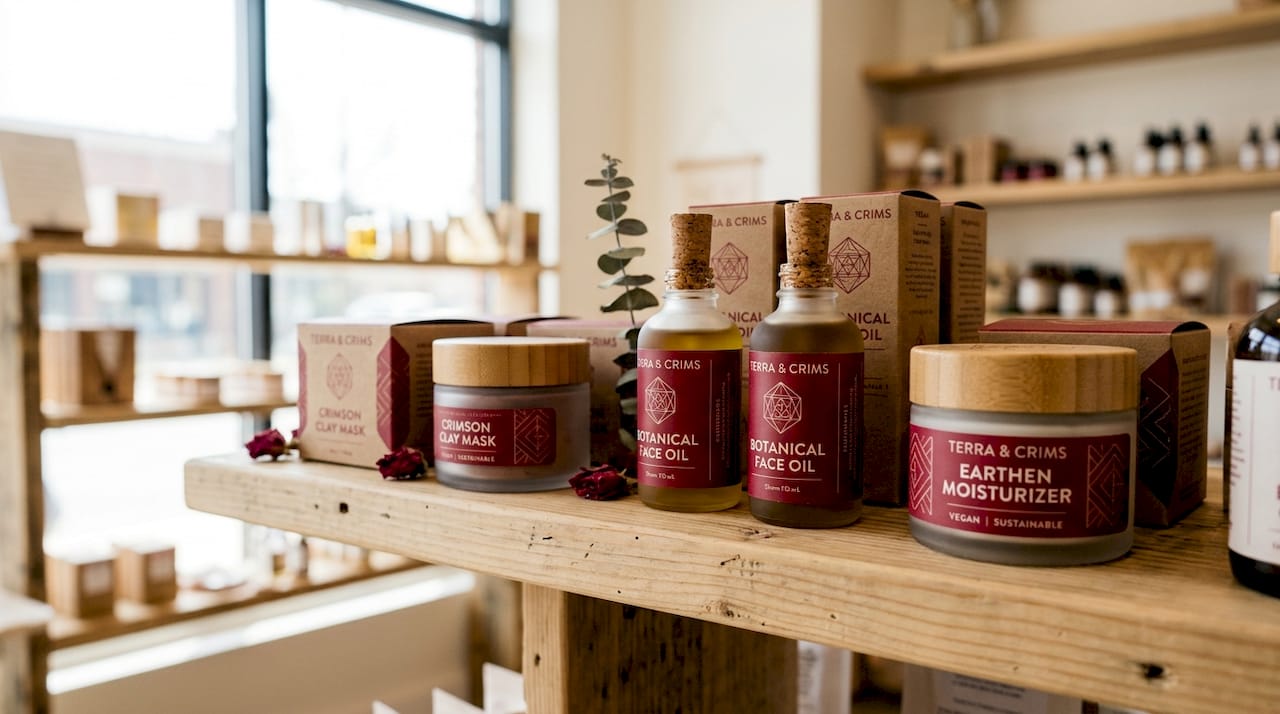
Sustainable packaging in beauty serves three simultaneous functions: protecting the formulation, reducing environmental impact, and communicating brand values to the consumer. These three demands rarely align perfectly, which is why packaging decisions in this industry are among the most technically complex a brand will face.
The protection function is non-negotiable. Barrier properties against oxygen, moisture, and contamination are what keep a serum stable or a cream free from microbial growth. Some early-generation bioplastics and single-material recycled polymers struggled to match the barrier performance of conventional multilayer plastics. That gap is closing. Advances in nanocomposite films, such as PHBHHx-ZnO formulations, have demonstrated measurable improvements in antimicrobial performance and storage extension, with shelf life increases from 6 to 16 days in perishable goods trials. For beauty brands, this signals that material science is catching up to the performance demands of cosmetic formulations.
The environmental function requires more than swapping plastic for paper. Genuine eco-friendly packaging considers the full lifecycle: raw material sourcing, manufacturing energy, transport weight, end-of-life recyclability, and consumer disposal behavior. A glass jar may feel premium and sustainable, but its weight increases shipping emissions significantly compared to a lightweight recycled PET alternative.
Pro Tip: Before switching packaging materials, request a lifecycle assessment (LCA) from your supplier. Even a simplified LCA will reveal whether your “greener” choice actually reduces total environmental impact or just shifts the problem to a different stage of the supply chain.
How does sustainable packaging impact product safety and shelf life?
Product safety and shelf life are the first objections beauty formulators raise when sustainable packaging is proposed, and they are legitimate concerns. Sustainable materials must be engineered or reformulated to meet the barrier requirements that protect delicate cosmetic ingredients from oxidation, evaporation, and contamination.
Recycled polymers, for example, can introduce trace contaminants from previous use cycles if not properly processed. Post-consumer recycled (PCR) PET used in skincare bottles must meet food-grade or cosmetic-grade purity standards, which requires certified suppliers and documented traceability. Brands that skip this verification risk product degradation and regulatory liability.
The good news is that material selection decisions that balance functionality, economics, and customer expectations are now better supported by industry data than they were five years ago. Phased adoption, starting with recycled polymers that fit existing manufacturing lines before planning longer-term redesigns, is the approach most successful beauty brands use. This reduces disruption while building internal expertise. Didisbeautycenter’s guidance on natural beauty packaging covers exactly this kind of practical transition planning for brands at different stages.
What are the main environmental and business benefits?
The advantages of sustainable packaging extend well beyond environmental optics. For beauty brands operating in competitive retail and e-commerce markets, the business case is concrete and measurable.
The environmental benefits include:
- Waste reduction: Recyclable and reusable packaging diverts material from landfill and supports circular economy supply chains.
- Lower carbon footprint: Lightweighting reduces transport emissions. Minimalist designs reduce environmental impact and logistics costs, according to DHL’s 2026 sustainability guidance.
- Resource conservation: Using recycled content reduces demand for virgin raw materials, lowering extraction-related environmental damage.
- Reduced product damage: Right-sized packaging reduces movement during transit, cutting damage rates and the waste associated with returned or destroyed goods.
- Brand differentiation: Sustainability credentials are now a purchasing factor, not just a nice-to-have. Brands with credible eco-friendly packaging programs attract and retain customers who align with those values.
The business benefits compound over time. Lower packaging weight reduces per-unit shipping costs. Simplified material choices reduce supplier complexity. Regulatory compliance avoids fines and market access restrictions in the EU and increasingly in other jurisdictions. Packaging sustainability is moving beyond promises to practical implementation, with measurable design changes now the standard expectation from both regulators and retail buyers.
For small beauty businesses, the benefit of green packaging is also reputational. Consumers notice when packaging is oversized, uses unnecessary layers, or lacks recycling instructions. Getting this right builds the kind of trust that drives repeat purchases.
How do current regulations shape sustainable packaging choices?
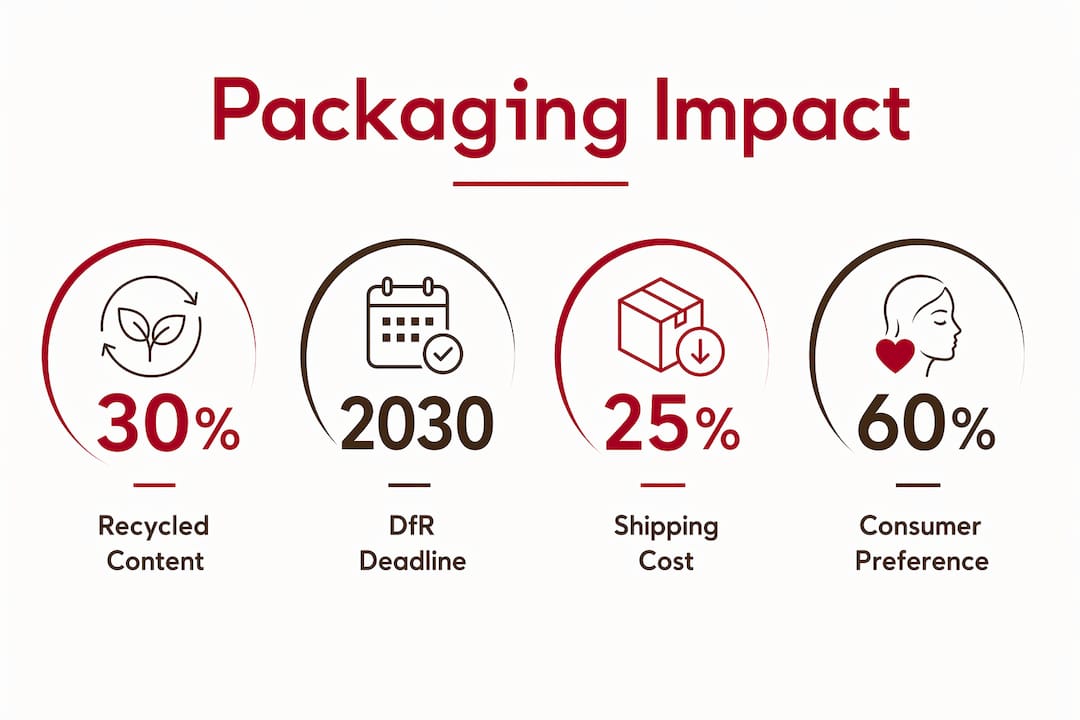
The EU’s PPWR is the most consequential regulatory development in beauty packaging since the Cosmetics Regulation. PPWR requirements apply across all EU member states and mandate that cosmetic packaging meet Design for Recycling (DfR) criteria by 2030, with a recyclability grading system running from A to E. Packaging graded below 70% recyclable will be banned from the EU market by 2030.
The recycled content requirements are equally significant. Plastic packaging must contain 30% recycled content by 2030, rising to 65% by 2040. For beauty brands selling into Europe, this is not a future consideration. Supplier contracts, material specifications, and product development timelines need to reflect these thresholds now.
The table below summarizes the key PPWR milestones beauty brands must plan for:
| Requirement | Deadline | Impact on beauty brands |
|---|---|---|
| Design for Recycling (DfR) compliance | 2030 | All packaging must achieve A–E recyclability grade |
| Ban on packaging below 70% recyclable | 2030 | Non-compliant packaging removed from EU market |
| 30% recycled content in plastic packaging | 2030 | Supplier sourcing and material specs must change |
| 65% recycled content in plastic packaging | 2040 | Long-term material strategy required |
| Labeling harmonization | Phased | Standardized recycling instructions across EU |
PPWR compliance requires extensive packaging data, traceability, and cross-team collaboration between legal, technical, and design teams. Brands that treat this as a documentation project rather than a design project will struggle. The regulation rewards brands that build recyclability into the product development process from the start, not those who retrofit compliance at the end.
What do consumers actually expect from sustainable beauty packaging?
Consumer expectations around packaging have become specific and measurable. 86% of consumers expect sustainable packaging in 2026, while 98% still prioritize product protection. These two demands are not in conflict, but they require deliberate design to satisfy simultaneously.
Two-thirds of consumers report that packaging influences their unboxing experience and likelihood of repeat purchase. Over 70% actively avoid oversized packaging. These numbers reflect a consumer base that has moved past vague sustainability preferences into concrete behavioral choices. Brands that ship a 30ml serum in a box three times its size are losing customers, not just generating waste.
“Consumer trust in sustainable packaging depends heavily on clear communication and system support to narrow the gap between sustainability intention and actual recycling behavior.” — Sustainable Packaging News, 2026
This quote captures the most underappreciated challenge in sustainable packaging: the intention-behavior gap. A consumer who wants to recycle your packaging but cannot figure out how to separate the pump from the bottle will throw the whole thing in general waste. Clear on-pack recycling instructions, material identification symbols, and participation in take-back programs all reduce this gap. Didisbeautycenter’s resource on eco-friendly packaging transitions addresses how beauty brands can communicate sustainability credentials without greenwashing.
Balancing luxury aesthetics with eco-friendly materials is a real design challenge, particularly for premium skincare brands. Frosted glass, soft-touch coatings, and metallic finishes often compromise recyclability. The solution is not to abandon premium aesthetics but to source materials and finishes that achieve the desired look within recyclability constraints.
What practical steps can beauty brands take to implement sustainable packaging?
Implementing sustainable packaging successfully requires a structured process, not a single material swap. The following steps reflect how brands with credible sustainability programs actually operate.
- Conduct a packaging audit. Map every SKU against its current packaging materials, weight, recyclability grade, and recycled content percentage. This baseline identifies which products carry the highest regulatory and environmental risk.
- Engage suppliers early. Request material data sheets, recycled content certifications, and DfR assessments from every packaging supplier. Suppliers who cannot provide this documentation are a compliance liability under PPWR.
- Test for performance. Any new sustainable material must pass the same barrier, compatibility, and stability tests as its conventional predecessor. Accelerated shelf-life testing with the actual formulation is non-negotiable.
- Design for minimal waste. Right-size packaging to the product. Eliminate secondary packaging where the primary container provides adequate protection. Reduce component count to simplify end-of-life sorting.
- Plan for refill and reuse systems. Refillable packaging is gaining traction in prestige skincare, with brands like Chanel Beauty and Kjaer Weis demonstrating that refill systems can command premium pricing while reducing material waste per use cycle.
Pro Tip: Start your sustainability transition with your top three best-selling SKUs. Achieving compliance and performance on high-volume products builds supplier relationships, internal expertise, and consumer recognition faster than spreading effort across your entire catalog.
Sustainable packaging adoption succeeds when brands treat it as a phased program with clear milestones rather than a one-time project. Material-only switches that ignore market acceptance and supply chain impacts consistently underperform.
Key takeaways
Sustainable packaging in beauty requires simultaneous performance across product protection, regulatory compliance, and consumer communication. Brands that treat these as separate workstreams will fail at all three.
| Point | Details |
|---|---|
| Barrier performance is non-negotiable | Sustainable materials must match conventional packaging in protecting formulations from oxidation and contamination. |
| PPWR sets hard deadlines | EU brands must achieve 70% recyclability and 30% recycled content in plastic packaging by 2030. |
| Consumer expectations are specific | 86% expect sustainable packaging; over 70% avoid oversized packaging, making right-sizing a retention factor. |
| Phased adoption outperforms single swaps | Starting with recycled polymers on high-volume SKUs builds expertise before full catalog redesign. |
| Communication closes the recycling gap | Clear on-pack disposal instructions directly increase actual recycling rates among consumers. |
Why sustainable packaging is harder than it looks, and worth it anyway
I have worked with enough beauty brands to know that sustainable packaging conversations almost always start with enthusiasm and end with compromise. That is not a failure. It is the reality of working with materials that must simultaneously protect a vitamin C serum from oxidation, survive a 48-hour shipping journey, look premium on a shelf, and be recyclable in a municipal system that varies by city.
What I have observed is that the brands making the most genuine progress are not the ones with the biggest sustainability budgets. They are the ones who started their packaging audit two years before they needed to, built supplier relationships around material transparency, and made peace with the fact that their packaging will never be perfect. Perfection is not the standard. Measurable, documented improvement is.
The regulatory pressure from PPWR is actually a gift for smaller brands, even though it does not feel that way. It levels the playing field by forcing large multinationals to meet the same recyclability and recycled content standards that smaller, more agile brands can often achieve faster. If you are a small beauty business reading this, your size is an advantage. You can switch suppliers, redesign a component, and update labeling in a timeline that a global brand cannot match.
The consumer education piece is where I see the most missed opportunity. Brands invest in sustainable materials and then say nothing about it on the pack or in their marketing. That silence does not protect against greenwashing accusations. It just wastes the investment. Tell your customers what the packaging is made from, how to recycle it, and why you chose it. That transparency builds the kind of loyalty that no discount can replicate.
— Gloria
Build your sustainable beauty brand with Didisbeautycenter
Didisbeautycenter’s private label program is built for beauty entrepreneurs who want to launch or scale with eco-conscious packaging from day one. The program combines natural, vegan formulations with packaging guidance that reflects current regulatory requirements and consumer expectations. Whether you are sourcing your first product line or redesigning an existing catalog for PPWR compliance, Didisbeautycenter provides the supplier connections, product expertise, and educational resources to make sustainable choices that hold up under scrutiny. Explore the private label options and connect with a team that treats sustainability as a design standard, not an afterthought.
FAQ
What is sustainable packaging in the beauty industry?
Sustainable packaging in beauty refers to packaging made from recyclable, reusable, or compostable materials that minimize environmental impact while maintaining product safety and shelf life. It must meet both regulatory standards and consumer expectations for protection and aesthetics.
Why use sustainable packaging for cosmetics?
Sustainable packaging reduces waste, lowers carbon emissions from shipping, and meets growing regulatory requirements like the EU PPWR. It also directly influences consumer purchasing decisions, with 86% of consumers expecting eco-friendly packaging in 2026.
What are the biggest challenges in sustainable packaging for beauty?
The primary challenge is maintaining barrier properties that protect formulations from oxidation, moisture, and contamination while using materials with lower environmental impact. Regulatory compliance documentation and supplier traceability add further complexity for brands operating in EU markets.
How does the EU PPWR affect beauty packaging?
The PPWR requires all cosmetic packaging sold in the EU to meet Design for Recycling criteria by 2030, achieve a minimum recyclability grade, and contain at least 30% recycled content in plastic packaging by the same deadline.
How can small beauty brands start implementing sustainable packaging?
Start with a packaging audit of your top-selling SKUs, then engage suppliers for material certifications and recyclability data. Phased adoption using recycled polymers that fit existing manufacturing lines is the most practical entry point before committing to full catalog redesign.
Discourse (0)