


Selecting authentic natural and vegan skincare products feels overwhelming when 60% of ‘natural’ labeled products contain synthetics. Consumers and business owners face constant confusion about ingredient transparency, misleading claims, and certification validity. A structured workflow eliminates guesswork, ensuring safer choices that align with ethical values while delivering visible results. This guide provides a proven system to confidently navigate the skincare market.
Table of Contents
- Introduction To Natural And Vegan Skincare Product Selection
- Prerequisites: Tools And Knowledge Needed Before Starting
- Stepwise Workflow For Selecting Natural And Vegan Skincare Products
- Common Mistakes And How To Avoid Them
- Expected Timelines, Costs, And Success Metrics
- Special Considerations For Small Business Owners
- Summary And Next Steps
- Discover Didis Beauty Center’s Private Label Solutions For Vegan Skincare
- Frequently Asked Questions
Key takeaways
| Point | Details |
|---|---|
| Stepwise approach ensures safety | Following verification steps reduces risk of adverse reactions and greenwashing. |
| Certification verification is critical | Third-party logos confirm authentic vegan and natural formulations. |
| Skin type matching prevents issues | Tailoring products to your specific needs minimizes irritation. |
| Patch testing is non-negotiable | A 48-hour test reveals sensitivities before full application. |
| Ready-made packs accelerate business launch | Entrepreneurs save costs and time with private label solutions. |
Introduction to natural and vegan skincare product selection
Understanding what qualifies as natural or vegan skincare is your first defense against misleading marketing. Natural products derive ingredients from plant, mineral, or animal sources with minimal processing. Vegan skincare excludes all animal-derived components like beeswax, lanolin, and collagen. However, these terms lack universal regulation, creating room for brands to stretch definitions.
Market confusion stems from inconsistent labeling standards across regions and manufacturers. A product labeled natural might still contain synthetic preservatives or fragrances. Similarly, vegan claims require verification because the term ‘vegan’ lacks formal regulation in skincare, forcing consumers to rely on third-party certifications.
Common pitfalls include greenwashing, where brands use eco-friendly imagery without substantive ingredient changes. Misleading marketing exploits consumer trust by highlighting one natural ingredient while burying synthetic fillers in fine print. Transparency matters because your skin absorbs up to 60% of what you apply, making ingredient integrity non-negotiable.
Ethical sourcing extends beyond ingredient lists to encompass fair labor practices and environmental impact. Brands committed to sustainability use recyclable packaging, support biodiversity, and maintain supply chain transparency. Building a natural skincare routine starts with recognizing these foundational principles.
Key considerations for informed selection:
- Verify ingredient sources to distinguish truly natural from synthetic mimics
- Question vegan claims without recognized certification logos
- Prioritize brands disclosing full ingredient lists and sourcing practices
- Assess packaging sustainability as part of overall environmental impact
Prerequisites: Tools and knowledge needed before starting
Knowing your skin type forms the cornerstone of effective product selection. Oily skin benefits from lightweight, non-comedogenic formulas, while dry skin requires richer emollients. Combination skin needs balanced solutions targeting different facial zones. Sensitive skin demands fragrance-free, hypoallergenic options with minimal ingredients.
Reading ingredient lists becomes intuitive once you recognize common allergens and unwanted chemicals. Parabens, sulfates, phthalates, and synthetic fragrances trigger reactions in many users. Learn to spot these ingredients listed under alternative names. Plant-based alternatives like coconut-derived surfactants or essential oils offer gentler cleansing without harsh side effects.
Trusted third-party certifications provide reliable verification when evaluating vegan and natural claims. The Vegan Society, PETA’s Beauty Without Bunnies, USDA Organic, and COSMOS Natural maintain rigorous standards. Familiarize yourself with their logos to quickly identify authenticated products during shopping.
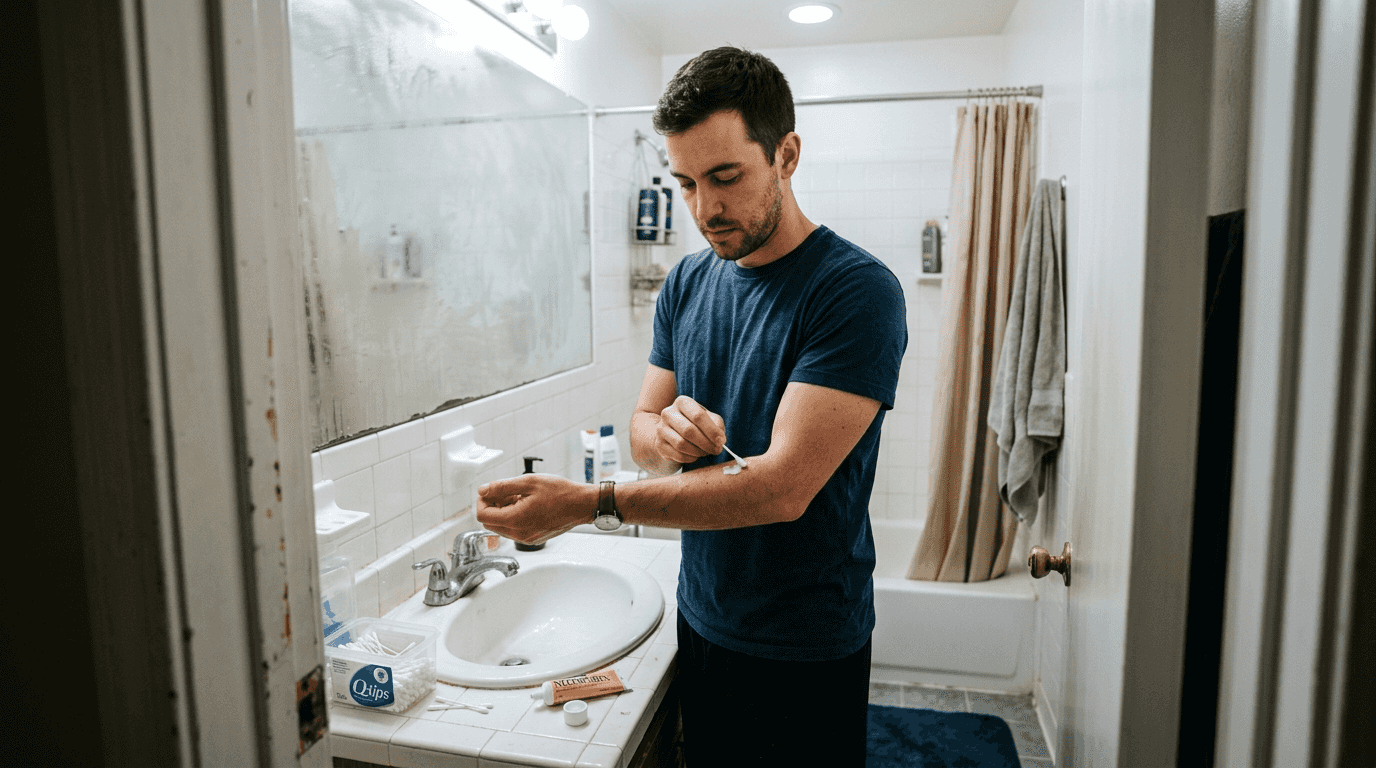
Patch testing requires simple tools you likely already own. Use a clean cotton swab to apply product to your inner wrist or behind your ear. Cover with a bandage and monitor for 48 hours. Any redness, itching, or swelling signals incompatibility before you risk full-face application.
Ethical and sustainability standards encompass cruelty-free testing, fair trade sourcing, and carbon-neutral shipping. Research brands’ corporate social responsibility initiatives to ensure alignment with your values. A comprehensive step by step vegan skincare approach integrates these considerations from day one.
Essential preparation checklist:
- Complete a skin type assessment through professional consultation or online tools
- Create a list of personal allergens and ingredients to avoid
- Download ingredient-checking apps like Think Dirty or EWG’s Skin Deep
- Gather patch testing supplies including cotton swabs and adhesive bandages
- Review eco-friendly beauty tips to refine your sustainability criteria
Pro Tip: Keep a skincare journal documenting products tested, patch test results, and skin reactions over time. This record prevents repeating mistakes and identifies patterns in ingredient sensitivities.
Stepwise workflow for selecting natural and vegan skincare products
A systematic approach transforms overwhelming product selection into manageable decision-making. Each step builds on the previous one, creating a safety net against poor choices while optimizing results. This workflow adapts to both personal use and business sourcing needs.
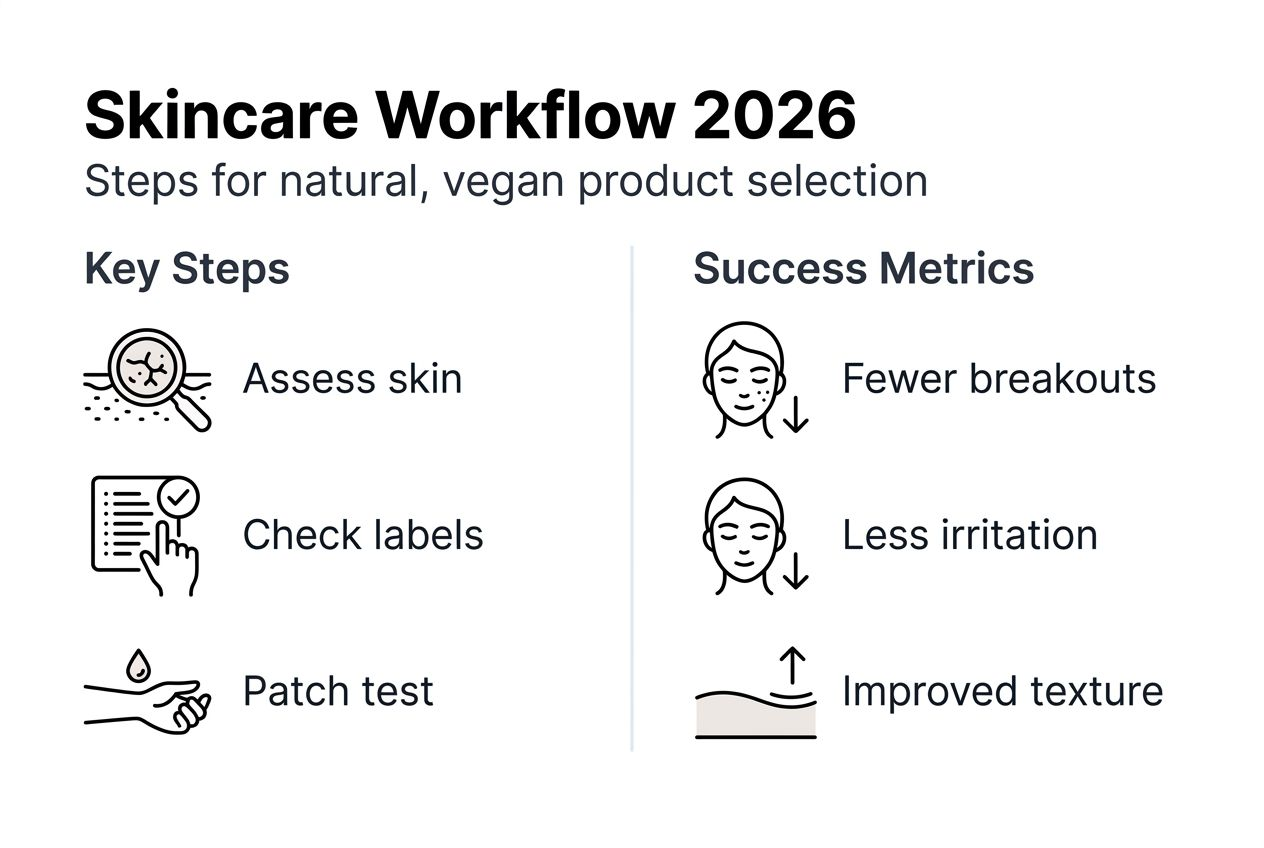
Step 1: Identify your skin type and primary concerns. Consult a dermatologist or use validated online assessments. Document specific issues like acne, hyperpigmentation, or aging signs. This baseline guides every subsequent decision.
Step 2: Research ingredients for natural and vegan authenticity. Cross-reference product ingredient lists against databases identifying animal derivatives and synthetic additives. Choosing verified plant-based ingredients reduces irritation risk by 40% compared to formulas with animal derivatives. Note personal allergens and questionable preservatives.
Step 3: Verify third-party certifications on packaging. Look for The Vegan Society, PETA, USDA Organic, or COSMOS logos. Contact manufacturers directly if certifications seem ambiguous. Authentic brands willingly provide documentation.
Step 4: Conduct 48-hour patch tests before full application. Apply a small amount to your inner forearm. Monitor for redness, itching, or swelling. Never skip this step, even with products from trusted brands.
Step 5: Evaluate ethical and sustainability claims. Review brand websites for transparency reports, supply chain disclosures, and environmental certifications. Verify carbon offset programs and fair trade partnerships through independent sources.
Step 6: Monitor skin adaptation over 6 to 12 weeks. Track changes in hydration, tone, and texture. Document improvements or setbacks in your skincare journal. Adjust products based on consistent patterns, not isolated incidents.
| Workflow Stage | Timeline | Key Actions |
|---|---|---|
| Initial assessment | Week 1 | Identify skin type, document concerns, list allergens |
| Product research | Weeks 1-2 | Verify certifications, check ingredient databases, shortlist options |
| Patch testing | Week 3 | Test top 3 candidates, observe reactions for 48 hours each |
| Gradual integration | Weeks 4-6 | Introduce one product at a time, maintain current routine otherwise |
| Results evaluation | Weeks 7-12 | Track improvements, adjust based on skin response |
Pro Tip: Introduce only one new product every two weeks. This isolation prevents confusion when identifying which product causes reactions or delivers benefits. Following a structured 4-week vegan skincare layering guide ensures proper sequencing.
Common mistakes and how to avoid them
Trusting marketing claims without verification leads to wasted money and potential skin damage. Brands exploit emotional appeals through buzzwords like botanical, pure, and clean without substantive backing. Always demand third-party certification before accepting natural or vegan assertions.
Skipping patch tests ranks among the most dangerous shortcuts consumers take. Allergic reactions can escalate from mild redness to severe dermatitis requiring medical intervention. Products lacking preservatives cause microbial contamination and infections in 15% of users, making proper formulation critical even in natural lines.
Preservative-free products sound appealing but often lack adequate microbial protection. Natural preservatives like rosemary extract or vitamin E require careful formulation to prevent bacterial growth. Unopened products should remain stable, while opened containers need sufficient preservation for safe use within recommended timeframes.
Mismatching products to skin type wastes time and causes frustration. Oily skin suffocates under heavy creams designed for dry complexions. Sensitive skin rebels against active ingredients suitable for resilient types. Precision in product selection accelerates visible improvements.
Greenwashing remains rampant despite increased consumer awareness. Companies highlight one organic ingredient while burying synthetic fillers. Package redesigns featuring leaves and earth tones create false impressions of natural formulations. Learn to recognize these tactics by scrutinizing full ingredient lists rather than front-label claims.
“The skincare industry’s lack of regulation means consumers must become their own advocates. Verifying every claim protects your health and wallet from manipulative marketing tactics that prioritize profit over safety.”
Avoidance strategies:
- Demand certification proof instead of accepting brand claims at face value
- Never skip patch testing regardless of product popularity or recommendations
- Research preservation methods in natural formulations before purchasing
- Match every product to your specific skin type and current concerns
- Review common vegan skincare mistakes to avoid before building your routine
Expected timelines, costs, and success metrics
Skin adaptation to new natural and vegan products requires patience. Your skin undergoes a transition period as it adjusts to different ingredient profiles and the absence of synthetic additives. Expect 6 to 12 weeks before seeing consistent improvements in texture, tone, and hydration. Initial purging or minor breakouts may occur as your skin detoxifies from previous products.
Cost considerations vary based on product quality and certification standards. Entry-level certified vegan cleansers range from $12 to $25, while premium serums cost $30 to $80. Complete routines including cleanser, toner, serum, and moisturizer typically require $80 to $250 initially. Budget-conscious consumers can phase purchases over several months while maintaining effectiveness.
Success metrics focus on tangible skin health improvements rather than subjective feelings. Reduced irritation, fewer breakouts, improved hydration levels, and more even skin tone indicate effective product selection. Photograph your skin weekly under consistent lighting to track subtle changes invisible to daily observation.
Business owners measure success differently, tracking customer satisfaction scores, repeat purchase rates, and revenue growth. Initial brand launches using private label solutions typically see positive feedback within 3 to 6 months if product quality and marketing align. Understanding natural skincare timeline and costs helps set realistic business projections.
| Cost Category | Consumer Range | Business Range | Timeline |
|---|---|---|---|
| Initial product purchase | $80-$250 | $500-$2,000 | Week 1 |
| Ongoing monthly maintenance | $30-$75 | $200-$800 | Ongoing |
| Certification verification tools | Free-$10 | $50-$200 | Week 1 |
| Professional consultation | $75-$200 | $300-$1,000 | Weeks 1-2 |
| Visible results timeframe | 6-12 weeks | 3-6 months | Variable |
Special considerations for small business owners
Entrepreneurs entering the natural vegan skincare market face unique challenges beyond personal product selection. Sourcing authentic, certified products at wholesale prices requires careful supplier vetting. Ready-made vegan skincare product packs offer significant advantages by eliminating formulation costs and accelerating time to market.
Private labeling ready-to-label packs reduces upfront development costs while ensuring professional formulation quality. Established manufacturers invest in certification compliance, safety testing, and ingredient sourcing that would cost individual entrepreneurs tens of thousands of dollars. Leveraging their expertise allows you to focus on branding and customer relationships.
Supplier vetting criteria should mirror your personal product selection standards but include business-specific considerations. Verify minimum order quantities align with your budget and storage capacity. Confirm lead times fit your launch schedule. Request certification documentation for every product claim. Test samples extensively before committing to bulk orders.
Cost considerations impact pricing strategy and profit margins. Calculate total costs including product, packaging, shipping, and marketing when setting retail prices. Natural and vegan products command premium pricing when backed by authentic certifications and transparent communication. Customers willingly pay more for verified quality and ethical sourcing.
Brand reputation depends entirely on product authenticity and transparency. One incident involving misleading claims or quality issues damages trust permanently in today’s connected marketplace. Invest in proper certifications from the start rather than risking reputation repair costs later. Building a comprehensive private label skincare guide ensures informed decision-making.
Business owner checklist:
- Verify supplier certifications match your brand values and target market expectations
- Test product samples for 6 to 8 weeks before bulk ordering
- Calculate true unit costs including all associated expenses
- Develop transparent communication about sourcing and certification
- Explore DIDIS Bee private label options for turnkey solutions
Summary and next steps
Mastering natural and vegan skincare selection requires systematic evaluation rather than impulse decisions. The workflow outlined ensures safety through certification verification, patch testing, and gradual integration. Patience during the 6 to 12 week adaptation period allows accurate assessment of product effectiveness.
Prioritizing third-party certifications protects against greenwashing while supporting truly ethical brands. Never compromise on verification steps regardless of marketing appeals or price pressures. Your skin health and ethical values deserve products that deliver on their promises.
Business owners gain competitive advantages by leveraging private label solutions that reduce costs and accelerate market entry. The same verification standards apply whether selecting personal products or sourcing for resale. Authenticity and transparency separate successful brands from forgotten launches.
Continued learning through trusted resources keeps you informed about ingredient innovations, certification updates, and market trends. The natural skincare industry evolves rapidly as research uncovers new plant-based actives and sustainable sourcing methods.
Immediate action steps:
- Complete your skin type assessment and allergen documentation today
- Create a shortlist of three products meeting certification criteria
- Schedule patch tests over the next two weeks
- Join communities focused on natural skincare routine steps for ongoing support
- Review your business sourcing needs if launching a skincare brand
Discover Didis Beauty Center’s private label solutions for vegan skincare
Small business owners seeking authentic natural and vegan skincare products find ready-to-label solutions that eliminate formulation complexity and reduce launch timelines. Didis Beauty Center offers certification-backed product packs allowing entrepreneurs to focus on branding and customer relationships rather than costly product development.
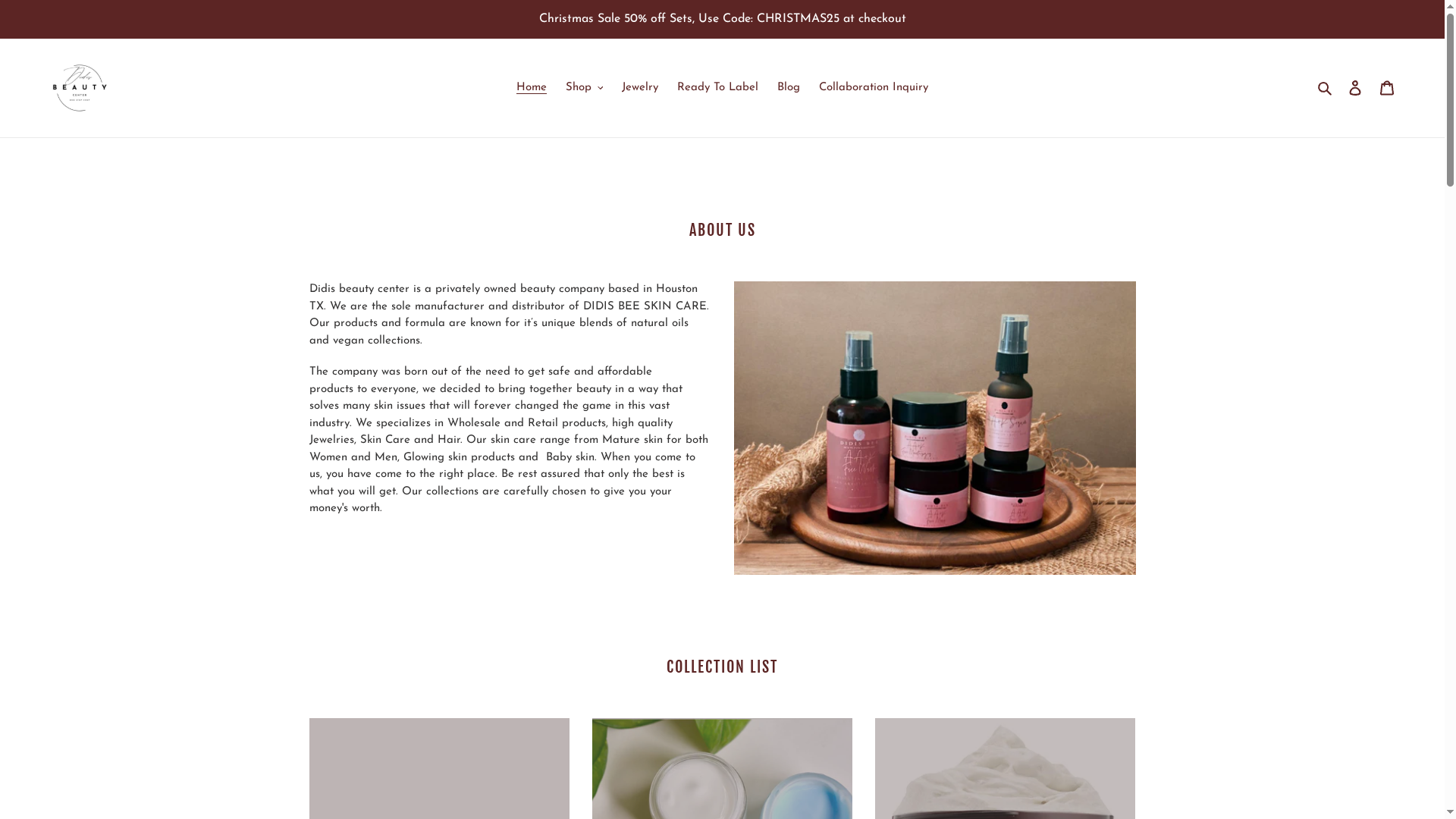
Expert guidance helps navigate supplier selection, ensuring products align with your brand values and target market expectations. Reduce upfront investment while maintaining quality standards that build customer trust and loyalty. Ready-to-launch options include face soaps, brightening lines, toners, and complete skincare sets.
Explore DIDIS Bee private label options to discover how turnkey solutions accelerate your market entry. Professional support ensures your brand launches with products customers trust and recommend. Visit the Didis Beauty Center homepage to review complete product catalogs and certification documentation.
Frequently asked questions
How can I verify if a skincare product is truly vegan and natural?
Look for reputable third-party certifications like The Vegan Society, PETA, or USDA Organic on product packaging. Review complete ingredient lists for animal derivatives such as beeswax, lanolin, or collagen. Consumers must rely on third-party certifications because the term vegan lacks formal regulation in skincare.
What is the best way to test a new natural vegan skincare product safely?
Apply a small amount of product to your inner forearm or behind your ear. Cover with a bandage and observe the area for 48 hours without disturbing it. Proceed with full-face application only if no redness, itching, or swelling occurs during the test period.
How long does it typically take to see benefits from natural vegan skincare products?
Transitioning to vegan skincare requires 6 to 12 weeks for skin adaptation and noticeable results. Consistency matters more than immediate effects as your skin adjusts to new ingredient profiles. Track improvements like reduced redness, better hydration, and more even texture through weekly photographs.
What should small business owners consider when choosing products for resale?
Verify supplier certifications match your brand values and provide documentation customers can review. Private labeling ready-to-label vegan skincare packs reduces development costs and accelerates brand launch timelines significantly. Evaluate customer demand for natural and vegan credentials in your target market before finalizing product selection.
Discourse (0)