


TL;DR:
- Vegan beauty products are not automatically cruelty-free, natural, or chemical-free, requiring careful certification verification.
- Efficacy depends on formulation and individual skin needs, not just vegan labels or marketing claims.
There’s a lot of noise around vegan beauty right now, and not all of it is accurate. If you’ve ever wondered whether vegan skincare products actually work, whether “vegan” and “cruelty-free” mean the same thing, or whether going vegan with your routine means going chemical-free, you’re already asking the right questions. Explaining vegan beauty myths matters because bad information leads to bad purchasing decisions and skin results that disappoint. This guide cuts through the marketing hype and lays out what the science and certifications actually say.
Table of Contents
- Key takeaways
- Explaining vegan beauty myths: where the confusion starts
- Vegan vs. cruelty-free: they are not the same thing
- The myth that vegan products are chemical-free
- Are vegan beauty products actually effective?
- Sustainability and ethics: what vegan doesn’t cover
- My take on what the myths are really costing you
- Start your routine with products that actually deliver
- FAQ
Key takeaways
| Point | Details |
|---|---|
| Vegan and cruelty-free differ | A product can be vegan without being cruelty-free, and vice versa. Both require separate certification. |
| No such thing as chemical-free | Every skincare ingredient is a chemical, including water and plant extracts. |
| Efficacy depends on formulation | Vegan status alone doesn’t predict how well a product performs for your specific skin type. |
| Vegan doesn’t mean sustainable | Some vegan materials are plastic-based and carry their own environmental costs. |
| Certifications are your best guide | Look for logos like Leaping Bunny and the Vegan Society Trademark to cut through vague label claims. |
Explaining vegan beauty myths: where the confusion starts
The word “vegan” carries a lot of assumptions into the beauty aisle. People often expect vegan products to be gentler, more natural, chemical-free, cruelty-free, and automatically better for the environment. Some of those things are sometimes true. Most of them are not guaranteed by the label alone.
Part of the confusion comes from how loosely the term gets applied. Unlike food, there’s no universal regulatory standard forcing a beauty brand to prove its products meet a specific vegan definition before printing the word on a bottle. That means “vegan” can mean different things on different shelves, and understanding that gap is the first step in debunking beauty myths that have spread widely online and in stores.
The good news is that the truth behind vegan beauty isn’t discouraging. Vegan skincare can be highly effective, ethically sound, and genuinely eco-friendly. The key is knowing what actually makes those things true versus what’s just clever packaging language.
Vegan vs. cruelty-free: they are not the same thing
This is probably the most common of the common vegan beauty myths, and it trips up even experienced shoppers. The two terms describe completely different aspects of how a product is made.
Vegan and cruelty-free are distinct labels: vegan means the product contains no animal-derived ingredients, while cruelty-free means no animal testing was conducted at any stage of production. A product can easily be one without being the other.
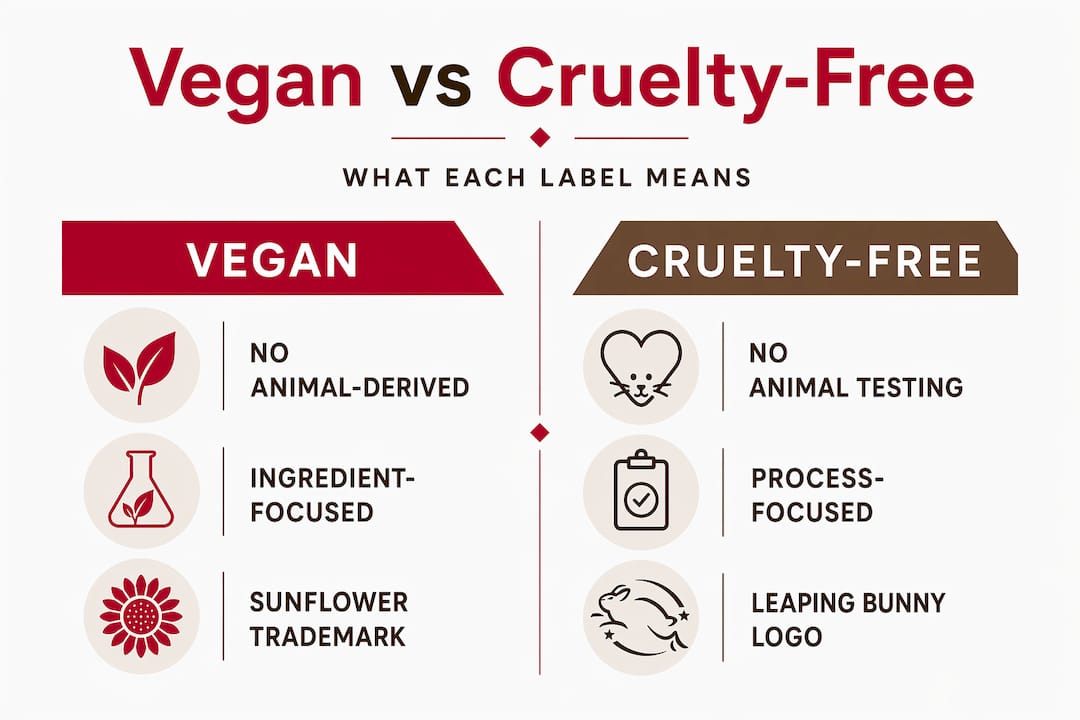
Here’s a concrete example. A face cream could contain zero animal ingredients (making it vegan) but still be tested on animals in markets that require it by law (making it not cruelty-free). Flip it around: a brand might be certified cruelty-free but still use beeswax, lanolin, or carmine in its formulas. That makes it cruelty-free but not vegan.
| Term | What it means | Does not guarantee | Common certification |
|---|---|---|---|
| Vegan | No animal-derived ingredients | Cruelty-free status | Vegan Society Trademark |
| Cruelty-free | No animal testing at any stage | Vegan ingredients | Leaping Bunny |
| Both | Vegan ingredients and no testing | Sustainability or ethical sourcing | Both certifications together |
Certifications like Leaping Bunny and the Vegan Society Trademark provide reliable validation of these claims and protect you from vague marketing language. A logo from one of those bodies requires an application process and auditing, not just a brand decision to use a friendly-sounding word.
There’s also a subtler issue worth knowing. Vegan labeling focuses on ingredient origin but ignores complexities like lab-grown animal ingredients or minor animal-derived additives used during processing. That gap exists because standards haven’t caught up with biotechnology yet. Genuine cruelty-free certification requires rigorous and transparent auditing, and consumers should look beyond superficial claims to trusted certifications.
Pro Tip: When you pick up a new product, look for both the Leaping Bunny logo and the Vegan Society sunflower. If you only see one, you know exactly which claim is missing.
The myth that vegan products are chemical-free
This one needs to be said plainly: there is no such thing as a chemical-free skincare product. Water is a chemical. Vitamin C is a chemical. Every plant extract that ever graced a bottle label is made up of chemical compounds. The chemical-free myth is scientifically inaccurate across all skincare, vegan or otherwise.

When brands use “chemical-free” language, they’re typically trying to signal that a product avoids certain synthetic or harsh ingredients. That’s a legitimate goal. But the shorthand is misleading because it trains consumers to fear the word “chemical” and chase products that promise something physically impossible.
Vegan formulas regularly include:
- Synthetic preservatives like phenoxyethanol or sodium benzoate, which prevent bacterial growth and extend shelf life
- Emulsifiers that keep water and oil from separating in a cream or serum
- pH adjusters that keep formulas stable and safe for your skin barrier
- Silicones in some vegan products for texture and slip, even though they’re entirely synthetic
None of those ingredients are harmful at regulated concentrations. And none of them disqualify a product from being vegan. Understanding vegan skincare ingredients means learning to evaluate each ingredient on its own merits, not grouping synthetic with dangerous or natural with safe.
Pro Tip: When reading an ingredient list, look up any unfamiliar ingredient on the International Nomenclature of Cosmetic Ingredients (INCI) database. It gives you a neutral, science-based description instead of a marketing spin.
Are vegan beauty products actually effective?
This is where a lot of people have the most anxiety, and it’s the heart of myths about vegan cosmetics. The short answer is that product quality depends almost entirely on formulation and your specific skin type, not on whether the product carries a vegan label.
Vegan beauty brands that focus on nourishing botanicals and supportive ingredients can address various skin types effectively without animal-derived components. Plant-based actives like bakuchiol (a natural retinol alternative), niacinamide derived from plants, and hyaluronic acid produced via fermentation are all well-supported in the literature for real skin benefits.
A few misunderstandings worth clearing up specifically:
- Topical collagen: Applying collagen to your skin topically doesn’t replace what your body produces internally. Skincare expert Anna Lahey emphasizes understanding the biological limits of topical applications. If a vegan product promises to “restore” collagen through topical use, it’s setting up an expectation the formula can’t physically meet.
- Vegan equals better for all skin types: It doesn’t. Skin compatibility and formulation matter more than vegan status. Some people with sensitive skin react to certain botanical extracts that are perfectly vegan. Some oily skin types do better with specific synthetic ingredients that control sebum without plant oils.
- Marketing buzzwords: Many skincare innovations like upcycled botanicals are often marketing rebrands rather than new scientific breakthroughs. Dermatologists recommend evaluating what the ingredient actually does rather than how the campaign describes it.
Consumers should prioritize skin compatibility over marketing claims when selecting vegan skincare, recognizing that skin changes due to hormonal cycles and age. What works at 25 may not work at 45, regardless of whether it’s vegan.
The 4-week vegan skincare layering guide from Didisbeautycenter is a practical resource for understanding how product order and combination affect results more than any single label.
Sustainability and ethics: what vegan doesn’t cover
Understanding vegan beauty also means getting comfortable with this truth: vegan doesn’t automatically mean eco-friendly. This is one of the most important myths about vegan cosmetics to correct in 2026, especially as greenwashing has become more sophisticated.
Here’s how to think through it practically:
- Check the packaging, not just the product. A vegan serum in a single-use plastic bottle is still contributing to plastic waste. True sustainability requires thinking about the full product lifecycle, from ingredient sourcing to how you dispose of the packaging.
- Research the vegan materials used. Many vegan materials like traditional vegan leather are plastic-based and not biodegradable. This applies to product containers and applicators too. Next-generation bio-based materials offer more sustainable alternatives, but only brands committed to transparency will tell you which they use.
- Look for brand transparency on sourcing. A genuinely sustainable vegan brand will tell you where its plant ingredients come from, how they’re harvested, and whether the supply chain avoids practices like monocropping that deplete soil health.
- Evaluate longevity over novelty. Sustainable vegan product development increasingly integrates lifecycle thinking beyond the vegan claim alone. Products designed to last, concentrate, or refill have a fundamentally smaller footprint than trendy single-use formats.
The Didisbeautycenter blog on eco-conscious vegan beauty goes deeper on what to look for in brands that actually walk the sustainability talk, not just market it.
Pro Tip: Search for the brand’s sustainability report or ingredient sourcing page before you buy. If it doesn’t exist, that’s the answer.
My take on what the myths are really costing you
I’ve spent years reading the research on vegan beauty, talking to formulators, and helping consumers figure out what actually belongs in their routines. The thing that strikes me most isn’t that the myths are complicated. It’s that they consistently steer people away from products that would genuinely work for them.
When someone avoids a well-formulated vegan serum because they assume “vegan” means “weak,” they often end up with a more aggressive product that irritates their skin. When someone buys something labeled “chemical-free” and thinks they’re being safer, they’ve been sold a fiction that has no bearing on actual skin safety.
What I’ve learned is that ingredient literacy is more protective than any label. Once you know how to read a formula and match ingredients to your skin’s actual needs, the vegan vs. non-vegan question becomes just one factor among several. It matters, especially if ethics are part of your purchasing values. But it’s not a shortcut to quality.
I also think consumers underestimate how much their skin changes. Hormonal shifts, age, climate, stress, and diet all affect what your skin needs. A product that worked beautifully two years ago may not serve you the same way now, vegan or not. The brands worth trusting are the ones that help you understand your skin, not just sell you on a certification.
— Gloria
Start your routine with products that actually deliver
If you’ve been sorting through myths about vegan cosmetics and you’re ready to try products with a clear ethical and formulation standard, Didisbeautycenter has options built for exactly that.
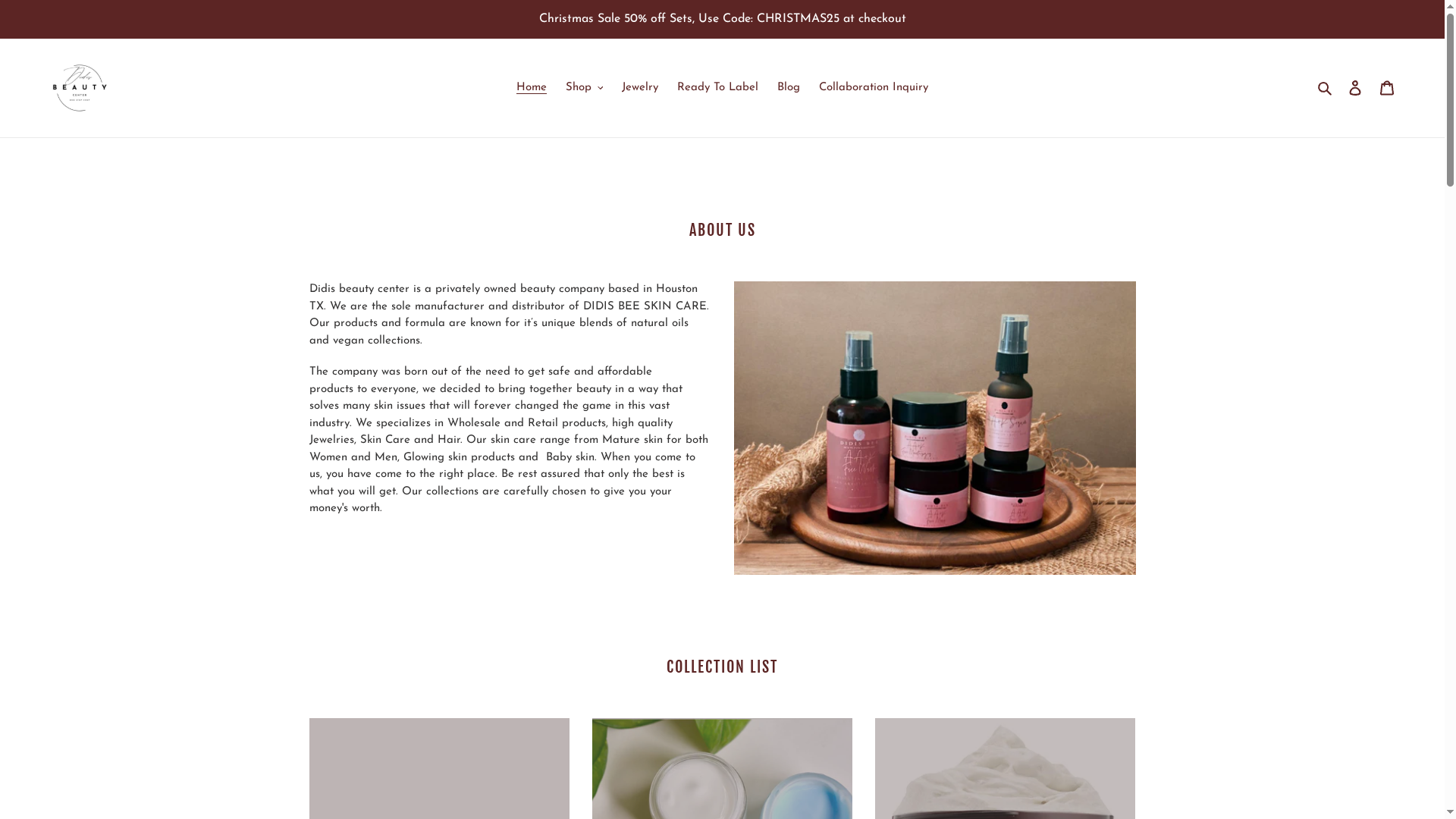
The Daily Essential Bundle is a strong starting point: a curated set of vegan skincare staples that removes the guesswork from building a routine. Each product is formulated with ingredient transparency in mind and backed by the kind of cruelty-free and vegan sourcing this article has been talking about. For those focused on aging and long-term skin vitality, the Ageless Beauty line supports collagen function from a realistic, skin-compatible approach. Browse the ethical sourcing guide to understand what makes these formulas different before you buy.
FAQ
What is the difference between vegan and cruelty-free?
Vegan means a product contains no animal-derived ingredients, while cruelty-free means no animal testing was used at any stage. The two require separate certifications and one label does not guarantee the other.
Are vegan skincare products actually effective?
Yes, when properly formulated for your skin type. Product efficacy depends on formulation and ingredient compatibility with your skin, not on vegan status alone.
Do vegan products really avoid all chemicals?
No. Every ingredient in any product, including water and plant extracts, is technically a chemical. All skincare ingredients are chemicals, and “chemical-free” is not a meaningful or accurate product claim.
Does vegan beauty automatically mean sustainable?
Not necessarily. Many vegan materials are plastic-based and not biodegradable, so true sustainability requires evaluating packaging, ingredient sourcing, and brand transparency beyond the vegan label.
How do I know if a vegan beauty product is trustworthy?
Look for recognized certifications like the Vegan Society Trademark and Leaping Bunny, read the ingredient list critically, and check whether the brand provides clear sourcing information. Certifications backed by auditing are far more reliable than self-applied label claims.
Discourse (0)