


TL;DR:
- Promoting cruelty-free brands requires understanding the lack of legal standards and focusing on verified certifications.
- Using credible third-party logos and transparent messaging builds trust and enhances advocacy effectiveness.
Promoting cruelty-free brands sounds simple until you realize how murky the landscape actually is. Vague label claims, inconsistent standards, and outright greenwashing make it genuinely hard to know which brands deserve your advocacy and which are just riding an ethical trend. Whether you are a passionate consumer, a beauty blogger, or an entrepreneur building your own line, you need methods that hold up to scrutiny. This guide breaks down 10 proven, evidence-based ways to amplify cruelty-free brands with real transparency, strong credibility, and lasting impact.
Table of Contents
- Understand what ‘cruelty-free’ actually means
- Leverage credible certifications for trust and impact
- Adopt proof-based, transparent messaging
- Grow awareness through community participation and advocacy
- Educate to reduce confusion and tackle greenwashing
- Our perspective: The power and pitfalls of ethical promotion today
- Promote real change: Explore cruelty-free solutions
- Frequently asked questions
Key Takeaways
| Point | Details |
|---|---|
| Certification matters | Verified logos like Leaping Bunny give cruelty-free promotions real credibility and avoid greenwashing. |
| Proof-based messaging | Transparent, evidence-driven communication outperforms vague ethical claims in building trust. |
| Community advocacy works | Reviews, shares, and active participation spread cruelty-free awareness beyond what ads can achieve. |
| Education reduces confusion | Teaching others how to identify genuine cruelty-free practices protects against misleading labels. |
| Integration is key | Combining certification, strong messaging, community, and education delivers the biggest impact. |
Understand what ‘cruelty-free’ actually means
Before you promote anything, you need to know exactly what you are standing behind. Here is the uncomfortable reality: there is no legal definition for “cruelty-free” in most countries. That means any brand can print it on a label without meeting a single verifiable standard. This is not a minor technicality. It is the root cause of widespread consumer confusion and the main reason greenwashing thrives in the beauty industry.
Because the term is so loosely regulated, promotion that relies only on a brand’s self-description can unintentionally mislead your audience. The better path is to steer people toward independently verified standards like Leaping Bunny or PETA’s official database, where brands must meet documented criteria to appear on the list.
Here are the key distinctions worth understanding before you promote any brand:
- Certified cruelty-free: Independently audited by a third party with published criteria
- Self-declared cruelty-free: No external verification; relies entirely on brand honesty
- Cruelty-free but not vegan: No animal testing, but may still contain animal-derived ingredients
- “Not tested on animals” vs. cruelty-free: Some brands don’t test their final product, but their ingredient suppliers still do
“The term ‘cruelty-free’ may not have a legal definition, meaning promotion should steer audiences toward independently verified standards, not just brand self-description.” — PETA
Learning how to identify cruelty-free brands using verified criteria is the foundation that makes every other promotional effort more credible and effective.
Leverage credible certifications for trust and impact
Once you understand why self-declarations fall short, the natural next step is putting third-party certifications front and center in your promotion. According to the Humane Society’s consumer guide, using recognized certification logos and linking to official brand lists is one of the strongest credibility mechanisms available to advocates and promoters alike.
Here is a quick comparison of the most recognized cruelty-free certification programs:
| Certification | Issuing organization | Key requirements | Where to verify |
|---|---|---|---|
| Leaping Bunny | Cruelty Free International | Supplier audits, annual recommitment | leapingbunny.org |
| PETA Beauty Without Bunnies | PETA | Brand pledge, no third-party testing | crueltyfree.peta.org |
| Choose Cruelty Free | CCF (Australia) | Comprehensive supply chain check | choosecrueltyfree.org.au |
| COSMOS Organic | COSMOS Standard | Organic + cruelty-free formulation | cosmos-standard.org |
When you share content about a cruelty-free brand, always include the certification logo if you have permission, and link directly to the brand’s verification page. This one step alone dramatically increases audience trust because it gives people a way to check for themselves.
Some key best practices when featuring certifications:
- Always link to the official certification database, not just the brand’s own website
- Mention the certification’s specific criteria so your audience understands what it really means
- Highlight brands that participate in lists of cruelty-free brands maintained by independent organizations
- Clarify if a brand holds multiple certifications, since that signals a higher level of commitment
Pro Tip: Screenshot or download the official certification badge directly from the issuing body’s media kit. Using an unofficial version of the logo can undermine trust and may even violate the certification organization’s usage guidelines.
Adopt proof-based, transparent messaging
Emotional appeals are not enough anymore. Saying “we care about animals” is fine, but it does not give your audience anything they can verify. Proof-based messaging means providing specific, verifiable details: audit results, supplier policy links, third-party test records, and honest explanations of your supply chain.
Here is a step-by-step framework for building proof-based promotion:
- Start with certification documentation. Reference the certifying body by name and link to the official verification page, not just the brand’s “About” page.
- Describe the supply chain. Where are ingredients sourced? Do suppliers test on animals? Answering these questions specifically separates you from vague claims.
- Link to written policies. If a brand has a published animal testing policy, link to it directly in your content.
- Reference independent audits. If a brand has been audited by Leaping Bunny or a similar body, mention the year and what the audit covered.
- Acknowledge limitations. No brand is perfect. Mentioning known gaps actually builds more trust than claiming a brand is flawless.
- Update regularly. Cruelty-free status can change when brands are acquired or expand into new markets. Keep your content current.
When you study cruelty-free brand examples that communicate transparently, you notice they tend to publish detailed ingredient sourcing pages and maintain active relationships with their certification bodies. That level of openness is what you want to amplify, not just the label itself.
Understanding the benefits of cruelty-free makeup goes beyond ethics too. Many cruelty-free formulas avoid harsh synthetic compounds, which makes the ingredient transparency argument even stronger for health-conscious consumers.
Pro Tip: Share your own cruelty-free learning journey, including the brands you initially thought were certified but weren’t. Authentic setbacks are far more compelling than polished endorsements and signal genuine expertise to your audience.
Grow awareness through community participation and advocacy
You do not need a massive platform to make a real difference. Some of the most effective cruelty-free promotion comes from everyday actions that, when multiplied across a community, create serious momentum. Rewarding community participation and advocacy rather than focusing only on purchases is a strategy that turns individual effort into a movement.
The top five advocacy actions for individuals include:
- Leaving detailed product reviews that specifically mention cruelty-free certification and ingredient quality
- Sharing brand posts on social media with your own commentary about why the certification matters
- Tagging brands in questions about their supply chains, which puts public accountability in motion
- Joining brand newsletters and forwarding relevant campaigns to friends who care about ethical beauty
- Participating in awareness months like World Week for Animals in Laboratories (April) to amplify campaigns at peak visibility moments
Here is how community advocacy compares to traditional marketing approaches:
| Factor | Traditional marketing | Community advocacy |
|---|---|---|
| Cost | High (paid media) | Low to zero |
| Trust level | Moderate (brand-owned) | High (peer-driven) |
| Reach | Broad but shallow | Targeted and deep |
| Longevity | Short campaign cycles | Ongoing and compounding |
| Authenticity | Lower | Much higher |
Learning from best cruelty-free practices shows that brands who actively nurture their community of advocates consistently outperform those who rely purely on paid advertising. When you understand the role of advocacy in cruelty-free beauty, it becomes clear that individual voices compound over time into significant market influence.
Educate to reduce confusion and tackle greenwashing
Greenwashing is not accidental. Some brands knowingly exploit vague language because it works on uninformed shoppers. Your most powerful tool against this is education, and it does not have to be academic or dry to be effective.
Comparison and contrast content is one of the most effective formats for clarifying what cruelty-free labels actually mean and what to watch out for. A simple side-by-side chart comparing a certified brand versus a self-declared one can shift a reader’s understanding more than three paragraphs of explanation.
Research consistently shows that a significant share of shoppers find cruelty-free labeling confusing, with multiple studies pointing to over 60% of consumers unable to distinguish between “cruelty-free,” “vegan,” “natural,” and “organic” when shopping for beauty products. That level of confusion is an opportunity for educators and advocates.
Three educational campaign ideas anyone can launch right now:
- “Certifications explained” social series: A weekly post that explains one certification program in plain language, including what brands must do to earn it and how consumers can verify it
- “Spot the greenwash” challenge: Invite followers to submit product images with vague claims, then analyze them publicly to identify missing verification links or misleading language
- Myth-busting blog posts: Write short, direct posts on the most common misconceptions, such as “cruelty-free means vegan” or “natural means ethical,” and pair each myth with a verifiable fact
Following practices for cruelty-free brands and sharing what you learn through accessible educational content positions you as a trustworthy resource rather than just another advocate shouting into the void.
Our perspective: The power and pitfalls of ethical promotion today
Here is something most cruelty-free promotion guides will not tell you: ethical signaling alone does not convert buyers. It creates motivation, but motivation is not a purchase. Consumer behavior research confirms that certified labels and influencer advocacy genuinely increase cruelty-free motivation, but the pathway from motivation to an actual purchase is conditional. Price fairness is the single biggest moderating factor. When a cruelty-free product costs significantly more than its conventional equivalent without a clear value story attached, even motivated buyers walk away.
This is the gap that most ethical promotion misses entirely. Advocates tend to focus on values and certifications, which are genuinely important, but they underestimate how much the “is this worth the price” question shapes behavior in real shopping moments.
What we have seen through experience with cruelty-free beauty promotion is that the most effective campaigns do three things simultaneously: they prove authenticity through certifications and transparent policies, they build community through meaningful advocacy in ethical beauty, and they address value explicitly. That means explaining why a product is priced the way it is, what ethical sourcing actually costs, and what you get in return.
The temptation is to run a single campaign, see modest results, and conclude that cruelty-free messaging doesn’t resonate. That conclusion is wrong. What actually failed was the integration. A single influencer post cannot carry the weight of proof, community, and value messaging all at once. Real impact is cumulative and requires all of these elements working together over time.
Promote real change: Explore cruelty-free solutions
Knowing what makes cruelty-free promotion effective is only half the picture. The other half is having access to quality products and resources that make your advocacy concrete and credible.
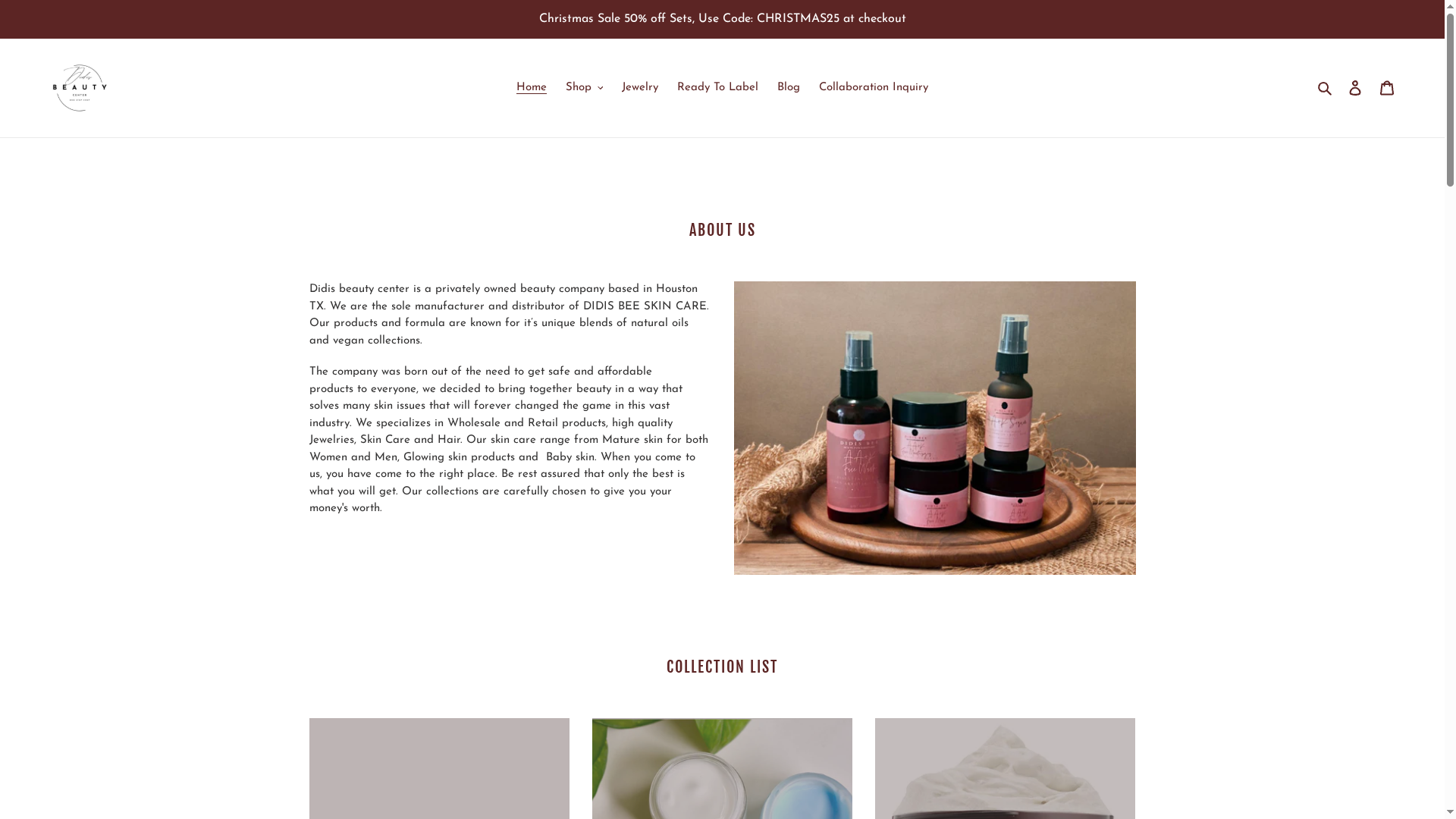
Didis Beauty Center is built specifically for ethical consumers and beauty entrepreneurs who want to move beyond generic promises. If you are building your own brand, explore private label cruelty-free solutions that give you natural, vegan-formulated products you can stand behind with confidence. Every product in the catalog is developed with ingredient transparency and ethical formulation in mind, making your proof-based messaging strategy a natural fit. You can also browse cruelty-free accessories and curated skincare collections to support your lifestyle or gift to the conscious beauty lovers in your circle. Your next step toward real, meaningful promotion starts here.
Frequently asked questions
How do I know if a cruelty-free label is authentic?
Look for well-established certifications like Leaping Bunny or PETA’s official database, since the term “cruelty-free” has no legal definition in most markets and any brand can use it without meeting a verified standard. Always cross-check by searching the brand name directly on the certification body’s website.
Can small beauty brands get credible cruelty-free certification?
Yes, and many programs actively support smaller brands through the process. Third-party certification programs like Leaping Bunny and PETA’s Beauty Without Bunnies provide clear criteria and guidance to help brands of any size meet the standard and earn the logo.
What is greenwashing in cruelty-free marketing?
Greenwashing happens when brands use vague or unverifiable language to appear cruelty-free without meeting documented standards. Comparison content and consumer education are among the most effective tools for helping shoppers recognize and avoid misleading claims.
Does being cruelty-free guarantee a brand is vegan?
Not at all. Cruelty-free refers specifically to animal testing practices, while vegan means the formula contains no animal-derived ingredients whatsoever. Because the term lacks a legal definition, it is worth checking both claims independently before purchasing or promoting a brand.
What are easy advocacy actions for busy people?
Leaving honest product reviews that mention certifications, sharing brand content with your personal endorsement, and subscribing to cruelty-free newsletters are all fast but genuinely impactful steps. Community participation and advocacy compound over time, meaning even small, consistent actions build real momentum for the cruelty-free movement.
Discourse (0)