


Finding truly sustainable skincare can feel complicated when water scarcity is a growing global concern. Many beauty lovers and entrepreneurs look for alternatives that reduce their ecological footprint without sacrificing product quality. Waterless beauty goes far beyond solid bars or powders, offering concentrated liquids and innovative formulas that minimize water usage in production, packaging, and everyday routines. This article clears up common misconceptions and explores efficient solutions for anyone committed to eco-friendly beauty practices and product development.
Table of Contents
- Defining Waterless Beauty And Common Misconceptions
- Types Of Waterless Beauty Products Available
- How Waterless Beauty Formulations Work
- Sustainability Benefits In Beauty And Packaging
- Challenges, Risks, And Misconceptions To Avoid
Key Takeaways
| Point | Details |
|---|---|
| Waterless Beauty Redefines Formulations | Waterless beauty emphasizes innovative product strategies that reduce water use while maintaining effectiveness. |
| Misconceptions Exist | Consumers often mistakenly believe waterless products are less effective or lack luxury, despite advanced formulations proving otherwise. |
| Sustainability is Key | Waterless beauty significantly lowers environmental impact through reduced water consumption and innovative packaging solutions. |
| Challenges and Risks | Key challenges involve formulation stability and consumer perceptions, making education and transparency crucial for brand success. |
Defining Waterless Beauty and Common Misconceptions
Waterless beauty represents a transformative approach to skincare that goes far beyond simply removing water from product formulations. It’s an innovative strategy designed to reduce environmental impact while maintaining product effectiveness. Cosmetic researchers define waterless beauty not just as eliminating water, but as efficiently using or replacing water to minimize ecological footprint.
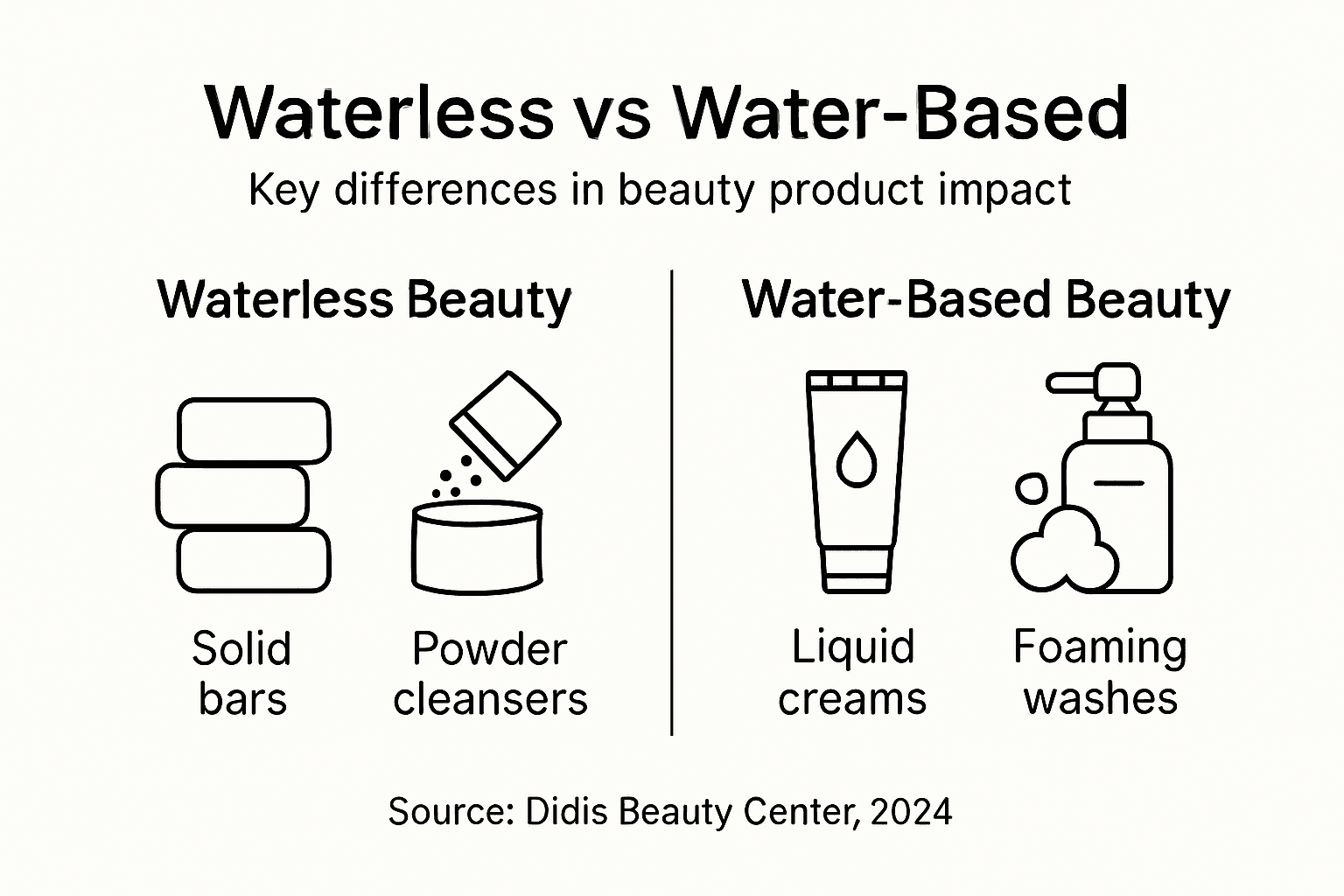
Contrary to popular belief, waterless beauty isn’t limited to solid bars or powders. The concept encompasses a wide range of formulations that strategically minimize water consumption. These innovative products can include:
- Concentrated liquid formulations
- Powder products that activate with minimal liquid
- Anhydrous (water-free) cream and oil-based skincare
- Solid stick treatments
- Highly condensed serums and treatments
The primary goal of waterless beauty extends beyond product texture. It addresses critical environmental challenges by reducing water usage during production, packaging, and consumer application phases. Sustainable formulation strategies aim to conserve increasingly scarce water resources while maintaining high-performance skincare experiences.
Misconceptions about waterless beauty often stem from limited understanding of product development. Consumers frequently assume these products are dry, ineffective, or lack the sensory experience of traditional skincare. However, advanced formulation techniques allow brands to create luxurious, hydrating products that perform comparably—or even superiorly—to water-based alternatives.
Pro tip: When exploring waterless beauty, look for products with concentrated botanical extracts and natural hydrating ingredients that provide intense moisture without requiring traditional water-based formulations.
Types of Waterless Beauty Products Available
Waterless beauty has revolutionized skincare by introducing innovative product formats that dramatically reduce water consumption. Waterless cosmetic innovations encompass a diverse range of formulations designed to minimize environmental impact while delivering exceptional skincare results.
The most prominent types of waterless beauty products include:
-
Solid Bars:
- Shampoo bars
- Deodorant bars
- Body wash bars
- Facial cleansing bars
-
Concentrated Formulations:
- Powder cleansers
- Liquid serums with minimal water content
- No-rinse spray treatments
-
Anhydrous Products:
- Oil-based balms
- Concentrated moisturizing creams
- Waterless facial oils
Solid Formulation Innovation represents a particularly exciting development in waterless beauty. Advanced solid body scrub research demonstrates how brands can create complex textures and experiences using natural ingredients without traditional water bases.
These product formats offer multiple advantages beyond environmental sustainability. They typically feature more concentrated active ingredients, reduced packaging weight, improved portability, and extended shelf life compared to traditional water-based skincare products. By eliminating water, brands can create more potent, compact formulations that require less preservative intervention.
Here’s how waterless beauty products differ from traditional water-based skincare:
| Attribute | Waterless Beauty Products | Traditional Water-Based Products |
|---|---|---|
| Ingredient Concentration | Highly concentrated actives | Typically diluted with water |
| Preservation Needs | Fewer or different preservatives | Requires strong preservatives |
| Packaging Size | Compact and lightweight | Bulkier, larger containers |
| Environmental Impact | Lower water/carbon footprint | Higher water and plastic use |
Pro tip: When exploring waterless beauty products, examine the ingredient concentration and look for products that offer multiple functional benefits in compact, water-efficient formats.
How Waterless Beauty Formulations Work
Waterless beauty formulations represent a sophisticated approach to skincare that fundamentally reimagines product development. Advanced drying technologies enable manufacturers to remove up to 98% of water content, creating innovative products that challenge traditional skincare paradigms.
The core mechanics of waterless beauty formulations involve several key scientific strategies:
-
Ingredient Concentration:
- Maximize active ingredient potency
- Eliminate water as a dilution medium
- Create more stable chemical compositions
-
Binding Technologies:
- Use surfactants and emulsifiers
- Stabilize active ingredients without water
- Maintain product integrity and effectiveness
-
Innovative Delivery Mechanisms:
- Solid sheet or disc formats
- Rehydratable product designs
- Compact, lightweight packaging solutions
Biocomposite Formulation takes waterless beauty to the next level. Waterless mask technologies demonstrate how natural composites can cleanse and exfoliate efficiently without traditional water-based dissolution, offering gentle yet powerful skincare experiences.
These formulations provide remarkable benefits beyond environmental sustainability. They typically feature enhanced ingredient stability, reduced microbial risk, smaller carbon footprints, and more concentrated active ingredients. By eliminating water, brands create potent, long-lasting products that require minimal preservatives and offer maximum skincare effectiveness.
Pro tip: When selecting waterless beauty products, prioritize formulations with transparent ingredient lists that showcase concentrated, high-quality natural compounds.
Sustainability Benefits in Beauty and Packaging
Waterless beauty represents a revolutionary approach to reducing environmental impact across the cosmetics industry. Sustainability strategies in beauty production demonstrate profound ecological advantages by minimizing water consumption and transforming packaging methodologies.
The key sustainability benefits of waterless beauty include:
-
Water Conservation:
- Dramatically reduce water usage in production
- Eliminate water as a primary product ingredient
- Minimize water waste throughout manufacturing
-
Packaging Innovation:
- Reduce plastic container volumes
- Create more compact product designs
- Enable lightweight shipping solutions
-
Carbon Footprint Reduction:
- Lower greenhouse gas emissions
- Minimize transportation-related environmental impact
- Decrease overall manufacturing energy consumption
Circular Economy Strategies are particularly compelling in waterless beauty. Global environmental packaging innovations demonstrate how refillable and recyclable packaging can transform traditional beauty industry practices, aligning with broader sustainability goals.
These eco-friendly approaches extend beyond environmental benefits. By creating concentrated, lightweight products, brands can significantly reduce shipping costs, minimize plastic waste, and provide consumers with more sustainable skincare options that don’t compromise on quality or effectiveness.
Pro tip: When evaluating waterless beauty products, look for brands that transparently communicate their sustainability metrics and demonstrate genuine commitment to reducing environmental impact.
Challenges, Risks, and Misconceptions to Avoid
Waterless beauty, while innovative, presents unique challenges that consumers and manufacturers must carefully navigate. Waterless cosmetic formulation complexities reveal intricate considerations beyond simple product development.
Key challenges in waterless beauty include:
-
Formulation Stability:
- Complex ingredient interactions
- Preservation without traditional water-based methods
- Maintaining product integrity over time
-
Consumer Perception:
- Overcoming sensory experience expectations
- Educating about product effectiveness
- Challenging traditional skincare assumptions
-
Technical Risks:
- Potential microbial contamination
- Altered preservative requirements
- Precise manufacturing tolerances
Greenwashing Concerns remain a significant issue in the waterless beauty movement. Sustainable cosmetic production insights highlight the importance of transparent communication and genuine environmental commitment.
Misconceptions about waterless beauty often stem from limited understanding. Consumers frequently assume that waterless automatically means completely water-free or inherently sustainable, when in reality, the approach requires nuanced analysis of entire product life cycles, manufacturing processes, and actual environmental impact.
The following table summarizes key risks and misconceptions in waterless beauty, along with mitigation strategies:
| Issue | Example Misconception | Impact | How to Address |
|---|---|---|---|
| Product Stability | Less effective than water-based | Reduced results | Seek advanced formulation |
| Sustainability Claims | All waterless equals sustainable | Greenwashing risk | Review transparency, metrics |
| Microbial Contamination | No water means no microbes | Ignoring infection risk | Choose reputable brands |
Pro tip: Always request detailed sustainability documentation from brands, examining their full production process rather than relying solely on marketing claims about waterless products.
Discover Powerful Waterless Beauty Solutions at Didis Beauty Center
Are you ready to embrace the eco-friendly impact of waterless beauty while treating your skin to truly nourishing ingredients Concentrated and water-efficient products like those in our Oils Collection: Skincare Oils for Face & Body – Didis Beauty Center offer the natural hydration and potent actives your skin deserves without unnecessary water content Understanding the importance of ingredient concentration and sustainable formulation can transform your skincare routine and contribute to a greener planet
Explore our carefully curated Serums Collection: Brightening & Wrinkle Recovery Serums – Didis Beauty Center to find luxurious, waterless-inspired serums designed to deliver maximum benefits with minimal environmental impact Take the step now to join the movement toward sustainable beauty by visiting Didis Beauty Center Discover high-quality, vegan options that combine ethical values with effective skincare solutions right at your fingertips
Frequently Asked Questions
What is waterless beauty?
Waterless beauty refers to skincare products designed to minimize water usage during production and application while maintaining effectiveness. This approach can include concentrated liquids, powders, and anhydrous formulations.
How do waterless beauty products differ from traditional products?
Waterless beauty products typically contain highly concentrated active ingredients, require fewer preservatives, are more compact, and have a lower environmental impact compared to traditional water-based products.
What are some examples of waterless beauty products?
Examples include solid bars like shampoo and deodorant bars, concentrated powder cleansers, oil-based balms, and waterless facial oils. These products offer effective skincare without relying on water as a primary ingredient.
Are waterless beauty products effective?
Yes, waterless beauty products can be highly effective. They are often formulated with concentrated botanicals and hydrating ingredients, providing comparable or even superior performance to their water-based counterparts.
Discourse (0)