


Choosing effective vegan skincare can feel complicated when labels, ingredients, and ethical claims all compete for your attention. With higher global demand for sustainability and transparency, education in beauty is now more than technique or trend. Comprehensive education empowers consumers and professionals to make informed, ethical choices that benefit both personal well-being and the environment. This guide explains how learning shapes responsible beauty practices and highlights the key knowledge needed for meaningful impact in the industry.
Table of Contents
- Defining Education’s Influence in Beauty
- Essential Knowledge for Vegan Skincare
- Navigating Sustainable and Cruelty-Free Standards
- Education’s Impact on Beauty Professionals
- Common Misconceptions and Consumer Risks
Key Takeaways
| Point | Details |
|---|---|
| Holistic Beauty Education | Modern beauty education integrates technical skills with ethical, cultural, and environmental considerations for well-rounded professionals. |
| Vegan Skincare Principles | Understanding vegan skincare involves more than avoiding animal products; it requires knowledge of plant-based ingredients and ethical practices. |
| Sustainable Practices | Emphasizing sustainable and cruelty-free standards is crucial for responsible product development that benefits people, animals, and the environment. |
| Consumer Awareness | Educated consumers can make informed choices that align with their values by critically evaluating product ingredients and claims. |
Defining Education’s Influence in Beauty
Education plays a transformative role in the beauty industry, extending far beyond traditional skill training. At its core, beauty education represents a holistic approach to understanding aesthetic practices, professional development, and personal empowerment. The landscape of beauty learning has dramatically evolved, incorporating complex interdisciplinary knowledge that connects technical skills with deeper societal insights.
Modern beauty education emphasizes comprehensive learning that integrates multiple dimensions:
- Theoretical knowledge about skin biology
- Practical skills in application techniques
- Understanding of cultural and psychological aspects of beauty
- Ethical considerations in product development
- Sustainability and environmental consciousness
Research demonstrates that effective beauty education goes beyond mere technical instruction. Multidisciplinary approaches to beauty learning can cultivate broader social and emotional competencies. These educational strategies help professionals develop not just technical expertise, but also critical thinking skills that enable them to understand beauty as a complex, multifaceted concept.
Professional development in beauty requires continuous learning and adaptation. Innovative educational models are emerging that challenge traditional training paradigms, focusing on creating well-rounded professionals who understand beauty’s psychological, cultural, and technological dimensions. These approaches prepare individuals to navigate an increasingly complex and dynamic beauty landscape.
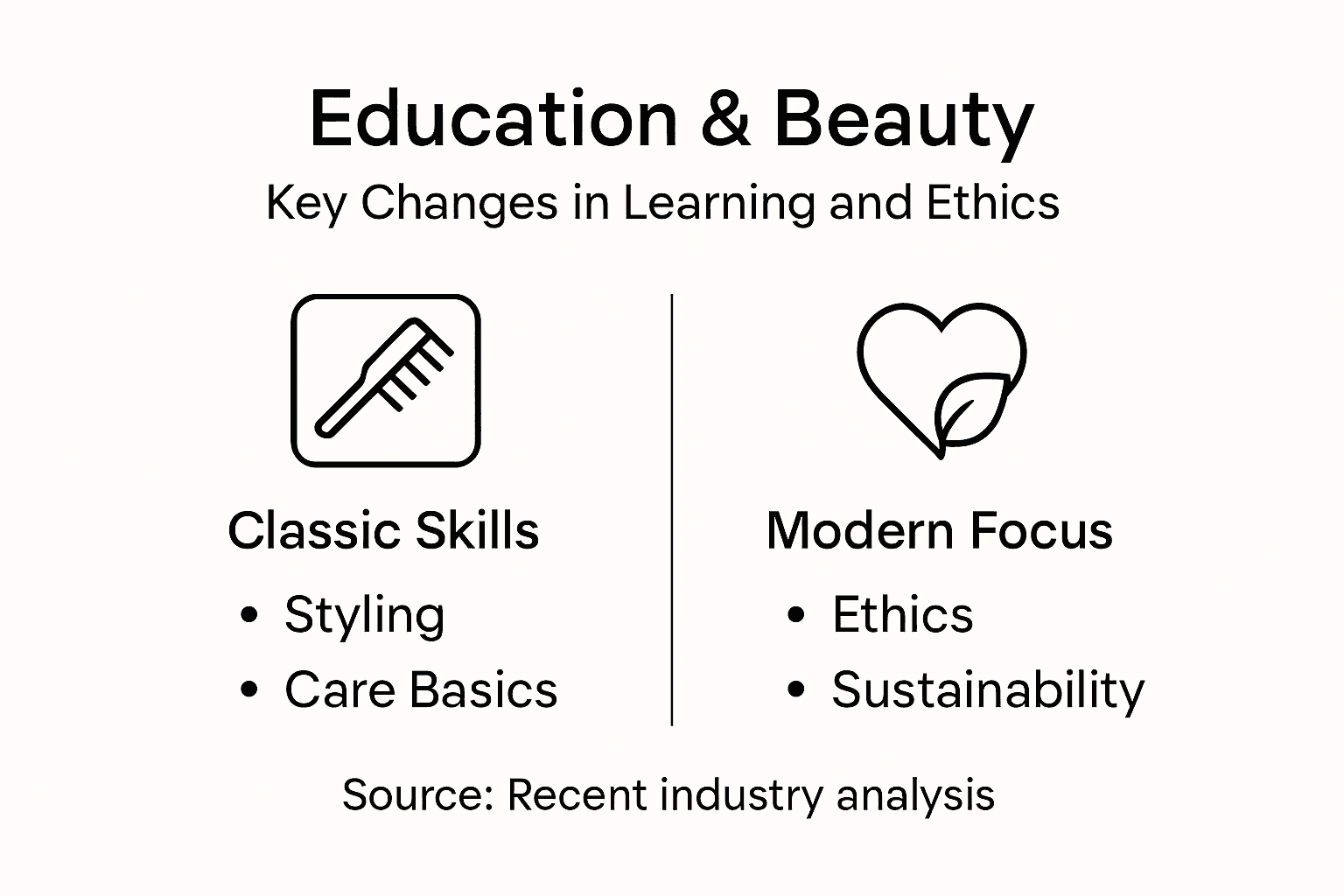
Here’s a comparison of traditional and modern beauty education approaches:
| Aspect | Traditional Beauty Education | Modern Beauty Education |
|---|---|---|
| Focus | Technical skill training | Holistic, multidisciplinary |
| Curriculum Content | Basic cosmetology techniques | Science, ethics, sustainability |
| Adaptability | Slow to change | Embraces new trends |
| Professional Impact | Skill certification | Critical thinking, leadership |
Pro tip: Invest in educational programs that offer comprehensive curriculum covering technical skills, emotional intelligence, and industry trends.
Essential Knowledge for Vegan Skincare
Vegan skincare represents a revolutionary approach to personal care that prioritizes ethical, plant-based ingredients and cruelty-free practices. Understanding the foundational principles of vegan skincare goes beyond simply avoiding animal-derived products - it’s about embracing a holistic philosophy of wellness that respects both human and environmental health.
Key components of comprehensive vegan skincare knowledge include:
- Understanding plant-based ingredient profiles
- Identifying potentially harmful synthetic additives
- Recognizing certifications and ethical labeling
- Evaluating product sustainability
- Comprehending skin biology and botanical interactions
Plant-based ingredient research reveals complex mechanisms of botanical extracts that provide remarkable skin health benefits. Advanced vegan formulations now incorporate sophisticated ingredients like antioxidant-rich peptides, probiotic compounds, and targeted botanical extracts that offer profound nutritional support for skin regeneration and protection.
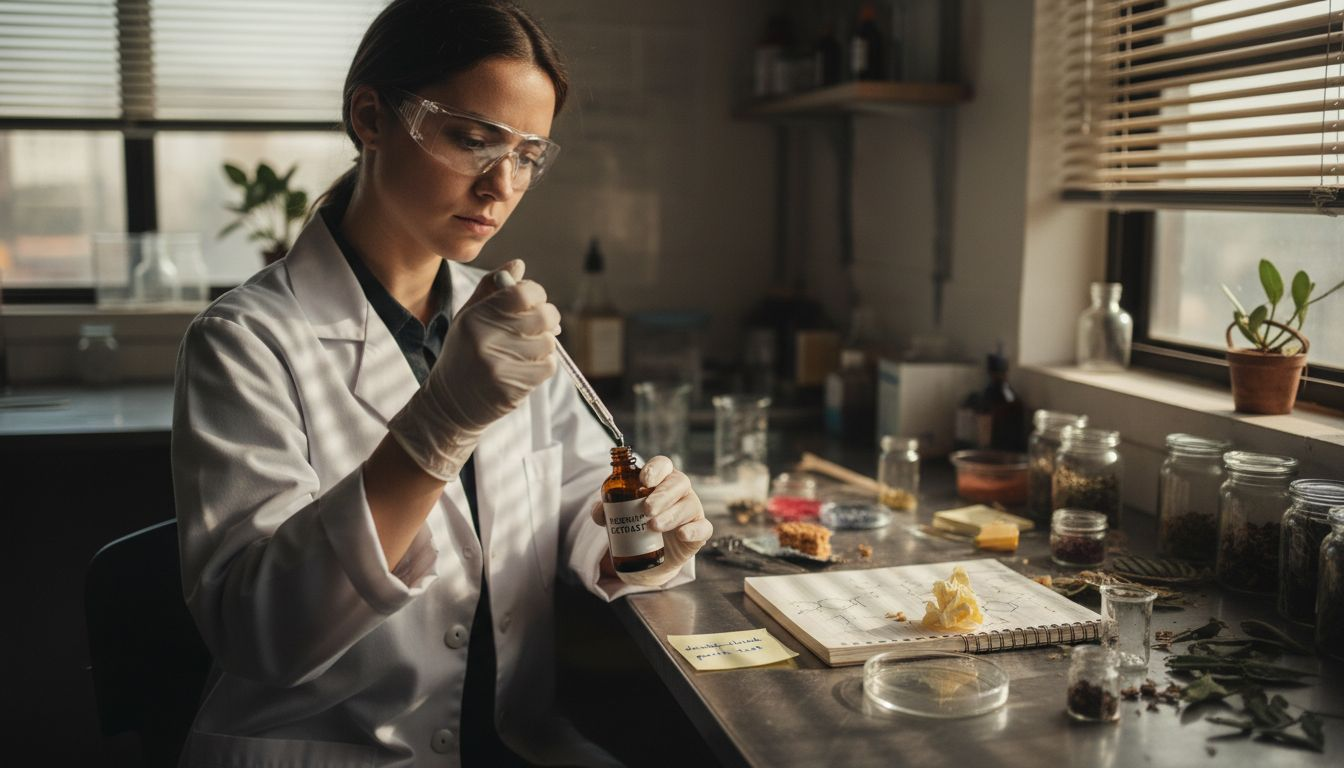
Consumer awareness plays a critical role in navigating the vegan skincare landscape. Ethical consumption requires understanding ingredient origins, production processes, and the broader environmental impact of skincare choices. This knowledge empowers individuals to make informed decisions that align with personal values of compassion, sustainability, and holistic wellness.
Pro tip: Research ingredient lists thoroughly and prioritize products with transparent, scientifically validated botanical compositions.
Navigating Sustainable and Cruelty-Free Standards
The beauty industry is undergoing a transformative shift towards ethical and environmentally responsible practices. Sustainable and cruelty-free standards represent more than just marketing buzzwords - they embody a comprehensive approach to responsible product development that considers human, animal, and environmental welfare.
Key considerations for understanding sustainable beauty standards include:
- Environmental impact of ingredient sourcing
- Transparency in supply chain practices
- Ethical animal testing policies
- Biodegradability of product packaging
- Carbon footprint reduction strategies
- Fair labor and production practices
Sustainable cosmetic strategies demonstrate the complex challenges companies face in creating truly responsible beauty products. The journey involves comprehensive evaluations of ingredient origins, manufacturing processes, packaging innovations, and long-term environmental consequences.
Consumer awareness plays a crucial role in driving industry transformation. Ethical consumption requires deep understanding of certification processes, recognizing genuine sustainable practices versus superficial marketing claims. This knowledge empowers individuals to make informed choices that align with their values of environmental stewardship and animal protection.
To better understand labels, here is a summary of common certifications found in sustainable and cruelty-free beauty products:
| Certification | Meaning | Typical Logo Presence |
|---|---|---|
| Leaping Bunny | No animal testing at any stage | Rabbit with pink or blue ears |
| USDA Organic | Product meets organic ingredient standards | Green-and-white circular seal |
| Vegan Society | Contains no animal-derived ingredients | Sunflower with “Vegan” wording |
| Ecocert | Environmental and ingredient responsibility | Green check on white background |
Pro tip: Always verify product claims by checking official certifications and researching the brand’s comprehensive sustainability practices.
Education’s Impact on Beauty Professionals
The beauty industry’s landscape is continuously transformed by strategic educational approaches that empower professionals with cutting-edge skills, knowledge, and adaptive capabilities. Modern beauty education transcends traditional skill training, focusing on developing holistic professionals who can navigate complex industry dynamics and emerging technological innovations.
Key dimensions of professional beauty education include:
- Technical skill development
- Industry trend awareness
- Technological adaptation skills
- Ethical and sustainable practice understanding
- Business and entrepreneurship competencies
- Continuous learning mindset
Post-pandemic professional education strategies reveal profound shifts in learning methodologies. These strategies emphasize flexible, hybrid learning models that combine online and in-person training, enabling beauty professionals to acquire diverse skills that meet rapidly evolving industry demands.
The integration of comprehensive educational programs plays a critical role in professional growth. Professional development requires more than technical expertise - it demands a nuanced understanding of global beauty trends, consumer psychology, technological innovations, and ethical considerations. Successful beauty professionals continuously expand their knowledge base, adapting to changing market dynamics and consumer expectations.
Pro tip: Invest in multifaceted educational programs that offer both technical training and broader industry insights to enhance your professional versatility.
Common Misconceptions and Consumer Risks
The beauty industry is riddled with complex misconceptions that can potentially compromise consumer health and decision-making. Understanding these nuanced risks requires a critical approach that goes beyond surface-level marketing claims and delves into scientific evidence and comprehensive product evaluation.
Primary misconceptions consumers encounter include:
- Natural ingredients are always safe
- Chemical-free means completely non-toxic
- All synthetic ingredients are harmful
- Fragrance-free guarantees hypoallergenic products
- Higher price equals guaranteed product quality
- Single ingredient effectiveness across all skin types
Health hazards in cosmetic products reveal significant risks associated with uninformed consumer choices. Many synthetic cosmetics contain chemical ingredients that may contribute to long-term health complications, underscoring the importance of rigorous ingredient scrutiny and comprehensive product research.
Consumer education plays a critical role in mitigating potential health risks. Product transparency requires consumers to develop a nuanced understanding of ingredient interactions, potential allergens, and the complex relationship between chemical compounds and individual skin responses. Informed decision-making involves looking beyond marketing narratives and examining scientific evidence about product composition and potential long-term effects.
Pro tip: Always review ingredient lists critically, research unfamiliar components, and consult healthcare professionals when uncertain about product safety.
Empower Your Beauty Journey with Education and Ethical Choices
The article highlights how education in beauty is key to unlocking professional growth and ethical decision-making. You might be facing challenges understanding complex skincare ingredients and sustainable beauty trends while aiming to align your routine or business with cruelty-free and vegan standards. Concepts like holistic learning and ethical consumption are essential to truly empower your beauty practices.
At Didis Beauty Center you will find carefully curated Skin Care Collection - Face, Body, Oils – Didis Beauty Center featuring natural and vegan formulations that align with educational insights in the article. These products reflect commitment to sustainability and high-quality safe ingredients.

Start transforming your beauty routine or cosmetic business today by choosing ethically crafted products and exploring our expert educational blog content. Visit Didis Beauty Center to access our full range including Beauty Bundles Collection | 50% Massive Sales – Didis Beauty Center for great value on curated sets perfect for learning and practicing new beauty techniques. Take the first step toward an empowered and informed beauty experience now.
Frequently Asked Questions
What is the importance of education in the beauty industry?
Education in the beauty industry is crucial as it not only provides technical skills but also fosters a holistic understanding of aesthetic practices, ethical considerations, and cultural aspects of beauty, empowering professionals to navigate complex industry dynamics.
How has modern beauty education evolved compared to traditional approaches?
Modern beauty education emphasizes a multidisciplinary curriculum that includes theoretical knowledge, ethical practices, sustainability, and emotional intelligence, unlike traditional education which primarily focused on basic technical skills.
What should beauty professionals focus on for their continuous education?
Beauty professionals should prioritize continuous education that covers technical skill development, industry trends, ethical practices, and business competencies to adapt to the fast-evolving beauty landscape.
How can consumers make informed choices in the skincare market?
Consumers can make informed choices by understanding ingredient origins, recognizing certification labels, and thoroughly researching product compositions to align their purchases with values of sustainability and cruelty-free practices.
Recommended
- Role of Education in Skincare – Empowering Better Choices – Didis Beauty Center
- Role of Education in Skincare – Empowering Better Choices – Didis Beauty Center
- Beauty Entrepreneurship: Creating Eco-Conscious Brands – Didis Beauty Center
- Beauty Entrepreneurship: Creating Eco-Conscious Brands – Didis Beauty Center
Discourse (0)