


Finding truly ethical beauty products can overwhelm even the most dedicated eco-conscious shopper or small brand founder. The beauty landscape is shifting as more people demand products that respect both people and planet. By understanding the core principles of Fair Trade in beauty, you gain the knowledge to source ingredients responsibly, protect your brand reputation, and support communities worldwide seeking dignity and sustainability.
Table of Contents
- Fair Trade In Beauty: Core Principles Explained
- Types Of Fair Trade Certifications In Beauty
- How Fair Trade Works Across Supply Chains
- Benefits For Brands, Workers, And Consumers
- Common Misconceptions And Pitfalls To Avoid
Key Takeaways
| Point | Details |
|---|---|
| Fair Trade Benefits | Fair Trade ensures producers receive living wages and work in safe conditions, improving community welfare. |
| Sourcing Transparency | Brands should focus on traceability and request Fair Trade certification to build trust with consumers. |
| Avoiding Pitfalls | Be cautious of greenwashing; verify the ethical practices of suppliers beyond their certifications. |
| Certification Strategy | Start with Fair Trade International certification and consider additional certifications to strengthen brand ethics without overwhelming costs. |
Fair Trade in Beauty: Core Principles Explained
Fair Trade beauty operates on a straightforward premise: beauty products should never come at the expense of the people who make them. The World Fair Trade Organization has established 10 core Fair Trade principles that guide how companies should source ingredients, compensate workers, and protect the environment. These aren’t vague suggestions; they’re measurable standards that transform supply chains from exploitative to equitable.
The first pillar centers on fair compensation. This means producers earn enough money to cover their actual production costs and earn a living wage, not just survive on pennies. When you buy fair trade shea butter or argan oil, you’re ensuring the farmer who grew it can afford healthcare, education for their children, and basic dignity. This contrasts sharply with conventional beauty sourcing, where middlemen often pocket most of the profit while growers remain trapped in poverty cycles.
Safe working conditions form the backbone of fair trade standards. Workers in fair trade facilities enjoy reasonable hours, proper safety equipment, and the right to organize. No child labor. No hazardous chemical exposure without protection. No forced overtime that leaves extractors unable to care for their families. These protections extend throughout the entire supply chain, from harvesting to processing to packaging.
Environmental stewardship is equally non-negotiable. Fair trade beauty emphasizes sustainable farming practices, fair wages, and community investment that protect soil health, preserve biodiversity, and minimize harmful pesticides. When farmers use regenerative agriculture, they’re building soil that will feed future generations, not depleting it for short-term yields.
Transparency and traceability matter enormously for small beauty entrepreneurs sourcing ingredients. You need to know exactly where your materials originate, who handled them, and under what conditions. Fair Trade certification provides this documentation, allowing you to confidently tell customers the authentic story behind your products.
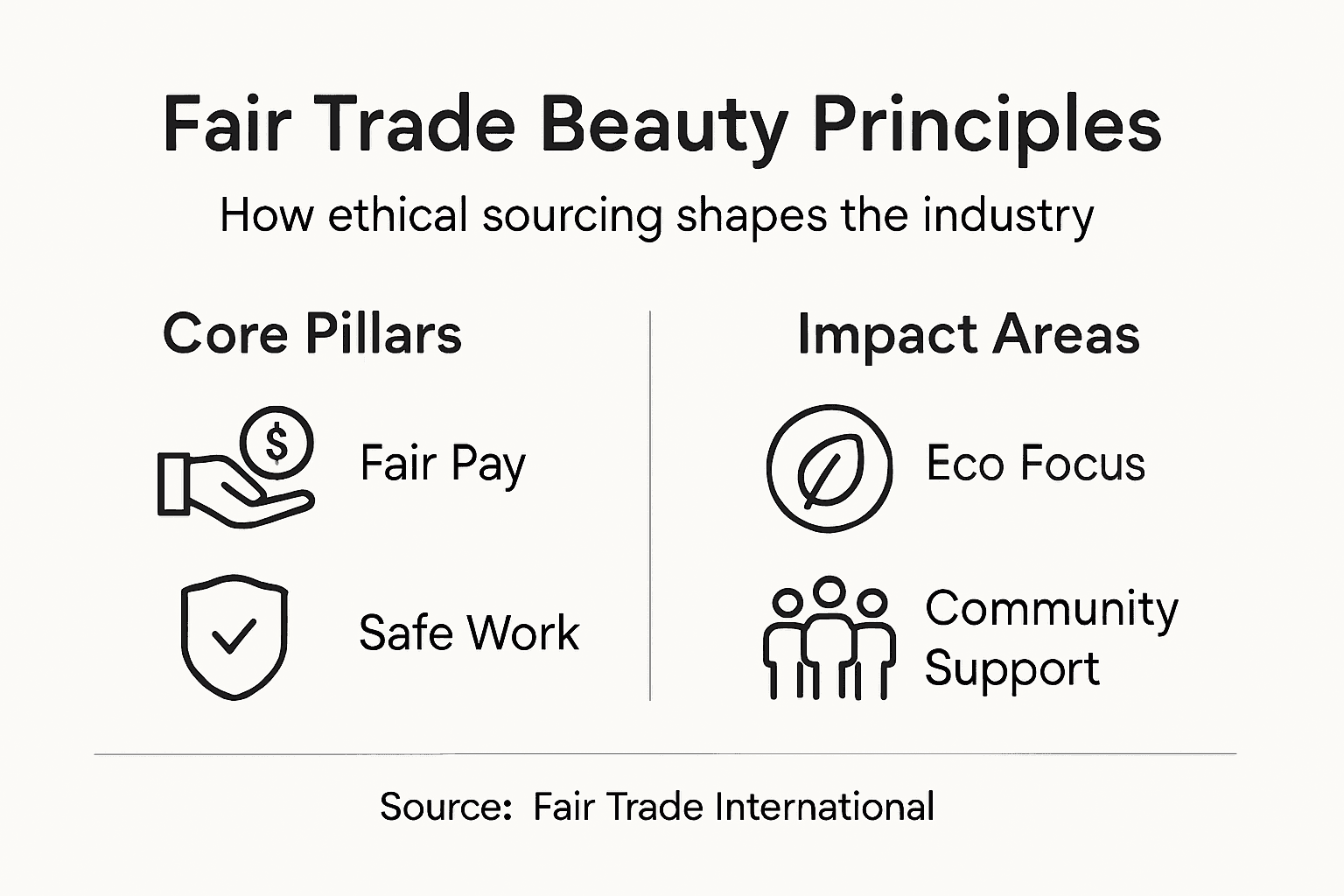
The Fair Trade premium represents a tangible commitment to communities. A percentage of every sale goes directly into shared funds that communities themselves decide how to spend: school construction, water well installation, business training, or cooperative equipment. This shifts power away from corporations and toward the people actually doing the work.
Pro tip: When selecting ingredients from suppliers, request their Fair Trade certification documents and ask about traceability records; this due diligence protects your brand reputation and ensures you can authentically market your products to conscious consumers.
Types of Fair Trade Certifications in Beauty
Not all Fair Trade certifications are created equal. The beauty industry uses multiple certification schemes, each with different standards, costs, and scope. Understanding what these labels actually mean helps you make informed sourcing decisions and communicate authentically with customers about your products.
Fair Trade International stands as the most recognized fair trade label globally. It focuses specifically on fair wages and safe working conditions for producers and workers in developing countries. When you see the Fair Trade seal on an ingredient like cacao or vanilla, it signals that workers earned a living wage and labored under protective conditions. This certification works particularly well for beauty brands sourcing raw materials from agricultural communities.

Many beauty entrepreneurs combine fair trade with other certifications. Organic certifications like USDA Organic and COSMOS verify that ingredients grew without synthetic pesticides or harmful chemicals. A product might carry both Fair Trade International and USDA Organic, meaning it meets ethical labor standards and environmental farming practices simultaneously. This combination appeals strongly to eco-conscious consumers.
Cruelty-free labels like Leaping Bunny address animal welfare, not labor practices. These certifications guarantee that neither the finished product nor its ingredients were tested on animals. While separate from Fair Trade, many conscious beauty brands pursue both certifications because their values align. Rainforest Alliance and Climate Neutral certifications address environmental sustainability through supply chain transparency and carbon footprint reduction.
B Corp Certification takes a broader approach, measuring a company’s overall social and environmental impact across operations. This matters for small beauty business owners building their entire brand around sustainability. B Corp certification signals to customers that you’re serious about ethics beyond just ingredient sourcing.
The challenge? Multiple certifications increase costs. A small business might prioritize one certification that aligns with core values, then layer additional ones as the company scales. Researching certification requirements upfront prevents costly mistakes and ensures your supply chain genuinely reflects your brand promises.
Here’s a comparison of leading Fair Trade and Ethical Beauty certifications:
| Certification | Core Focus | Typical Scope | Unique Benefit |
|---|---|---|---|
| Fair Trade International | Fair wages, worker safety | Developing countries, raw ingredients | Ensures living wages for producers |
| USDA Organic | Chemical-free farming | Agriculture, beauty, food | Guarantees no synthetic pesticides |
| Leaping Bunny | Animal welfare | Cosmetics and personal care | Verifies no animal testing |
| B Corp | Social and environmental impact | Entire company operations | Signals broad ethical commitment |
Pro tip: Start with Fair Trade International certification for your primary raw materials, then research complementary certifications like organic or cruelty-free that strengthen your brand positioning without overwhelming your budget.
How Fair Trade Works Across Supply Chains
Fair Trade doesn’t operate as a simple label slapped on a product. It functions as a complete system that reshapes how value moves through supply chains, from remote farms to your customers’ bathrooms. Understanding this mechanism reveals why fair trade beauty matters and how it genuinely transforms lives.
The process starts with producer organizations rather than individual farmers. When cocoa growers or shea nut harvesters band together into cooperatives, they gain bargaining power they never had alone. These organizations handle quality control, aggregation, and negotiations directly with beauty brands. Instead of selling to middlemen who extract most profits, producers now deal with buyers committed to fair pricing.
Fair Trade systems embed transparency and monitoring throughout every stage. Brands track ingredients from harvest to manufacturing to packaging. This traceability means you know exactly where your raw materials originated and can verify that workers earned living wages. For small beauty entrepreneurs building private label brands, this documentation becomes your proof of authenticity.
Fair pricing mechanisms replace the exploitative haggling of conventional markets. Instead of fluctuating commodity prices that bankrupt farmers during downturns, Fair Trade establishes minimum prices that cover production costs plus a living wage. A shea butter producer knows they’ll earn X dollars per kilogram, regardless of global price swings. This stability lets farmers invest in their communities and plan for the future.
The Fair Trade premium flows directly into community funds. Workers and producers democratically decide how to spend this money on education, healthcare, infrastructure, or business training. This approach shifts power dynamics. Communities aren’t waiting for charitable donations; they’re building their own futures through the profits they generate.
Collaboration between all stakeholders makes this work. Brands, producers, certifiers, and policymakers must align on standards and commit to long-term relationships. When you source from fair trade suppliers, you’re participating in a network designed for mutual benefit, not extraction.
Pro tip: Request supply chain documentation from your ingredient suppliers and trace at least one product back to its producer organization to authentically communicate your sourcing story to customers.
Benefits for Brands, Workers, and Consumers
Fair Trade beauty creates a rare win-win-win situation. Every participant in the supply chain gains something tangible. This triple benefit explains why fair trade continues growing despite higher upfront costs.
Workers see immediate improvements. Living wages replace poverty-level pay. Fair Trade delivers better prices that cover living costs plus additional premiums that communities control democratically. A shea butter processor in Burkina Faso earns enough to send children to school, access healthcare, and plan beyond survival. Safe working conditions mean no chemical burns, reasonable hours, and the right to organize. These aren’t abstract benefits; they’re the difference between dignity and desperation.
Brands gain competitive advantage through certification. Fair Trade credentials signal to conscious consumers that you take ethics seriously. This builds trust that competitors without certification cannot claim. Small beauty entrepreneurs using fair trade sourcing stand out in crowded markets. You’re not just selling skincare; you’re selling a story of positive impact that resonates with buyers who care about where products come from.
Consumer loyalty strengthens around fair trade brands. People increasingly research their purchases and seek products aligned with their values. When customers know their money directly improves lives, they become brand ambassadors. They tell friends, leave positive reviews, and return for repeat purchases. Studies show increased purchase frequency and willingness to pay premium prices for ethically sourced beauty products.
The environmental payoff extends beyond ingredients. Fair Trade farming practices build soil health and preserve ecosystems. Farmers who earn living wages stop practicing destructive agriculture out of desperation. They can invest in sustainable methods that regenerate land rather than deplete it.
Quality improves across the board. When producers earn fair compensation, they invest in better equipment, training, and care. The shea butter you source becomes more consistent, potent, and reliable. Consumers receive superior products with transparent supply chains they can genuinely trust.
This table summarizes how Fair Trade creates value for key participants:
| Stakeholder | Main Benefit | Example Result |
|---|---|---|
| Producers | Reliable income, decision power | School construction, improved health |
| Brands | Market differentiation, trust | Positive consumer perception |
| Consumers | Ethically sourced quality | Willing to pay premium prices |
Pro tip: Feature fair trade stories on your product labels and social media by sharing the specific cooperative or region you source from, transforming your supply chain transparency into powerful marketing that builds customer loyalty.
Common Misconceptions and Pitfalls to Avoid
Fair Trade sounds perfect in theory. Then reality hits. Understanding where Fair Trade actually struggles prevents you from making costly mistakes when building your brand or sourcing ingredients.
The biggest misconception? Fair Trade solves poverty alone. It doesn’t. Fair Trade improves lives for participating producers, but it doesn’t magically transform entire economies. Many farmers still live in poverty despite Fair Trade certification because systemic issues run deeper. Fair Trade is one tool among many needed to address global inequality. Treating it as a complete solution sets unrealistic expectations.
Another pitfall involves greenwashing. Some companies slap Fair Trade labels on products while cutting corners elsewhere. Label fatigue and greenwashing confuse consumers trying to make ethical choices. Just because a single ingredient carries Fair Trade certification doesn’t mean the entire product is ethically made. A face serum with Fair Trade argan oil still might contain synthetically produced ingredients from questionable sources.
Certification costs create exclusionary barriers. Small producers struggle to afford Fair Trade certification fees, even when they already practice fair labor and sustainable methods. This means many genuinely ethical operations lack official labels simply because they cannot absorb certification expenses. As a sourcing entrepreneur, investigate suppliers beyond their labels.
Profit leakage remains a real problem. Certification challenges and intermediaries sometimes prevent premiums from reaching producers. Middlemen, processors, and distributors can capture profits that should go to farmers. Requesting transparency about exactly how premiums flow through your supply chain protects both your integrity and your suppliers’ livelihoods.
Limited reach means Fair Trade covers mainly small-scale producers. Large plantations operate outside Fair Trade systems, so sourcing from certified suppliers doesn’t automatically mean you’re avoiding industrial agriculture’s worst practices.
The solution? Move beyond assumption. Ask specific questions. Request documentation. Build direct relationships with suppliers when possible. Combine Fair Trade with other certifications addressing your specific concerns. Fair Trade works best as part of a comprehensive sourcing strategy, not a standalone solution.
Pro tip: Ask suppliers to prove that Fair Trade premiums actually reached producer organizations by requesting distribution documentation, then verify with producer groups directly through online communication.
Embrace Ethical Beauty and Build Your Brand with Confidence
The challenge of sourcing products that truly honor fair compensation, safe working conditions, and environmental sustainability can feel overwhelming. At Didis Beauty Center, we understand your goal to create beauty products that reflect fairness and transparency without compromising quality or affordability. Our Ready To Label Collection - Brightening Skin Care offers you ethically sourced, natural formulations that align with Fair Trade principles, enabling you to confidently share authentic stories behind your brand.

Start your journey toward responsible beauty today by exploring our carefully curated collections, including our Cream Collection - Skincare & Moisturizers for Face & Beard, designed to complement your commitment to sustainability. Visit Didis Beauty Center to discover products that support fair wages and sustainable practices. Take action now and transform your passion into a brand that customers trust and love.
Frequently Asked Questions
What are the core principles of Fair Trade in beauty?
Fair Trade in beauty is guided by principles like fair compensation, safe working conditions, environmental stewardship, and transparency in supply chains. These principles ensure that beauty products are produced ethically and sustainably, benefiting both workers and communities.
How does Fair Trade improve working conditions for producers?
Fair Trade ensures that workers enjoy safe working conditions, earn living wages, and have the right to organize. It prohibits child labor and requires the use of proper safety equipment to protect workers from hazardous conditions.
What are the different types of Fair Trade certifications available in beauty?
Types of Fair Trade certifications include Fair Trade International, which focuses on fair wages and worker safety; USDA Organic, ensuring no synthetic pesticides; and cruelty-free certifications, which guarantee no animal testing. Businesses often combine these certifications to enhance their ethical standards.
What benefits do consumers gain from purchasing Fair Trade beauty products?
Consumers benefit from Fair Trade beauty products through the assurance of ethically sourced ingredients, improved product quality, and the positive impact their purchases have on producers’ lives. Many consumers also express loyalty and a willingness to pay premium prices for products they trust to be ethical and sustainable.
Discourse (0)