


Most american skincare routines overlook one powerful truth—genuine skin health comes from knowledge, not just products. With eco-conscious consumers and small business owners around the world demanding vegan, sustainable options, understanding ingredients and ethical practices has never been more critical. Studies show informed customers are up to 60 percent more likely to choose sustainable products. This guide reveals how skincare education transforms daily habits, helping you achieve results that reflect your values.
Table of Contents
- What Skincare Education Truly Means
- Misconceptions and Myths in Skincare
- Understanding Ingredients and Safe Formulations
- How Education Shapes Sustainable Skincare Practices
- Benefits for Consumers and Beauty Entrepreneurs
Key Takeaways
| Point | Details |
|---|---|
| Understanding Skin Health | Skincare education emphasizes a comprehensive understanding of skin functions and requires personalized care strategies to promote overall skin wellness. |
| Critical Thinking About Skincare | Consumers must develop skills to analyze marketing claims and ingredient lists to make informed, evidence-based skincare choices. |
| Sustainable Practices | Sustainable skincare education encourages informed product selections that consider environmental impact and ethical sourcing for better long-term solutions. |
| Empowerment Through Knowledge | Both consumers and beauty entrepreneurs benefit from skincare education, fostering a symbiotic relationship that drives innovation and higher industry standards. |
What Skincare Education Truly Means
Skincare education represents a comprehensive approach to understanding skin health beyond superficial beauty treatments. At its core, it involves developing critical knowledge about how our skin functions, responds to environmental factors, and requires personalized care strategies. Dermatology undergraduate training emphasizes the importance of structured learning that empowers individuals to make informed skincare decisions.
True skincare education goes far beyond product recommendations. It encompasses understanding skin biology, recognizing individual skin types, comprehending ingredient interactions, and learning how lifestyle factors like nutrition, stress, and sleep impact skin health. This holistic approach means transforming skincare from a purely cosmetic practice into a scientifically informed wellness strategy that considers individual genetic, environmental, and personal health contexts.
Effective skincare education also involves critically analyzing marketing claims, understanding scientific research methodologies, and developing skills to evaluate product ingredients objectively. This means learning to read ingredient labels, understanding the difference between marketing hype and evidence-based formulations, and recognizing how specific compounds interact with different skin types and conditions. By promoting scientific literacy, individuals can make more empowered, personalized skincare choices that align with their unique physiological needs.
Pro tip: Start building your skincare education by maintaining a detailed skin journal tracking product usage, environmental conditions, diet, and skin responses to develop a personalized understanding of your skin’s unique characteristics.
Misconceptions and Myths in Skincare
Skincare myths have become increasingly prevalent, largely driven by social media misinformation and unverified beauty trends. Widespread misconceptions in dermatology often stem from outdated information and oversimplified beauty narratives that can potentially harm individual skin health. These myths range from quick-fix solutions to misleading claims about product effectiveness, creating significant confusion for consumers seeking reliable skincare guidance.
Some of the most pervasive skincare myths include believing that oily skin doesn’t require moisturizer, expensive products are always superior, or that sunscreen is unnecessary on cloudy days. Common skincare misconceptions can lead individuals to adopt ineffective or even damaging skincare routines. For instance, many people mistakenly think aggressive scrubbing or daily exfoliation will improve skin texture, when in reality, such practices can compromise the skin’s protective barrier and cause increased sensitivity.
Critical thinking and scientific literacy are essential in navigating the complex world of skincare information. Consumers must learn to distinguish between marketing hype and evidence-based research, understanding that personalized skincare depends on individual skin types, genetic factors, environmental conditions, and overall health. This requires developing skills to critically evaluate product claims, ingredient lists, and recommended treatments by consulting reliable, scientifically-backed sources and professional dermatological advice.
Pro tip: Always cross-reference skincare advice from social media influencers with recommendations from board-certified dermatologists and scientific research publications to ensure you’re receiving accurate, evidence-based information.
Here’s a summary of common skincare myths and the scientific reality behind them:
| Skincare Myth | Why It’s Incorrect | Scientific Reality |
|---|---|---|
| Oily skin doesn’t need moisturizer | Ignores skin hydration needs | All skin types require moisture |
| Expensive products work better | Price does not guarantee efficacy | Effectiveness depends on formulation |
| Sunscreen isn’t needed on cloudy days | Underestimates UV exposure | UV rays penetrate clouds |
| Aggressive scrubbing improves texture | Damages skin barrier | Gentle care preserves skin health |
| Daily exfoliation clears up skin | Can cause irritation | Exfoliation should be moderate |
Understanding Ingredients and Safe Formulations
Skincare formulation is a sophisticated science that requires deep understanding of ingredient interactions, safety profiles, and potential synergistic effects. Modern skincare components leverage advanced ingredients like antioxidants, peptides, plant extracts, and probiotics to deliver targeted skin health benefits. These sophisticated formulations go beyond simple cosmetic approaches, focusing on supporting skin barrier function, reducing inflammation, and promoting long-term skin wellness.

Balancing active ingredients with supportive compounds is crucial for creating effective and safe skincare products. Skincare formulation strategies involve carefully selecting components like retinoids, antioxidants, and peptides, and combining them with appropriate emollients, humectants, and preservatives. Understanding ingredient compatibility, stability, and optimal pH levels ensures that products not only perform effectively but also maintain safety standards throughout their shelf life.
Consumers and skincare professionals must develop critical skills in ingredient analysis, learning to decode complex product labels and understand the functional roles of different compounds. This involves recognizing potentially irritating ingredients, understanding concentration levels, and identifying scientifically validated active ingredients versus marketing-driven claims. Key considerations include evaluating ingredient sources, understanding potential interactions, and recognizing how individual skin types might respond to specific formulations.
Pro tip: Develop a habit of reading ingredient lists from most concentrated to least concentrated, and research any unfamiliar compounds to understand their potential skin interactions and benefits.
How Education Shapes Sustainable Skincare Practices
Sustainable skincare practices represent a holistic approach that extends far beyond individual product choices, encompassing comprehensive understanding of environmental impact, ethical sourcing, and responsible consumption. Responsible beauty education programs are transforming the industry by equipping professionals with critical skills in green chemistry, sustainable sourcing, and eco-friendly business operations. These educational initiatives empower individuals to make informed decisions that consider the broader ecological and social implications of skincare product development.
The core of sustainable skincare education involves developing a nuanced understanding of product lifecycles, from ingredient sourcing to packaging and disposal. This means learning to evaluate environmental footprints, understanding the impact of chemical compounds, recognizing sustainable ingredient alternatives, and critically assessing the true sustainability claims of beauty brands. By promoting scientific literacy and environmental awareness, these educational approaches help consumers and professionals challenge greenwashing and demand genuine transparency in skincare product development.
Moreover, sustainable skincare education is about creating a cultural shift that views beauty practices through a lens of global responsibility. This involves understanding connections between personal skincare choices and broader environmental challenges, recognizing how individual consumption patterns contribute to global sustainability efforts. By promoting knowledge about fair trade practices, ethical manufacturing, biodegradable ingredients, and reduced carbon footprints, these educational initiatives transform skincare from a purely aesthetic practice to a meaningful act of environmental stewardship.
Pro tip: Start building your sustainable skincare knowledge by researching the origins of three key ingredients in your current skincare routine, investigating their environmental impact and ethical sourcing practices.
Compare key components of sustainable vs. conventional skincare approaches:
| Factor | Sustainable Skincare | Conventional Skincare |
|---|---|---|
| Ingredient sourcing | Ethically and eco-sourced | Often non-transparent |
| Packaging | Biodegradable or recyclable | Frequently single-use plastic |
| Environmental impact | Focus on reduced footprint | Often high waste output |
| Transparency | Full disclosure, traceability | Limited ingredient details |
| Consumer awareness | Informed, values-driven | Often trend-driven |
Benefits for Consumers and Beauty Entrepreneurs
Skincare education offers transformative advantages for both consumers and beauty entrepreneurs, creating a symbiotic ecosystem of knowledge and innovation. Consumers gain critical insights into personalized skincare strategies, enabling them to make informed decisions about product selection, ingredient compatibility, and individual skin health management. This empowerment allows individuals to develop nuanced understanding of their unique skin characteristics, moving beyond generic beauty recommendations to tailored, scientifically supported approaches.
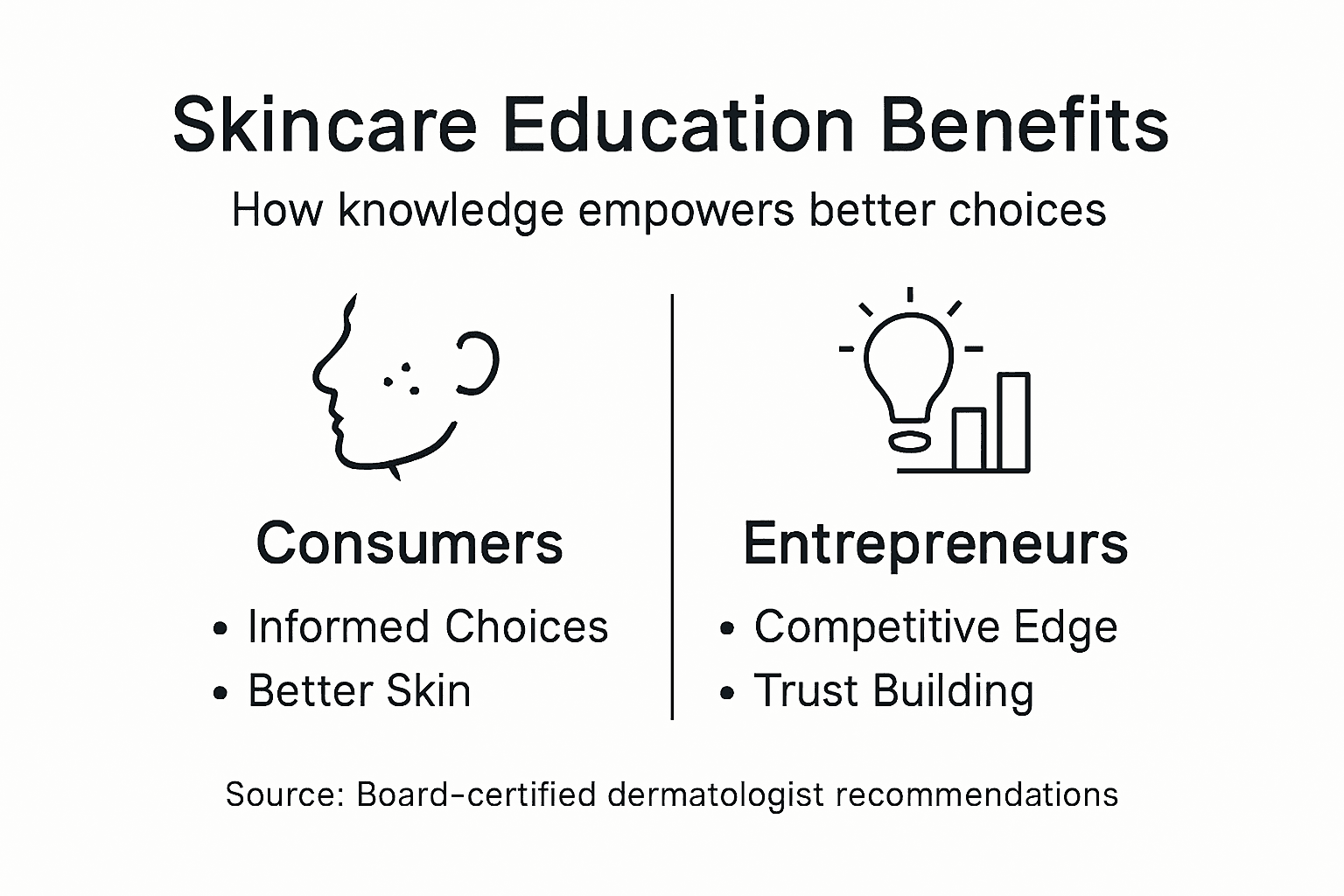
For beauty entrepreneurs, skincare education represents a powerful competitive advantage in an increasingly sophisticated market. Deep knowledge about ingredient interactions, formulation techniques, and emerging research allows entrepreneurs to develop more innovative, targeted product lines that address specific consumer needs. Understanding the science behind skincare enables small business owners to differentiate themselves, build credibility, and create more meaningful connections with their customer base by demonstrating genuine expertise and commitment to skin health.
Beyond individual benefits, skincare education contributes to broader industry transformation. By promoting scientific literacy, these educational initiatives challenge marketing-driven narratives, encourage transparency, and elevate industry standards. Consumers become more discerning, demanding higher-quality, ethically produced products, while entrepreneurs are motivated to invest in research, sustainable practices, and genuine innovation. This creates a positive feedback loop where increased knowledge drives more responsible, effective skincare solutions across the beauty landscape.
Pro tip: Invest at least one hour weekly in reading peer-reviewed dermatological research or attending professional skincare webinars to continuously expand your industry knowledge and stay ahead of emerging trends.
Empower Your Skincare Journey with Knowledge and Quality Products
Skincare education is essential to making informed decisions that truly benefit your skin health. Understanding ingredient interactions and debunking myths allows you to embrace personalized, science-backed routines that promote lasting wellness. At Didis Beauty Center, we recognize these needs by offering a carefully curated Skin Care Collection - Face, Body, Oils – Didis Beauty Center featuring natural, vegan formulations designed to align with your unique skin requirements.

Take control of your skincare routine today by exploring our selection of effective and safe products. Whether you are an individual wanting to nourish your skin or a beauty entrepreneur ready to start your own brand, our platform supports you with affordable, quality solutions and educational insights. Visit Didis Beauty Center now and begin transforming your skincare choices into empowered, informed actions.
Frequently Asked Questions
What is the importance of skincare education?
Skincare education helps individuals understand skin health beyond superficial fixes. It provides knowledge about skin biology, personalized care strategies, and ingredient interactions, enabling informed skincare decisions.
How can I identify my skin type?
To identify your skin type, observe how your skin feels and responds to products and the environment. Consider factors like oiliness, dryness, sensitivity, and reaction to climate changes, and consult educational resources or a dermatologist for guidance.
What are common skincare myths I should be aware of?
Common skincare myths include that oily skin does not need moisturizer, expensive products are always better, and daily exfoliation is necessary. Understanding the science behind skincare can help debunk these misconceptions and promote healthier routines.
How can I evaluate skincare product ingredients?
You can evaluate skincare products by reading ingredient lists from most to least concentrated, researching unfamiliar compounds, and considering how they interact with your skin type. Consult reliable scientific sources and dermatological advice to inform your decisions.
Recommended
- Eco-Friendly Skincare Guide: Achieve Sustainable Glow – Didis Beauty Center
- Eco-Friendly Skincare Guide: Achieve Sustainable Glow – Didis Beauty Center
- 7 Essential Eco-Friendly Beauty Tips for Natural Skincare – Didis Beauty Center
- 7 Essential Eco-Friendly Beauty Tips for Natural Skincare – Didis Beauty Center
- Benefits of Gentle Skincare: Glowing Confidence, Naturally – EMILY SANDERS LIFESTYLE
- Why Men Need Skincare Education for Lasting Confidence
Discourse (0)